Classic movie report: January 2015

A few weeks ago I declared as one of my New Year’s resolutions that I would watch more classic old movies. As compared to resolutions about training for a marathon run or learning a foreign language, this one didn’t exactly rank high on the difficulty or willpower meter. Nevertheless, I’m here to report that I’m doing pretty well on keeping it, aided by a winter cold that kept me more housebound than usual.
In fact, I’ve been on overdrive, with a big dose of historical and war movies:
Mister Roberts (1955) (4 of 4 stars)
Henry Fonda stars as Doug Roberts, a frustrated lieutenant serving on a rusty Navy cargo ship in the final year of the WWII’s Pacific Theatre. Roberts badly wants transfer to a combat ship, but his ambitions are blocked by a tyrannical captain (played by James Cagney) who refuses to approve his repeated requests. William Powell as the ship’s doc and Jack Lemmon as hapless Ensign Pulver round out a great cast of major supporting characters.
This is a superb, touching, and funny movie, evocative of its era but much, much more than a period piece. It’s easy to see why it was first such a hit on the Broadway stage, premiering in 1948 and running for years with Fonda in the lead role. It’s equally easy to watch the movie and imagine how it was staged as a play.
John Paul Jones (1959) (2.5 stars)
Robert Stack plays the America’s first Revolutionary War naval hero, Capt. John Paul Jones. I found it a bit of a disappointment. Though not without its interesting segments, the movie lacks dramatic pull.
Shenandoah (1965) (3 stars)
James Stewart stars in this Civil War story of Virginia farmer Charlie Anderson, who stubbornly tries to keep himself and his family out of the war until circumstances make it impossible to do so. This is an old fashioned Hollywood depiction of the Civil War, and Stewart makes it worth watching. I’ve watched this movie several times over the years, and I’m sure I’ll be doing so again.
The Flying Fleet (1929) (3 stars)
This is a historical nugget, a silent movie about the early years of naval aviation, featuring fascinating film footage of old Navy biplanes and the U.S.S. Langley, the very first American aircraft carrier. Co-stars Ramon Novarro and Ralph Graves are young pilots who compete for plum missions and for the attentions of Anita Page, a hottie of the silent film era.
The Flying Fleet was co-authored by Frank “Spig” Wead, a naval aviation pioneer whose colorful career would later be the subject of The Wings of Eagles (1957), starring John Wayne. It was intended to glamorize and promote naval aviation, which was fighting for legitimacy among traditional, hidebound Navy leaders and the general public. Here’s a trailer:
My travel-related bucket list

The term “bucket list,” if you missed its pop culture origins, is drawn from the 2007 motion picture The Bucket List. The movie features Morgan Freeman and Jack Nicholson as two men who, after receiving dire assessments from their doctors, ditch their hospital beds for a whirlwind road trip to places they’ve never visited and to do things they’ve never done.
Very quickly, the term became popularized by comparatively healthier middle-aged adults (among others) to describe their wish lists of to-dos and must-sees, many of which are associated with travel.
Now that I’m well into my fifties, I find a curious twist occurring: My own bucket list, at least when it comes to travel, is narrowing rather than expanding.
What’s on my list? As far as new places outside of the U.S. go, I’d like to see Athens and bear witness to the sites of ancient Greek history. Maybe I could squeeze in a visit to Italy as well. I’d also like to tour some of the famous historical and religious sites in France, ranging from First World War battlefields to ancient cathedrals.
Otherwise, I’d like to revisit a cluster of old haunts. Even traveling, I’m a creature of habit, and once I discover something I like, I’m drawn to go back. London, for example, has long been one of my very favorite cities, so much that I feel very comfortable there without losing that feeling of wondrous discovery. (Someday soon I’ll write about my visits there.)
For a someone with only a modest travel bug, I’ve been fortunate to see a lot of interesting, fascinating places, and I’ve experienced first-hand how travel can expand our minds and worlds. So especially to those whose bucket list dreams have yet to be fulfilled, I wish for you many opportunities to make them a reality.
***
As for The Bucket List, I give it maybe 3 or 2.5 stars out of 4. I’ve long been a fan of Morgan Freeman, but Jack Nicholson — in just about every role he plays — reminds me of too many of the egos I’ve encountered in the legal profession and in academe! Nevertheless, it’s a good movie, and it leaves us with some points worth thinking about.
New Year’s resolution: Enjoy and appreciate old movies

Screenshots of “Family Classics,” WGN TV in Chicago, hosted by Frazier Thomas (photo: Wikipedia)
If you’re around 40 or older, then you may recall the days when watching a favorite old movie on television was a small event.
If you grew up with standard-brand network television (in those days, ABC, NBC, and CBS) plus a handful of local and PBS channels, the search for favorite movies often started by combing the listings in the weekly TV magazine that came with the Sunday newspaper.
Certain movies, such as The Wizard of Oz and The Sound of Music, appeared only once a year, often around holidays, which made them special occasions for family TV gatherings.
In the age before VCRs, DVDs, and DVR service, we assumed and accepted the fact that we’d be watching edited versions of these movies with commercial interruptions. If we couldn’t view them when they were being aired, then we’d simply have to wait for the next time.
If you knew that a favorite movie was going to be on TV and you could be home to watch it, then you could look forward to that with eager anticipation. (At the risk of sounding like an economist, scarcity can make something feel a lot more appealing!)
“Family Classics” and “Creature Features” on WGN-Chicago
Two weekly movie series from WGN Television in Chicago, especially popular during the 60s and 70s, captured for me that wonderful sense of anticipation. They may resonate with friends and family who grew up in the Chicagoland region.
Family Classics
The first is “Family Classics,” hosted by Frazier Thomas, a weekly selection of movies suitable for family viewing. Thomas personally selected and introduced the films, most of which were adaptations of popular novels and non-fiction books. At times, Thomas edited out portions that he deemed a little too risqué or otherwise inappropriate for a family audience. But make no mistake, he did not come across as a holy roller, just an old fashioned guy who loved good movies.
Here’s a Frazier Thomas intro of the movie version of the Jules Verne classic, Mysterious Island:
If you liked that one, then go here for his intro of Shenandoah, a story set in the Civil War, starring James Stewart.
Wikipedia has a lengthy entry on “Family Classics,” including Thomas’s curated list of films.
Creature Features
The second is “Creature Features,” which launched in the early 1970s and featured screenings of old horror movies on late Saturday nights. “Creature Features” was my introduction to 30s and 40s classics such as Frankenstein, The Mummy, Dracula, and The Wolfman. I remember fortifying myself with popcorn and a beverage, while covered in a quilt just in case I had to hide under it!
Here’s the wonderfully evocative intro for “Creature Features”:
Fast forward
Today, of course, we’re rich in movie-watching options, and many are accessible on all but the tightest of budgets. Public libraries now have DVD collections, and free movies abound online as well. Netflix subscriptions are relatively affordable, and a handful of video stores are still around. While cable remains very expensive by comparison, even the economy packages offer an array of stations that televise movies.
It’s also possible to assemble a pretty good personal library of DVDs at decent prices, especially if you’re a resourceful shopper. The typical Barnes & Noble store features a ton of discounted DVDs and regular sales, and online vendors offer plenty of new and second-hand offerings too. As DVDs slowly give way to streaming options, they’ll continue to drop in price.
Taking it for granted
But all of these options may have had a predictable effect: It’s easy to take this bounty of riches for granted. At least I do.
It makes watching a great old movie less of an event. We scroll through the On Demand listings, check out streaming choices online, or pop in a DVD, and bingo, it’s instant gratification. There’s no need to say I can’t wait to watch that movie, because basically, we rarely have to wait.
2015 resolution
With so many great offerings at my disposal, among my 2015 resolutions is to enjoy and appreciate old movies.
Now, when I say “old,” I’m giving myself wide berth. Anything produced over five or so years ago counts for me. And I may even include a mini-series or two. That said, I’m going to emphasize classic movies made during the last century.
I’m shooting for my own personal “Movie of the Week.” With some good snacks or maybe a pizza to make it a bit of an event, I want to make this something I can look forward to as a welcomed part of my week.
I’ll be writing about some of these movies here, so stay tuned. And while you’re at it, you might make up your own list of movies to enjoy.
Throwback Thursday: Aloha to an old warhorse

Two weeks ago I wrote that my old television set had seen its best days and that I was awaiting a replacement. I’m all set now, with a new flatscreen unit and a technologically upgraded cable package. As I made the transition, I decided it was time to say goodbye to my 22-year-old VCR machine. Here it is, pictured above, unplugged and soon to be disposed of, after many years of steady service.
Despite my enjoyment of movies, I was a latecomer to VCRs. Living in New York, I was happy to see old films in the city’s several revival movie theaters, and I was living on a tight budget to boot. But as VCRs became commonplace and more affordable, I finally took the plunge. In the summer of 1992, I went to an electronics store, pretty much arbitrarily picked out a VCR (my usual quick-hit approach to shopping), and set it up in my Brooklyn apartment.
I wouldn’t want to estimate how many hours I spent watching movies using my VCR that summer, as the answer would be highly suggestive of addictive behavior. Suffice it to say, however, that I was a loyal supporter of video stores near work and home. As I wrote last year in a lament over the closing of Blockbuster video stores, it was such a treat to survey the shelves of these stores in search of old favorites and new discoveries.
Given how many movies have played on that machine, it’s something of a miracle that it lasted so long. Over the past decade, of course, I’d morphed over to DVDs, but on the few occasions when only a VCR version of a movie or show was available, I could pop in the cassette and watch it.
I tend to be resistant to jumping to new technologies right away, so these days I find myself preferring DVDs to streaming video. My Netflix subscription still includes the discs, and I continue to get a short spark of little-kid-like happiness when a red envelope shows up in my mailbox. Alas, my luck with DVD players has not been as good, and it looks like I’ll be buying a new one soon. Perhaps I’ll upgrade to a high-def model. They seem to have dropped in price in recent years, and now I have a TV set that justifies the purchase.

“The Big Lift”: World War and Cold War meet up in Berlin

In the aftermath of the Second World War, the victorious Allies divided the city of Berlin into zones controlled by the Americans, British, French, and Russians. The first major international crisis of the Cold War was triggered by a 1948 Russian blockade of Western goods and supplies into Berlin, and resulted in the Western countries joining together in the Berlin Airlift, a massive airlift of food, fuel, and other necessities for a German populace still suffering from the ravages of the war. The blockade was lifted in 1949, with Germany divided into separate Eastern and Western states.
The Big Lift (1950) is a raw, authentic, fascinating movie built around the Berlin Airlift. Montgomery Clift leads the cast as an Air Force sergeant who becomes involved with a Berliner, played by German actress Cornell Borchers. Paul Douglas, in a lead supporting role, plays an American sergeant who carries deep anger and contempt toward the Germans. All other military roles were played by actual members of the U.S. Armed Forces.
The Internet yields mixed reviews for this movie, mostly due to supposedly uneven plot lines. However, I find the personal stories to be smartly layered into the time and place, and both lead and supporting cast members deliver convincing performances. The film’s interactions between the Americans and Germans are emotionally and politically complex, capturing how tensions fueled by both the Second World War and the Cold War shaped personal relationships.
But the real star here is post-war Berlin, where most of the movie was filmed in 1949. Some four years after the war ended, Berlin was still rebuilding from Allied bombings, and much of the city remained as piles of rubble. The movie wholly captures that reality. In addition, the aerial shots of Allied supply planes flying into and taking off from Berlin’s Templehof airport are like a documentary from the era. Scenes in the Berlin subway and city streets are gritty and real. You feel like you’re watching history.
The movie was produced as a portrayal of a major international event, but now it serves as a unique, remarkable time capsule. The Big Lift gets my vote as one of the most underrated historical dramas ever. I just finished a repeat viewing, and I’m sure it won’t be the last time.
***
Go here for a version posted to YouTube.
Go here for the Wikipedia article on The Big Lift (spoiler alert on the summary)
Go here for the Wikipedia article on the Berlin blockade.
June 6, 1944: Why it matters for those of us born much later

Photograph of D-Day landings (from National WWII Museum, New Orleans)
Seventy years ago, Allied forces landed on the beaches of Normandy, France, signaling the beginning of the major campaign to reclaim Europe from Hitler’s Germany. If you’ve ever wondered how terms such as “D-Day” and “first wave on the beach” became parts of our cultural vocabulary, look no more.
The veterans of D-Day are aging, and many have passed on. But this remains a signature event in history. Had the invasion failed and the Allied forces been pushed back across the English Channel, the war likely would’ve gone on for years. Instead, it ended the next May in Europe and the next September in the Pacific.

German defenses watched Allied troops landing on Normandy beaches from these fortifications (from National WWII Museum, New Orleans)
Most of us have been spared the experience of armed combat, but if you want a sense of what it was like to be in that first wave of troops on the beach, the opening sequence of Saving Private Ryan, Steven Spielberg’s 1998 depiction of a squad of American soldiers assigned to a special mission, is about as close as you’d want to get.
If you’d prefer popular historical overviews of D-Day, then Stephen Ambrose’s D-Day (1994) and Walter Lord’s The Longest Day (1959) are good book choices. The 1962 screen adaptation of Lord’s book (also titled The Longest Day), while very much a Hollywood war movie, tells the story well, too.

In my previous post, I observed that some of us would benefit by finding greater meaning in the common, ordinary, and mundane pieces of our lives, rather than always working toward or anticipating the next big event. Many of the men who returned home from D-Day and other places of battle understood that notion implicitly. They had seen enough of the world’s conflicts and drama; many wanted nothing more than to lead quiet, comfortable, and relatively uneventful lives.
I try to remember this whenever I look back at WWII, while simultaneously yearning for a greater sense of shared purpose in our fragmented society. It’s awfully easy to romanticize the war era through a rose-colored lens some 70 years old. But I can’t imagine anyone who survived the beaches of Normandy getting too soggy about a global war that left millions of casualties. D-Day matters for a lot of reasons, not the least of which is how it reminds us of the blessings of living in peace.
A 1937 must-see tearjerker for our times: Make Way For Tomorrow
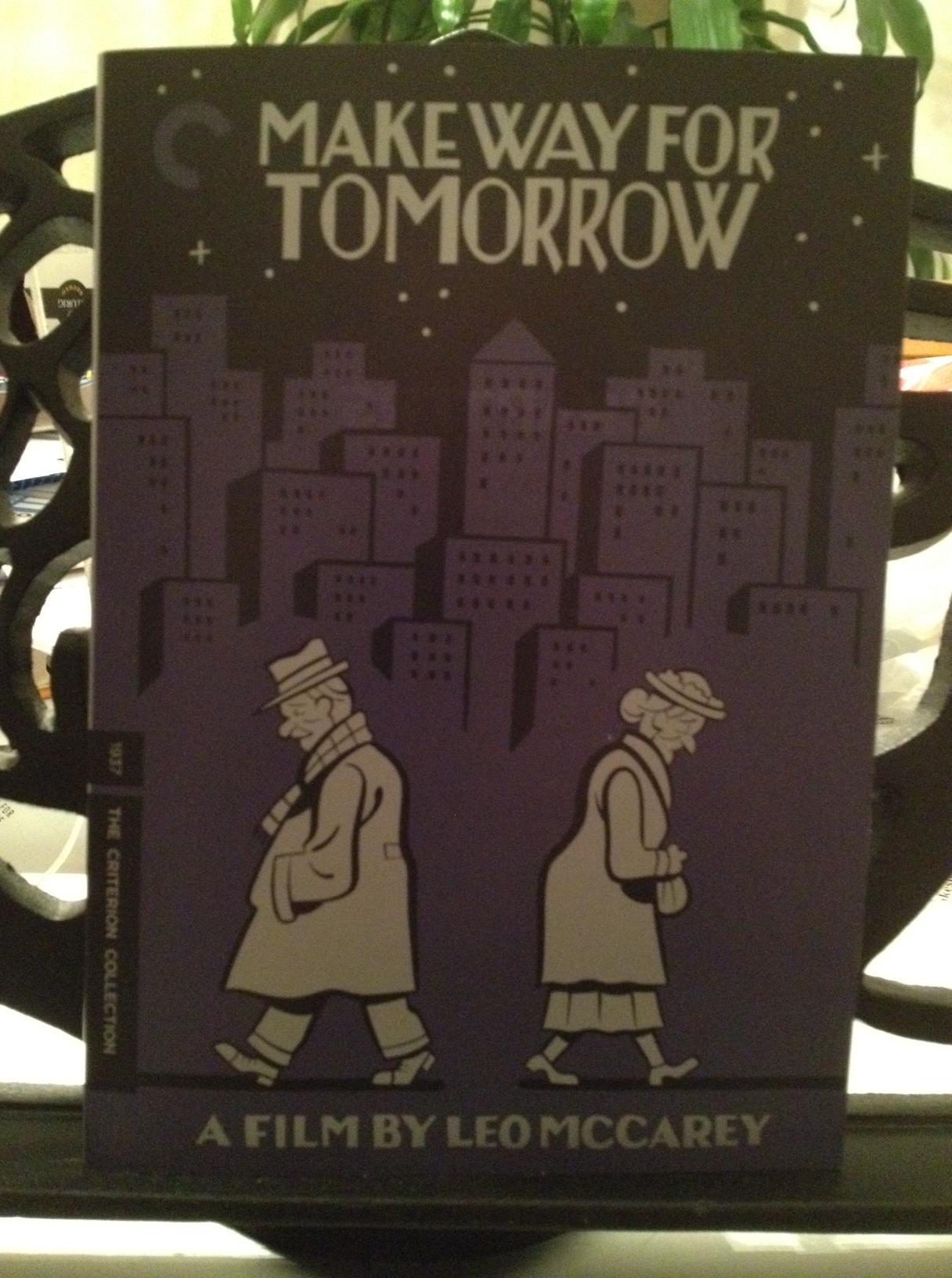
Last night I viewed a 1937 movie by Leo McCarey, Make Way for Tomorrow. It is a hidden classic, one of the most moving films I’ve ever watched. Here’s how the Criterion Collection describes it:
Leo McCarey’s Make Way for Tomorrow is one of the great unsung Hollywood masterpieces, an enormously moving Depression-era depiction of the frustrations of family, aging, and the generation gap. Victor Moore and Beulah Bondi headline a cast of incomparable character actors, starring as an elderly couple who must move in with their grown children after the bank takes their home, yet end up separated and subject to their offspring’s selfish whims. An inspiration for Ozu’s Tokyo Story, Make Way for Tomorrow is among American cinema’s purest tearjerkers, all the way to its unflinching ending, which McCarey refused to change despite studio pressure.
Lead actors Victor Moore and Beulah Bondi play Barkley and Lucy Cooper, the elderly couple who lose their home during the Depression. None of their five children are willing or able to take in both of them, so they must live apart with different offspring, several hundred miles away from each other. Family tensions arise, as both are seen as something of an inconvenience. In the meantime, Barkley and Lucy miss each other dearly.
Through the first two-thirds of the movie, I wasn’t sure I would end up agreeing with its “tearjerker” label. But during the last three scenes, which take place in New York City, I understood fully why Orson Welles said that Make Way for Tomorrow “could make a stone cry.”
Moore and Bondi didn’t win any awards for Make Way for Tomorrow. Of the popular movie performers of the era, they were well-regarded actors but were not considered stars. (Bondi is better known for playing Ma Bailey in It’s a Wonderful Life.) However, make no mistake about them: Their performances were masterful, and Bondi, especially, was heartbreakingly brilliant in this role.
A film for our times
Make Way for Tomorrow is much more than a classic old movie. It is wholly relevant to the challenging times in which we live.
The Great Recession and other setbacks have caused so many families to take in other family members. Our aging population has created hard caregiving decisions about where an elderly parent or relative might live. The movie reminds us that these questions, and the family dilemmas that come with them, are hardly new.
Make Way for Tomorrow is powerfully effective at getting us to look at life through the eyes of Barkley and Lucy. For those of us who have not reached senior status, it puts us in their shoes — and teaches us some important lessons in the process.
***
Beulah Bondi, it turns out, graduated in 1916 from Valparaiso University, my undergraduate alma mater! According to Dr. Richard Baepler’s history of the University, Flame of Faith, Lamp of Learning (2001), Bondi was “a leader in campus performance activities” and “participated in the lively theatre program.” Also, schoolmate Lowell Thomas, who would achieve considerable fame as a journalist and chronicler of the life of Lawrence of Arabia, “recalled that [Bondi’s] residence was a center of campus social activity.”
***
I watched the Criterion edition of the film. Criterion films are pricier than normal DVD movies, but they are beautifully produced and packaged with extras that enhance a viewer’s enjoyment and understanding of the movie. They typically include a booklet of essays about the featured film. I confess that Criterion editions are one of my consumer weaknesses, and periodically I hunt down the best prices I can find for them or wait for a sale at my local Barnes & Noble.
The communal experience of watching a great movie or TV show
One Sunday night during my first semester of law school at New York University, I had reached my fill of studying, so I decided to catch a movie. I checked the Village Voice and saw that “Singin’ in the Rain,” the classic 1952 musical starring Gene Kelly, was playing at the Theatre 80 St. Marks movie house in the East Village. I had never seen the movie before, but I thought I’d enjoy it.
So I trekked over to the theatre and plunked down my five bucks at the ticket window. I expected that the theatre would be pretty empty — I mean, c’mon, who goes to see a 30-year-old movie on a Sunday night? — but lo and behold, hardly any free seats remained!
Within a half hour into the screening, I knew I was watching what would become my favorite movie. I was thoroughly entertained, enchanted, and uplifted. And what added so much to the experience was that people were clapping, enthusiastically, after each of the iconic musical numbers, such as Gene Kelly’s signature performance of the title song (click above!) and Donald O’Connor’s dazzling, funny song-and-dance number, “Make ‘Em Laugh.”
I had never before been at a theatre where strangers cheered scenes of a movie in each other’s company. We reveled in that film, and obviously it made for a lifetime memory.
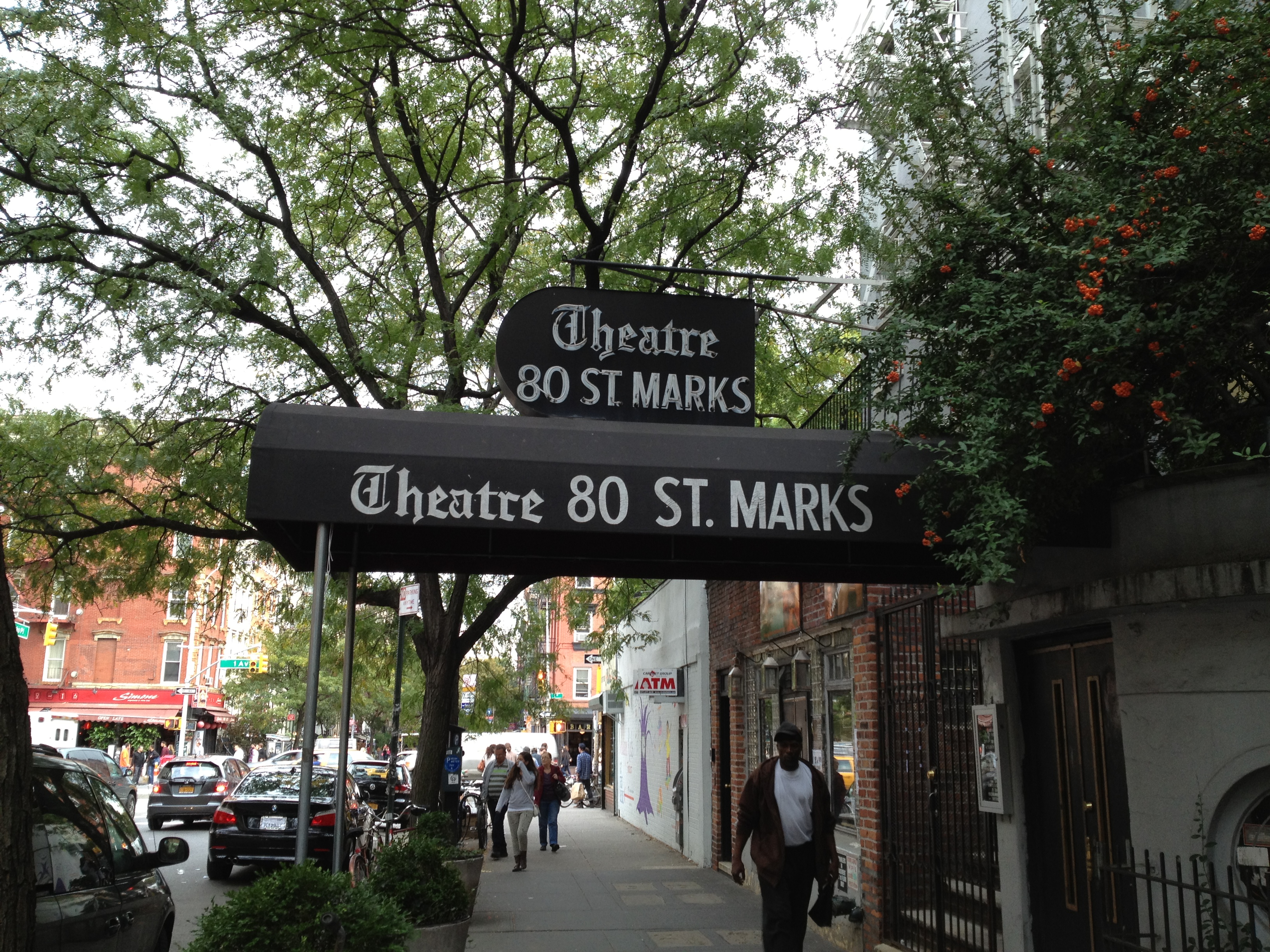
Theatre 80, East Village, Manhattan (photo: DY)
Going to see movies at Theatre 80 and other revival movie houses would become a staple of my New York experience. At times I would drag someone along, and on other occasions I’d just go by myself. How cool it was to watch classic old movies on a big screen!

Seasons 1 & 2 are on DVD
At the risk of sounding like the first year of law school was a cakewalk (rest assured, it wasn’t), another good memory of communing before a screen occurred every week in the Hayden Hall dormitory where most first-year law students lived. The dorm had a TV room, and dozens of us would gather to watch “Hill Street Blues” and “Cheers” as a group study break.
“Cheers” was at the start of its long run, and we enjoyed it. But it was “Hill Street Blues” — a cop show that anticipated just how good TV dramas could become — that most captured our attention. Largely unknown actors such as Daniel Travanti (Capt. Frank Furillo), Bruce Weitz (Sgt. Mick Belker), and Betty Thomas (Sgt. Lucy Bates) made for one of the best ensemble casts in television history, and the developing storylines maintained our interest from week to week.

Hayden Hall, NYU, Washington Square: Back in the day, lots of cockroaches, but a nice TV room (Photo: DY)
Such communal viewing experiences are few and far between these days. The old Theatre 80 still stands and is used for performing arts events, but it’s no longer a movie theatre. The widespread availability of VCRs pretty much killed off the revival houses, and with them went the experience of watching a classic movie in the company of others.
I have no idea if the TV room in Hayden Hall is still around, but even if it is, I’d be surprised if it plays the same community-enhancing role for the undergraduates who now live there. Most of them probably have their own TVs or use their laptops to watch the latest small screen programs.
As the rows of DVDs running along my bookshelves and my Netflix subscription attest, I appreciate being able to pop in a disc of a favorite movie or TV show. But I know it’s not the same as applauding with others for “Singin’ in the Rain” at Theatre 80, or rooting with friends for Captain Furillo and his squad to catch the bad guys and survive City Hall politics on “Hill Street Blues.”
Bye bye, Blockbuster

This week’s announcement that Blockbuster is shuttering its remaining video stores was greeted with a ho hum by most of the public. Some may have assumed that the company already had disappeared, recalling its 2010 bankruptcy filing. Others may have skipped past the news as they clicked into their Netflix queue.
In my case, of course, news of Blockbuster’s demise triggered a bout of remembrance….
As much as I love movies, I was a latecomer to home video. I didn’t buy my first VCR until the summer of 1992, when I was in my early 30s. But once the VCR was set up in my apartment, I went into video rental overdrive, and the Blockbuster on 6th Avenue near 8th Street in Manhattan got a lot of my business that summer (and thereafter).
It wasn’t the cool, artsy video store in the East Village, nor the cozy neighborhood shop where I lived in Brooklyn. Nevertheless, Blockbuster had movies, and lots of them. Its blend of the latest hits, popular older movies, and some of the classics was just right for me.
I visited Blockbuster 3-4 times a week that summer, always filled with anticipation over what I might discover. I’d start with the new arrivals in the front of the store, then went toward the back to check out the oldies. Rare was the time I walked out empty handed.
Businesses may come and go, and Blockbuster has had its run. But I’m not alone in remembering the fun of picking out a movie there and loading it into my VCR later that night, minutes after the pizza was delivered! Having that kind of easy access to thousands of movies — no more scouring the TV listings in hopes that a favorite would pop up — changed dramatically how we engaged the medium, and made for many enjoyable evenings at home.
***
Logo:Wikipedia
Scary stories: It’s Halloween time!

Once again, I’m all in for Halloween decorations! (Photo: DY, 2013)
As a kid, Halloween was all about trick-or-treating. It basically involved the short-lived joy of my brother Jeff and I returning home with our bags full of candy, dumping our catch on the kitchen table, and sorting out the A list candies from all the rest. A couple of weeks and a few gazillion grams of sugar later, it was over.
Truth is, I always felt kinda dopey dressing up in a Halloween costume. But you gotta do what you gotta do to get the annual haul of candy.
There also was the annual viewing of “It’s the Great Pumpkin, Charlie Brown.” It took a far second place to “A Charlie Brown Christmas,” but still managed to give us our fix of the Peanuts gang.
Nowadays…
I can’t recall the last time I went to a Halloween party, and more often than not I’ve found myself teaching on Halloween night. This year, scary movies are my way of ringing in the Halloween season. Here are the three I’ve viewed so far:
The Haunting (1963) (**** stars) — An old house in a remote part of New England has a bad history, and four paranormal researchers descend upon it to learn more. A very scary psychological thriller, enhanced by the black & white cinematography, starring Julie Harris and Claire Bloom.
Paranormal Activity (2007) (*** stars) — A young woman has been dealing with a paranormal entity for much of her life, and it’s not about to let her and her boyfriend (played by Katie Featherston and Micah Sloat) settle comfortably into this otherwise perfectly normal San Diego house. A low-budget movie that delivers some real goosebump moments.
The Ring (2002) (**1/2 stars) — I enjoyed this more than I expected after reading mixed reviews. Naomi Watts stars as a Seattle newspaper reporter investigating the unexplained death of a friend’s daughter. It’s already a “period piece,” as the story is driven by a VHS tape and use of extensive videotape technology.
I hope to squeeze in two more by Halloween, a couple of high-touted oldies that I’ve never seen before: The Uninvited (1944) (starring Ray Milland) and The Innocents (1961) (starring Deborah Kerr).
Ghosts and “chicken skin”
I can’t say for sure that I’ve ever seen a ghost or an apparition, but I believe they exist. I’ve never gone on an actual ghost hunt, but I enjoy going on ghost tours in cities I visit and reading about local ghost stories and supposed hauntings.
Over the years I’ve been on ghost walking tours in London, Cambridge (UK), Oxford, New Orleans, New York, Chicago, and Boston. I’ve also walked around parts of Hawaii, Gettysburg, PA, and Salem, MA, figuring ghosts must be hanging around. These occasional wanderings are supplemented by a small collection of books about ghosts and the supernatural that I enjoy dipping into now and then.
Technically, of course, none of this has much to do with Halloween, other than the general idea of scary stories. There’s a part of me that says you don’t wanna mess with this stuff too much, but I guess the “what if” is part of the fun of it all. It’s about what the Hawaiian folks call “chicken skin” stories, the tales that give you goosebumps.
******
Related post
 Musings of a Gen Joneser
Recent Comments