Too many road warrior gadgets?

….and add my iPhone, which took this photo
This week I took a super quick, one night trip to Washington D.C. for an awards banquet, and I found myself chuckling over how much gadgetry I was packing for my short sojourn: My MacBook, iPad, Kindle, and iPhone. (Yeah, I’m mostly Apple these days.) That means four charging cables as well.
That’s a lot of gear for a 24-hour trip!
Curiously, on balance, I’m a light traveler. For all but the lengthiest of trips, I will travel with a backpack and a roll aboard bag that fits comfortably into even a small overhead aircraft bin.
So why all the gadgets?
For starters, the laptop is a work machine. The tablet is my most-used device when I’m en route anywhere…the subway, a short pitstop on a walk somewhere, and certainly out-of-town trips. The cellphone, while perhaps my least used hardware, is invaluable at times and takes pretty good photos. And although I much prefer printed books to an e-reader, the latter allows me to travel with the equivalent of a small library.
A pain in the ash
Maybe I now err on the side of taking all these devices with me because five years ago, I was stranded in Germany for several days without them and felt quite disconnected as a result. In packing, I had decided that for a short international trip, I could leave my laptop at home. Dumb move.
You see, I was participating in a conference at the University of Augsburg, and it so happened that during that time, the big volcano in Iceland was spewing out ash clouds that swept across Europe and shut down the airspace.
Now, there are worse places to be stuck than the beautiful medieval city of Augsburg, but I had not planned on an extended stay. Because my hotel had only one guest computer and the proprietor looked sternly at anyone spending too much time on it (i.e., me), I made multiple treks to the local Internet cafe in order to catch up on e-mails and keep track of the news.
After all, in a pinch, you can do some laundry in the sink or the tub, but you can’t turn your scrubbed out socks into a computer.
Next Gen???
Perhaps the march of technology will allow me to consolidate functions into fewer devices. My current gadgets are of slightly “older” vintage — iPad 2, iPhone 4, etc. — so I’m thinking it’s time to be on the lookout for an upgrade. I was looking covetously at the newly announced iPad Pro, but I’ll wait to see the reviews.
In the meantime, I’ll continue to pack all my toys whenever I’m about to hop on a plane or a train.
***
Related post
Have our gadgets sapped some of the adventure out of travel? (2014)
A quick visit to Hyde Park, Chicago

Yours truly in Hyde Park (Photo by Sharon Franklin Driscoll, 2012)
During my recent visit to Northwest Indiana, I made a quick side trip to the Hyde Park section of Chicago, largely to browse through some of the bookstores near the University of Chicago.
As venerable universities go, U of C isn’t that old, having first appeared on the scene in 1892. However, its founders wanted to create an immediate impression that this was a place for serious study and research. That goal was partially expressed in buildings that, according to the University’s online history page, “copied the English Gothic style of architecture, complete with towers, spires, cloisters, and gargoyles.”
In other words, Chicago wanted to look more like Cambridge and Oxford, not Harvard and Yale.
And you know something, they pulled it off. Hyde Park has some of the most awesome architecture of any American university neighborhood. While the U of C has some edifice flops from the 60s and 70s (as do Cambridge and Oxford), the overall look and feel of the area is learned, old, and quiet — a sharp contrast to many other parts of brawny Chicago.
The previous site of the Seminary Co-op Bookstore, since moved to roomier digs, is a perfect example. A few years ago I met up with my long-time friends the Driscoll family for a Hyde Park visit, and the bookstore was a primary reason for our gathering there. Sharon Driscoll, who is quite the amateur photographer, took the photo of me above in the Co-op building. It looks like I traveled back in time — and fortunately, my backpack made it there with me!
As for the University of Chicago, even in this era of growing vocationalism in higher education, it has managed to maintain its serious devotion to ideas. I’m sure it has made compromises to incorporate more career preparation, but it still remains a place where learning and scholarship are valued for their own sake. That is an increasing luxury in higher ed today.
A nostalgic traveler’s dilemma: Explore new vistas or retrace old steps?
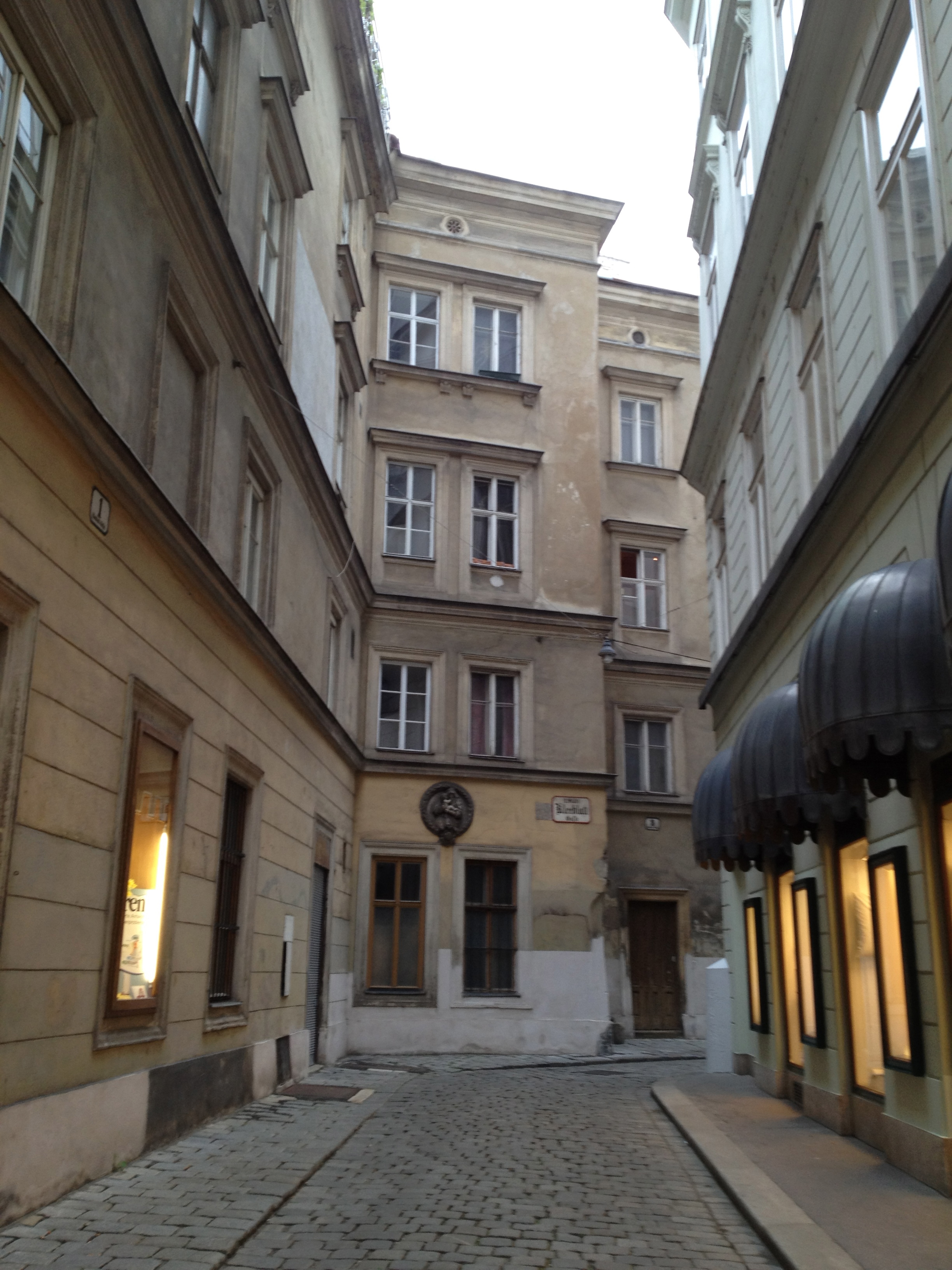
Vienna, Austria: I love turning a corner and finding an old city street
Travelers who suffer from chronic bouts of nostalgia (i.e., me) may face a familiar dilemma: Given a choice, do we explore new vistas or revisit old haunts? Do we step out in search of fresh discoveries, or do we retrace steps from back in the day?
When I booked my July trip to Vienna to attend the week-long International Congress on Law and Mental Health, I added a few days after the conference to do some sightseeing. I assumed that I would spend that extra time outside of the city.

The gardens of Schonbrunn Palace, Vienna
My first and only previous visit to Austria occurred way back in 1981. Vienna, Salzburg, and Innsbruck were part of my whirlwind tour through western Europe after a semester abroad in England.
Of those cities, Salzburg — small, manageable, and with spectacular scenery — was by far my favorite. I even enjoyed “The Sound of Music” bus tour that my friend dragged me on, for it included many of the city’s most beautiful sites. By contrast, while I liked Vienna, it didn’t rank as a highlight of that leg of my sojourn.
So when I planned this current trip, I figured that I would squeeze in a quick visit to Salzburg during my add-on days. Hey, maybe I’d even join the hordes of other American tourists for a redux of “The Sound of Music” tour!
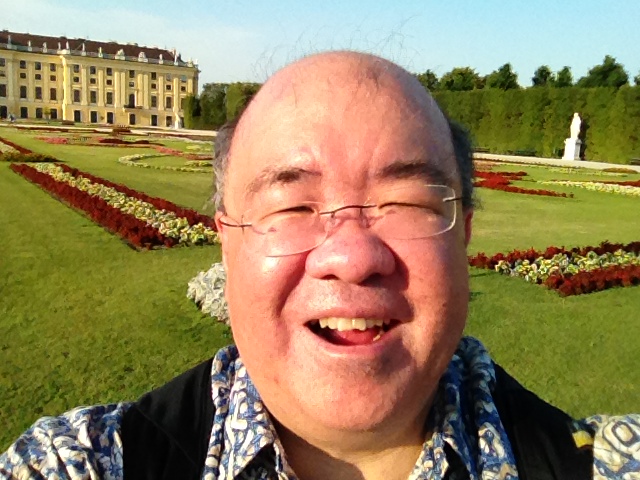
A Schonbrunn Palace grounds selfie
Ultimately, however, I decided to stick to Vienna. To my great delight, Vienna came alive for me this time around. I now understand why it is such a global attraction. The heart of Vienna is simply beautiful, with stunning architecture, public sculptures, and old city streets seemingly at every turn. The city also offers relatively inexpensive eateries and cafes serving up hearty food and beverages.

Hearty (if not healthy) dinner of schnitzel, fries, and salad at a cafe near my hotel
Vienna exudes a sense of cultural and intellectual history. Given that I was attending a law and mental health conference, I considered it semi-obligatory to visit the Sigmund Freud residence and museum. Although little of the original interior decor remains, there were plenty of exhibits and photographs to give you a sense of where he lived and practiced during the early 20th century.

The stairwell leading to Dr. Sigmund Freud’s practice and family residence
An exhibit at the University of Vienna presented an unexpected opportunity to roam around the main building of one of Europe’s oldest universities, founded in 1365! For an urban campus, it was a notably serene academic setting.

Courtyard of the Main Building of the University of Vienna
When I first visited Europe in 1981, I had no idea that many wonderful singers and musicians demonstrated their talents on the streets of great cities.
Since then, I have been drawn to street performers. At first glance, I wondered if this man, with his walking stick, bucket, and visual impairment, was panhandling. But then he turned on his little music player and started to sing…wow…his voice was superb. It was a privilege to tip him a few Euros.
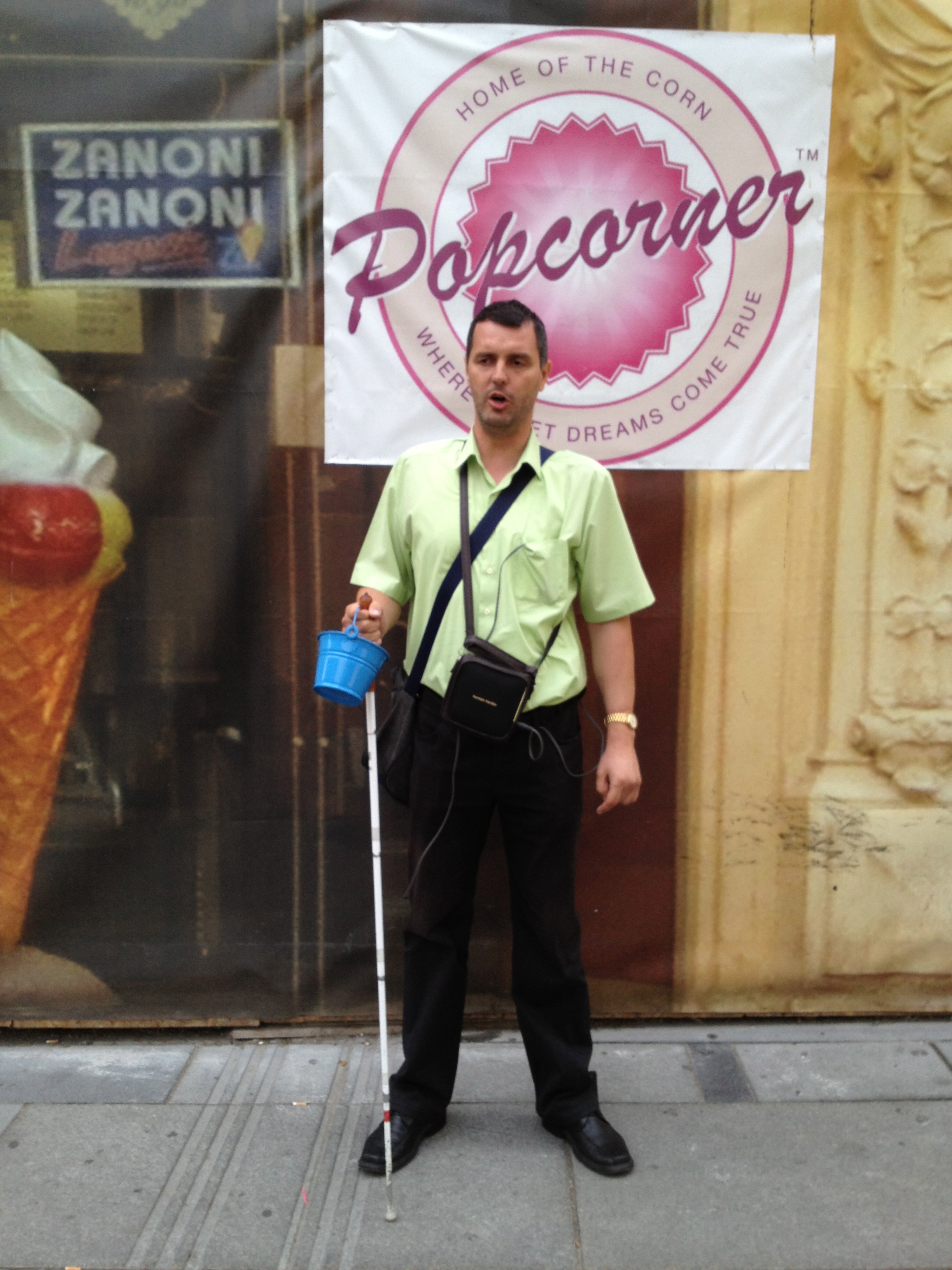
A great singer in one of the city squares
Of course, I also had to hunt down the city’s English language bookstore, Shakespeare and Company, tucked away in a nook of old Vienna that felt like a step back in time.

In the heart of old Vienna is this neat little bookshop
Thanks in part to the conference itself, I experienced a bit of Vienna’s classical music scene. Here are three of my friends and fellow conference participants, Shelley, Carol, and Nicole, in the pews of St. Stephen’s Cathedral, as we awaited the start of a classical music concert organized for our group by the International Academy on Law and Mental Health.

Warm smiles for the camera before the concert begins
And here’s what that stunning cathedral looks like. Listening to a first-rate music performance in such a historic site was a treat.

Inside St. Stephen’s Cathedral
The unsung star of Vienna was its subway system, which proved to be dependable, fast, and easy to navigate. In visiting a big city, I usually find that learning the basics of its subway system early on pays dividends throughout the trip. This was no exception!

Vienna’s U-Bahn system was fast and reliable
Throwback Thursday: Old haunts and lasting friendships
I made an extended weekend trip to northwest Indiana for a long overdue visit with friends and family, one filled with both nostalgia for the past and appreciation for enduring friendships renewed.
Concededly, I am positively masochistic when it comes to self-inflicted nostalgia. During much of this trip, I had my rental car radio tuned to an oldies station that played songs mostly from the late 70s through early 80s. Like many, I associate old Top 40 songs with memories of earlier days, so I basically had a series of mental videos going through my head, prompted by whatever was on the air.
I put the nostalgia machine on overdrive when I had some time to kill before heading off to O’Hare Airport. I decided to spend a few hours driving around to old haunts.

Here’s our early boyhood home in Grffith, Indiana. When our family moved to the neighboring city of Hammond, our aunt, uncle, and cousins moved from Ohio to Griffith to take our place in this home!
It started with a visit to our early boyhood home in small-town Griffith, Indiana, where my brother Jeff and I spent our early years with our parents. I had not been there in many decades. I was stunned to see a cozy little block with a narrow street. In my memories of being five years old, it is a big, humongous block with a wide street!
I also stopped at the Hammond, Indiana house that was home for most of my childhood through teen years. No real surprises there…it and the surrounding homes were much more as I had remembered them.

Now a Dollar Store in Highland, Indiana, this was the site of the warehouse-style outlet of the drugstore chain I worked for during an interim year between college and law school.
For some odd reason I wanted to revisit the sites of jobs I had worked before moving to New York for law school in 1982. During several college summers and holiday periods, as well as an interim year between finishing college and leaving for law school, I worked for Ribordy Drugs, a local drugstore chain that once had a couple of dozen stores dotting northwest Indiana.
It was standard low-paid retail store work, unloading delivery trucks, tagging merchandise, and stocking shelves. Although I grumbled about it at times, I now look back and realize that those experiences helped me to develop a work ethic.
When I graduated from Valparaiso in 1981, I intended to take an interim year before moving on to law school. Alas, so-called “professional” jobs were not in large supply for new graduates in recession-burdened Northwest Indiana. So I ended up returning to Ribordy Drugs, this time working at its new warehouse-style store, a local precursor of the big box chain stores that now dominate the retail outlets in the area. I worked there more-or-less full-time, while also doing some part-time reporting for a local community newspaper.
It was not the most exciting year of my life, but because I was filing my law school applications, it was filled with anticipation. My original plan was to head to the west coast, but when an acceptance letter from New York University arrived in the mail, I knew that I wanted to go there. In August 1982, I would leave for NYU and the Big Apple.

Mini-reunion of Valparaiso University friends and family members, in Valparaiso (photo by Don Driscoll)
But let me get back to people. The photo above is from a mini-reunion last Friday of college friends from Valparaiso University and assorted family members. The company of Hilda, Mark, Brad, Don, Maggie, Dave, Dorothy, Jim, Elena, Abby, and Matt made for a most enjoyable evening. The many smiling faces in the photo were more than snapshot poses. We were laughing a lot, unearthing stories from back in the day and sharing news of the latest goings-on in our lives.
At my motel, I also bumped into another group of VU alums holding their own little reunion, including friends Sheralynn (and a most articulate contributor to a running e-mail exchange about the suspense series 24 when it aired) and Rachelle (fellow study abroad participant). Their sorority was doing a kind of Chicagoland summer reunion caravan that concluded with a visit to their alma mater. Getting to see them was an unexpected treat.
The next day, I drove to Hammond, where I joined with my brother Jeff and old friends Mark and Karen for a meal at the House of Pizza, a restaurant than enjoys legendary status for its uniquely excellent thin crust pizza. Mark and I have been friends going waaaay back to the 3rd grade. And all four of us have been going to House of Pizza since we were kids. Sharing a meal at one of Chicagoland’s many superb pizza places has become a sort of tradition during visits there.
I then met up for a visit with my long-time friend Katherine (going back to high school), who first took me to the local Community Veteran’s Memorial, featuring some very well done historical exhibits and timelines. We then went to one of the local casinos (none of which were around when I grew up there), where we enjoyed a first-rate meal and won $10 playing the nickel slots. (I cannot recall the last time I was in a casino. What a surreal world onto itself.)
***
So here’s the lesson, especially for us nostalgia freaks: Old haunts are what they are, places of days gone by. It may be meaningful to revisit them, but they are of the past. When it comes to people, however, it’s about the present. The relationships built over the years may have their roots in long ago, but when they remain vibrant, and thankfully stripped of our my early immaturities (er, at least some of them), that is a pretty cool thing.
Classic movie report: July 2015
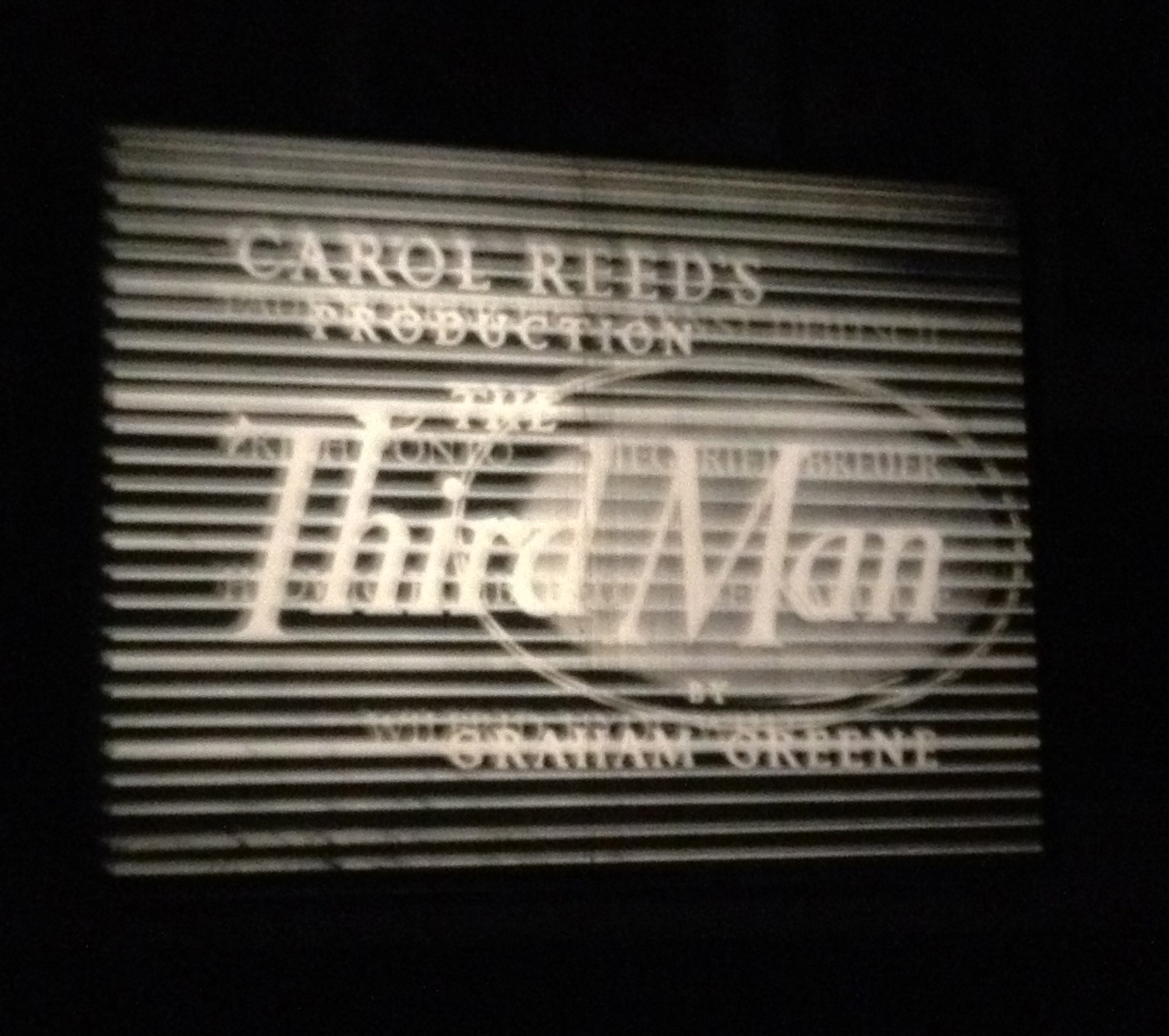
A film clip by the co-founder of the Third Man Museum in Vienna, running on an old-style projector.
I declared as one of my New Year’s resolutions that I would watch more classic old movies, so each month I’m devoting an entry to how I’m doing with it. This month’s selections have a distinctly Austrian flavor to them, inspired by a week-long visit to Vienna this month to participate in a conference on law and mental health.
The Third Man (1949) (4 stars out of 4)
This is widely recognized as one of the all-time best movies, a story set in postwar Vienna, with Orson Welles, Joseph Cotten, Trevor Howard, and Alida Valli in starring roles. IMDb neatly sums up the plot without giving anything away:
Pulp novelist Holly Martins travels to shadowy, postwar Vienna, only to find himself investigating the mysterious death of an old friend, black-market opportunist Harry Lime.
The other star is Vienna itself, largely shorn of its glorious beauty and instead portrayed as city of intrigue and recovery in the years following the Second World War.
My first sightseeing visit in Vienna was not to an art museum or classical music venue, but rather the small Third Man Museum, dedicated to the movie and life in postwar Vienna. It was time very well spent. Here are some photos from the museum:

Still shots and memorabilia from the movie.
If you know the movie, then you know what this is about!

Wonderful zither concert by Viennese musician Cornelia Mayer…again, if you know the movie, then you know this instrument!
The Sound of Music (1965) (4 stars)
This beloved, iconic movie musical, set in pre-war Salzburg, is about as wide a contrast from The Third Man‘s depiction of Austria as one could imagine. Starring Julie Andrews and Christopher Plummer, the renowned classic is celebrating the 50th anniversary of its release. In addition to offering songs that are firmly embedded in our popular culture, the film makes maximum use of the beauties of Salzburg.
Back in 1981, after finishing a semester abroad program in England, I made a quick tour of the European continent, and Salzburg was one of my stops. Even though at the time I had never seen the movie, I allowed myself to get dragged onto The Sound of Music bus tour by one of my traveling companions. While she was thrilled at every recognizable location from the movie, I just kept taking pictures, figuring that someday I’d watch the movie and then flip back to my photos to compare. I’m glad I did.
Here are some of those old snapshots.
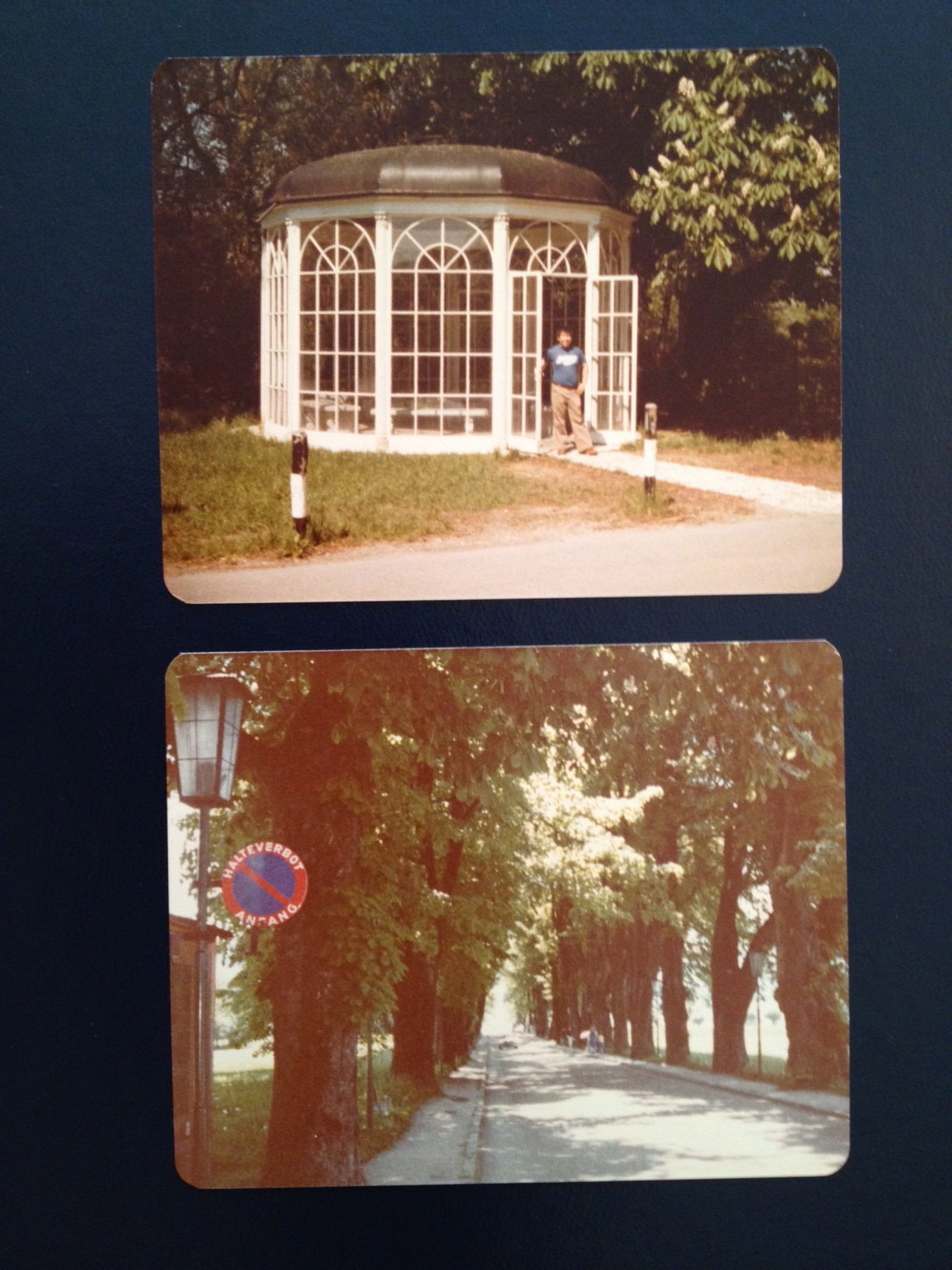
Top: The famous gazebo. Bottom: The road where the Von Trapp kids are up in the trees.

Top: The Von Trapp family home. Bottom: The cemetery in the abbey.
***
Photos: Third Man Museum (DY, 2015); Salzburg (DY, 1981).
Throwback Thursday: Vienna waits for me

Prater Wheel, Vienna (Photo: DY, 1981)
On Thursday evening, I’ll be hopping on a plane for Vienna, Austria, for the biennial International Congress of Law and Mental Health, a week-long event that draws some 1,000 people from around the world. I’ll be presenting a paper on continuing legal education, attending plenty of panels, and enjoying the company of friends and colleagues who are immersed in research and practice related to law and psychology.
Traveling to Vienna pushes my nostalgia buttons. In May 1981, it was a stop on a brisk trip through parts of western Europe, following completion of a semester abroad in England via my college, Valparaiso University. The grainy photo above was taken from the famous Prater Wheel, a giant Ferris wheel built in 1897. If I recall correctly, I spent three days in Vienna with one of my traveling pals from the VU group.
That European jaunt was one of the most memorable experiences of my life. Traveling alternately on my own and with members of our group, I visited Paris; several towns in Switzerland; Innsbruck, Salzberg, and Vienna; and finally Munich and Berlin.
The semester abroad also happened to be the final term of my senior year, and I was full of excitement and uncertainty as to what would come next. But even with all of my heady aspirations for the road ahead, I had the good sense to drink in a lot of this overseas opportunity. Although my cultural immaturity caused me to pass on some pretty significant sights during this sojourn abroad, those five months made a lifelong imprint on me.
Back to today: As usual, I find myself packing and planning at the last minute. However, I know that I’ll get a lot out of this trip. I’ll do so as a much more grounded person than the anxious young man who first saw Vienna several decades ago. The march of time brings its blessings.
***
As a little sidebar to this post, click and enjoy Billy Joel’s “Vienna” (1977). And to learn how the famous singer/songwriter did his homework about Vienna in writing this number, check out this interesting Wikipedia entry.
Visits to London
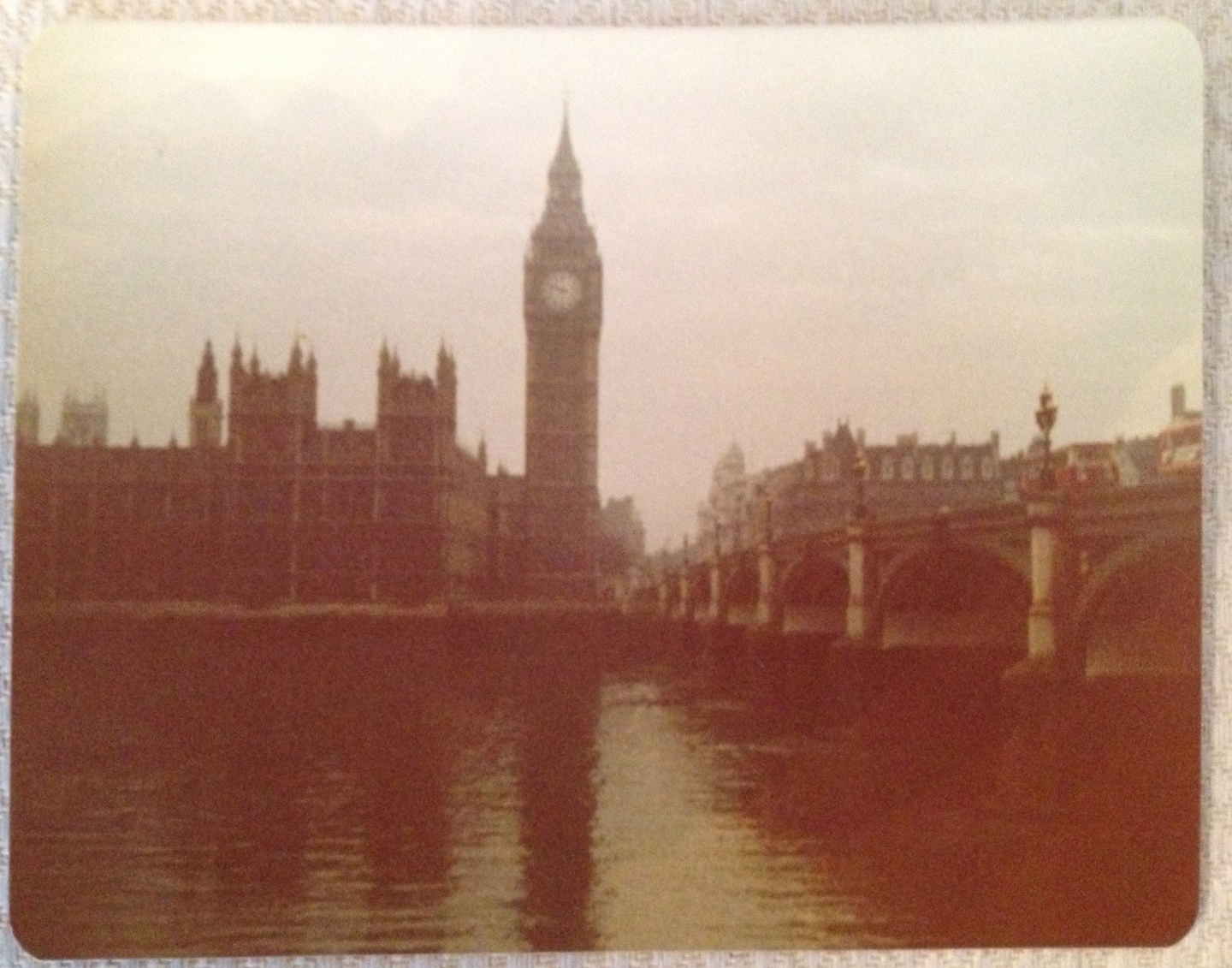
A grainy image alongside my sharp memories: My first ever snapshot of London (January 1981)
London has long been one of my favorite places, a huge yet walkable city steeped in history, tradition, culture, and entertainment. Not too long ago, a week-long trip to London was easier and cheaper than making similar visits to many locations in the U.S., at least from the East Coast. My fascination with the city and the relative affordability of traveling there made for some great visits during my younger days.
Jonesing for a return to London
During a formative semester abroad in England (1981), I visited London several times and was awestruck by it. It was just this fascinating, intimidating colossus. After that semester, I often daydreamed of returning. However, as a law student and then as a Legal Aid lawyer in New York City, spare cash was in extremely short supply.
Throughout the 1980s, London had this weird hold on my imagination from afar. I even was drawn to “Ticket to London, ” a role-playing game for my Commodore 64 computer, featuring the city’s major landmarks and geography. The simple graphics allowed me to “interact” with the city, which felt like the closest I would ever get to going back there.
But in 1990, an opportunity to return presented itself. I was enrolled part-time in a master’s degree program in labor studies at Empire State College in New York, which was co-sponsoring a two-week, interactive study tour in British public policy, hosted by the University of Bristol. Given a chance to earn degree credits, see something of the U.K., and spend a few extra days in London, I signed up! (While still cash crunched, I had learned to juggle credit cards by then.)
It was a great trip. The formal program was excellent. I learned a lot about British public policy and labor relations, and I enjoyed the company of my American and British colleagues. Equally important, I was able to spend a few blessed days in London. The way I spent my time there — seeing a play with friends from my Bristol group, visiting museums, taking a walking tour, and searching out bookstores — would set the pace for future trips.
Spring Break trips to London
That return visit to England whetted my appetite, and fortunately air fares and travel costs were very agreeable. During the early to mid 1990s, I could get a round-trip ticket from either New York or Boston to London for around $300, book a safe, clean, modest B&B room for less than $50/night, and enjoy the city fairly inexpensively.
I did these London trips during spring breaks, usually on my own, occasionally meeting up with friends along the way. The total cost was a meaningful dent in a young professor’s budget, but it was a very good deal for a week’s visit to such a grand city.
I’ve always been a creature of habit, and my visits to London mixed routines with a little variety. Here are the recurring themes:
Walking tours
A quality walking tour is a great way to explore a city. A variety of commercial tour operators provided fun and affordable opportunities to see and learn about London. My preferred walking tour company was London Walks, which I’m pleased to see is still around. With London Walks, I went on ghost walks, crime walks, “hidden London” walks, and, of course, Jack the Ripper walks.
Of the various tours offered, the Ripper walk was my favorite. The city’s East End — site of the Ripper murders — was still rather gritty in the early 90s, which added to the walk’s authenticity. During my London visits, I went on several Ripper walking tours, some of which were led by were serious researchers tackling the still-unanswered question of the killer’s identity. (Sidenote: On any given Ripper walk, I would be one of dozens of fellow Americans, causing me wonder why we hadn’t had our fill of serial killers on our own side of the pond.)
One Ripper tour (not London Walks) turned out to be an unintentionally comic relief version. The guide showed up somewhat inebriated, a condition exacerbated by the ritual pub stop that is part of a typical London walking tour. Let’s just say that his commentary caused some to walk away in exasperation, while the rest of us stayed out of pure amusement and tried not to laugh too loudly.
History
The 1990s overlapped with the 50th anniversary observations of Britain’s involvement in the Second World War (1939-45), and as a history buff this was tailor made for me. I made return trips to the Imperial War Museum, which houses a fascinating collection of artifacts and displays about both world wars. Skillfully and tastefully curated, these exhibits made for one of the best historical museums I’ve ever visited. Also on the WWII theme, I went to Winston Churchill’s underground war rooms, where Britain’s leaders plotted military strategy while the city above faced attacks by Germany’s Luftwaffe and long-range rockets.
Further drawn by the city’s earthy history, I enjoyed the Museum of London, the Old Operating Theatre near London Bridge, and the Clink Prison Museum. Let’s just say that all these sites helped to illustrate how life for so many denizens of Jolly Olde England wasn’t all that jolly. Philosopher Thomas Hobbes‘s characterization of life being “solitary, poor, nasty, brutish and short” comes to mind.
South Bank
Its lack of aesthetic appeal notwithstanding, I loved spending time in the concrete jungle of the city’s South Bank arts complex, running along the Thames. I would arrive in the late morning to buy a cheap day ticket to a play or show at the National Theatre later that night. I would then spend the rest of my day poring over the open air used book stalls next to the theatre and hanging out at the nearby Festival Hall area, where I could buy a sandwich, catch a free lunchtime concert, or read a book.
Although I lived in New York for 12 years, my appreciation for the theatre was stoked in London, and the National Theatre had a lot to do with it. Starting with my collegiate semester in England, and proceeding into those 1990s visits, I was fortunate to see a lot of first-rate stuff there, including The Elephant Man, Murmuring Judges (a devastating portrayal of the British criminal justice system), and revivals of Oklahoma! and Carousel.
Bookshops
London is a book lover’s delight, or at least it was prior to the emergence of the same online competition faced by America’s brick and mortar booksellers.
Whether we’re talking huge bookstores selling new titles, musty old used bookshops, specialty sellers, or even museum gift shops, London’s offerings were the biggest threat to my budget. My purchases also made it hard to pack for the trip home. I recall two occasions when I had to buy an extra bag in order to bring my new acquisitions to the States.
***
Looking back, I realize how my 1990s visits to London transformed this giant metropolis into a comfortable place that balanced familiarity with discovery. This process was eased by the city’s subway system — the Tube — which could connect me to just about anywhere I wanted to go.
Since those trips during the 90s, I’ve been back to London on several occasions in connection with conferences and continuing education programs in the U.K. I look forward to returning again someday, though no longer with the haunting sense of yearning that drew me back there some 25 years ago. London is now a part of who I am, regardless of how many times I go back there.
***
I’d been working on this post for some time, but the inspiration to finish it up was this neat Yestervid.com video (about 11 minutes) containing some of the oldest known film footage of London, going back to the late 1800s and early 1900s. If you enjoy London, then this is a treat:
My fascination with Abraham Lincoln

From my modest Lincolnania collection: Reprints of Harper’s Weekly following the assassination and the playbill from the fatal night (Photo; DY)
One hundred and fifty years ago today, President Abraham Lincoln (1809-65) died of a gunshot wound to the head, fired by Southern sympathizer John Wilkes Booth the night before at Ford’s Theatre in Washington D.C. It’s a story that gives me chills.
I remember when I realized that Abraham Lincoln is one of the most fascinating, compelling figures in history. It was 1986, the year after I graduated from law school, and I made a quick trip to Washington D.C. to see friends and play tourist. The latter included visits to the Lincoln Memorial, Ford’s Theatre, and the Petersen House across the street from the theatre, where a wounded Lincoln was carried after the shooting and cared for until he died.
Ford’s Theatre and the Petersen House were especially powerful and haunting; I simply felt something there about the tragedy, sadness, and enormity of what happened. I bought a couple of Lincoln biographies and dove into them. By the time I returned home to New York, Lincoln was very much on my historical radar screen.
The draw of Lincoln has continued for me, coupled with a like fascination over America’s Civil War. It is a deep interest shared with friends. For example, in recent years, I’ve accompanied my long-time friends and fellow history buffs the Driscolls (yeah, the whole family — too numerous to list out here!) to the Abraham Lincoln Presidential Library and Museum in Springfield, Illinois, as well as to other Lincoln sites in the city, including Lincoln’s law office.
Among great historical figures, the most compelling thing about Lincoln to me is his humanity. We know today that he suffered from severe bouts of depression, dating back to his earlier years. With his humble roots, we might call him a self-made man. He became a lawyer largely by private study, in the days when one could become an attorney without going to law school.
The United States was breaking apart between North and South when he assumed the Presidency in 1861. He carried the weight of the world on his shoulders during the Civil War, while dealing with the death of a young son due to typhoid fever and the devastating effects of that loss on his wife, Mary.
Perhaps to counter his sorrows, Lincoln had a sharp sense of humor and loved to tell humorous stories to punctuate his points, to the exasperation of more “refined” senior advisors and Cabinet members. His beliefs about race, while in some ways advanced for his time, would fall short of modern standards of political correctness. He was also a shrewd politician who knew how to get things done, even if it meant breaking bending the rules a bit.
So many great historical figures seem personally inaccessible to me. But it seems that Lincoln could carry on a conversation with just about anyone, and if we were to go back in time and bump into him on the streets of Washington (which he often walked, without security escort), I bet that we could strike up a chat with him, too.
***
Related post
“Had Anne Frank been able to survive for just a few more weeks…”

Anne Frank House museum, Amsterdam (Photo: DY, 2013)
It has been one of history’s heartbreaking “what ifs”: What if Anne Frank had been able to survive the typhus that would claim her for just a few weeks longer, when the Allies liberated the Bergen-Belsen concentration camp where she was imprisoned? Would she have recovered under the care of the Allies? If so, what would’ve become of her life and her diary?
It had been estimated that Anne and her sister Margot died in late March of 1945, and the Allies liberated the camp on April 15. Hence, many have contemplated the excruciating possibility that the Frank sisters barely missed being rescued.
Now, however, the Anne Frank House museum in Amsterdam estimates that she died sometime in February. From an Associated Press story by Mike Corder (via Yahoo! News):
Anne likely died, aged 15, at Bergen-Belsen camp in February 1945, said Erika Prins, a researcher at the Anne Frank House museum.
***
But [Prins] said the new date lays to rest the idea that the sisters could have been rescued if they had lived just a little longer.
“When you say they died at the end of March, it gives you a feeling that they died just before liberation. So maybe if they’d lived two more weeks …,” Prins said, her voice trailing off. “Well, that’s not true anymore.”
You can read the full article for details on how the new approximate date of their deaths was determined.

The story of Anne Frank can do numbers on us. We may engage in rescue fantasies, wondering how Anne could’ve held on just a little while longer, until the camp was liberated. We may speculate, with twinges of guilt, whether her diary would have ever been published had she made it through the war.
So now the likelihood is that when Anne and Margot Frank were suffering from typhus, liberation was not just a few weeks away.
This can trigger questions that cross into the religious or metaphysical, with still more discomfort attached: Did Anne Frank die so that millions could be moved by her diary?
***
In 2013 I visited the Anne Frank House museum. I was participating in the biennial Congress of the International Academy of Law and Mental Health, held that year in Amsterdam, and this was the one “must see” item on my list for a first-ever visit to the city.
The exterior pictured above doesn’t give you a hint at what’s inside. The interior has been recreated to show us how Anne and seven others lived in hiding for some two years. I am among countless others to say it, but it was a very moving experience to stand in the same cramped spaces of the “Secret Annex” where they lived before they were discovered and arrested.
For me, the most chilling part of the tour was walking up the long, narrow stairwell to the Annex, located behind the moving bookcase that covered the entrance. It was the same walk their captors took to find and arrest them. Of course, it also was the stairwell taken by the residents of the Annex as they were being escorted out of their hiding place.
***
You may take a virtual tour of the Annex here.
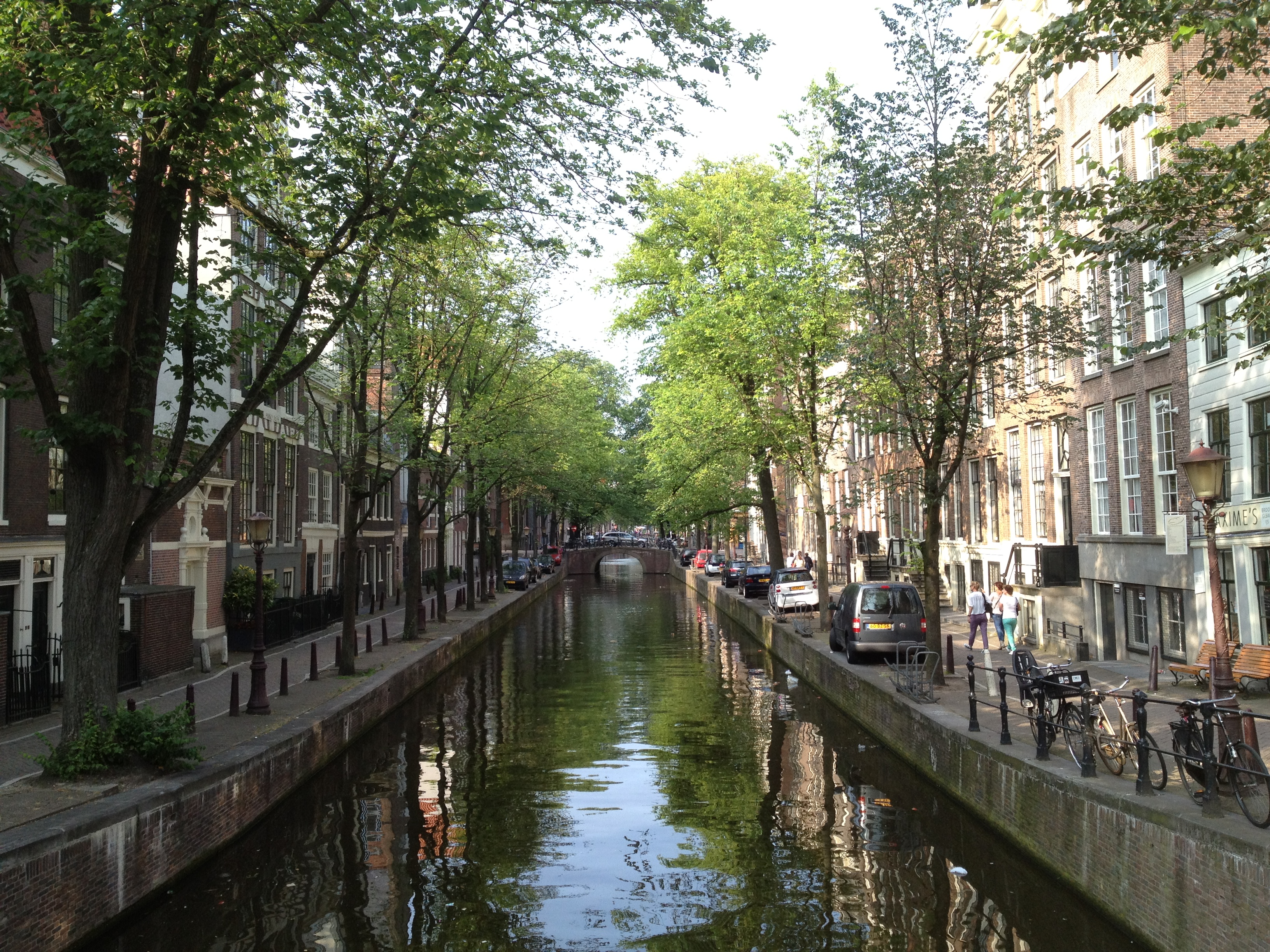
Anne Frank’s Amsterdam: Let’s finish this piece with the beauties of one of the city’s canals (Photo: DY, 2013)
Bowing to my middlebrow appetite: Give me a good diner any day
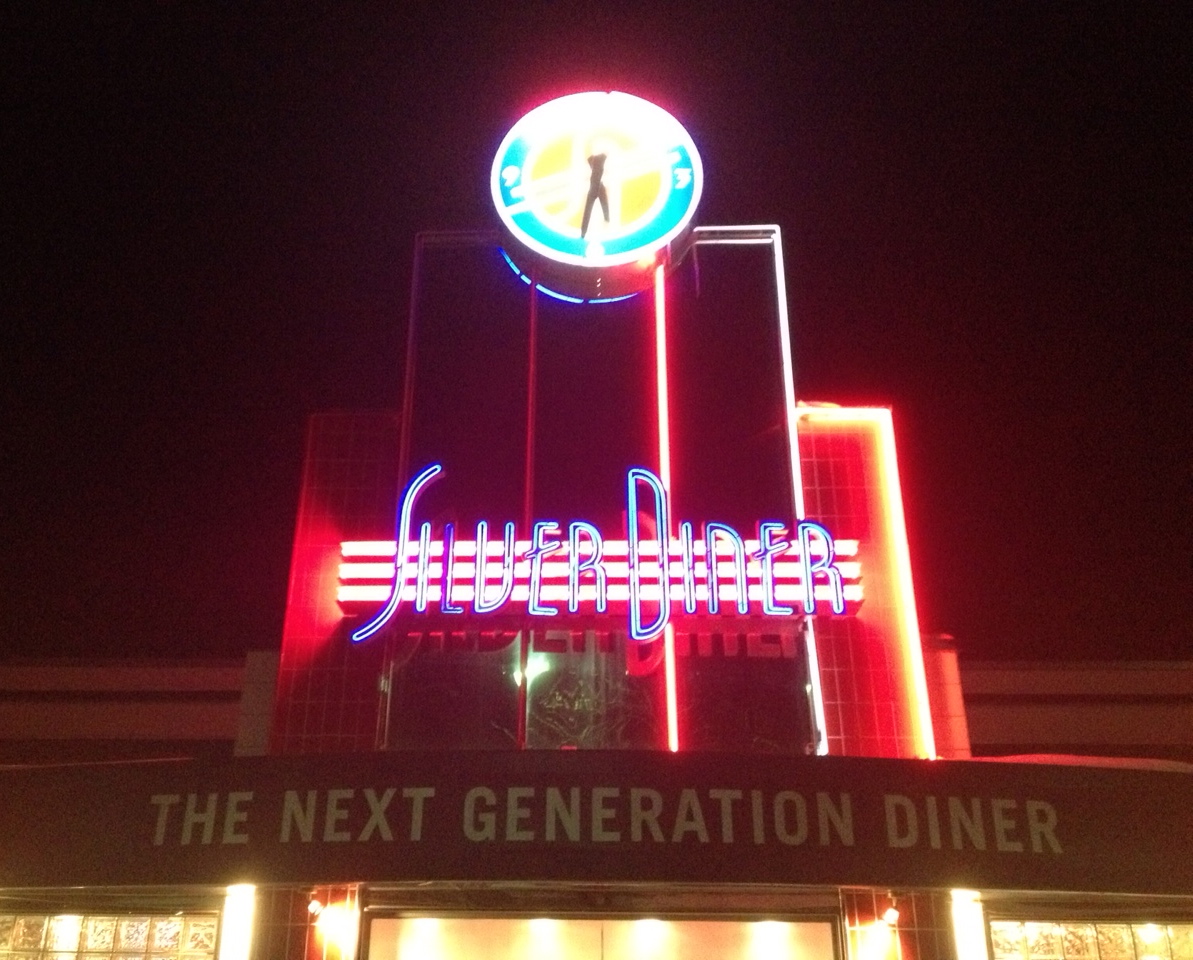
Silver Diner, Reston, Virginia (Photo: DY)
When it comes to food, my tastes are distinctly middlebrow. Fancy French meals? Nah. Pricey steakhouses? Ok, but I don’t crave them. A place setting with multiple forks, spoons, and glasses? Too confusing.
If there’s a type of restaurant that best captures my appetite, it’s a good quality diner, with a menu featuring sandwiches & burgers, comfort food entrées, salads without too much junk in them, and day-long breakfast offerings.
Oh, I can enjoy pizza and seafood. And Asian food agrees with me, as do many other ethnic cuisines.
But there’s something about diner fare that I just like.
Pictured above is the Silver Diner in Reston, Virginia, part of a small chain in the Washington D.C. metro region. When I visit friends in Northern Virginia, a meal at the Silver Diner is usually part of my stay. Breakfasts, burgers, dinner platters, desserts — all very good, at decent prices.

The Cozy Soup ‘n’ Burger, Broadway & Astor Place, NYC (Photo: DY)
When I moved to New York City in 1982, it seemed that diners were everywhere, especially in Manhattan! Many are simply gems, and my favorite is the Cozy Soup ‘n’ Burger on Broadway & Astor Place in Greenwich Village.
My law school pal Joel introduced me to the Cozy during our second year at NYU, and I was a regular customer throughout my years in New York. I still go there almost every time I’m in the city, sometimes twice! My order is usually the same: Turkey burger (I top it with ketchup and cole slaw), a cup of split pea soup (really awesome), and occasionally an order of rice pudding (rich & creamy).
Oh boy, this is making me hungry. And I’m writing this post here in Boston, where diner fare is scarce. You see, although Boston has its share of good eateries, it is woefully lacking in quality diners. I think a city has to be more of a 24-hour kind of place to support a multiplicity of diners, and that’s just not Boston.
I’m sure I’ll find something else to my liking. In the meantime, if the owners of the Cozy Soup ‘n’ Burger or Silver Diner want to open a restaurant close to my home or work, I pledge to be a loyal customer.
 Musings of a Gen Joneser
Recent Comments