Throwback Thursday: Old haunts and lasting friendships
I made an extended weekend trip to northwest Indiana for a long overdue visit with friends and family, one filled with both nostalgia for the past and appreciation for enduring friendships renewed.
Concededly, I am positively masochistic when it comes to self-inflicted nostalgia. During much of this trip, I had my rental car radio tuned to an oldies station that played songs mostly from the late 70s through early 80s. Like many, I associate old Top 40 songs with memories of earlier days, so I basically had a series of mental videos going through my head, prompted by whatever was on the air.
I put the nostalgia machine on overdrive when I had some time to kill before heading off to O’Hare Airport. I decided to spend a few hours driving around to old haunts.

Here’s our early boyhood home in Grffith, Indiana. When our family moved to the neighboring city of Hammond, our aunt, uncle, and cousins moved from Ohio to Griffith to take our place in this home!
It started with a visit to our early boyhood home in small-town Griffith, Indiana, where my brother Jeff and I spent our early years with our parents. I had not been there in many decades. I was stunned to see a cozy little block with a narrow street. In my memories of being five years old, it is a big, humongous block with a wide street!
I also stopped at the Hammond, Indiana house that was home for most of my childhood through teen years. No real surprises there…it and the surrounding homes were much more as I had remembered them.

Now a Dollar Store in Highland, Indiana, this was the site of the warehouse-style outlet of the drugstore chain I worked for during an interim year between college and law school.
For some odd reason I wanted to revisit the sites of jobs I had worked before moving to New York for law school in 1982. During several college summers and holiday periods, as well as an interim year between finishing college and leaving for law school, I worked for Ribordy Drugs, a local drugstore chain that once had a couple of dozen stores dotting northwest Indiana.
It was standard low-paid retail store work, unloading delivery trucks, tagging merchandise, and stocking shelves. Although I grumbled about it at times, I now look back and realize that those experiences helped me to develop a work ethic.
When I graduated from Valparaiso in 1981, I intended to take an interim year before moving on to law school. Alas, so-called “professional” jobs were not in large supply for new graduates in recession-burdened Northwest Indiana. So I ended up returning to Ribordy Drugs, this time working at its new warehouse-style store, a local precursor of the big box chain stores that now dominate the retail outlets in the area. I worked there more-or-less full-time, while also doing some part-time reporting for a local community newspaper.
It was not the most exciting year of my life, but because I was filing my law school applications, it was filled with anticipation. My original plan was to head to the west coast, but when an acceptance letter from New York University arrived in the mail, I knew that I wanted to go there. In August 1982, I would leave for NYU and the Big Apple.

Mini-reunion of Valparaiso University friends and family members, in Valparaiso (photo by Don Driscoll)
But let me get back to people. The photo above is from a mini-reunion last Friday of college friends from Valparaiso University and assorted family members. The company of Hilda, Mark, Brad, Don, Maggie, Dave, Dorothy, Jim, Elena, Abby, and Matt made for a most enjoyable evening. The many smiling faces in the photo were more than snapshot poses. We were laughing a lot, unearthing stories from back in the day and sharing news of the latest goings-on in our lives.
At my motel, I also bumped into another group of VU alums holding their own little reunion, including friends Sheralynn (and a most articulate contributor to a running e-mail exchange about the suspense series 24 when it aired) and Rachelle (fellow study abroad participant). Their sorority was doing a kind of Chicagoland summer reunion caravan that concluded with a visit to their alma mater. Getting to see them was an unexpected treat.
The next day, I drove to Hammond, where I joined with my brother Jeff and old friends Mark and Karen for a meal at the House of Pizza, a restaurant than enjoys legendary status for its uniquely excellent thin crust pizza. Mark and I have been friends going waaaay back to the 3rd grade. And all four of us have been going to House of Pizza since we were kids. Sharing a meal at one of Chicagoland’s many superb pizza places has become a sort of tradition during visits there.
I then met up for a visit with my long-time friend Katherine (going back to high school), who first took me to the local Community Veteran’s Memorial, featuring some very well done historical exhibits and timelines. We then went to one of the local casinos (none of which were around when I grew up there), where we enjoyed a first-rate meal and won $10 playing the nickel slots. (I cannot recall the last time I was in a casino. What a surreal world onto itself.)
***
So here’s the lesson, especially for us nostalgia freaks: Old haunts are what they are, places of days gone by. It may be meaningful to revisit them, but they are of the past. When it comes to people, however, it’s about the present. The relationships built over the years may have their roots in long ago, but when they remain vibrant, and thankfully stripped of our my early immaturities (er, at least some of them), that is a pretty cool thing.
Brooklyn, 1985

In a New York Times real estate section piece last week, Alison Gregor spotlighted beautiful Brooklyn Heights. While I enjoyed the photos of this picturesque, historic neighborhood, what caused me to sit up straight were the real estate prices:
Depending on their size and the number of bathrooms they have, studio co-ops go for around $350,000 to $400,000; one-bedrooms for $450,000 to $750,000; two-bedrooms for $950,000 to $1.35 million; and three-bedrooms for $2.3 million to $3.2 million . . . .
. . . Rentals range from $2,000 to $4,000 a month for one-bedroom apartments; $2,500 to $6,500 for two-bedrooms; and $5,000 to $10,000 for three-bedrooms . . . .
Good grief. Brooklyn Heights has long been considered the borough’s jewel in the crown, thanks to its first-rate housing stock, wonderful urban vistas, and close proximity to Manhattan. But those housing numbers are staggering.
The price tags sent me into a nostalgic spin, recalling when I moved to Brooklyn in 1985, days after graduating from law school. . . .
Park Slope, here I come
With law school coming to a close in the spring of 1985, my days in the NYU residence hall were numbered. Late that semester, I was apprised of a possible apartment share in the Park Slope neighborhood of Brooklyn.
The Slope, as it was known (and probably still is), was a neighborhood “in transition” during an early period of gentrification in Brooklyn that seemed inevitable as Manhattan housing prices climbed steeply. I had accepted a position as a Legal Aid lawyer in lower Manhattan, starting at the princely salary of $20,000. Brooklyn was the most viable option in terms of convenience and price.
I agreed to join two others in renting a three-bedroom apartment in the top half of a brownstone owned by a young couple. Our monthly rent, to be split three ways, was $1,000. Yup, $1,000, split three ways.
Of course, the low monthly rent didn’t exactly make me Legal Aid’s version of Donald Trump (who, by the way, was coming into prominence right around then). The overall cost of living was high, and I was paying back student loans to boot.
Rough around the edges, but still good
Today Park Slope is home to well-to-do professionals and a fair share of celebrities, but back then it was a mix of long-time locals, farsighted buyers and speculators, and younger non-profit types priced out of Manhattan.
Overall, the streets closer to Prospect Park (another New York showpiece by Frederick Law Olmstead) were fancier and safer. Away from the park, the dicier things could get. I was mugged twice in Park Slope during my nine years there, and lots of other Slope denizens shared similar tales of criminal victimhood.
But no matter, this was during the heart of my love affair with New York. I enjoyed it on a shoestring, while dealing with its occasional hazards. And after three years of being a Manhattanite during law school, I explored parts of the wondrous Borough of Brooklyn, a place with as rich a history and variety of humanity as any in America.
My neighborhood’s in-transition status also meant that affordable eateries could still be found, albeit varying greatly in quality. I recall one diner on now-fancy Seventh Avenue, doors from the subway station, that served a thoroughly mediocre meatloaf platter, replete with imitation mashed potatoes and canned green beans. Taste aside, it was a filling match for my public interest lawyer’s budget, and so I ate there often after work.
Although the draw of Manhattan remained strong, I spent a fair share of my time in the Slope and its environs. Among other things, the area featured a neat little bookshop, a popular video store, and a dumpy but serviceable movie theatre. Soon after I moved there, I became active in a local reform Democratic club and volunteered for several campaigns.
Of course, the aforementioned Prospect Park was a wonderful draw. From the late spring through the early fall, lawyers and staff from our Legal Aid office would play weekly softball games there. It also was a great place for a walk with a friend or a slow afternoon with a book in hand.
Pictured above
The photo above shows the hardcover edition of Thomas Boyle’s Only the Dead Know Brooklyn (1985). It is the first entry in an entertaining crime trilogy featuring police detective Francis DeSales.
The real star of the book and the series, however, is the changing nature of Brooklyn, circa 1980s. I devoured Only the Dead when it first came out, and it helped me to understand the culture(s) of the borough, wrapped around a well-told story. It was also a fun read that nailed some of the details of living there, such as the view from the F train as it passed over the mega-polluted Gowanus Canal.
It has now been over 20 years since I’ve lived in Brooklyn. That chapter of my life seems like that of another epoch, no small milestone for someone whose nostalgic instincts can make events of decades ago feel like yesterday. Maybe it’s time to pull Only the Dead off the shelf and see how it reads many years later.
My first camera: The Polaroid Swinger

The Polaroid Swinger camera (photo: Wikipedia)
As a young grade schooler, I really wanted a camera. Already being an independent type, I was drawn to the Polaroid cameras that produced more-or-less instantaneous photos, as opposed to the Kodak-brand models that required you to take or mail your film to a photo lab to be developed. Unfortunately, the Polaroids also cost a mint, and so I assumed it would never happen.
But in 1965, TV commercials for a new model, the Polaroid Swinger, started airing, with catchy lyrics that hyped its (barely) under $20 price point: [Trivia questions: (1) Who is the long-haired brunette featured in the commercial? (2) Who wrote and sang the jingle? Answers below!]
In case you want to sing along:
Hey, meet the swinger
Polaroid Swinger
meet the swinger
Polaroid Swinger
It’s more than a camera
it’s almost alive
it’s only nineteen dollars
and ninety-five
Swing it up (yeah yeah)
it says yes (yeah yeah)
take the shot (yeah yeah)
count it down (yeah yeah)
zip it off
Don’t get me wrong; $19.95 was a lot of money back in that day. But it made it under the line for a Big Gift, and so for Christmas 1965, the Swinger made its way under the tree.
I was ecstatic. I probably took a full roll on Christmas Day alone, all 12 shots. And while I didn’t exactly become a serious photographer, I used it often and at one point had quite a stack of prints. I remember being especially proud when my Uncle Kenny asked me to take his picture so he could use it for his next U.S. government employee I.D. photo!
I also was a perfect example of the emerging power of television advertising. That darn jingle got into my head and stayed there, both before and after I received the camera as a gift.
***
You can read more about the Polaroid Swinger in this piece recently published on Boston.com, marking the camera’s 50th anniversary.
***
Trivia question answers: (1) Ali McGraw; (2) Barry Manilow. Yup!
Throwback Thursday: Vienna waits for me

Prater Wheel, Vienna (Photo: DY, 1981)
On Thursday evening, I’ll be hopping on a plane for Vienna, Austria, for the biennial International Congress of Law and Mental Health, a week-long event that draws some 1,000 people from around the world. I’ll be presenting a paper on continuing legal education, attending plenty of panels, and enjoying the company of friends and colleagues who are immersed in research and practice related to law and psychology.
Traveling to Vienna pushes my nostalgia buttons. In May 1981, it was a stop on a brisk trip through parts of western Europe, following completion of a semester abroad in England via my college, Valparaiso University. The grainy photo above was taken from the famous Prater Wheel, a giant Ferris wheel built in 1897. If I recall correctly, I spent three days in Vienna with one of my traveling pals from the VU group.
That European jaunt was one of the most memorable experiences of my life. Traveling alternately on my own and with members of our group, I visited Paris; several towns in Switzerland; Innsbruck, Salzberg, and Vienna; and finally Munich and Berlin.
The semester abroad also happened to be the final term of my senior year, and I was full of excitement and uncertainty as to what would come next. But even with all of my heady aspirations for the road ahead, I had the good sense to drink in a lot of this overseas opportunity. Although my cultural immaturity caused me to pass on some pretty significant sights during this sojourn abroad, those five months made a lifelong imprint on me.
Back to today: As usual, I find myself packing and planning at the last minute. However, I know that I’ll get a lot out of this trip. I’ll do so as a much more grounded person than the anxious young man who first saw Vienna several decades ago. The march of time brings its blessings.
***
As a little sidebar to this post, click and enjoy Billy Joel’s “Vienna” (1977). And to learn how the famous singer/songwriter did his homework about Vienna in writing this number, check out this interesting Wikipedia entry.
Throwback Thursday: Boyhood summers spent managing big league baseball teams

Box cover for RGI’s Gil Hodges’ Pennant Fever (photo: DY)
Late in my grade school years, I discovered a world of baseball board games that simulated the National Pastime through sophisticated play charts and statistical ratings of real-life major league baseball players. Dice or spinners typically served as activators for game play.
Most tabletop board games could be played solitaire or head-to-head. Devoted gamers could replay an entire season of a favorite team, or even a full-blown league. You could also play short schedules of your favorite teams, or draft players to stock your own teams and play a league schedule that way.
Every spring, pre-season baseball magazines such as Street & Smith‘s were chock full of tantalizing ads for these games, such as those pictured below. The sales pitch was simple and effective: It would appeal to a sports fan’s fantasies of managing a big league baseball team and of imagining themselves up at the plate or on the mound as their favorite players.
Some of these (mostly small) companies sold their games directly by mail. Others offered a “free” player performance card and brochure that described the game in greater detail, with ordering information included.

Instructions, game charts & cards, dice, and player performance rosters for Pennant Fever (photo: DY)
During the late 1960s and through the early 1980s, a lot of kids and young men discovered these games and drooled over the ads in the baseball magazines. We’d either order the games directly or send away for the descriptive brochures, and then we would wait in great anticipation for the mail delivery.
Even though, as these photos show, the games themselves were full of numbers, charts, and symbols, we weren’t disappointed. We were not expecting the equivalent of today’s video sports games, where players and their movements are rendered so realistically on the digital playing field. The charts, cards, and dice activated our mind’s eyes, so that we could recreate player performances on the tabletop and imagine the action on the field. More than a few of us would narrate the games like sports announcers, either in our heads or out loud.
Gil Hodges’ Pennant Fever, sold by Research Games, Inc., in New Jersey, was my first exposure to a serious baseball board game. Its statistical game engine wasn’t as sophisticated or as precise as some of the other baseball simulations on the market at the time, but its play descriptions fueled our imaginations.
For example, if you look closely at the photo above, you’ll see on the right a pitching card that says “Throw him blazing FAST BALLS.” Use of that card was specially limited to strikeout pitchers such as Juan Marichal and Sam McDowell. You’ll also see a pink CONNECTS chart, which was used when a dice roll resulted in the possibility of an extra base hit, especially a home run.
Pennant Fever had the added bonus of being among the less expensive offerings, and — unlike most of these games — it could be purchased at retail store outlets.
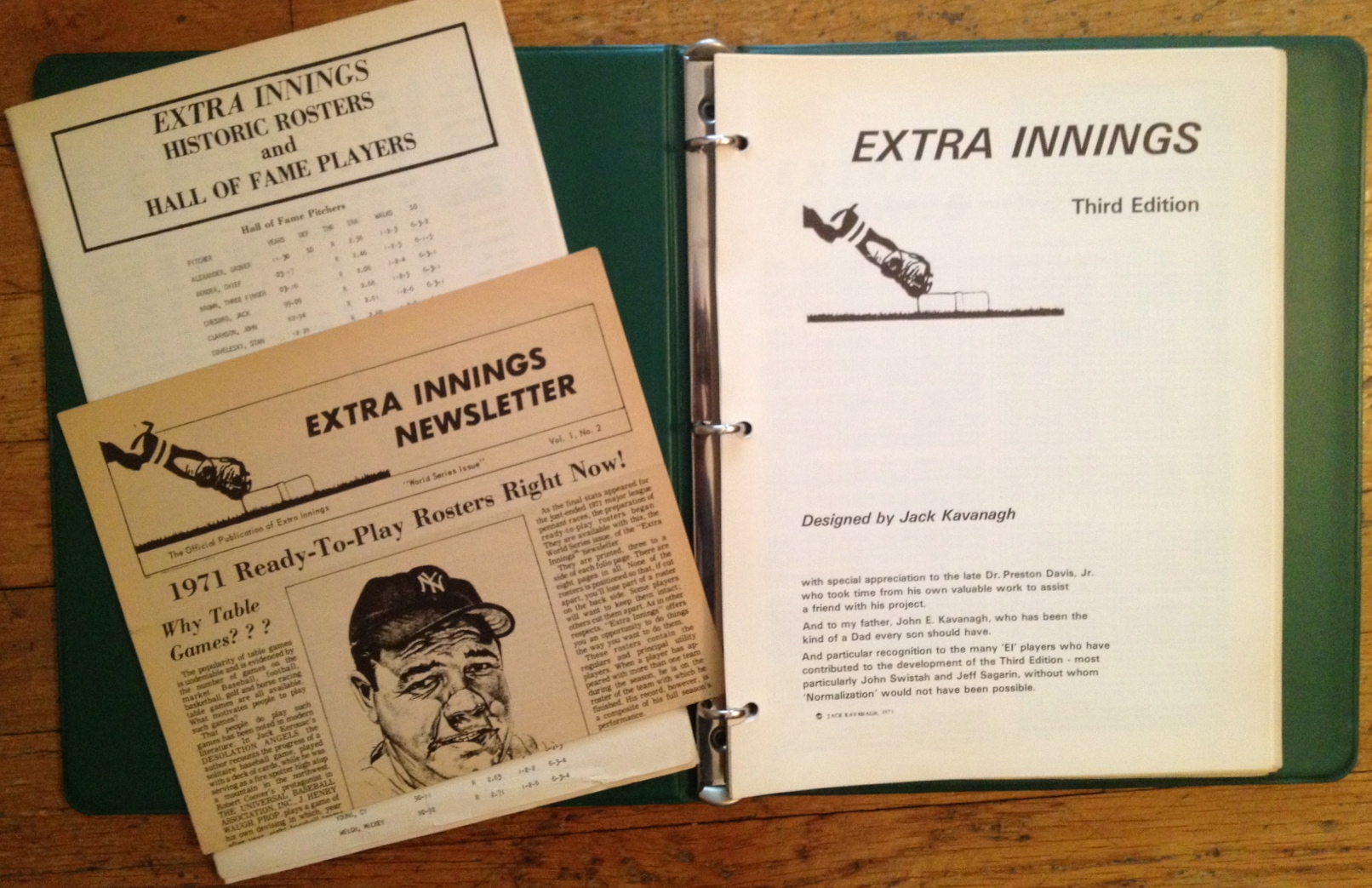
Game book & binder, player performance roster, and newsletter for Extra Innings (photo: DY)
I also sent away for a neat little game, Extra Innings, that had an attractive price tag ($9.95), the novelty of a game contained in a three-ring binder, and an extensive basic package that included player performance ratings for the most recent season as well as all-time great teams and Hall of Famers.
The designer of the game, Jack Kavanaugh, was a retired ad man and a thinking man’s game designer. His Extra Innings Newsletter, a copy of which is pictured above, contained some of the most thoughtful commentary about the challenges of statistically reproducing baseball in a tabletop simulation game that I’ve ever read. Kavanaugh is no longer with us, but his game still has a devoted following today.
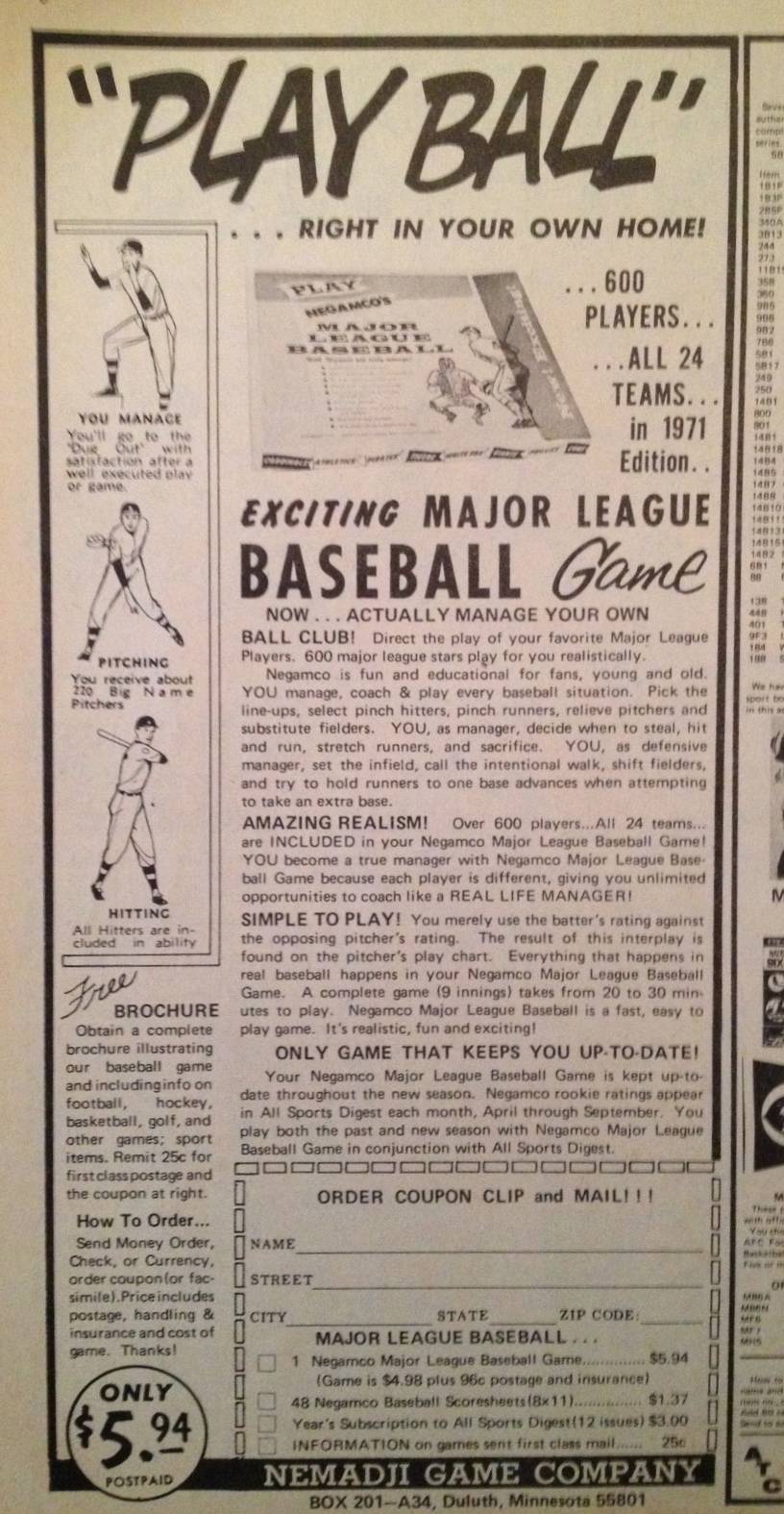
Magazine ad for Negamco baseball game (photo: DY)
I played a lot of Negamco’s Major League Baseball. This game, as you can see below, was activated by a spinner, which would create a few extra seconds of suspense for each play sequence. It wasn’t the most realistic game around, but it was easy to play and had a somewhat addictive quality to it. I recall summer nights when I’d stay up late to play just one more game.
If you want to read a great boyhood remembrance about playing Negamco baseball, check out Mayer Schiller’s “Killer Goryl” in the Elysian Fields Quarterly. And in 2011, Michael Weinreb wrote a similarly evocative long form piece for Grantland about playing another popular offering, Statis-Pro baseball, as an adolescent: “Statis-Pro Baseball: An Instruction Manual”

Negamco baseball charts, spinner, lineup card, and scoresheet (photo: DY)
When it came to baseball board games, however, the big kids on the block were Strat-O-Matic (SOM) and APBA. Both games had been around for some time: APBA debuted in the early 1950s (and it was based on an earlier game that appeared in the 1930s!), and SOM appeared in the early 1960s. As the ads below indicate, you sent away for a brochure and game samples first, then made the decision to buy.

Magazine ads for Strat-O-Matic and APBA baseball games (photo: DY)
The brochures were incredibly descriptive, and for a young baseball fan conjured up images of managing a favorite team and players to the World Series, replete with box scores and statistical sheets marking the season’s progress. If you want a sense of how the marketing and advertising for these games captured our imaginations, go to the APBA Baseball Archives and click around.
APBA and SOM were also among the most expensive offerings — somewhere in the $15-20 range for full editions if memory serves me right. Their game parts were first rate, and each player was represented by his own performance card. (Most of the less expensive games featured team roster sheets with the relevant player data rather than individual cards.)
Here are cards from a reissue of APBA’s 1968 season:

And here are cards from a commemorative reprint of SOM’s very first edition:

These are the Good Old Days
APBA and SOM were both beyond my meager allowance back in the day, but as you can see from the photos, I’ve become a collector and occasional player of both games today. And as I collect vintage seasons, I keep telling myself that when I retire in X number of years, I’ll play them all the time!
Which brings up another point: Bouts of nostalgia aside, for anyone who wishes to play some type of baseball simulation game, these are the good old days, because diverse and fun options abound.
There’s still a steady interest in and demand for tabletop baseball simulations, stoked primarily by guys 40 and older. To capture the flavor of current offerings and interests, check out the Delphi Table Top Sports forum.
Another great site is Tabletop-sports.com, which hosts an active forum and links Downey Games, a popular sports game company offering well over a dozen game titles. The One For Five blog and magazine also provide lots of support for the hobby.
The APBA and Strat-O-Matic game companies are still offering their famous baseball games, now in charts & dice, computer, and online versions. Previous seasons are readily available from the companies and via a rich resale market through online forums such as the Delphi site and e-Bay.
They are joined by many other small companies offering a multitude of tabletop and computer baseball simulations. Replay, History Maker, and Ball Park (once favored by famed baseball statistician Bill James) are among the popular offerings.
I recently supported a Kickstarter campaign for Pine Tar Baseball, a new offering that appears to be carving a niche by recreating 19th century baseball seasons.
Computer baseball simulations are often remarkably deep and sophisticated in their game play. The Out of the Park computer baseball game, and its boiled down tablet/smartphone version, for example, allow players not only to replay past seasons and create fictitious leagues, but also to play the role of owner and general manager. (I’m partial to OOTP because it’s one of the few baseball sims available for the Mac as well as for Windows.)
Of course, the major video game platforms offer baseball sims that put a premium on hand-eye coordination, with some stunning graphics and features to boot.
And if you’re like me, you’ll also want to manage a fantasy baseball team or two.
The Draw of Baseball on a Tabletop
Especially for guys who grew up rooting for their favorite teams and players and who tracked baseball stats in the daily paper, these baseball simulations retain a special draw. They provide us with a connection to a beloved boyhood sport in a way that allows us to participate and play in a league of our own, and to relive the exploits of diamond heroes of days past.
As I’ve mentioned before here, my friend Ken Heard, a professional journalist, writes a marvelous blog — Love, Life and APBA Baseball — detailing his devotion to the APBA baseball game and how replaying past historic seasons has been a form of entertainment, engagement, and sometimes refuge over the years. Two summers ago I wrote an extended piece about Ken’s blog for my own professional blog.
Last year, I wrote a post about writer Jack Kerouac’s homebrewed tabletop baseball game, replete with fictitious players and news accounts of their on the field exploits. Kerouac kept up his fictional baseball league for years.
And Robert Coover’s The Universal Baseball Association, Inc., J. Henry Waugh, Prop. (1968) is considered a minor classic and one of the best books about the dramatic pull of baseball. It’s a novel about a man who invents his own cards & dice baseball game and becomes lost in the life of his fictitious baseball league.
So yes, there is something about baseball and the imagination that keeps us attracted to these simulations of the National Pastime. Even if they become obsessions, we could do a lot worse.
As summer approaches, winter has given way to spring in Boston

Boston Common (photo: DY)
The brutal winter that we experienced here in Boston has finally given way to more civilized weather, even if piles of snow collected during January and February and deposited in designated snow removal areas have not fully melted.
Summer beckons, even though the temperature here remains very cool and spring-like. I’m not complaining — I can live with spring and fall weather very happily, thank you. But especially now that my classes are done and I’m finished grading exams and papers, I sort of expect it to be warmer.
Nevertheless, the cool, nice weather has made it comfortable to walk around a bit and take a few snapshots, which I’m happy to share with you.
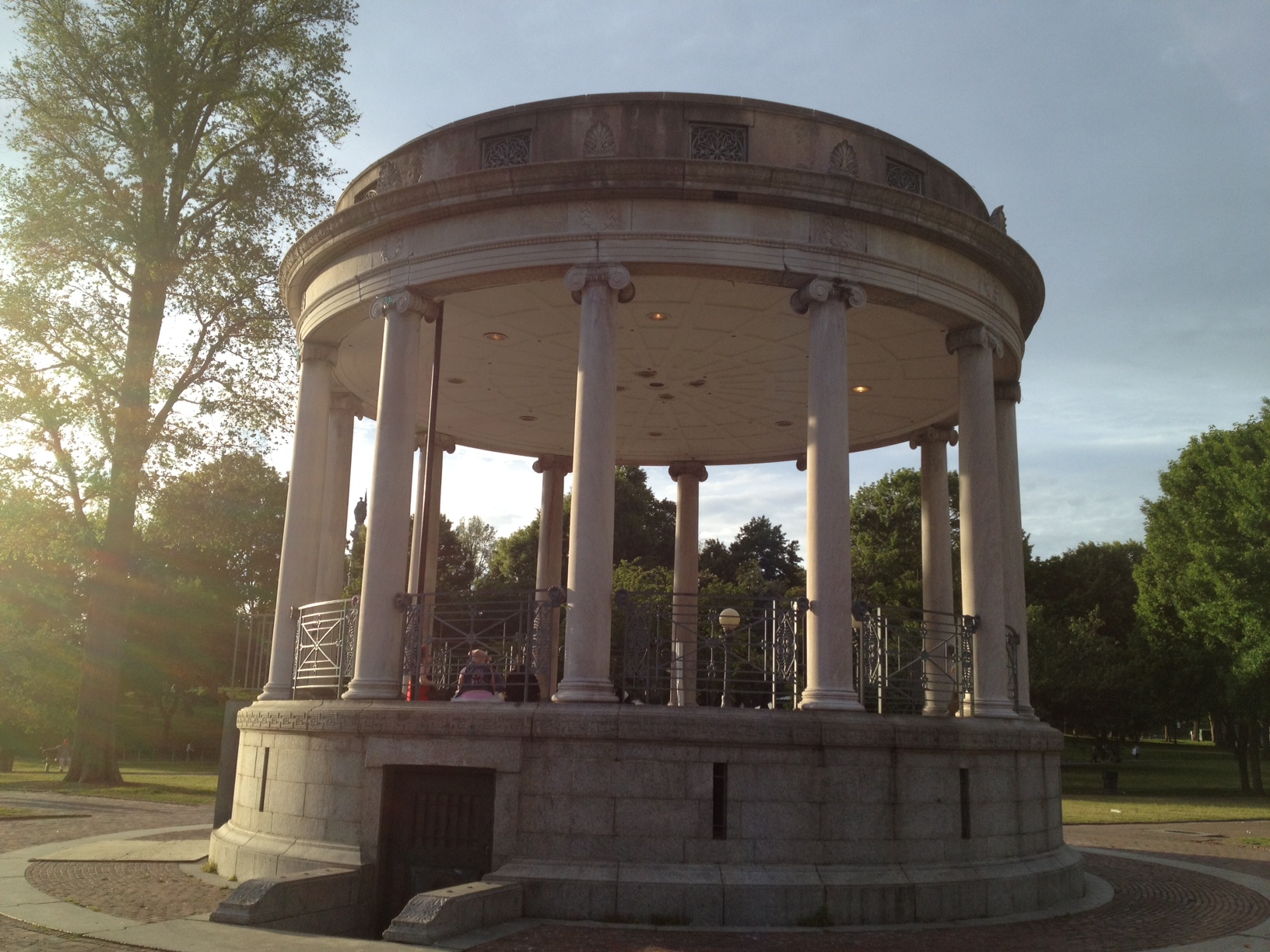
Boston Common (photo: DY)
This time of year triggers bouts of nostalgia for me. Thirty years ago, I graduated from NYU School of Law and began studying for the New York bar exam, a fun little ordeal I wrote about last year.
I had already accepted a position with New York City Legal Aid Society, fulfilling my wish to work as a public interest lawyer. First, however, I had to get through the summer bar study. I managed do to so, but not without feeling sorry for myself an awful lot of that time. In particular, as I wrestled with studying for the exam itself, I badly missed many of my best friends from law school, who took their talents across the country to start their legal careers.

Boston Common (photo: DY)
My previous law school summers were memorable. I spent the summer after my second year working as a summer associate at a large corporate law firm in Chicago, an experience I wrote about in a post last year. It taught me a lesson that I share with many of my students: Sometimes experiences that help you eliminate options are as valuable as those that help you to create choices.
I spent the summer after my first year working at the New Jersey Public Defender’s office, while living in one of the NYU law dorms. Heh, one of the things I remember most about that summer was the opening of Steve’s Ice Cream in the Village. Steve’s was a Boston ice cream brand that popularized the practice of toppings hand mixed into your chosen flavor of ice cream. I was making the princely minimum wage that summer, and a chunk of those meager earnings went to Steve’s.

Robert Gould Shaw Memorial, Boston Common, which calls out the Civil War story told in the movie “Glory” (Photo: DY)
Thirty-five years ago, I had finished my junior year at Valparaiso University. I spent a lot of time serving in a key Indiana volunteer role for the independent Presidential campaign of John B. Anderson, which I wrote about here last June. I also studied hard for the Law School Admissions Test, which I took that summer.
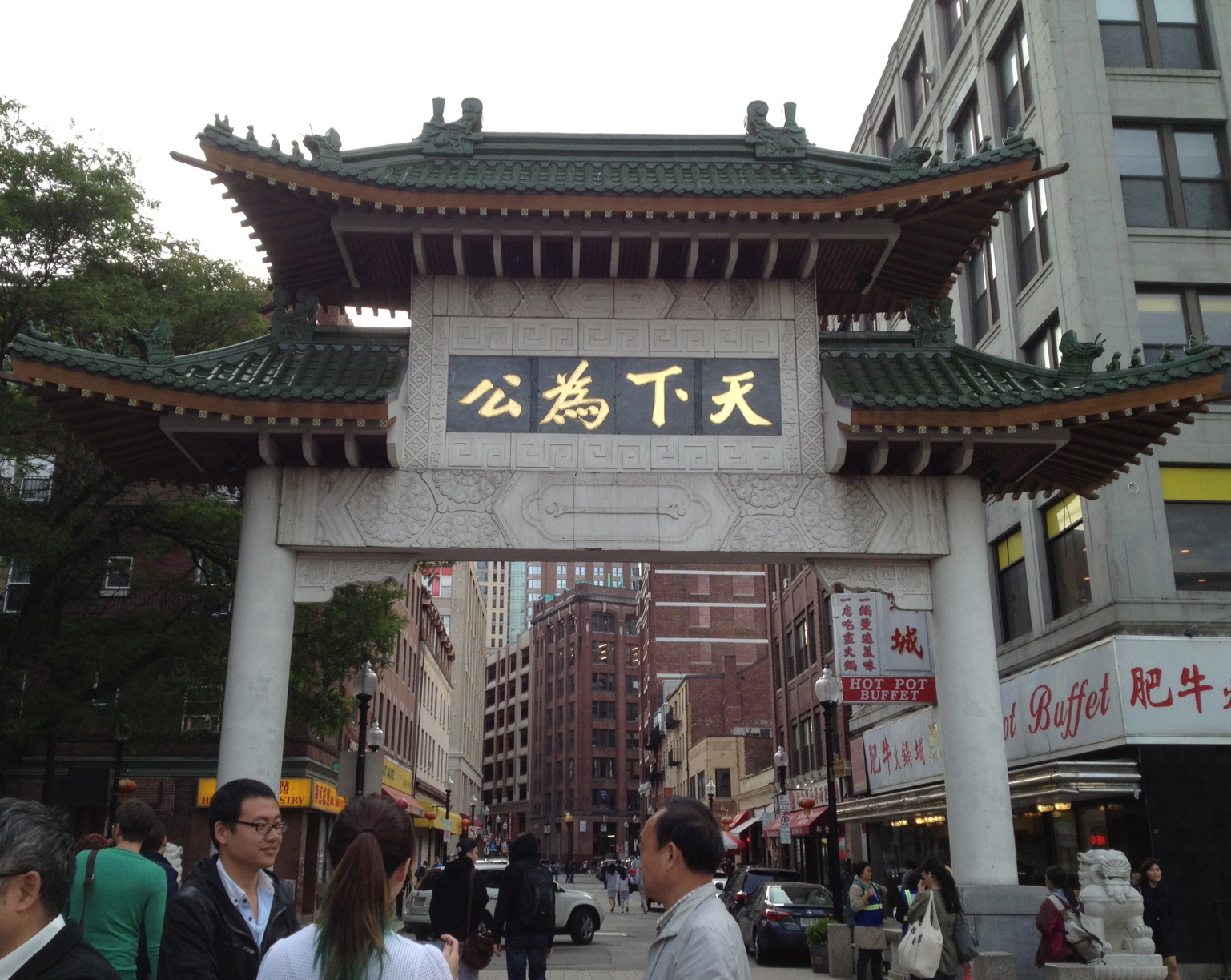
In case you need a marker, you’re entering Chinatown, Boston (Photo: DY)
A few weeks after taking the LSAT, I would learn that I did well enough to have some attractive options for law school. Originally I had every intention of attending law school on the west coast, but NYU was too appealing to turn down.

Cream puffs to die for in Chinatown, Boston (Photo: DY)
Since becoming a professor, most summers have been devoted in large part to various research and writing projects typically leading to the publication of articles in scholarly law journals. During the summer of 1998, for example, I did a lot of the spadework on my first article examining the legal and policy implications of workplace bullying, eventually published in 2000. It would prove to be a groundbreaking piece that helped to plant the seeds for a movement to enact workplace anti-bullying laws.
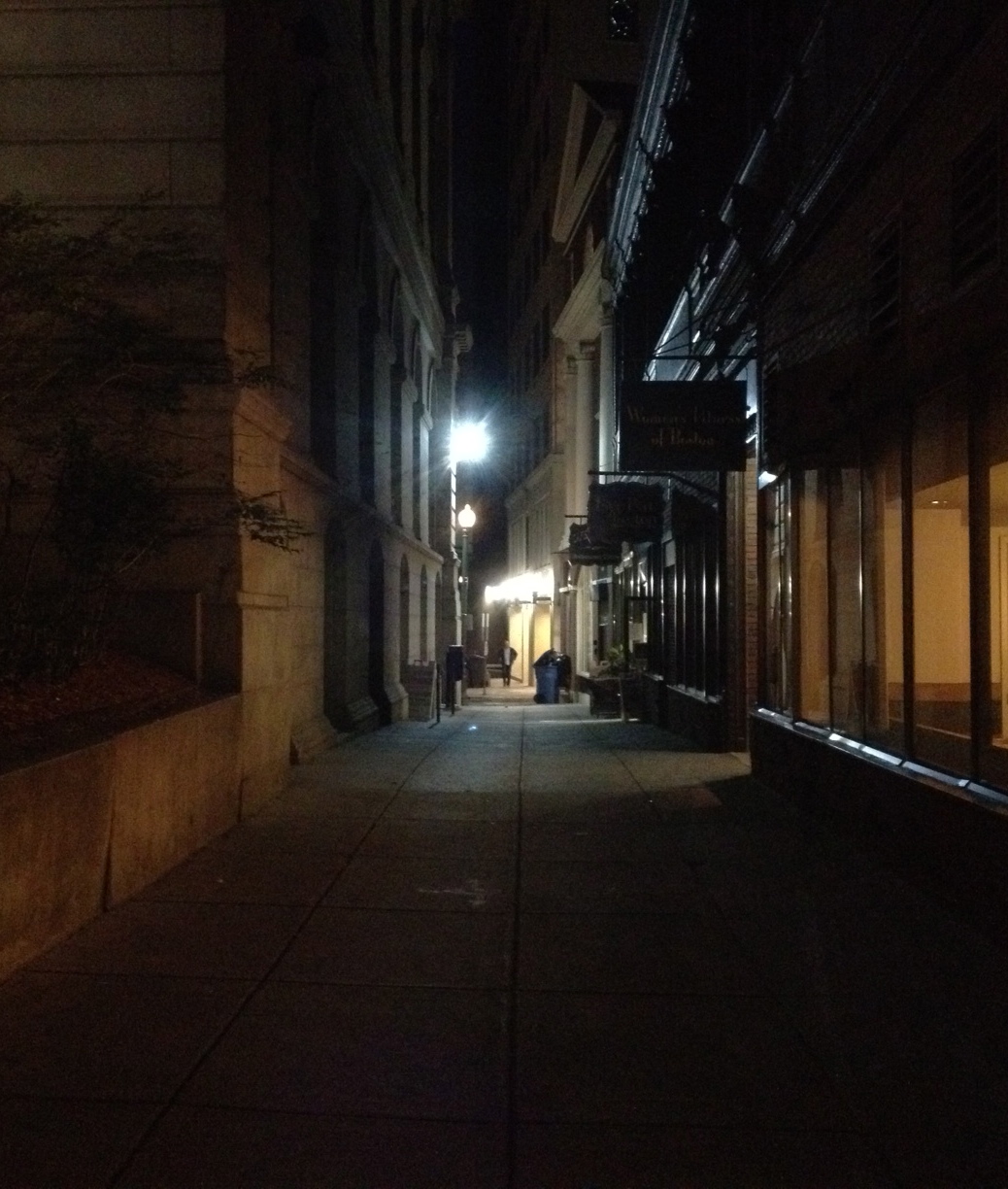
At night, this corridor in Downtown Crossing, Boston, looks like a step back in time (Photo: DY)
This summer I’ve been finishing up a piece on legal scholarship and “intellectual activism,” the latter being a term that I use to describe the process of engaging in research and analysis of a significant legal problem, designing proposed law reform and public policy responses, and then going into a more public mode with those proposals. It harnesses many of the experiences I’ve had and lessons I’ve learned over the past twenty or so years.
Of course, I also am grateful for the flexibility my job affords me to spend the summer working on a largely self-defined schedule. That very flexibility allows me the time to step out the door and take a few photos of this walkable city.
Final exam season: Recalling late night munchies for student chow hounds

You’ve come a long way, baby: Late night college chow has upgraded its game
If this headline and photo are to be believed, collegiate munchies have definitely stepped up a notch or two since my student days. Those burgers look pretty darn good, don’t they?
During this month of May, I’ll be reminiscing even more about collegiate and law school experiences, and this particular entry is appropriately about food. After all, especially around finals time, late night eateries near campuses do a landmark business. Back in the day, I contributed mightily to this sales uptick.
At Valparaiso University in northwest Indiana during the late 70s and early 80s, late night chow options were somewhat limited, at least within reasonable walking distance. In fact, this post was triggered by a Facebook conversation the other day posted by a fellow dorm dweller (hat tip to Dr. Mark Kegel here), during which we reminisced about local eateries. A place called Greek’s Pizza deservedly enjoyed semi-legendary status, and the VU student union did a decent job on pizza as well, but beyond that the pickings were uneven.
I recall an independent donut shop that apparently had escaped regular health code inspections; I considered it a destination of desperation. There was a food truck selling pretty good stromboli sandwiches that would drive around campus. I also ate more microwaved sandwiches from the local 7-Eleven than my large intestine cares to remember. Toss in a Dairy Queen and a few other fast food places, and that was basically it.
When I got to law school at NYU a few years later, the midnight munchies situation got much better. This was, of course, Greenwich Village of the early 80s, and affordable eateries abounded. Thanks to my more gastronomically adventurous law school pals, my appetite would diversify considerably, especially when it came to ethnic foods.
Late night food options, however, reverted back to basics, with the 24-hour diners at the top of the heap. The Washington Square Diner on West 4th Street was the site of numerous 2 a.m. bacon cheeseburger runs and breakfast platters, and the Cozy Soup ‘n’ Burger on Broadway at Astor Place served up many a burger and cups of their awesome split pea soup. Empire Szechuan delivered tasty Chinese food into the wee hours. And after a late night of studying in the library, a pitstop at Ben’s Pizzeria for a serviceable quick slice was sometimes in order. (All of these places are still in business, by the way!)
In both college and law school, these intakes didn’t exactly make for the healthiest of diets. I have a feeling that many of today’s students are doing a little better on that count. Chipotle’s might not count as fast food, but it’s healthier and fresher than a visit to the Golden Arches. Then again, for a pure late night food experience, a good bacon cheeseburger in the wee hours of the morning beats a burrito bowl any day.
Visits to London
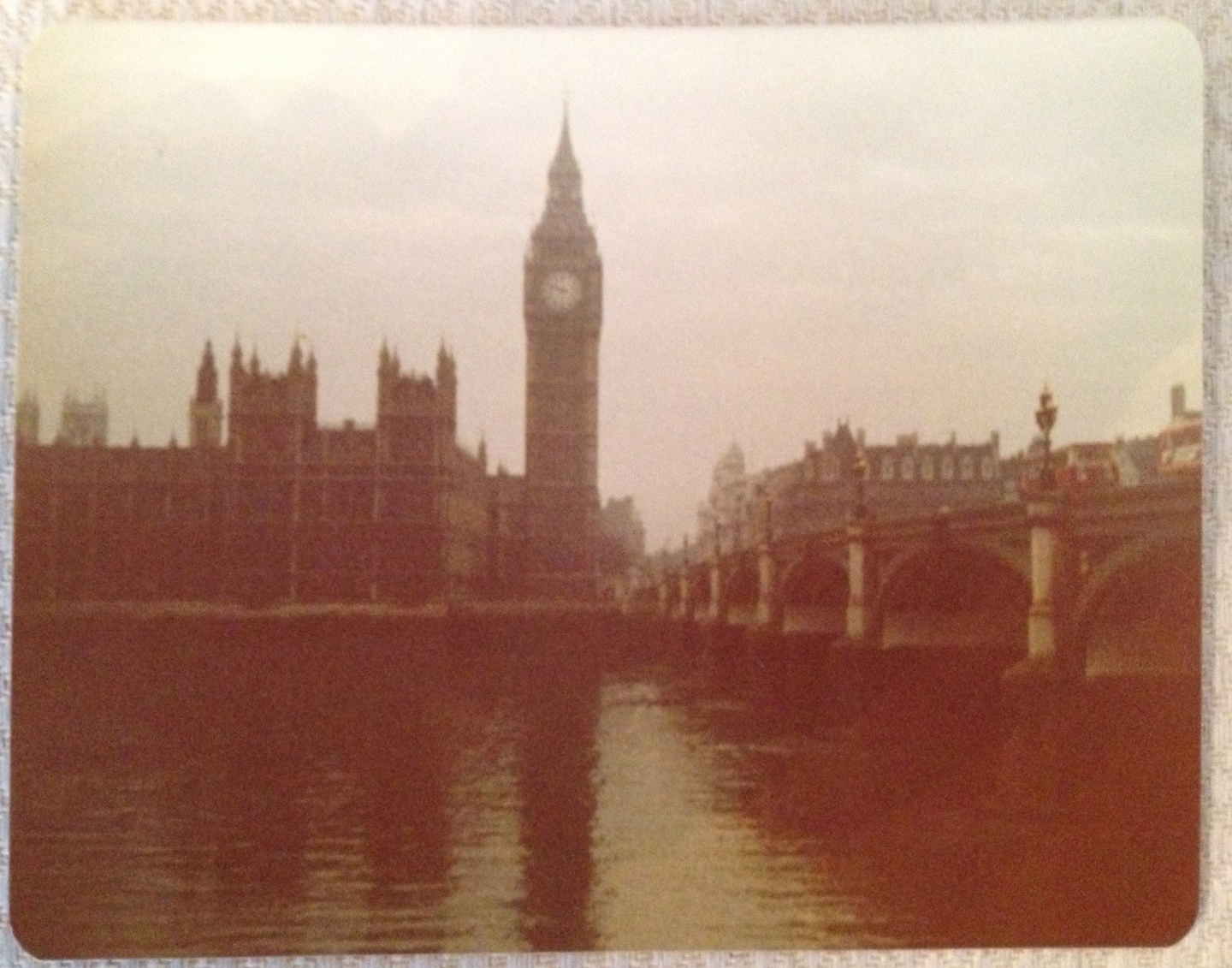
A grainy image alongside my sharp memories: My first ever snapshot of London (January 1981)
London has long been one of my favorite places, a huge yet walkable city steeped in history, tradition, culture, and entertainment. Not too long ago, a week-long trip to London was easier and cheaper than making similar visits to many locations in the U.S., at least from the East Coast. My fascination with the city and the relative affordability of traveling there made for some great visits during my younger days.
Jonesing for a return to London
During a formative semester abroad in England (1981), I visited London several times and was awestruck by it. It was just this fascinating, intimidating colossus. After that semester, I often daydreamed of returning. However, as a law student and then as a Legal Aid lawyer in New York City, spare cash was in extremely short supply.
Throughout the 1980s, London had this weird hold on my imagination from afar. I even was drawn to “Ticket to London, ” a role-playing game for my Commodore 64 computer, featuring the city’s major landmarks and geography. The simple graphics allowed me to “interact” with the city, which felt like the closest I would ever get to going back there.
But in 1990, an opportunity to return presented itself. I was enrolled part-time in a master’s degree program in labor studies at Empire State College in New York, which was co-sponsoring a two-week, interactive study tour in British public policy, hosted by the University of Bristol. Given a chance to earn degree credits, see something of the U.K., and spend a few extra days in London, I signed up! (While still cash crunched, I had learned to juggle credit cards by then.)
It was a great trip. The formal program was excellent. I learned a lot about British public policy and labor relations, and I enjoyed the company of my American and British colleagues. Equally important, I was able to spend a few blessed days in London. The way I spent my time there — seeing a play with friends from my Bristol group, visiting museums, taking a walking tour, and searching out bookstores — would set the pace for future trips.
Spring Break trips to London
That return visit to England whetted my appetite, and fortunately air fares and travel costs were very agreeable. During the early to mid 1990s, I could get a round-trip ticket from either New York or Boston to London for around $300, book a safe, clean, modest B&B room for less than $50/night, and enjoy the city fairly inexpensively.
I did these London trips during spring breaks, usually on my own, occasionally meeting up with friends along the way. The total cost was a meaningful dent in a young professor’s budget, but it was a very good deal for a week’s visit to such a grand city.
I’ve always been a creature of habit, and my visits to London mixed routines with a little variety. Here are the recurring themes:
Walking tours
A quality walking tour is a great way to explore a city. A variety of commercial tour operators provided fun and affordable opportunities to see and learn about London. My preferred walking tour company was London Walks, which I’m pleased to see is still around. With London Walks, I went on ghost walks, crime walks, “hidden London” walks, and, of course, Jack the Ripper walks.
Of the various tours offered, the Ripper walk was my favorite. The city’s East End — site of the Ripper murders — was still rather gritty in the early 90s, which added to the walk’s authenticity. During my London visits, I went on several Ripper walking tours, some of which were led by were serious researchers tackling the still-unanswered question of the killer’s identity. (Sidenote: On any given Ripper walk, I would be one of dozens of fellow Americans, causing me wonder why we hadn’t had our fill of serial killers on our own side of the pond.)
One Ripper tour (not London Walks) turned out to be an unintentionally comic relief version. The guide showed up somewhat inebriated, a condition exacerbated by the ritual pub stop that is part of a typical London walking tour. Let’s just say that his commentary caused some to walk away in exasperation, while the rest of us stayed out of pure amusement and tried not to laugh too loudly.
History
The 1990s overlapped with the 50th anniversary observations of Britain’s involvement in the Second World War (1939-45), and as a history buff this was tailor made for me. I made return trips to the Imperial War Museum, which houses a fascinating collection of artifacts and displays about both world wars. Skillfully and tastefully curated, these exhibits made for one of the best historical museums I’ve ever visited. Also on the WWII theme, I went to Winston Churchill’s underground war rooms, where Britain’s leaders plotted military strategy while the city above faced attacks by Germany’s Luftwaffe and long-range rockets.
Further drawn by the city’s earthy history, I enjoyed the Museum of London, the Old Operating Theatre near London Bridge, and the Clink Prison Museum. Let’s just say that all these sites helped to illustrate how life for so many denizens of Jolly Olde England wasn’t all that jolly. Philosopher Thomas Hobbes‘s characterization of life being “solitary, poor, nasty, brutish and short” comes to mind.
South Bank
Its lack of aesthetic appeal notwithstanding, I loved spending time in the concrete jungle of the city’s South Bank arts complex, running along the Thames. I would arrive in the late morning to buy a cheap day ticket to a play or show at the National Theatre later that night. I would then spend the rest of my day poring over the open air used book stalls next to the theatre and hanging out at the nearby Festival Hall area, where I could buy a sandwich, catch a free lunchtime concert, or read a book.
Although I lived in New York for 12 years, my appreciation for the theatre was stoked in London, and the National Theatre had a lot to do with it. Starting with my collegiate semester in England, and proceeding into those 1990s visits, I was fortunate to see a lot of first-rate stuff there, including The Elephant Man, Murmuring Judges (a devastating portrayal of the British criminal justice system), and revivals of Oklahoma! and Carousel.
Bookshops
London is a book lover’s delight, or at least it was prior to the emergence of the same online competition faced by America’s brick and mortar booksellers.
Whether we’re talking huge bookstores selling new titles, musty old used bookshops, specialty sellers, or even museum gift shops, London’s offerings were the biggest threat to my budget. My purchases also made it hard to pack for the trip home. I recall two occasions when I had to buy an extra bag in order to bring my new acquisitions to the States.
***
Looking back, I realize how my 1990s visits to London transformed this giant metropolis into a comfortable place that balanced familiarity with discovery. This process was eased by the city’s subway system — the Tube — which could connect me to just about anywhere I wanted to go.
Since those trips during the 90s, I’ve been back to London on several occasions in connection with conferences and continuing education programs in the U.K. I look forward to returning again someday, though no longer with the haunting sense of yearning that drew me back there some 25 years ago. London is now a part of who I am, regardless of how many times I go back there.
***
I’d been working on this post for some time, but the inspiration to finish it up was this neat Yestervid.com video (about 11 minutes) containing some of the oldest known film footage of London, going back to the late 1800s and early 1900s. If you enjoy London, then this is a treat:
Before the college application process went haywire

New York Times columnist Frank Bruni is getting a lot of attention for his new book, Where You Go Is Not Who You’ll Be: An Antidote to the College Admissions Mania (2015), which urges young people and their families not to buy into the huge anxieties and nuttiness that surround the college application process. In essence, he’s saying that the people and communities that we bring into our lives have much greater bearing on life satisfaction than getting into a prestigious school.
I think the overall message is a sound one, but the topic is more complicated than first meets the eye.
A good number of friends around my age have gone through this process with their children. Especially for high school students aspiring to attend a highly-ranked school, the college admissions game has become a significant, part-time job for them and their parents, one wrought with adolescent emotions, adult anxieties, and difficult cost-benefit assessments.
Sadly, I don’t think this will change, especially in an America where families in the middle and upper-middle classes are fearful of their ability to maintain their stations in life, college costs have gone through the roof, and the promise that the kids will do better than their parents is looking more and more precarious.
As a non-parent, it’s easy for me to claim from my detached perch that I wouldn’t buy wholeheartedly into that mania, but in truth it’s very, very hard to ignore this dynamic. And the peer pressure and social expectations for young students and parents alike are significant in high school settings that are turbo-charged about college placement.
Nevertheless, as a nostalgic creature by nature, does this make me a little wistful for the days when the college application process wasn’t so riddled with anxiety?
As a high school senior, I assumed I’d go to college, but I took the process rather casually. I visited a few schools in my home state of Indiana, and I ended up applying to only one, Valparaiso University in northwest Indiana. It was a smaller school, emphasizing the liberal arts, and it seemed comfortable and close enough to home. I figured it would be good enough, and it appeared that my chances of admission were strong.
I was accepted, and that was the extent of my college “search.” Easy peasy, right?! Isn’t this a perfect example of how low key the college application process was back in the day?
But herein lies the truth behind much nostalgia: It becomes a little, well, rose-colored fictitious. Even before the U.S. News rankings of colleges became ubiquitous and top 10/50/100 lists of schools started popping up everywhere, there was a rough sense of which schools were considered among the elite. And my story of applying to only one school and basically assuming I’d get admitted is exactly that, only mine. In the meantime, thousands of others who had more focused aspirations and their sights set on certain schools were sweating out the process.
In fact, five years later, I would ramp up my own anxieties when I applied to law schools. I was considerably more invested in the process, and I took active responsibility for researching law schools and identifying which ones might be good for me. Now, that’s the generic description. In truth, I became obsessed with the whole deal, and full of the kind of self-absorption that can inflict an ambitious young person during such life chapters. The moment I received New York University’s letter of acceptance, I pretty much knew I would go there, as I had many reasons to believe it would be a very good match for me.
So how do these schools look in the rear-view mirror some 30 years later? I’ve written on this blog many times about my experiences at Valparaiso (here, for example). My relationship with it has changed much for the better over the years, in large part because I have a greater appreciation for the quality education it gave me, and I have treasured friendships from those years that I know will be lifelong. As for NYU Law School, I am deeply grateful for the experiences, friendships, and opportunities it provided. In many ways, it was the right place at the right time for me. (You can read a bit more about that, here.)
As I reflect on all this, maybe Frank Bruni’s title — Where You Go Is Not Who You’ll Be — is overstating it, even if we welcome its underlying message. Many of us have been shaped profoundly by the schools we attended, though not necessarily because they were/weren’t considered “prestigious” in the eyes of others. The deeper questions associated with the college application process are more vital and complicated ones, fostering considerations about how much we should allow markers of prestige to shape our beliefs, decisions, and experiences.
In sum, for anyone who believes that upward mobility and “success” are, generally speaking, worthwhile aspirations, but that a good life embodies much more than collecting trophy lines on resumes, this conversation may be rife with honest and very human contradictions and inconsistencies. Easy peasy it ain’t.
Throwback Thursday: Discovering Jack Finney’s “Time and Again”

You may have to be a bookworm to fully appreciate a soggy, nostalgic Throwback Thursday post about, well, reading a book, but here it is: About 30 years ago, I discovered Jack Finney’s Time and Again (1970), an illustrated novel about a Manhattan advertising artist named Si Morley who is enlisted in a U.S. Government project experimenting with time travel.
No spoiler alerts are necessary to give you a preview. Let me first quote from the back cover of my paperback edition (pictured above): “Did illustrator Si Morley really step out of his twentieth-century apartment one night — right into the winter of 1882?” I’ll say no more about the story, except to say that if you love New York City and enjoy time travel stories, then this book is for you.
I discovered Time and Again in 1985. I had not heard of the book when I kept glancing at it during repeated visits to Barnes & Noble’s giant sale annex at 5th Avenue and 18th Street, but finally I decided to buy it. As I was reading along, soon I realized that it was becoming one of my favorite books. (It remains so.) Again, I’ll skip the details, but Chapters 7 and 8 provided some of my most cherished reading moments ever.
To grasp such a geeky memory, it helps to understand where I was in my life. In the fall of 1985, I had just graduated from NYU’s law school, I was living in Brooklyn, and I was working as a public interest lawyer in Manhattan. I had also become completely smitten with New York City. I doubt that I will ever again experience such deep affection for a place. If a big part of me will always be a New Yorker, then those early years in NYC will have a lot to do with it.
Time and Again spoke to that love of New York, and its story captivated me. Finney had a knack for writing the time travel tale — as his other books and short stories also attest — and he got it just right with this one. It may be as close to genuine time travel as I’ll ever get, a reading experience approached only by Stephen King’s 11/22/63 (2011). (In fact, in the Afterword to his book, King calls Time and Again “the great time-travel story.”)
So, if a tale of discovering olde New York is to your fancy, then you might give Time and Again a try. I think you’ll be glad you did. Don’t forget to close your eyes and see what Si Morley saw.
 Musings of a Gen Joneser
Recent Comments