Lost traditions: The Sunday newspaper

Not too long ago, a popular Sunday tradition was spending a good chunk of the day reading through the Sunday editions of the daily newspapers. Millions experienced the tactile delight of opening up a big Sunday paper, wondering what interesting stuff waited to be discovered. Even the advertising flyers were fun to page through, especially around holiday season.
The hefty Sunday newspaper has been a journalistic tradition for well over a century. One of my favorite coffee table books is Nicholson Baker & Margaret Brentano, The World on Sunday: Graphic Art in Joseph Pulitzer’s Newspaper (1898-1911) (2005), which celebrates Sunday newspapers published during the turn of the last century.
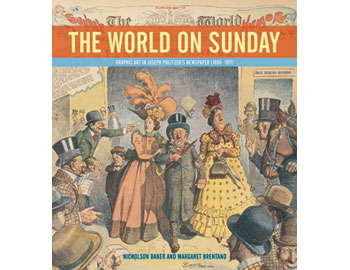
The World on Sunday and the tradition of Sunday newspaper reading represent an aspect of pre-digital culture that may be hard to understand for those weaned on an online world where wishes for news and commentary are instantly gratified. Fortunately, some of the major newspapers still land on doorsteps with a healthy thud on Sundays, containing some of their best in-depth reporting, feature articles, and opinion pieces.
Growing up in Chicagoland
My Sunday newspaper habit goes back to growing up in Northwest Indiana, where local papers and the Chicago dailies were readily available. Among the Sunday editions that regularly got my attention were the Chicago Tribune, Chicago Sun-Times, Hammond Times, and Gary Post-Tribune. The Tribune excelled at covering my beloved Chicago sports teams, and the Post-Tribune did a very good job with local news.
These papers deserve credit for turning me into a Sunday paper junkie. The Chicago influence was especially strong. The Windy City was a great, great newspaper town back in the day, fueled by the city’s colorful politicians, sports figures, and crime bosses. Beyond the headliners, however, the reporters and columnists who toiled for Chicago’s daily papers also had a knack for digging out the stories of everyday people. The human interest story had a regular place in the city’s newspapers.
Sundays in New York
When I lived in New York City (1982-1994), the Sunday papers were a special treat. The Sunday New York Times was an especially heavy load, a multi-pound door stopper packed with goodies and advertising circulars. The early edition of the Sunday Times would come out on late Saturday evening (and still does), and many a weekend night out included picking up a copy on the way home.
My personal favorite, however, was New York Newsday, the now gone NYC edition of the venerable Long Island daily. New York Newsday wasn’t as worldly as the Times, but it spoke more closely to the city’s middle class and did a superb job of covering local politics and sports. Its thick Sunday edition was chock full of extended features and commentaries. To this day, New York Newsday remains my favorite-ever newspaper.
And now in Boston
My Sunday paper of choice remains the New York Times. The Times has not abandoned the idea that the Sunday edition of a newspaper should be something special. I especially look forward to its Week in Review and Book Review sections.
The major daily here is the Boston Globe, and I have an online subscription. I have an on again, off again relationship with the Globe, and for now we are on digital terms only. In fact, despite a surfeit of subscriptions to printed periodicals, I increasingly get much of my news and commentary online.
And to be honest, I wouldn’t trade the remarkable world of information and news available online for the days of waiting for the paper to be delivered. I, too, have been spoiled by point and click access to news coverage from around the nation and the world. However, at a time when we can use more civilized, enjoyable, and affordable rituals in our lives, reading the Sunday newspaper remains a pretty good choice.
***
This is a revised version of a piece I wrote for another blog three years ago.
New England autumn, that Halloween feeling, and scary stories

Boston Common, October 2015 (Photo: DY)
Friday was a raw, wet, overcast October day here in Boston. For me, it meant that fall has truly arrived in New England. As my wholly repetitive earlier posts about fall attest (here and here), this is my favorite and most nostalgic season.
The change of seasons from summer to fall is rooted in the equinox, an astronomical term. As explained by Wikipedia:
An equinox is an astronomical event in which the plane of Earth’s equator passes the center of the Sun. . . . The Astronomical Almanac defines it, on the other hand, as the instants when the Sun’s apparent longitude is 0° or 180°. . . . The two definitions are almost, but not exactly equivalent. Equinoxes occur twice a year, around 21 March and 23 September.
The month will culminate with Halloween, that most candy-coated of holidays. It will include a viewing of It’s the Great Pumpkin, Charlie Brown, a childhood favorite that still manages to get me in the Halloween spirit.
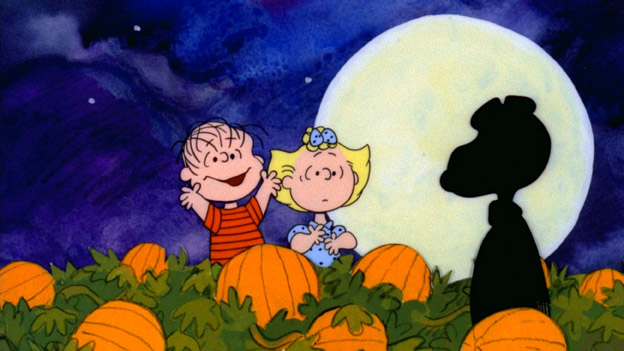
A childhood favorite: It’s the Great Pumpkin, Charlie Brown (Picture: abc.com)
But Halloween is about much more than empty calories and chocolate fixes. Its origins are grounded in religion and death. Again, from Wikipedia:
Halloween . . . is a yearly celebration observed in a number of countries on 31 October, the eve of the Western Christian feast of All Hallows’ Day. It initiates the three-day religious observance of Allhallowtide, . . . the time in the liturgical year dedicated to remembering the dead, including saints (hallows), martyrs, and all the faithful departed believers. . . . Within Allhallowtide, the traditional focus of All Hallows’ Eve revolves around the theme of using “humor and ridicule to confront the power of death.” . . .
According to many scholars, All Hallows’ Eve is a Christianized feast initially influenced by Celtic harvest festivals, . . . with possible pagan roots, particularly the Gaelic Samhain. . . . Other scholars maintain that it originated independently of Samhain and has solely Christian roots.
Perhaps it was inevitable that ghosts, goblins, and haunted houses would eventually enter the picture!
I’m in the right part of the country for religion and the supernatural to mix. It’s a combination that goes waaay back. Rosalyn Schanzer opens Witches! The Absolutely True Tale of Disaster in Salem (2011), a short, lively, fact-filled narrative of the Salem, Massachusetts witch hunts of the 17th century, with a description of the Puritan mindset of the day:
Yet with all their fine intentions, the voyagers had brought along a stowaway from their former home — a terrifying, ancient idea fated to wreak havoc in their new land. For the Puritans believed in the existence of two entirely different worlds.
The first of these was the Natural World of human beings and everything else we can see or touch or feel. But rooted deep within the Puritans’ souls like some strange invasive weed lurked their belief in a second world, an Invisible World swarming with shadowy apparitions and unearthly phantoms in the air.

Good little introduction to the story of the Salem witch hunts
It shouldn’t surprise us that this New England milieu has produced legendary writers of scary stories such as Stephen King and H.P Lovecraft.
After polling friends on Facebook and elsewhere for their Stephen King recommendations, I bought a small bagful of his books (Pet Sematary, It, and Needful Things), all with Maine settings. This one is first up on my reading list:

His scariest?
In his new introduction to Pet Sematary, King calls it his scariest book, so much so that he believed it would never be published.
In other words, it’s a great choice for an October reading.
There’s no great song about Boston, but there’s a lot of good music made here

Uh, Old Blue Eyes didn’t cover this one
Okay, students of the Great American Songbook, think now: What iconic popular song embodies the historic city of Boston? What tune did Sinatra croon that captures Beantown?
If we’re being honest, no such song exists.
I’m sorry, but while the Standells’ “Dirty Water (Boston You’re My Home)” from the late 60s is a popular number around these parts (listen to a live performance here), it falls short of city theme status. Over 60 years ago, the Kingston Trio did a fun little banjo song, “M.T.A.,” about a man named Charlie who was trapped in the Boston subway system; it was recorded as a protest to a potential fare hike. (Listen/watch here.) Ummm, that’s not exactly a great anthem either.
Last month, in a post about great songs celebrating great cities, I closed with the question of why there’s no iconic Boston song. Apparently I’m not alone. I recently Googled around a bit and found this blog post by the owner of Voltage Coffee & Art, an area cafe, thinking along the same lines:
Frank Sinatra and his buddies made a lot of songs famous, including several selections that seem to endorse these hipper cities as cooler than cool. The theme from “New York, New York”, “I Left my Heart in San Francisco”, “My Kind of Town (Chicago)” … think about it.
So, here’s my opinion on how to begin to solve this issue: what this city needs more than anything is a swanky jazz standard about our awesome city. Consider this a summer project. We’re putting together a contest to see who can write the best song. We’re looking for something super cool, maybe slightly wistful, that shows a completely un-ironic love of Boston. The best entry we receive will get recorded, hopefully with a Frank Sinatra impersonator and full orchestra if we can swing it. Official details to follow soon.
I don’t know if their project ever got off the ground.
My read on it
Great, cosmopolitan cities have playful styles that have expressed themselves in music and song. It’s why, for example, Sinatra could croon unofficial city anthems like “New York, New York” and “Chicago (That Toddlin’ Town)” in ways that evoke deep, rich feelings about those places.
In my not-so-humble opinion, the core of Boston’s traditional culture has historically lacked a certain joie de vivre. Its essence has been, well, kind of serious, and often uptight and controlling. It has an earned reputation of not being the friendliest place for newcomers. It also has the nastiest, most aggressive, least predictable drivers I’ve ever encountered — and I’m speaking solely as a pedestrian!
As I’ll suggest below, some of these elements are softening. However, during the heart of the century that produced the Great American Songbook, they were fairly baked into the culture of this city. That’s not exactly the makings of a Cole Porter classic.
Boston as music maker
But there’s a twist, and it’s a positive one: There is a lot of music made in Boston! Not only is Greater Boston home to major conservatories, the Boston Symphony, and the Boston Pops, but also it hosts an abundance of amateur and professional venues for playing and singing music of all types.
In his book Greater Boston (2001), urban historian Sam Bass Warner, Jr., opines that among its cultural traditions, Boston’s most notable one may well be “the making of music.” “On any given night,” he observes, “the Boston city region sends more musical sounds towards the heavens than any other American place except such giants as New York, Chicago, and Los Angeles.” Amateur singers and musicians play a meaningful role in the creation of this musical culture.
And you don’t even have to be a star in the making to find a place to play or sing, as my own experience attests. As I wrote last year, for many years I’ve been taking a weekly voice workshop at an area adult education center, taught by Jane Eichkern, a Juilliard-trained vocalist. Jane has built this class around the idea of a supportive, encouraging, and safe place to learn how to sing. And more recently I’ve been joining fellow voice class students for open mic cabaret nights at a local club.
Infused by newcomers
Here’s an interesting, unscientific trend that I’ve noticed about many folks who take the voice workshop: A good number of them are from other places, even other countries. Their personal backgrounds and occupations vary greatly. But they all have that twinkle in the eye and that dose of fortitude that are pretty much necessary to get up in front of a roomful of strangers (at least at the beginning, for it’s a very friendly group) and sing.
They capture for me a more joyful side of the city, one that helps to transform a place known more for its stiffness into one that has a song in its heart, at least within some circles.
Truly great cities are infused by newcomers. The newbies introduce different perspectives and world views. They offer their special qualities to the metropolitan mix. And they’ve already demonstrated a willingness to take a chance on something new, even if it’s a little scary.
Hmm, that does sound a lot like our weekly singing classes.
The music in me
It took me a while to realize how important this singing class has been to me, and, correspondingly, just how important music is to my life. For insight, I draw upon the work of my late good friend John Ohliger, a pioneering adult educator, public intellectual, and community activist. (Go here for a book chapter I wrote about him.) John’s short unpublished memoir, My Search for Freedom’s Song (1997), was constructed around the theme of music:
I can’t read music, I can’t play an instrument, and I don’t sing very well. But, looking back at my first 70 years, music has graced much of my life. Much of the time I find myself singing, humming, or whistling, softly or silently to music. I almost always associate music with good feelings — feelings of wholeness — in a fragmented personal and political world.
Like John, I can’t read music or play an instrument. (I do think I sing pretty well!) And like John, I now understand how “music has graced much of my life.” Thanks largely to participating in this ongoing, shared experience of singing, I also appreciate how music helps me cope with “a fragmented personal and political world.” For me, singing is a unique form of mindfulness, an invitation to be in the present. That’s a pretty cool way to spend one’s time, and in good company as well.
A cool breeze in the neighborhood

SW Corridor Park, Jamaica Plain, Boston (photo: DY, June 2015)
It was such a pleasure to be outside today. Originally I decided to go into downtown Boston, but after weighing the long mass transit delays caused by some weekend track work on the Orange Line (my subway line into the downtown), I opted for a walk around part of my Jamaica Plain (JP) neighborhood, with a couple of planned pitstops.
It was a great decision. The weather was perfect: Sunny, 70s, with a cool breeze.
Boston’s history of urban planning and design is one of big hits and big misses. Among the former is the Southwest Corridor Park, a stretch of parkway that runs roughly parallel to the Orange Line tracks. I decided to take a walk along the park before cutting up an intersecting street toward the shops and eateries of JP.

SW Corridor Park, Jamaica Plain, Boston (photo: DY, June 2015)
As you can see, it’s a really nice, picturesque walk. On the right are a man and his dog. As I approached, I said hi to the doggie, and he turned out to be a happy pooch. JP is a very animal friendly neighborhood, and this little guy was only one of several canines I encountered on my afternoon walk.

Shy but friendly doggie, SW Corridor Park, Jamaica Plain, Boston (photo: DY, June 2015)
Many moons ago, JP used to be a suburb of Boston. This short stretch of the park below may represent what the neighborhood looked like generally before it became more urbanized. Looking at the photo, it’s hard to believe that subway and rail lines are dug out on the left and that a city street is on the right.

SW Corridor Park, Jamaica Plain, Boston (photo: DY, June 2015)
I eventually walked out of the park and up a street toward the heart of JP. My first stop was Papercuts, JP’s new and only standalone bookstore. I wrote about this great little indie bookshop back in December. Today I picked up a couple of paperbacks, Joan Didion’s The Year of Magical Thinking (2005) and George Orwell’s Down and Out in Paris and London (1933).
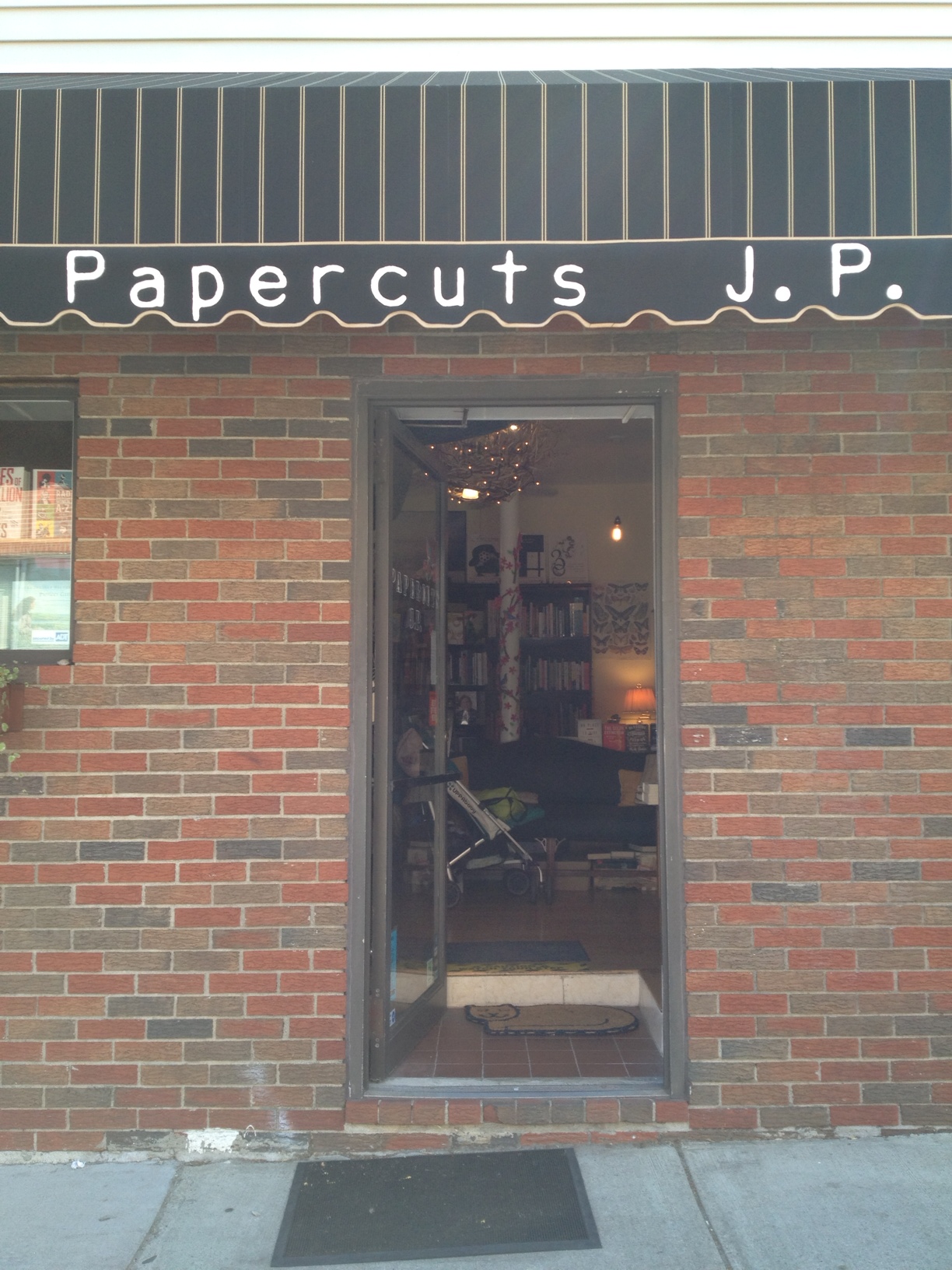
Papercuts J.P. bookstore, Jamaica Plain, Boston (photo: DY, June 2015)
Next came a late lunch at the City Feed & Supply on Centre Street. (The City Feed’s original, smaller store is just seconds away from my condo.) I opted for a soup & sandwich, featuring the jerk chicken soup pictured below and half of a Cuban sandwich. Both were delicious.
I spent some time at City Feed enjoying my food, catching up on e-mails via my iPad, and reading the Sunday newspaper.

Jerk chicken soup, City Feed & Supply on Centre Street, Jamaica Plain, Boston (photo: DY, June 2015)
Then it was time to walk back home. I pretty much reversed course, except when I got to the Southwest Corridor Park, I stuck to the paved areas running alongside the grass and the dirt pathway.
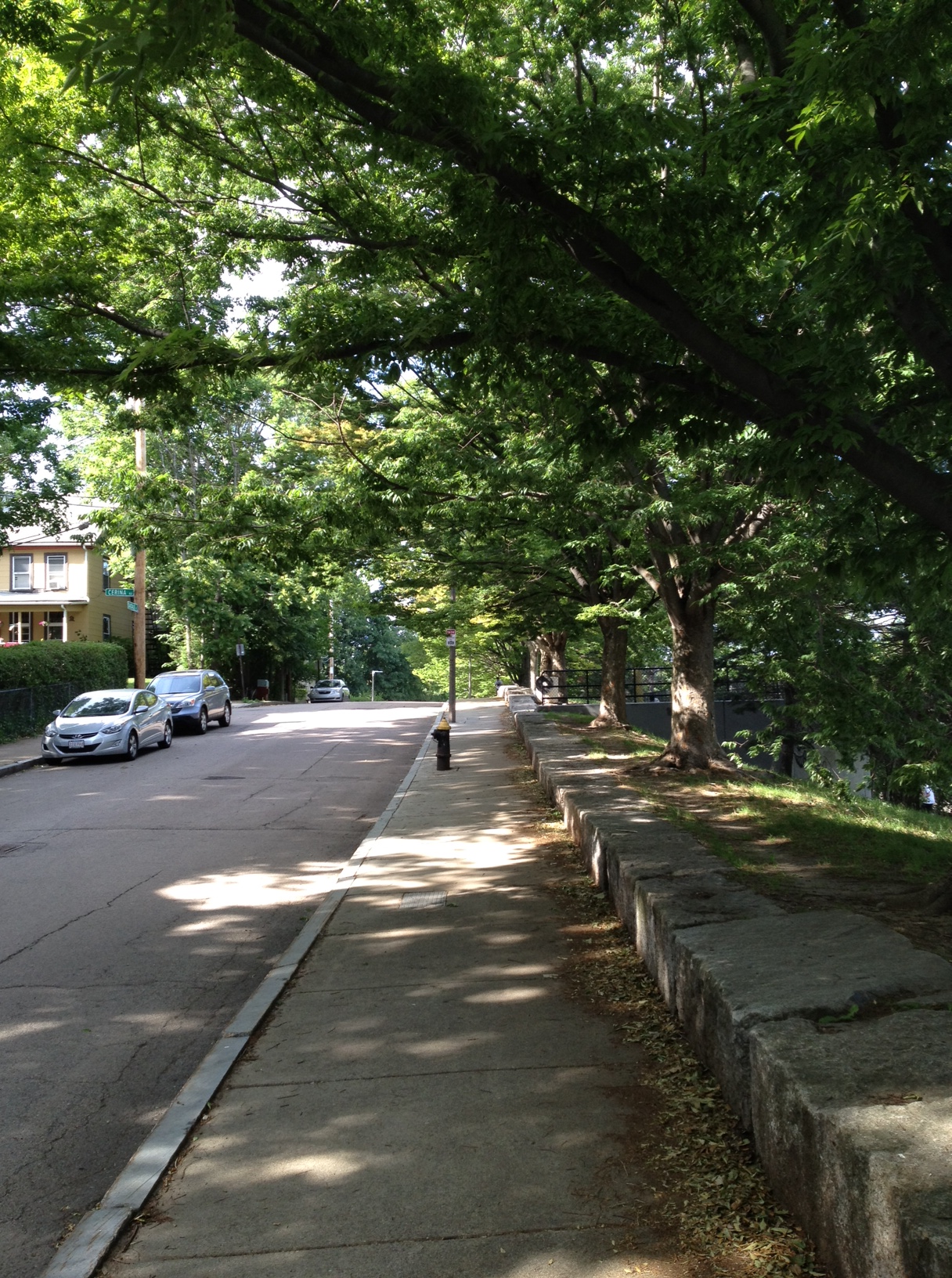
Sidewalk along SW Corridor Park, Jamaica Plain, Boston (photo: DY, June 2015)
I had intended to be a bit more productive today, but I’ll get some work done tonight — uh, at least after watching the NBA Finals on television.

SW Corridor Park, Jamaica Plain, Boston (photo: DY, June 2015)
As summer approaches, winter has given way to spring in Boston

Boston Common (photo: DY)
The brutal winter that we experienced here in Boston has finally given way to more civilized weather, even if piles of snow collected during January and February and deposited in designated snow removal areas have not fully melted.
Summer beckons, even though the temperature here remains very cool and spring-like. I’m not complaining — I can live with spring and fall weather very happily, thank you. But especially now that my classes are done and I’m finished grading exams and papers, I sort of expect it to be warmer.
Nevertheless, the cool, nice weather has made it comfortable to walk around a bit and take a few snapshots, which I’m happy to share with you.
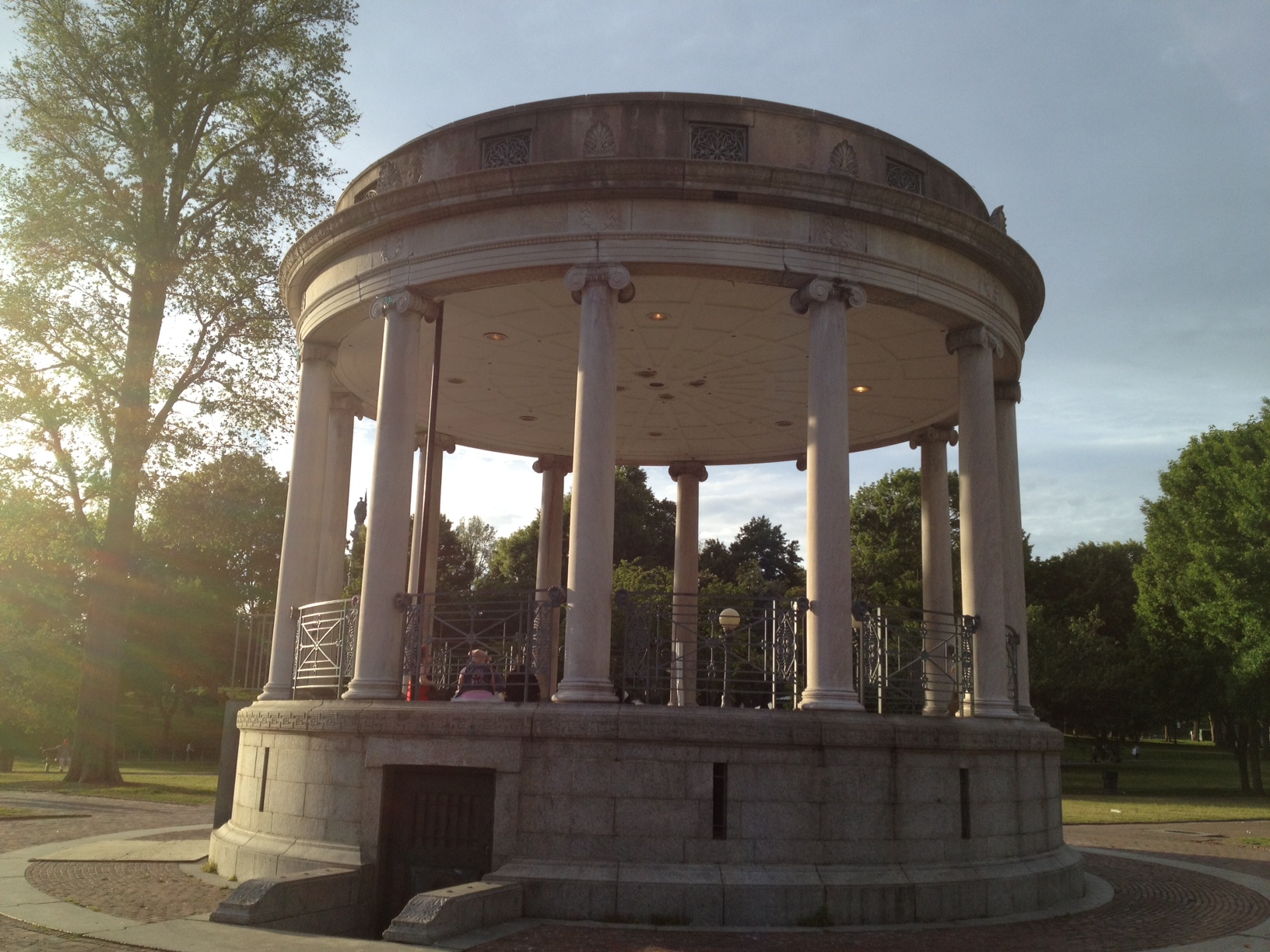
Boston Common (photo: DY)
This time of year triggers bouts of nostalgia for me. Thirty years ago, I graduated from NYU School of Law and began studying for the New York bar exam, a fun little ordeal I wrote about last year.
I had already accepted a position with New York City Legal Aid Society, fulfilling my wish to work as a public interest lawyer. First, however, I had to get through the summer bar study. I managed do to so, but not without feeling sorry for myself an awful lot of that time. In particular, as I wrestled with studying for the exam itself, I badly missed many of my best friends from law school, who took their talents across the country to start their legal careers.

Boston Common (photo: DY)
My previous law school summers were memorable. I spent the summer after my second year working as a summer associate at a large corporate law firm in Chicago, an experience I wrote about in a post last year. It taught me a lesson that I share with many of my students: Sometimes experiences that help you eliminate options are as valuable as those that help you to create choices.
I spent the summer after my first year working at the New Jersey Public Defender’s office, while living in one of the NYU law dorms. Heh, one of the things I remember most about that summer was the opening of Steve’s Ice Cream in the Village. Steve’s was a Boston ice cream brand that popularized the practice of toppings hand mixed into your chosen flavor of ice cream. I was making the princely minimum wage that summer, and a chunk of those meager earnings went to Steve’s.

Robert Gould Shaw Memorial, Boston Common, which calls out the Civil War story told in the movie “Glory” (Photo: DY)
Thirty-five years ago, I had finished my junior year at Valparaiso University. I spent a lot of time serving in a key Indiana volunteer role for the independent Presidential campaign of John B. Anderson, which I wrote about here last June. I also studied hard for the Law School Admissions Test, which I took that summer.
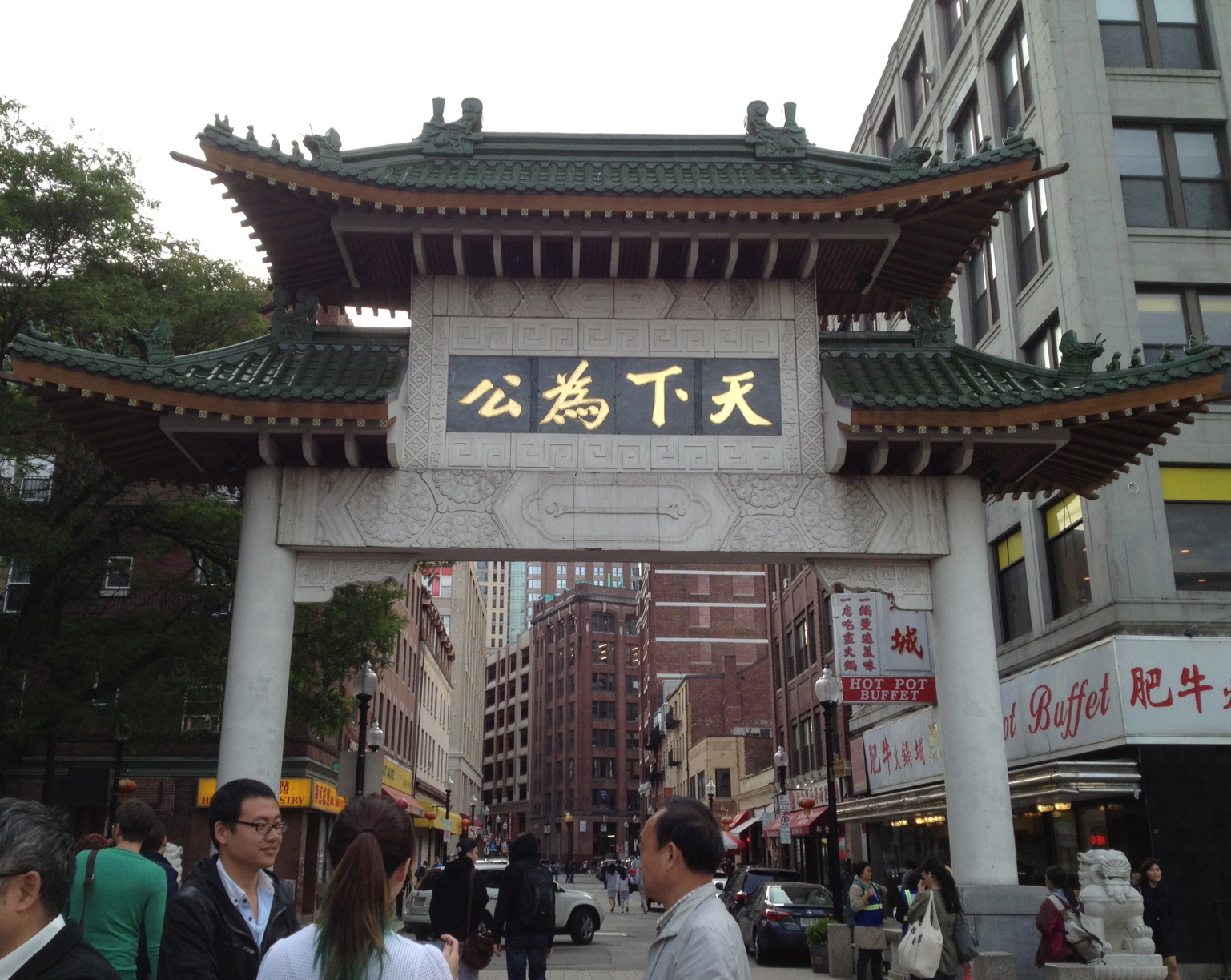
In case you need a marker, you’re entering Chinatown, Boston (Photo: DY)
A few weeks after taking the LSAT, I would learn that I did well enough to have some attractive options for law school. Originally I had every intention of attending law school on the west coast, but NYU was too appealing to turn down.

Cream puffs to die for in Chinatown, Boston (Photo: DY)
Since becoming a professor, most summers have been devoted in large part to various research and writing projects typically leading to the publication of articles in scholarly law journals. During the summer of 1998, for example, I did a lot of the spadework on my first article examining the legal and policy implications of workplace bullying, eventually published in 2000. It would prove to be a groundbreaking piece that helped to plant the seeds for a movement to enact workplace anti-bullying laws.
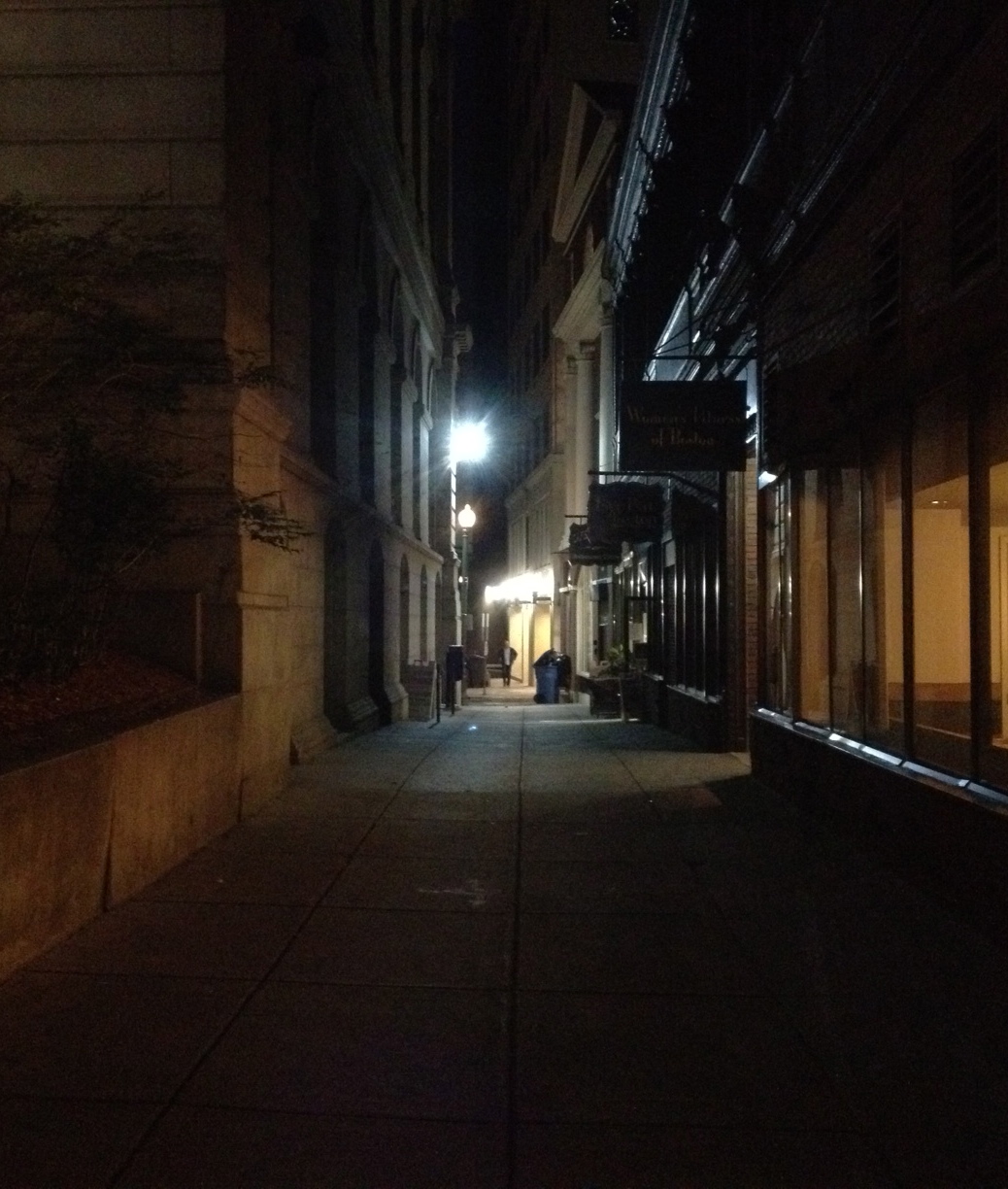
At night, this corridor in Downtown Crossing, Boston, looks like a step back in time (Photo: DY)
This summer I’ve been finishing up a piece on legal scholarship and “intellectual activism,” the latter being a term that I use to describe the process of engaging in research and analysis of a significant legal problem, designing proposed law reform and public policy responses, and then going into a more public mode with those proposals. It harnesses many of the experiences I’ve had and lessons I’ve learned over the past twenty or so years.
Of course, I also am grateful for the flexibility my job affords me to spend the summer working on a largely self-defined schedule. That very flexibility allows me the time to step out the door and take a few photos of this walkable city.
Heaven for a history geek: A David McCullough book talk

Not a great photo, but a wonderful book talk
One of the best things about living in Boston is that a lot of authors do book talks here, including many great writers of history. I just got back from one of them, a talk by historian David McCullough about his latest book, The Wright Brothers (2015), a story of brothers Orville and Wilbur Wright, who invented and flew the first successful airplane in 1903.
McCullough spoke in Cambridge as part of the Harvard Book Store speaker series to a packed house at the First Parish church.
McCullough is one of America’s foremost popular historians, and he is one of my personal favorites. His love of history pervades his books and his public appearances. In addition to being a master storyteller in print, his gravelly but gentle voice and a contagious enthusiasm for his subject matter add a magical quality to a talk or documentary.
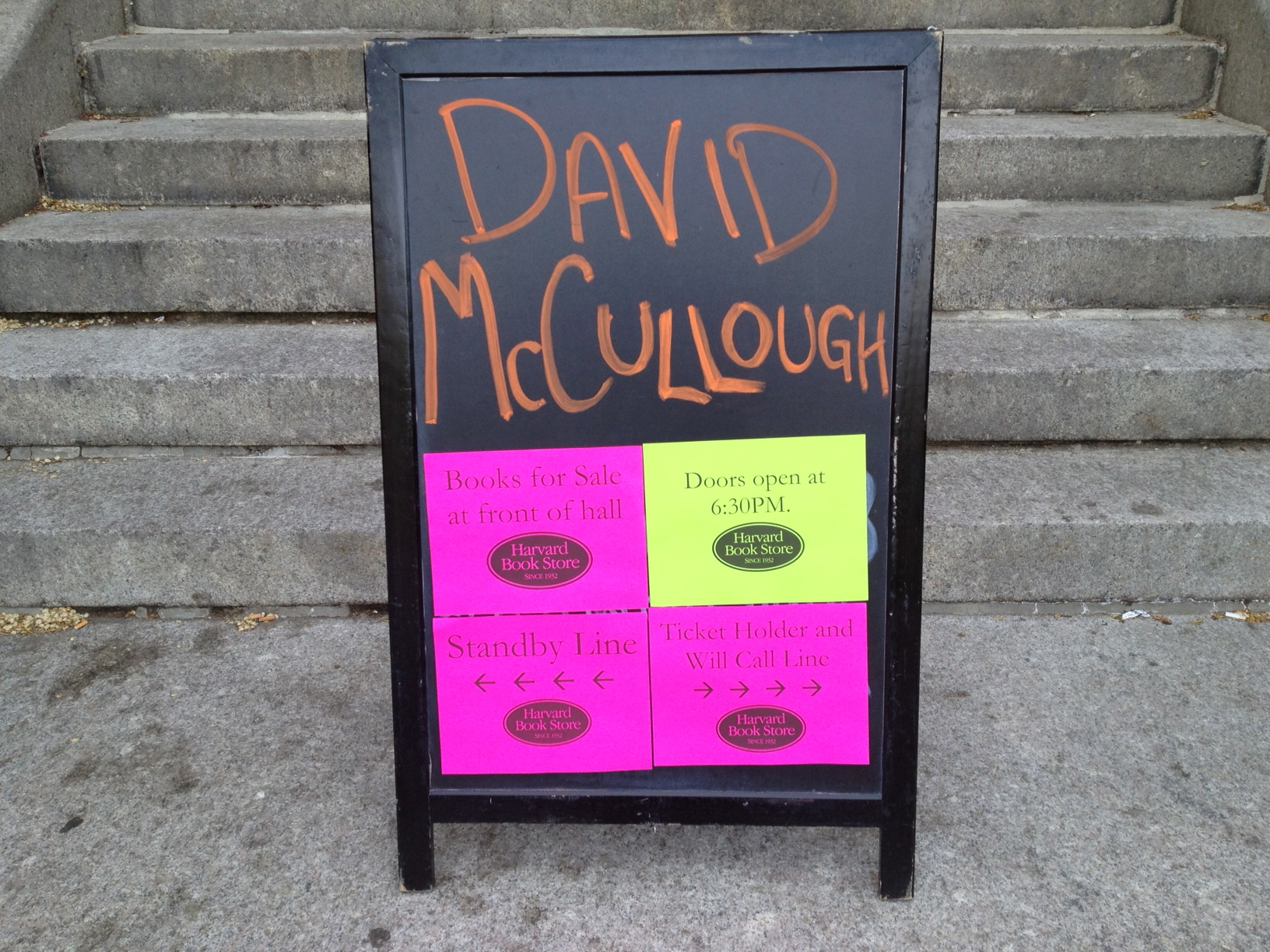
The ticket holders line stretched for over a block!
McCullough confessed that before he started his research, he knew little of the Wright Brothers’ story beyond the basics: Two brothers, owners of a bicycle shop in Dayton, Ohio, would go on to build and fly the first successful airplane, flown at Kitty Hawk, North Carolina.
However, as he dug into their story, he learned about how Orville and Wilbur were raised in very modest surroundings by a missionary father who believed very strongly in the power of reading, how their sister Katharine strongly influenced and supported their work, and how an intense devotion to teaching themselves the science and mechanics of flight led to their success.
It is clear that McCullough came to admire his subjects, for both their intelligence and their character. The Wright Brothers, he made clear during his talk, had the right stuff. He allowed himself to make broad connections, suggesting that great history is not just about politics and war. He compared the brilliant inventiveness of the Wright Brothers to that of composer George Gershwin.

During his prepared remarks and a lively Q&A, McCullough waxed eloquent about the importance of historical literacy. He said that history can be a “wonderful antidote” to the hubris of our present era. He noted that developments we take for granted today may be regarded as breakthroughs many years from now, adding that prognosticating about the future may be futile. “There’s no such thing as the foreseeable future,” he quipped.
David McCullough is a national treasure, as exemplified by tonight’s audience thanking him with long, warm rounds of applause and a standing ovation. It was just so much fun to be in the presence of this great historian and storyteller.
Dreaming of spring training

Baseball season approaches! Meanwhile, if you’re wondering what the sidewalks look like in many residential areas of Boston, here’s one from my ‘hood. I snapped the photo on Sunday night, walking home from the subway. (Photo: DY, 2015)
During this winter of our discontent here in Boston, baseball season seems as far away as the moon. Perhaps that’s why I find myself waxing nostalgic about the game, thinking back to my boyhood years when I became a fan.
During my latter grade school years, I discovered baseball, both watching and playing. The watching was inspired by my 80-something grandfather, who was living with us in Northwest Indiana and enjoyed Chicago Cubs games on television. He didn’t speak much English, but he could follow the ballgames, and so after school and during summers, we’d often watch with him in our little TV room. Here’s the song that would open many a Cubs telecast:
The playing was by way of my friends, who were big sports fans. A few were on organized Little League teams, but for most of us baseball was a pick-up game played on the local parkway, with improvised diamonds. I was terrible at first, but I had fun and kept at it, to the point where I could hold my own hitting and fielding.
In fact, my affinity for the game grew quickly, and the slightest sign of spring became reason to get out my baseball glove and bat. Once the temperatures hit the 60s, I would be full of anticipation for the coming Cubs season and for our parkway ballgames. I’d check the newspaper for news about spring training and search out neighborhood pals to play catch. I also became a fan of tabletop baseball games that used statistical charts and cards to simulate the performances of real-life baseball players — the forerunners of today’s sophisticated computer and video games.
As I got older my focus on baseball waned. But after I graduated from law school, I rediscovered the game. I was in New York City by then, and in the mid-1980s it was still possible to get Mets grandstand seats for under $10. I shared a pair of season tickets with friends during the Mets 1986 World Series championship season, and it was a blast. I also joined fellow Legal Aid Society lawyers for weekly softball games in Brooklyn’s Prospect Park. Yup, those were good years.
Today, I’d be in better physical shape if I was still playing softball, instead of anticipating the start of fantasy baseball season and playing baseball board and computer games! Whatever. Until this snow starts to clear up, any manifestations of baseball around here will be virtual anyway.
From top dog to underdog: Why I’m pulling for Barnes & Noble

Recent B&N acquisitions
Not too long ago, Barnes & Noble was a big bad bully of the bookselling industry, pushing indie bookshops out of business across the country and swallowing up competitors like B.Dalton. For a while it jousted for top dog status with Borders, its main competitor in the superstore category.
But then along came Amazon, the biggest, baddest book selling behemoth of them all, armed with easy online click & ship ordering, the Kindle e-reader, and marketing savvy. Borders would go into a slow death spiral, finally crashing a few years ago. Barnes & Noble is now trying to survive as the only significant, national brick & mortar bookstore chain.
The top dog has morphed into the underdog.
Still and all, I very much hope that B&N makes it. I have always enjoyed walking into their stores, wondering what new discoveries await me, and exploring their huge selections. In addition to the shopping experience, B&N’s stores host author talks, meetings of writers’ circles and book clubs, and informal meet-ups. They are good for a community.
In addition to shopping at indie bookstores and, yes, Amazon at times, I’ve been making a conscious effort to buy more of my books, DVDs, and periodicals at B&N’s main store here in Boston. If it disappears, Boston will be without a major, high volume bookstore in the heart of the city, and that would be a genuine civic shame.
Me and B&N: The beginning
Barnes & Noble and I go way back. I first discovered it well before its superstore era, when the company was a plucky retailer, with stores in Manhattan and a fledgling mail-order business. As an undergraduate living in Indiana (1977-81), I sent away for their thick catalogs, and I would spend hours poring over the remainder listings in search of good bargains.
When I moved to New York for law school in 1982, my periodic walks from NYU’s Greenwich Village campus up to B&N’s twin retail stores on opposite sides of 5th Avenue at 18th Street became regular rituals. The east side location housed its flagship academic bookstore, offering mostly new non-fiction titles and textbooks at full sticker price. As a budget-conscious student, this made it better for browsing than for buying.
The west side storefront, however, was the site of B&N’s huge Sale Annex. It quickly became a personal treasure trove, with several floors of low-priced remainder books, discounted new books, and a generous used book section. At the risk of betraying more of my geekdom, I confess that my heart would start beating faster upon entering the store, in anticipation of the affordable goodies I might find there. I cannot guess how many hours I spent in that store during my 12 years in New York.
Right next to the Sale Annex was a large B&N music store. Here, too, I was overwhelmed by the choices. This was still the golden age for cassette tapes, and the music store seemed to have them all. At the time, my “stereo system” was the portable cassette player I had brought with me from Indiana, and I would wear out the batteries over and again playing my purchases there.
Enter the superstores
In the early 1990s, B&N made its big move, launching the superstores with their huge book selections, many shelves of periodicals, music and video offerings, and cafés selling beverages and food. They started in New York and soon expanded the concept nationally.
At that point, B&N became the bad guy, the Manhattan bully that was pushing small independent bookshops out of business. There was truth in the charges. With its thousands of titles and discounted best sellers, B&N simply offered much more than did its smaller competitors, and at lower prices for popular books. Borders would soon join the fray, and the two went head-to-head for a decade or so, while the indies took even more of a beating.
Among book lovers, the superstore vs. indie issue became political. Looking back, I recall being in a distinct minority among my liberalish social cohort in saying that I preferred the big superstores to the mom & pop bookshops.
These debates even helped to inspire a main storyline in the 1998 romantic comedy You’ve Got Mail, starring Meg Ryan as the owner of a small Manhattan bookstore and Tom Hanks as a senior executive for the superstore opening in the indie shop’s neighborhood. (It also features AOL as the e-mail platform. How things have changed!)
Fast forwarding……
My gosh, the superstore vs. indie discussion is largely passé, yes?! When it comes to bookselling today, it’s Amazon vs. Everyone Else. In fact, until recently it appeared that Barnes & Noble would go the way of Borders and disappear from the scene. In particular, B&N’s Nook e-reader has flopped as a competitor to Amazon’s Kindle, and losses from its e-book division have been a drag on B&N’s balance sheet. In addition, Amazon’s ubiquitous online presence has hastened the closure of many B&N stores across the country.
Among the departed are the main and annex stores on 5th Avenue at 18th Street. That breaks my nostalgic heart a little.
However, B&N has been making something of a comeback. It appears that a growing number of book buyers have recognized the importance of having brick & mortar bookstores around, and B&N has joined indie booksellers in enjoying a minor resurgence. In pure business terms, even its stock value has staged a recovery.
Until a year or so ago, I was buying most of my books from Amazon and keeping a Prime membership to guarantee fast delivery. However, ethical concerns over Amazon’s treatment of its warehouse workers have caused me to reduce my ordering from Amazon and to cancel my Prime account. (See this piece posted to my professional blog for a longer explanation.)
In the meantime, I’ve rekindled my enjoyment of visiting brick & mortar bookstores of all types, including small indies, used bookstores, and B&N’s superstores. Yup, click & ship is awfully handy, and online booksellers (including B&N and Amazon) are now networked with used bookstores across the country, making the hunt for elusive out-of-print titles much easier. Nevertheless, physical bookstores, where you can browse and discover and buy, are a joy for the mind and spirit and are part of an intelligent, healthy society.
Let’s hope that B&N and other bookstores are around for a long time. I look forward to giving them more of my business.
I’m still writing about (drum roll, please) snow

Sunday a.m., looking down my street while the wind gusts
Dear readers, you’re about to be treated to another entry about the weather here in Boston. We’ve got our fourth consecutive weekly Big Snowstorm, two of them blizzards. Winter Storm Neptune (snowstorm 4/blizzard 2 if you’re counting) has been unfolding before our very eyes this weekend.
I wish I could claim that I’ve turned the snowbound days into productive work activity, but it’s only partially true. The weather geek in me keeps an eye on the TV weather coverage, even if it’s becoming repetitive. Snow here, snow there, snow everywhere — and plenty of wind gusts, too. This is, after all, a weather pattern of historic proportions, and we’ll be talking about it for years. Hey, this ain’t nothin’ compared to the big ones back in ’15……
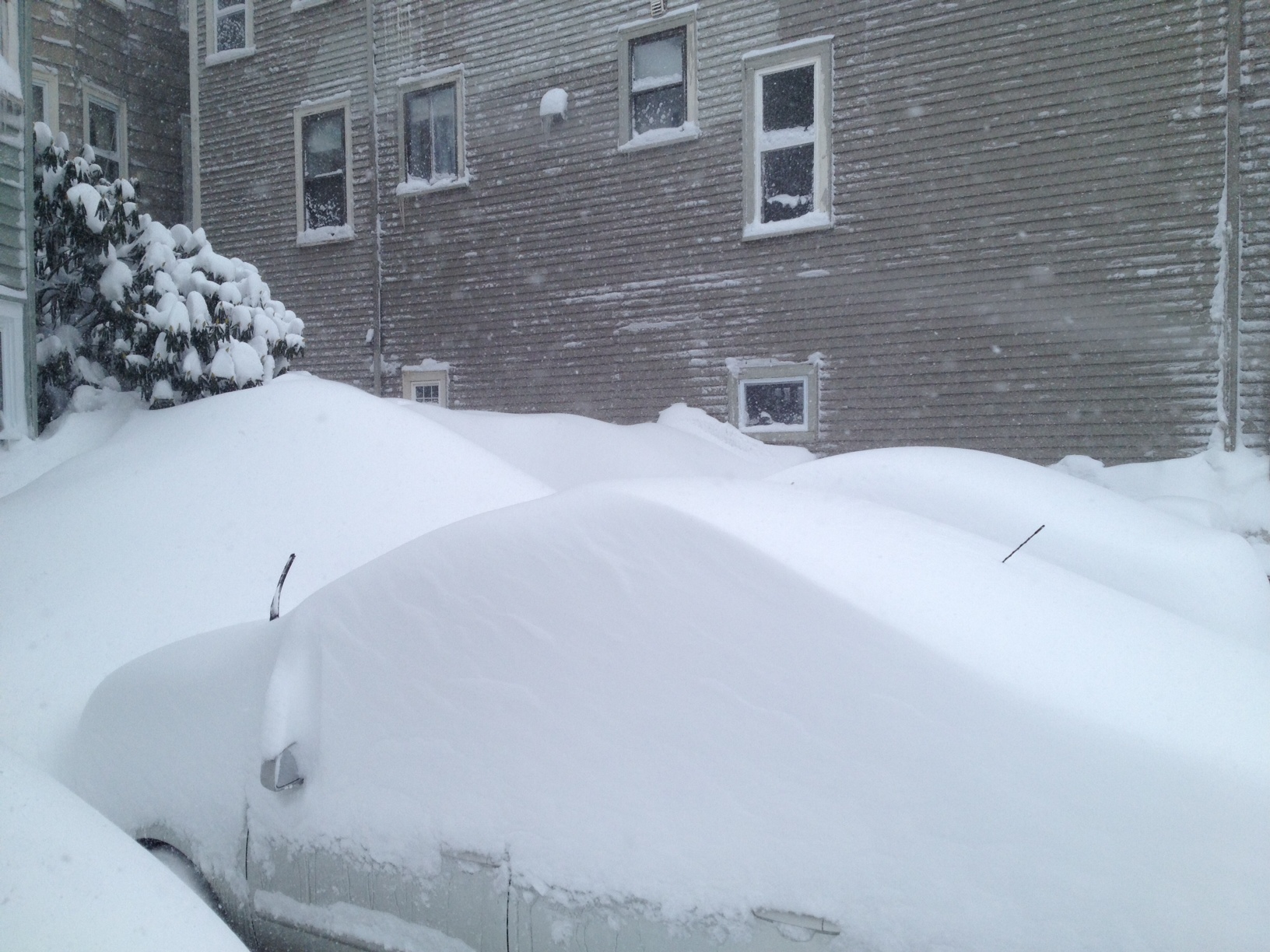
Sunday a.m., neighborhood snowmobiles
The local transit authority announced that the subway, buses, and commuter rail will be operating on, to put it gently, adjusted schedules on Monday, after being shut down completely today. My university decided to hold classes, which means that a lot of students, faculty, and staff will be having somewhat adventurous sojourns into downtown Boston. I’ll be among them!
I’ll also have a little soreness in this middle aged body tomorrow, thanks to my largely futile efforts at snow shoveling today. Fortunately, I was able to hire a couple of guys who were earning extra cash with a snowblower and a snowplow truck. They did in a few minutes what would’ve taken me…never mind…I wouldn’t have finished. That said, even the snowblower had trouble pushing through mounds of snow where the sidewalk was supposed to be.
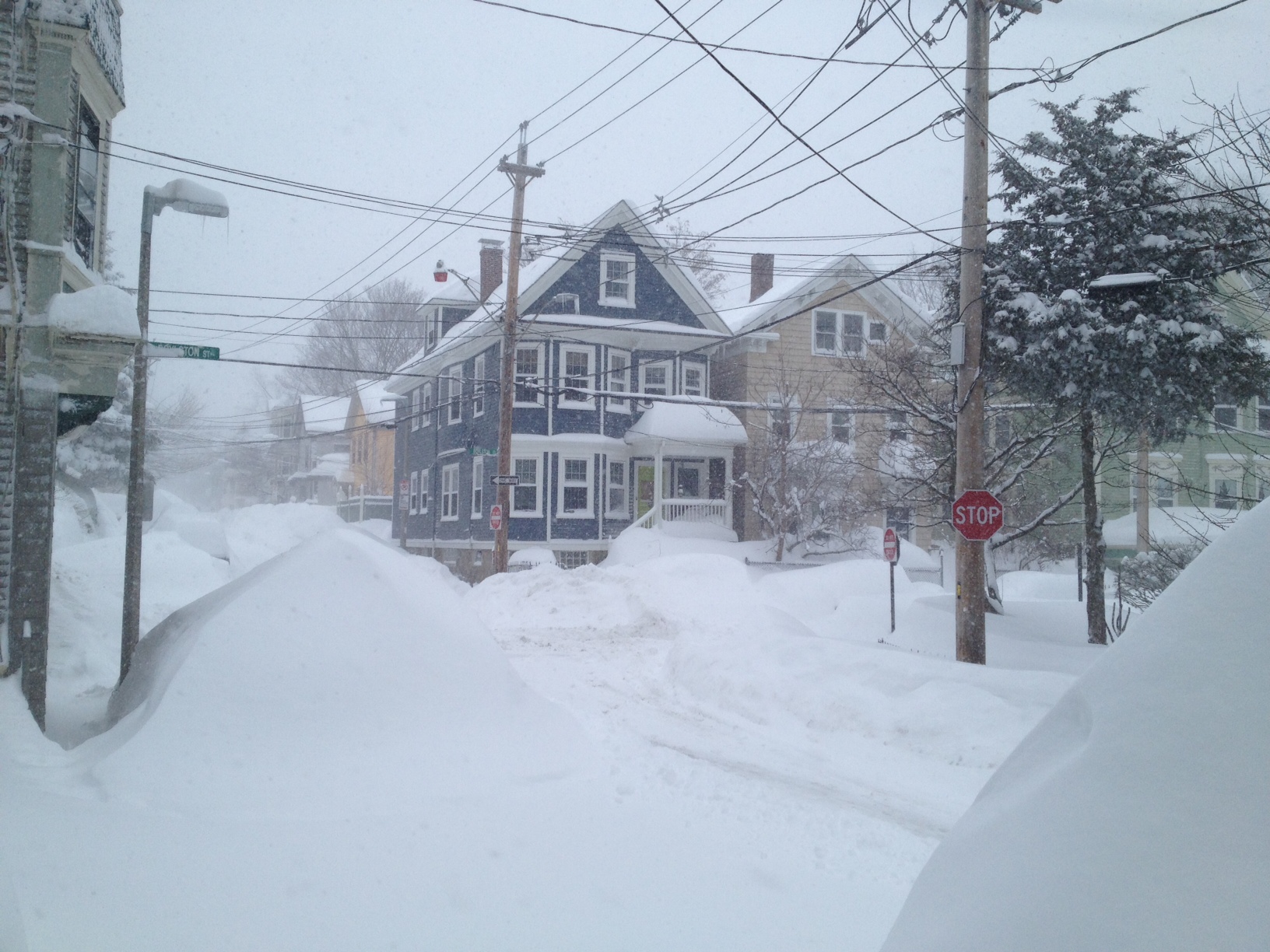
Sunday a.m., corner intersection
I did manage to watch some TV, including the latest episode of The Americans, one of the best one hour dramas around right now. I also watched an ESPN streamed college basketball game featuring my undergraduate alma mater, Valparaiso University, overcoming a half-time deficit to beat Wisconsin-Milwaukee, the latest win in a surprisingly strong season. VU’s basketball team wasn’t much to speak of while I was a student. But its fortunes have improved considerably since then, to the point where VU now ranks among the better mid-major Division I hoops programs.
As I finish off this blog post, I’m missing a 40th anniversary special for Saturday Night Live. It realize that it’s an iconic Generation Jones television show, premiering in 1975. SNL has had its moments — for me “Da Bears” skits and Tina Fey’s Sarah Palin impersonations are brilliant — but overall I find its humor misses as often as it hits. Maybe I’ll catch it another time, perhaps during a future snowstorm.
Snowpocalypse 2015

Another winter Monday in Boston: Walking down the street toward the subway station
Even my dearest friends who read this blog are probably tiring of this, but I must write again of the weather! Here in Boston, we’re getting pounded with another 20 inches or so of snow, our third major storm over the past 15 or so days. The city is once again in shutdown mode, and the white stuff keeps piling up.
This is the third Monday in a row that my classes have been cancelled, and for me the novelty of snow days may be forever gone, er, at least for a while. Anyway, I decided that this would be a good day to go to my office and get some work done. Encouraged by online postings that my subway line was experiencing only “moderate delays,” I bundled up and trudged over to the subway, a/k/a the “T” (shorthand for Massachusetts Bay Transit Authority).

The lies they tell: At this point it has been at “3 min” for 20 minutes with no announcements
You see the electronic sign in the photo above? I’ve noticed something about it, in any kind of weather. When it ticks down to 3 minutes, time according to the T stops in its, uh, tracks. It may stay at 3 minutes for a couple of minutes, maybe 5 minutes, maybe a bit longer. This time, however, it stayed at 3 minutes for over 20 minutes, with no public address announcement informing us of extended delays. I got the message and decided that riding the T today was not a prudent option.
I’ve spent most of my life in parts of the country where snowfall is par for the course, but I cannot recall being hit in three successive weeks with storms that, standing alone, would be regarded as the signature event of a more normal winter. This has been a remarkable stretch of weather, and I’m sure we’ll be sharing stories of the winter of 2015 for many years to come.
 Musings of a Gen Joneser
Recent Comments