“The Civil War” on PBS

Some 24 years have passed since the premiere of the groundbreaking PBS documentary series, “The Civil War,” by Ken Burns. It stands as probably the best historical documentary series ever made. Burns mixed photos, graphics, interviews, readings, music, and pitch-perfect narration by historian David McCullough to create an evocative and gripping story of America’s Civil War, fought from 1861 to 1865.
At the time it aired, I was a broke-as-hell public interest lawyer in New York, with no cable and a rabbit-eared black & white television set given to me by friends. The lack of decent TV reception made no difference; I knew I was watching an instant classic. Burns and his team pulled off the seemingly impossible. In nine episodes totaling roughly eleven hours, they made an era come alive in documentary form. No CGI. No Civil War re-enactors. Just brilliant content.
Of course, the series was criticized by some partisans for North and South alike for what it did or didn’t do, but the overall response to “The Civil War” was abundant, enthusiastic praise. It helped to rekindle a national interest in Civil War history that endures to this day. It certainly had that effect on me.
The producers of “The Civil War” brilliantly selected a modern piece of music with a 19th century feel, “The Ashokan Farewell” by Jay Ungar, as the series theme. Here’s Ungar playing a rendition with a folk band just a few years ago. It’s a beautiful, haunting tune, perfect for the series, and well worth five minutes of your time:
Even better, rent or pick up the series and watch it. You’ll get the whole deal, a documentary that breathes heart and soul into a story of one of the signature events in American history. And you’ll never tire of hearing “The Ashokan Farewell” over and again.
***
I have to toss in a side note about series narrator David McCullough, one of America’s leading popular historians. Several years ago, McCullough spoke at Boston’s Old South Meeting House — a key stop on the city’s “Freedom Trail” of historic Revolutionary-era sites — to preview one of his upcoming books. He started his talk by looking up at the packed house, opening up his arms wide, and warmly proclaiming “Aren’t we lucky to be here!?” It was his own way of celebrating how we all could share our love of history in this significant building. For a history buff like me, it was such a great, fun moment.
Photo of DVDs: DY, 2014
Earthy, historic, mysterious, delicious New Orleans

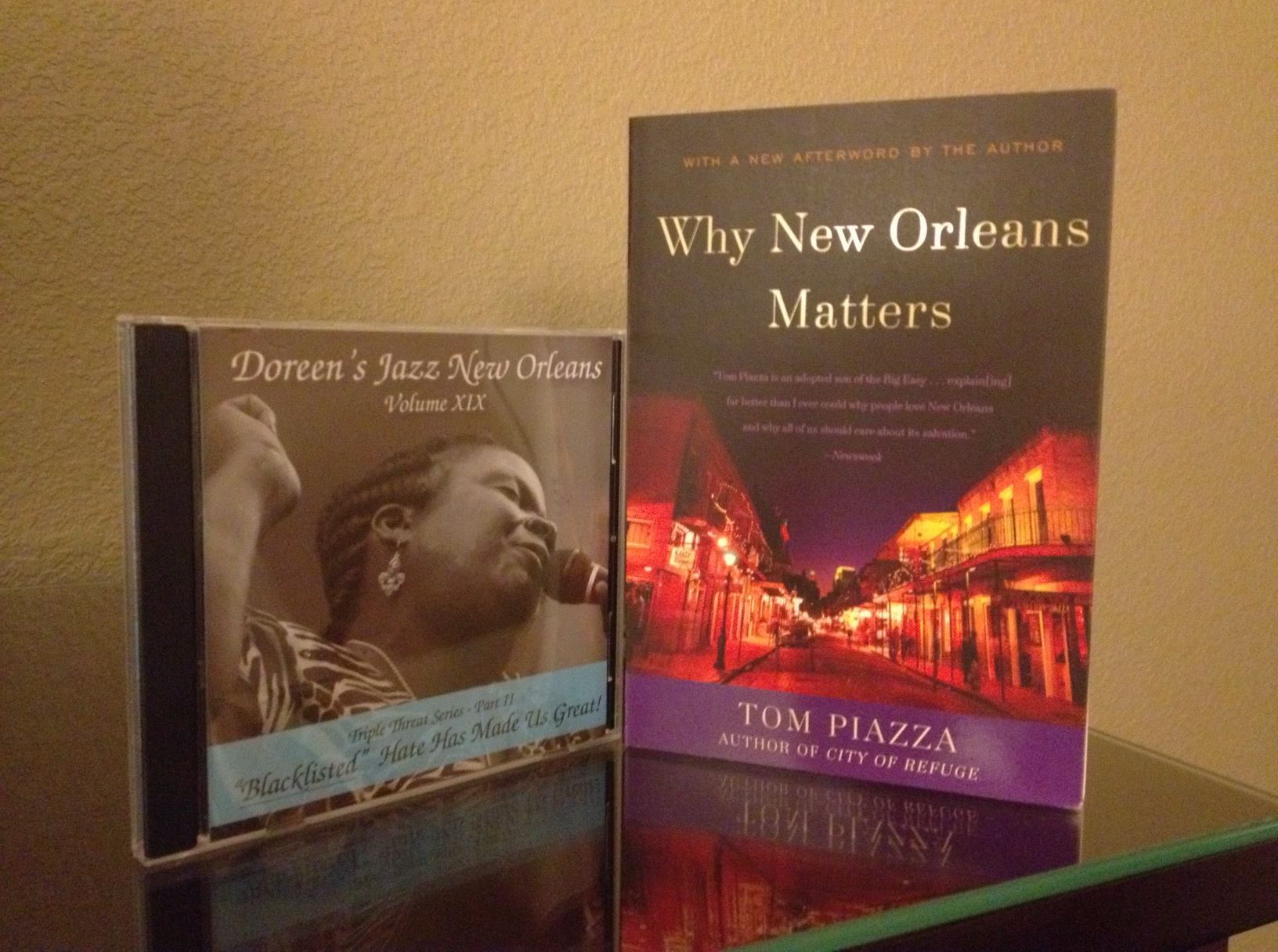
New Orleans has a mythology, a personality, a soul, that is large, that has touched people around the world. It has its own music (many of its own musics), its own cuisine, its own way of talking, its own architecture, its own smell, its own look and feel.
-Tom Piazza, Why New Orleans Matters (2005)
At least during those five months of the year when it isn’t unbearably hot and humid, I can’t think of a more fascinating American city to visit than New Orleans.
I’ve been in New Orleans for a conference, and it’s my first trip to the city in 15 years. Obviously NOLA (as they call it) has been through a lot in the post-Katrina years, but it retains the unique look and feel that Tom Piazza wrote about in his eloquent tribute to the city as it struggled to recover from the storm and flooding.
Lately my vacations have been limited to extended weekend trips and add-on days to work-related travel, and thus I tend to explore places I visit in short stretches. Fortunately I can dig into a city like New Orleans, especially its historic French Quarter, even if I have only a couple of days to do so. For starters, I took a great walking tour of the Quarter sponsored by Friends of the Cabildo, a non-profit organization dedicated to preserving Louisiana’s history. From that tour, here’s a shot of the St. Louis Cathedral, the oldest operating cathedral in North America:
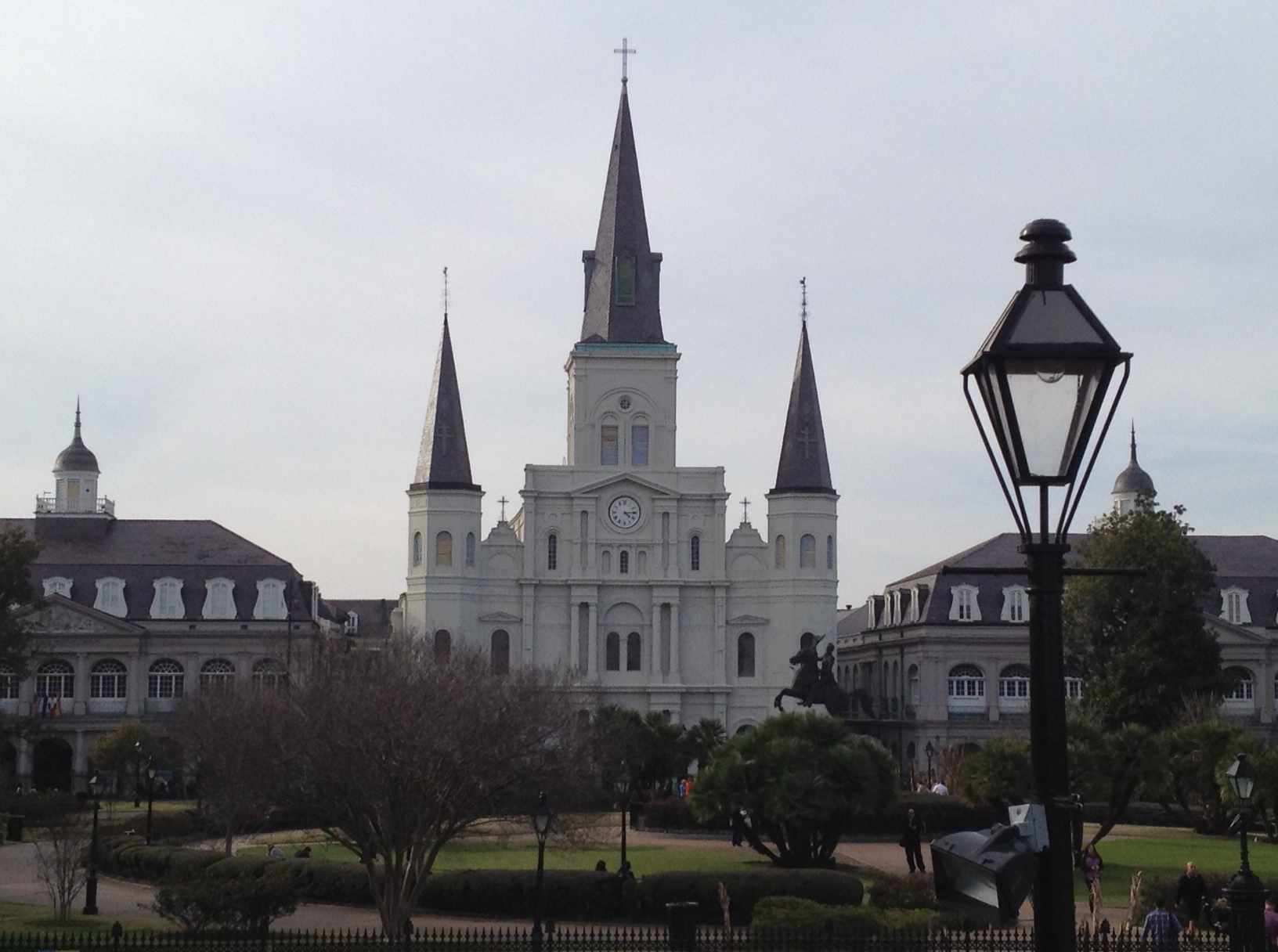
Some of my college pals who read this blog know all-too-well how much our semester abroad in England and accompanying post-semester sojourns imprinted themselves on me. Ever since, I’ve welcomed opportunities to re-experience the adventure of youthful European travel, however briefly, and New Orleans allows me to do just that without need of a passport! Seeing artists displaying their work in Jackson Square reminded me of my first visit to Paris over 30 years ago.

Being the bookstore hound that I am, I had to seek out a few of the city’s bookstores. Here’s Beckham’s Bookstore on Decatur Street, a great used bookstore with piles of books next to filled-up shelves that, well, sorta reminded me of my condo!

Beckham’s comes replete with its own resident cat, who apparently commandeers whatever space is convenient in order to get in a well-earned nap.

NOLA is home to some incredibly talented musicians. Here’s a great jazz band playing on Royal Street.
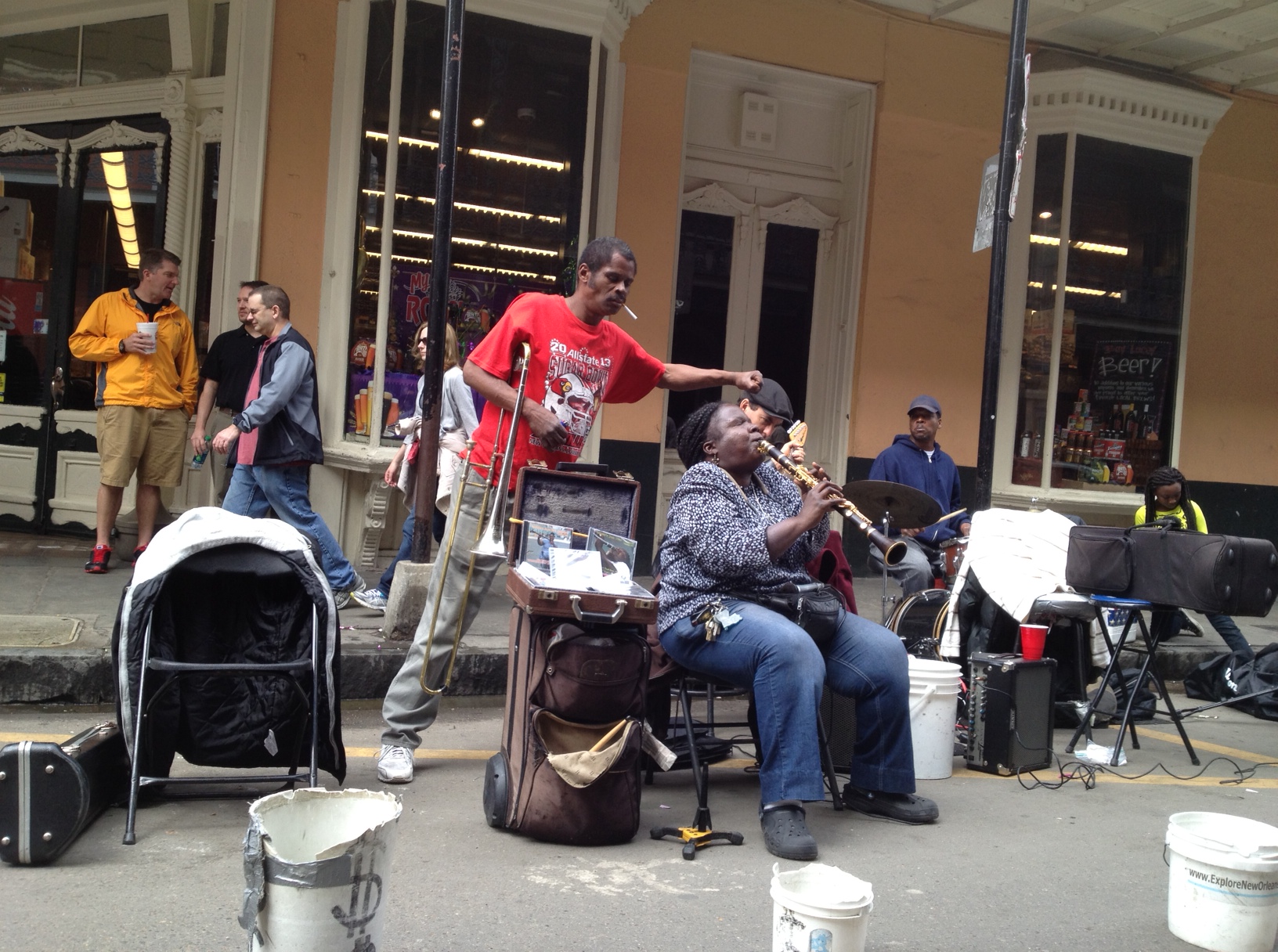
They’re so good, I picked up one of their CDs, pictured here with the Piazza book:
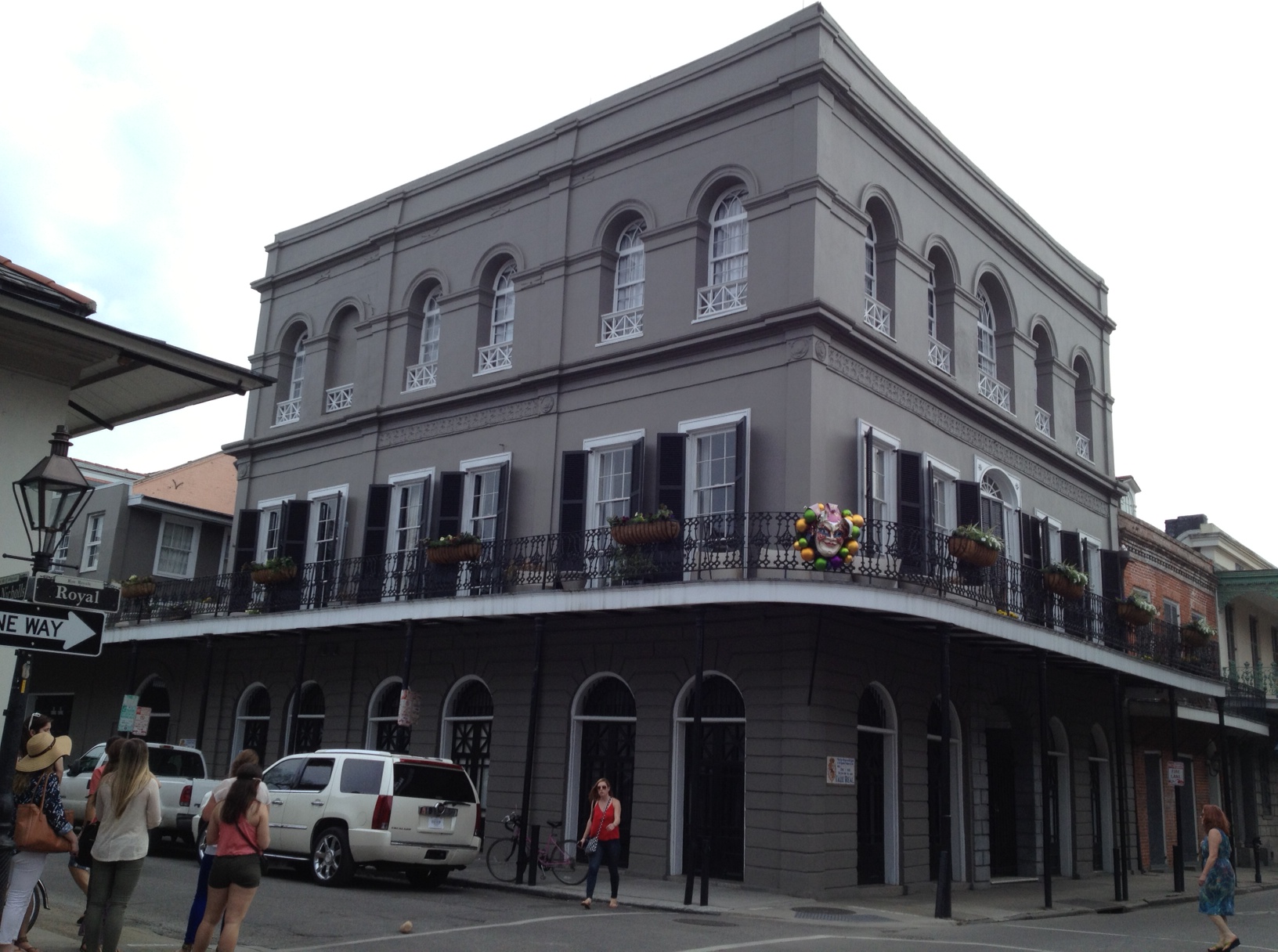
NOLA’s history has its ghastly side that, not surprisingly, sometimes turns ghostly. For example, pictured here is the house of Madame Delphine Lalaurie, who is said to have committed horrific acts of torture on her slaves during the 1830s. Though some claim that she has been unfairly indicted in the court of history, the most authoritative book that I’ve encountered on the topic, Carolyn Morrow Long’s Madame Lalaurie, Mistress of the Haunted House (2012), sides with the accusers. Naturally, the house is a favorite stop on the countless French Quarter ghost tours, and though I didn’t encounter anything supernatural when I was clicking away with my camera, I wouldn’t be eager to spend a night there.
Not all of the historical offerings are uniquely local. New Orleans also is home to the impressive National World War II Museum, co-founded by noted historian Stephen Ambrose, who taught at the University of New Orleans and whose books about D-Day and the European Theatre inspired the HBO series “Band of Brothers.” The museum, which continues to expand, includes a large hall containing vintage aircraft. Here is a B-17 “Flying Fortress,” an iconic U.S. bomber plane of the era.

Of course, a visit to New Orleans typically involves good food. The city has a collection of fancy restaurants, but I ended up being a repeat customer at less expensive eateries, including The Grill, pictured here…
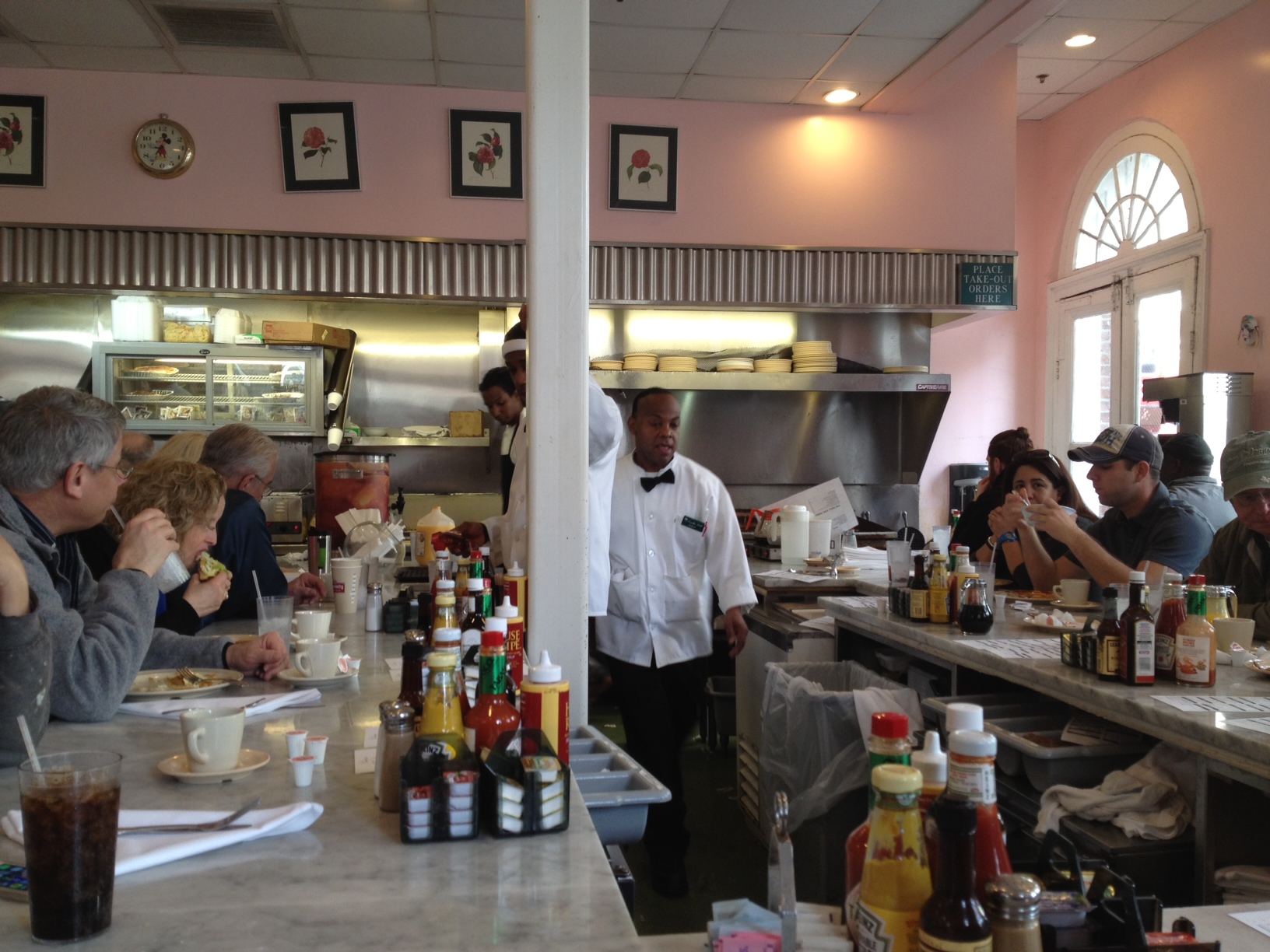
…and Jimmy J’s Cafe, whose wonderful cinnamon French toast is pictured here.

I think an order of French toast is a good way to conclude this blog post. Enjoy!
***
For a short piece on the psychology & law conference that brought me to New Orleans, go here.
All photos: DY, 2014
Bloody politics
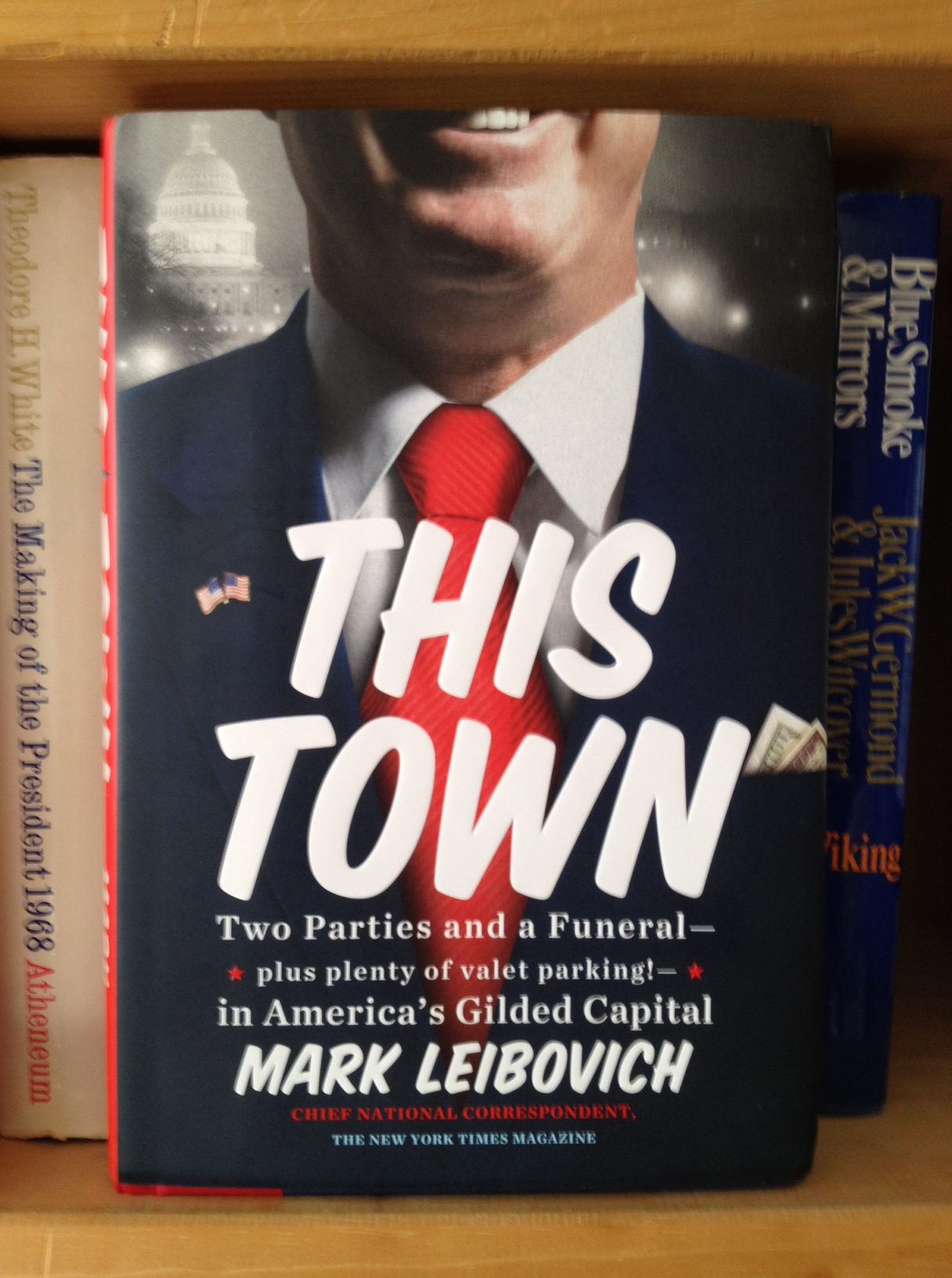
I just finished reading Mark Leibovich’s This Town (2013), a bestselling “insider” look at political life in the nation’s capital. It’s bitingly funny at times, as one might expect such a book to be, and it provides a fix for recovering political junkies like me.
It’s also a reminder of a path I chose not to take.
You see, reading about politics is a far cry from my aspirations of decades ago, when I was an ambitious student government pol in college and planned to go to law school as a springboard into the real thing. As an undergraduate at Valparaiso University in Indiana, I was elected to various student senate positions, and I volunteered regularly for political campaigns. I managed a successful upset campaign for a town board seat in northwest Indiana, and I served as an area coordinator for the 1980 independent presidential run of John B. Anderson.
Of course, I also was a political science major, and it so happened that the poli sci department at Valparaiso was comprised of dedicated teachers who stoked my fascination with politics. In particular, Professor James Combs, quite the political junkie himself, was teaching and writing up a storm about political communications, which played right into my obsession with campaigns and elections.
My interest in politics continued through law school and beyond. As a young lawyer during the late 1980s, I was an officer in a reform Democratic club in Brooklyn, and it served as a very on-the-ground introduction to the gritty realities of New York politics. (I recall discovering pages and pages of forged ballot access petition signatures filed by one of our opponents, marveling at their sheer chutzpah.)
But some 23 years ago, I stumbled my way into teaching. I returned to my legal alma mater, New York University, as an entry-level instructor in its innovative Lawyering skills program for first-year law students. I knew immediately that I enjoyed being an educator, and that experience turned out to be the start of an academic career. In fact, I’m now in my 20th year of teaching at Suffolk University Law School in Boston.
Today, I’m hardly removed from politics. My work in drafting and advocating for workplace bullying legislation puts me in regular contact with legislators and their staffs. Two years ago I finished a term as board chair of Americans for Democratic Action, a liberal policy advocacy organization based in D.C. And though my politicking these days is limited primarily to occasional campaign contributions, I follow electoral politics fairly closely.
But the world portrayed in Leibovich’s This Town, however embellished to attract more readers, is not for me. There are a lot of good, honorable people in politics, a fact we dismiss too easily in this cynical age. But politics is a bloodsport, and it requires a certain dispositional DNA to play the game for the long term without it becoming debilitating. When I think back to my collegiate ambitions, I now understand that I enjoyed reading and writing about politics more than being in the thicket of political life, even as the latter appealed more directly to my ego and insecurities at the time.
Okay, so the world of academe is hardly apolitical, and it can get as petty and nasty as any political brawl. (I sometimes quip that the real untold Biblical story is how God banished Adam & Eve to a faculty meeting as punishment for their transgressions.) That said, the focus of academic work itself is more on teaching, writing, and public education, and that’s more to my liking than the day-to-day work of political life.
Still, please do excuse me if I get a little charged every four years over news coverage about the Iowa caucuses or the New Hampshire primary. It remains neat stuff to me, albeit from a distance.
Saturday night television (back in the day)
As a grade schooler during the late 1960s, I always looked forward to Saturday night’s television lineup. The real world might’ve been in a state of crisis and unrest — this was, after all, the heart of The Sixties — but the realm of network television was still very much a sheltered place. Starting in the fall of 1968, for example, the following TV shows made up our standard Saturday night fare (Central times listed):
6:30 — “Adam-12” — A cop show, co-produced by Jack Webb, featuring patrol officers Reed and Malloy on the streets of pre-Rodney King Los Angeles.
7:00 — “Get Smart!” — I didn’t appreciate the brilliant humor until I was older, but this spy vs. spy sitcom featuring Don Adams as dimwitted Agent 86, Maxwell Smart, and Barbara Feldon as his brainy, beautiful partner, Agent 99, made for excellent comedy!
7:30 — “My Three Sons” — Featuring Fred MacMurray as a widower raising his three sons. A sentimental, feel-good family sitcom. Extra points for those who can hum the all instrumental theme song.
8:00 — “Hogan’s Heroes” — Who woulda thunk that a sitcom set in a German prison camp could be so stupidly funny? The character of Sergeant Schultz (John Banner) is iconic to a certain generation of viewers. (If someone tells you, “you’re just like Sergeant Schultz,” do not take it as a compliment!)
8:30 — “Petticoat Junction” — A light sitcom set at the Shady Rest Hotel in the rural town of Hooterville, featuring a neat old steam train and three comely lasses, Billie Jo, Bobbie Jo, and Betty Jo. Those who tired of the Ginger vs. Mary Ann debate could refocus their attentions here.
9:00 — “Mannix” — The only one-hour show on the list. A private detective series featuring Mike Connors as tough guy Joe Mannix. He was sort of the clean-up hitter of the Saturday night lineup.
Of these programs, only “Get Smart” and, yup, “Hogan’s Heroes” manage to hold up over time, due to some hilarious characters and clever dialogue. But back then, Saturday night TV meant an uninterrupted run of fun shows and after-dinner goodies, staying up late with no school the next day — a more innocent time of life, before the tumult of adolescence, and with little more to worry about than whether Mannix would catch the bad guy.
***
You can check out the full 1968-69 television lineup here on Wikipedia.
Gen Jonesers: Are you more Boomer or Gen Xer?

From nextavenue.org — Take the quiz!
Generation Jones is a “generation within generations,” made up of folks born between 1954 and 1965, i.e., late Boomers and early Gen Xers. A main premise behind the Gen Jones concept is that those of us who fall within those birth years, on the whole, had a very different set of framing events and experiences during our formative years than those of the more well-defined generations that sandwich us.
Writing for the excellent Next Avenue site, Liza Kaufman Hogan discussed the differences between Boomers and Gen Xers. Many readers here will find her contemplations of interest, but what really caught my attention was her 11-question quiz, “Gen X or Boomer? Which Are You?” (go to her article, scroll down for quiz). Your responses will give you a score that places you somewhere on the Gen X/Boomer spectrum.
I scored a 37. This puts me in the middle, a classic Gen Joneser!
Even this fun little diversion gets me thinking how, from a pop culture standpoint alone, the music we listened to, the television shows we watched, and stories on the nightly news coverage we followed in the 1970s were quite a contrast from those of the preceding and following decades.
Vive la différence, right? Take the quiz and find out where you stand!
Dealing with colds: Brothers in the struggle

Woe is me.
I’ve got a winter cold, and I’m feeling whiney about it. (In my last post I complained about the winter weather. At least I’m developing a theme.)
I remember when coming down sick meant staying home from school and watching reruns of bad sitcoms on TV. This is among the reasons why I can still sing the theme songs from shows such as “The Beverly Hillbillies” and “Green Acres.”
Today, being an academic, I suppose I could stay home from school and watch more bad reruns, but in reality I simply have to deal with my cold and be mindful not to share it with others.
We have yet to develop a cure for the common cold, but research is showing that among the various “alternative” remedies, zinc-based products have shown the most promise for reducing a cold’s duration and severity. I have found this to be the case, and hence the free plug for Cold-Eeze above.
However, no cold remedy is a miracle worker, and so some degree of discomfort is inevitable. Despite the burdens of my malady, I shall go on.
Our heavy burden
And if I may add a dose of gendered controversy into this post, it’s worth noting that we men may suffer more than woman from the common cold. As Nigel Farndale wrote for The Telegraph two years ago:
This is because a cold is debilitating, for a man. Loss of concentration is merely the start of it. A man knows his cold has properly kicked in when his brain has become glued to his skull and he can no longer breathe, not in any meaningful sense of the word.
For a woman, a cold is of little consequence, which is why I resent the mockery men endure about “man flu”. Yes, yes, I think. Very funny. But men have long known, by a process of deduction, that the colds they get are much worse than the colds women get.
In fact, he added, there may be scientific evidence for this:
Researchers at the University of Queensland have proved that men suffer more from colds than women. They found that female volunteers had a “much stronger immune response” to rhinoviruses – the bugs that cause the common cold – than men.
So the next time you encounter a man with a cold who is acting like a plague victim, don’t be judgmental. He’s doing the best he can.
As for me, I shall persevere. There’s work to be done, and I must do it.
I’m sick and tired of this winter — so bring on fantasy baseball!

Over the past few months, I’ve included a lot of winter photos to give some seasonal atmosphere to this little blog. Nice pictures, I hope, but I must say, I am really, really over this winter.
Perhaps someone who lives in New England has no whining rights when it comes to wintry weather, but I’ll take a chance and vent anyway. I can’t recall ever being so eager to say goodbye to a season! Every dose of novelty about heavy snowfall, all the hype fueled by The Weather Channel as a snowstorm approaches, even the prospect of a snow day at my university . . . been there, done that. Spring cannot come too soon, even if true spring weather lasts but a few weeks in the Northeast.
This evening, my seasonal spirits were brightened when a longtime friend and college classmate e-mailed me with his annual invitation to rejoin our fantasy baseball league. I am pleased to report that the Jamaica Plain Supercells, which finished 4th last season after winning the league championship the year before, will be making their next run at fake baseball glory soon after our league player draft in late March!
Yup, there’s something good about the pending return of baseball that makes the rest of winter more tolerable. Spring training is starting up, and before we know it, the real-life baseball players will be generating stats that power our fantasy league. As Chicago Cubs Hall of Famer Ernie Banks famously said, “let’s play two!”
“I want it all” (Grown up edition)
In the course of a life, can we really have it all?
The YouTube video above — featuring a song from the 1980s Broadway show “Baby” — captures our wishful thinking, especially when we’re younger. In this scene, three women of different ages and life circumstances — but all on the south side of 40 — meet by chance in a doctor’s office. In a sweet and clever number performed by Liz Calloway, Catherine Cox, and Beth Fowler at the 1984 Tony Awards, they share how they want it all.
Getting real
Way back in 1985, Norman Redlich, the dean of NYU Law School, referenced those Broadway lyrics in his remarks at our graduation convocation. His message: It sounds great, but most of us can’t have it all. There are choices to make and realities to navigate in a life that moves all too quickly.
So there we were, sitting among family and friends in beautiful Carnegie Hall, feeling a bit heady about ourselves, while thinking that the world was ours to conquer — and here’s our dean throwing cold water on us and suggesting that it’s probably not going to happen in the way we’re imagining it.
Among the sea of forgettable graduation speeches that I’ve heard over the years, I guess it means something that I remember this one.
Instead…how about a meaningful life?
Rather than chasing such an elusive goal, let’s focus on what makes for a good and meaningful life, while respecting the fact that we’re not able to control everything.
For some, that meaningful life may be grounded in raising a family, caring for a loved one, or pursuing an avocation. For others, it may mean devotion to a career or a cause, or perhaps creating something artistic or delicious. And still others may find meaning in overcoming significant personal or family challenges.
A lucky few may achieve a zen-like blend that allows them to check all the boxes. But for most of us, it will involve some juggling, choosing, compromising, and hopefully succeeding more than failing.
And if we are fortunate and play our cards well, we will get to do a lot of good things during the time we’re here.
Sorting through clutter
For some, sorting and tossing clutter — objects, emotions, experiences, what have you — may be a key to that meaningful life, especially when we reach a certain age. (Fill in number here.)
Okay, I’m the last person in the world who should be talking about reducing clutter. I’ve been a saver and collector all my life. (I’m a classic Cancerian in that sense.)
But that’s what I’m doing now, tossing a lot of stuff. You wouldn’t know it from the current look of my office or condo, but believe me, this year I’ve been offloading!
And you know something, it feels good. I have a pretty clear sense of what brings meaning to my life, and I am jettisoning or recycling the stuff that doesn’t connect with who I am and where I want to go.
Generation Jones
These thoughts are especially pertinent to many Gen Jonesers. As I’ve written before, for our generation, it’s game time. As a group, we’ve still got a lot of fuel left in the tank, but we need to be open to how we can create really great years ahead and define our personal legacies.
***
This is a considerably reworked and augmented version of a 2011 post from my professional blog Minding the Workplace.
A bookstore visit triggers memories of meeting an intellectual hero
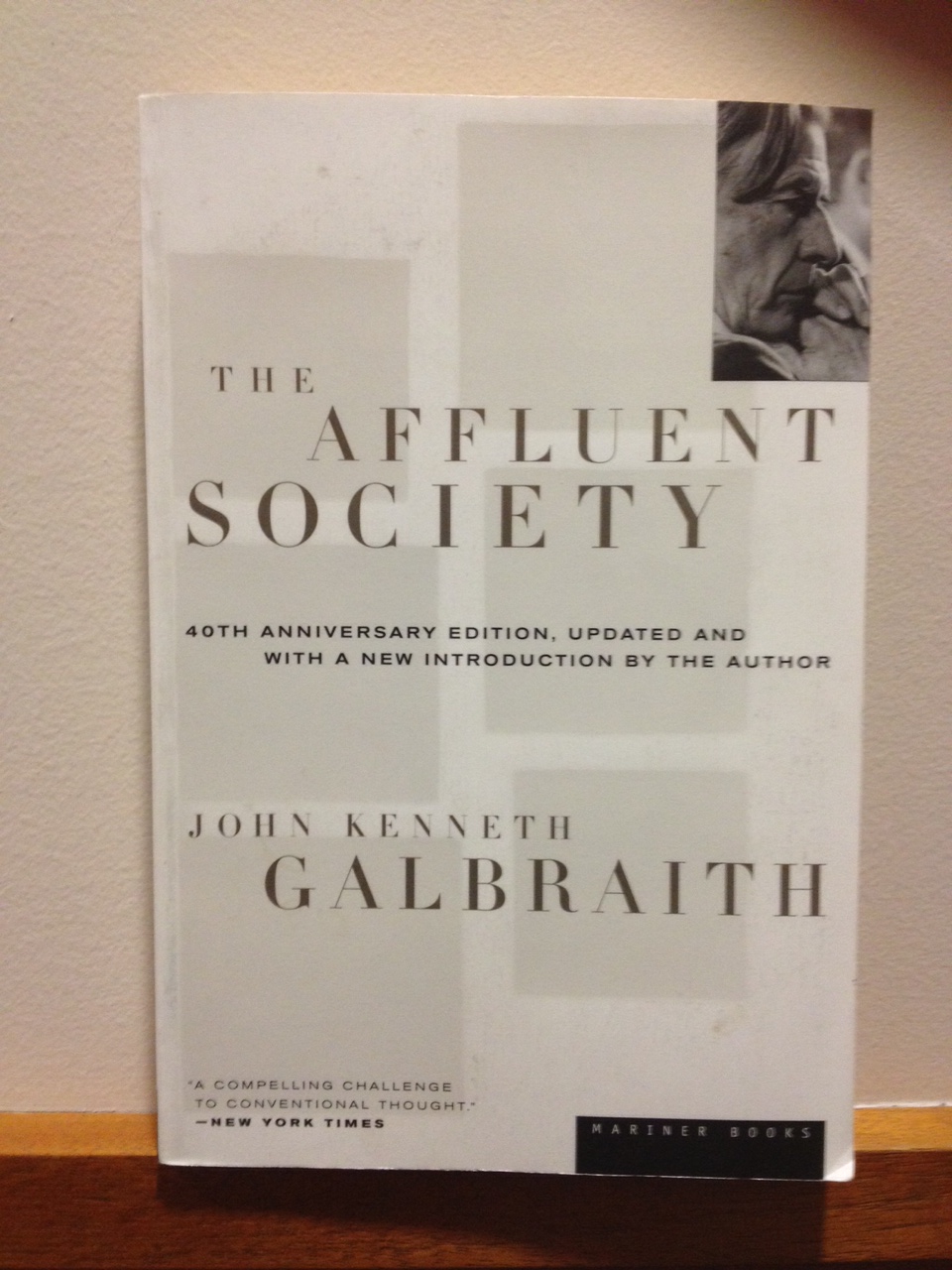
This afternoon I stopped by the venerable Brattle Book Shop, my favorite used bookstore in Boston and one of the nation’s oldest booksellers. The frequent turnover of their stock means that new discoveries await with each visit. Today’s brief sojourn introduced me to a newly-arrived row of books authored by John Kenneth Galbraith (1908-2006), the renowned Harvard University economist, public intellectual, and bestselling author of books on public affairs.
Galbraith cared passionately about economic society, but he never lost sight of the bigger picture. He understood that smart, sensible liberalism was not about advancing single issues to the exclusion of all others, but rather embraced a broader, inclusive agenda covering many priorities. He valued intelligent discussion over cheap slogans and didn’t hesitate to exchange ideas with those who disagreed with him.
Among the titles available at the Brattle were his most well-known works, including The Affluent Society (1958), The New Industrial State (1967), and The Great Crash, 1929 (1954). Many were signed by him, and when I opened the volumes I saw a signature that looked familiar to me. And herein lies a story…
I discovered Galbraith’s writings as an undergraduate during a semester abroad in Cambridge, England. There I attended a debate featuring Galbraith waxing eloquent about economic policy. Suitably impressed, I devoured several of his books during that overseas semester, and he quickly became one of my intellectual heroes. For years I thought to myself, gee, it sure would be great to meet the guy someday.
My assignment
Galbraith was a co-founder, leader, and ongoing supporter of Americans for Democratic Action (ADA), a longstanding liberal advocacy group based in Washington, D.C. In 2001, I joined the ADA’s board of directors. I became active in the organization’s fundraising efforts, and in 2006 I was dispatched in this role to visit with him at his Cambridge, Massachusetts home to solicit his statement of support for a fundraising campaign. He replied promptly to my letter requesting a meeting, and I arranged to meet with him at his Cambridge family residence.
On the appointed day I arrived at his home, where he was confined to his bed. I had not known that his health was in a sharp state of decline. It quickly became apparent that he was in the final chapter of his long journey. My nerves about this first-ever private chat with a man I had admired for so long were exacerbated by my awkwardness over meeting him in this condition. But I gathered myself, explained why I was visiting, and asked for his support for ADA. Although his attention waned at times during our talk, he promised to provide me with a testimonial for ADA and added that he’d send me a copy of the latest edition of The Affluent Society.
Several weeks later, Galbraith passed away. I hadn’t heard from him, and I realized that his condition did not allow him to follow up on our conversation. Nonetheless, I was enormously grateful for the opportunity to finally meet him.
In the mail
But I was in for a stunner: A few days after his death, I checked my mailbox at work, and there was a package with Galbraith’s Harvard University return address.
Hands shaking, I opened it, and on top was a note from his assistant, apologizing for the delay in following up on our meeting and explaining that mailing the package was delayed by his passing. Underneath was a dictated letter from John Kenneth Galbraith, dated 12 days before his death, which included his eloquent testimonial in support of ADA’s fundraising campaign.
There was one other item in the parcel. It was a copy of The Affluent Society, inscribed to me with a much scratchier version of the signature I saw in those books today at the Brattle Book Shop.
Years later, it still gives me goosebumps to think about it.
Frozen pizza

With another winter storm heading toward New England, my thoughts go to…
…frozen pizza!
I wrote about comfort food in November, but I neglected to include frozen pizza on my short list. Of course, pizza of any variety appears on that list — restaurant, take-out, delivery, whatever. But with more cold and snow on the way, it’s reassuring to know that I’ve got an Amy’s cheese pizza (yup, the one in the photo!) stored in the freezer.
Amy’s pizza is on the high end. It’s pricier than the standard fare. But it’s good stuff, and to keep it a “healthy” pie while enhancing the flavor, I add some tempeh (“fakin’ bacon) strips.
By far the best frozen pizza I’ve ever had is Trader Joe’s three cheese pizza, but alas, the closest store is several subway stops or a bus trip away. Newman’s Own cheese pizza is very good as well.
My guilty favorite is Red Baron’s individual deep dish pizzas, sporting a long list of ingredients that don’t sound too pizza-like to me. However, I’m trying to eat healthier these days, so between Amy’s frozen pies and a great eat in/delivery place in my neighborhood (Il Panino in Jamaica Plain), my domestic pizza situation is not as chemically enhanced as it used to be. (If the folks at Il Panino happen to be reading this, yes, you’ll be hearing from me sometime during the weekend.)
I’m glad that I ate a late dinner, or else I’d be tempted to pop that sucker into the oven right now. Such is the power of suggestion when writing about crave-worthy food…..
 Musings of a Gen Joneser
Recent Comments