The Apple Watch: Cool, but too close to being a computer implant for my taste

Screen shot of the Apple Watch webpage
So if the hype is accurate, the Apple Watch is the Next Big Thing in digital gadgetry. According to the product descriptions, it’s basically a mini-computer that doubles as a wristwatch.
I’m betting that the Apple Watch will be very popular. Once it creates a new market for watches that do everything except walk and chew gum — and Apple has a knack for creating new markets — it will spawn many imitators as well. (Surface Watch, anyone?)
While I own my share of Apple devices, I’m gonna take a pass on this one. When it comes to smaller e-gadgetry, I’m already ambivalent about cellphones, to put it kindly. Especially if I’m not traveling, many days can go by without my bothering to check my smartphone. To me, the Apple Watch seems to be only a step or two away from surgically implanting computers into our brains.
I know this is an overreaction from a 50-something who now sounds like a Luddite. But I’m really not anti-technology. I’m on my computer for hours each day. And hey, I do write two active blogs. It’s just that personally speaking, there’s a point at which the gadgetry is too close to becoming a part of me, literally and figuratively.
As for my friends who are drooling to get their paws on an Apple Watch, I do get it, because that’s how felt about the iPad. I would go into Apple stores and play with the machines there, while trying to convince myself that so long as laptops were around, these tablet thingies would be expensive indulgences at best. My thriftier instincts lost out, however. Fortunately the iPad would prove to be much more than a plaything, and now it often goes wherever I go.
My fascination with Abraham Lincoln

From my modest Lincolnania collection: Reprints of Harper’s Weekly following the assassination and the playbill from the fatal night (Photo; DY)
One hundred and fifty years ago today, President Abraham Lincoln (1809-65) died of a gunshot wound to the head, fired by Southern sympathizer John Wilkes Booth the night before at Ford’s Theatre in Washington D.C. It’s a story that gives me chills.
I remember when I realized that Abraham Lincoln is one of the most fascinating, compelling figures in history. It was 1986, the year after I graduated from law school, and I made a quick trip to Washington D.C. to see friends and play tourist. The latter included visits to the Lincoln Memorial, Ford’s Theatre, and the Petersen House across the street from the theatre, where a wounded Lincoln was carried after the shooting and cared for until he died.
Ford’s Theatre and the Petersen House were especially powerful and haunting; I simply felt something there about the tragedy, sadness, and enormity of what happened. I bought a couple of Lincoln biographies and dove into them. By the time I returned home to New York, Lincoln was very much on my historical radar screen.
The draw of Lincoln has continued for me, coupled with a like fascination over America’s Civil War. It is a deep interest shared with friends. For example, in recent years, I’ve accompanied my long-time friends and fellow history buffs the Driscolls (yeah, the whole family — too numerous to list out here!) to the Abraham Lincoln Presidential Library and Museum in Springfield, Illinois, as well as to other Lincoln sites in the city, including Lincoln’s law office.
Among great historical figures, the most compelling thing about Lincoln to me is his humanity. We know today that he suffered from severe bouts of depression, dating back to his earlier years. With his humble roots, we might call him a self-made man. He became a lawyer largely by private study, in the days when one could become an attorney without going to law school.
The United States was breaking apart between North and South when he assumed the Presidency in 1861. He carried the weight of the world on his shoulders during the Civil War, while dealing with the death of a young son due to typhoid fever and the devastating effects of that loss on his wife, Mary.
Perhaps to counter his sorrows, Lincoln had a sharp sense of humor and loved to tell humorous stories to punctuate his points, to the exasperation of more “refined” senior advisors and Cabinet members. His beliefs about race, while in some ways advanced for his time, would fall short of modern standards of political correctness. He was also a shrewd politician who knew how to get things done, even if it meant breaking bending the rules a bit.
So many great historical figures seem personally inaccessible to me. But it seems that Lincoln could carry on a conversation with just about anyone, and if we were to go back in time and bump into him on the streets of Washington (which he often walked, without security escort), I bet that we could strike up a chat with him, too.
***
Related post
In praise of the ice cream sandwich

Screenshot from the NY Times feature
Earlier this week, the New York Times ran a neat little photo feature on the merits of the ice cream sandwich. Ligaya Mishan’s piece opens with this lede on the origins of this long-time favorite:
The American ice cream sandwich was born in the Bowery district of Manhattan in the early 1900s, when a pushcart vendor slapped together skinny wafers and vanilla ice cream and handed them for a penny each to shoeshiners and stockbrokers alike.
The photos show some pretty fancy incarnations of the ice cream sandwich, at prices a lot higher than those you might recall from the corner store.
When my brother Jeff and I were kids, Mom usually brought home the Sealtest brand from the supermarket, and that was mighty fine for us. I always regarded the ice cream sandwich as being higher up on the frozen dessert food chain than the Klondike bar, Dreamsicle, and Fudgesicle options. It ranked a close second to the Drumsticks with ice cream, chocolate covering, and nuts plopped into a sugar cone, which were a little pricier and thus reserved for special occasions.
Even today, I much prefer the old-fashioned, unadorned, long rectangular ice cream sandwich with two chocolate wafers and vanilla ice cream. (For some reason, I’m less enamored of overstuffed ice cream sandwiches that are harder to manage.) However, I, too, have gone a bit upscale. My current ice cream sandwich of choice is Julie’s organic brand, which I’ll purchase by the box a couple of times a year from the City Feed & Supply store across the street from my home:

These little guys remind me of the Sealtest brand back in the day. They’re quite tasty, with healthier ingredients to boot.
Given the power of self-suggestion when it comes to goodies, I’ll probably pick up a box within the next few days. It is, after all, getting a tad warmer here in Boston, so I think I’ll celebrate with a nice a little treat.
If you had to stop buying books today, how long would it take to read through your home library?

Looking at some of my books
Those of you who enjoy shopping for books are invited to ponder this question with me: If you had to stop buying books today, how long would it take to read (or re-read) through the goodies already in your personal library?
In my case, I estimate over a decade, assuming I’d be working during that time. Even if I found myself under house arrest with a court order not to have cable, I’d still have at least several years of good reading in front of me.
Having a collection of books sufficient to dub a “library” means a lot to me. I’ve never cared much about furniture, interior design, clothes, kitchen gadgetry (ask some of my friends about my dishwasher story), and most other home accoutrements. However, having bookshelves filled to the brim…well…that’s my idea of material success. I haven’t counted my books at home, but I estimate they number around 2,000, with a healthy chunk — maybe a third — being at least somewhat work-related.
Now, as far as getting around to reading them, well, this is a problem. I work pretty hard, and a lot of my reading is related to various writing and research projects, which means using non-fiction books and articles mainly as resources, not cover-to-cover reads. That brainwork can leave me a little fried, and at the end of the day I might prefer to watch a good TV show or a movie.
I keep telling myself that all the unread books will wait for retirement, whatever and whenever that is, as I don’t intend to ever truly “retire.” If I am so blessed to have more leisure time 10 or 15 or 20 years down the line, then I will enjoy many pleasant hours with my library.
Nevertheless, I don’t want to wait that long to dive into many of these good books, so I’ll have to continue to find ways to sneak some quality reading time into my life.
In the meantime, the books are on shelves, or sometimes in piles. That’s okay. They are my inanimate friends, and more than a few have sentimental value to me. I can look at some of my favorite books and immediately recall stories associated with them. Such is a life grounded in geekdom, but I consider myself fortunate in that regard.
“Had Anne Frank been able to survive for just a few more weeks…”

Anne Frank House museum, Amsterdam (Photo: DY, 2013)
It has been one of history’s heartbreaking “what ifs”: What if Anne Frank had been able to survive the typhus that would claim her for just a few weeks longer, when the Allies liberated the Bergen-Belsen concentration camp where she was imprisoned? Would she have recovered under the care of the Allies? If so, what would’ve become of her life and her diary?
It had been estimated that Anne and her sister Margot died in late March of 1945, and the Allies liberated the camp on April 15. Hence, many have contemplated the excruciating possibility that the Frank sisters barely missed being rescued.
Now, however, the Anne Frank House museum in Amsterdam estimates that she died sometime in February. From an Associated Press story by Mike Corder (via Yahoo! News):
Anne likely died, aged 15, at Bergen-Belsen camp in February 1945, said Erika Prins, a researcher at the Anne Frank House museum.
***
But [Prins] said the new date lays to rest the idea that the sisters could have been rescued if they had lived just a little longer.
“When you say they died at the end of March, it gives you a feeling that they died just before liberation. So maybe if they’d lived two more weeks …,” Prins said, her voice trailing off. “Well, that’s not true anymore.”
You can read the full article for details on how the new approximate date of their deaths was determined.

The story of Anne Frank can do numbers on us. We may engage in rescue fantasies, wondering how Anne could’ve held on just a little while longer, until the camp was liberated. We may speculate, with twinges of guilt, whether her diary would have ever been published had she made it through the war.
So now the likelihood is that when Anne and Margot Frank were suffering from typhus, liberation was not just a few weeks away.
This can trigger questions that cross into the religious or metaphysical, with still more discomfort attached: Did Anne Frank die so that millions could be moved by her diary?
***
In 2013 I visited the Anne Frank House museum. I was participating in the biennial Congress of the International Academy of Law and Mental Health, held that year in Amsterdam, and this was the one “must see” item on my list for a first-ever visit to the city.
The exterior pictured above doesn’t give you a hint at what’s inside. The interior has been recreated to show us how Anne and seven others lived in hiding for some two years. I am among countless others to say it, but it was a very moving experience to stand in the same cramped spaces of the “Secret Annex” where they lived before they were discovered and arrested.
For me, the most chilling part of the tour was walking up the long, narrow stairwell to the Annex, located behind the moving bookcase that covered the entrance. It was the same walk their captors took to find and arrest them. Of course, it also was the stairwell taken by the residents of the Annex as they were being escorted out of their hiding place.
***
You may take a virtual tour of the Annex here.
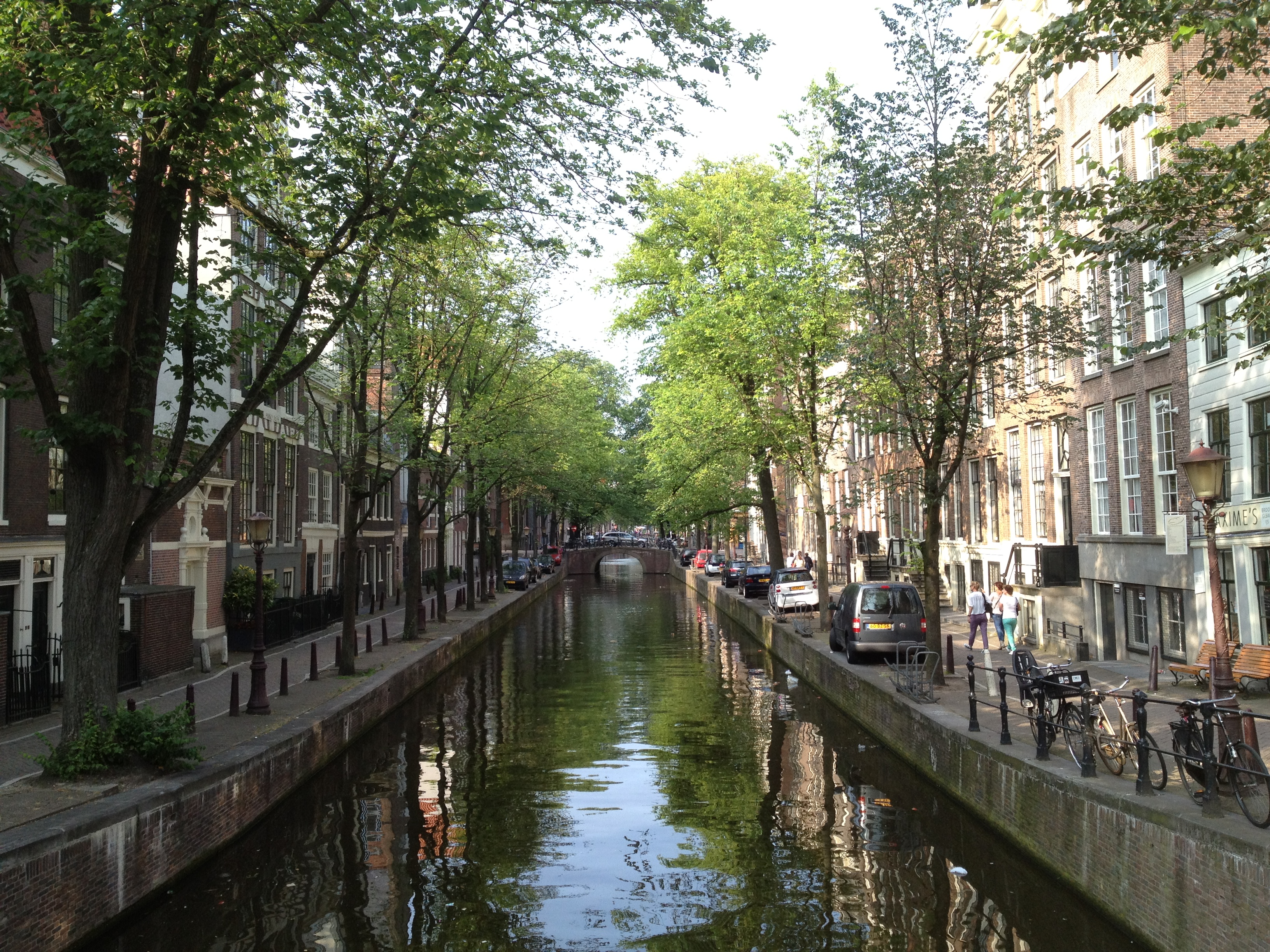
Anne Frank’s Amsterdam: Let’s finish this piece with the beauties of one of the city’s canals (Photo: DY, 2013)
Classic movie report: March 2015
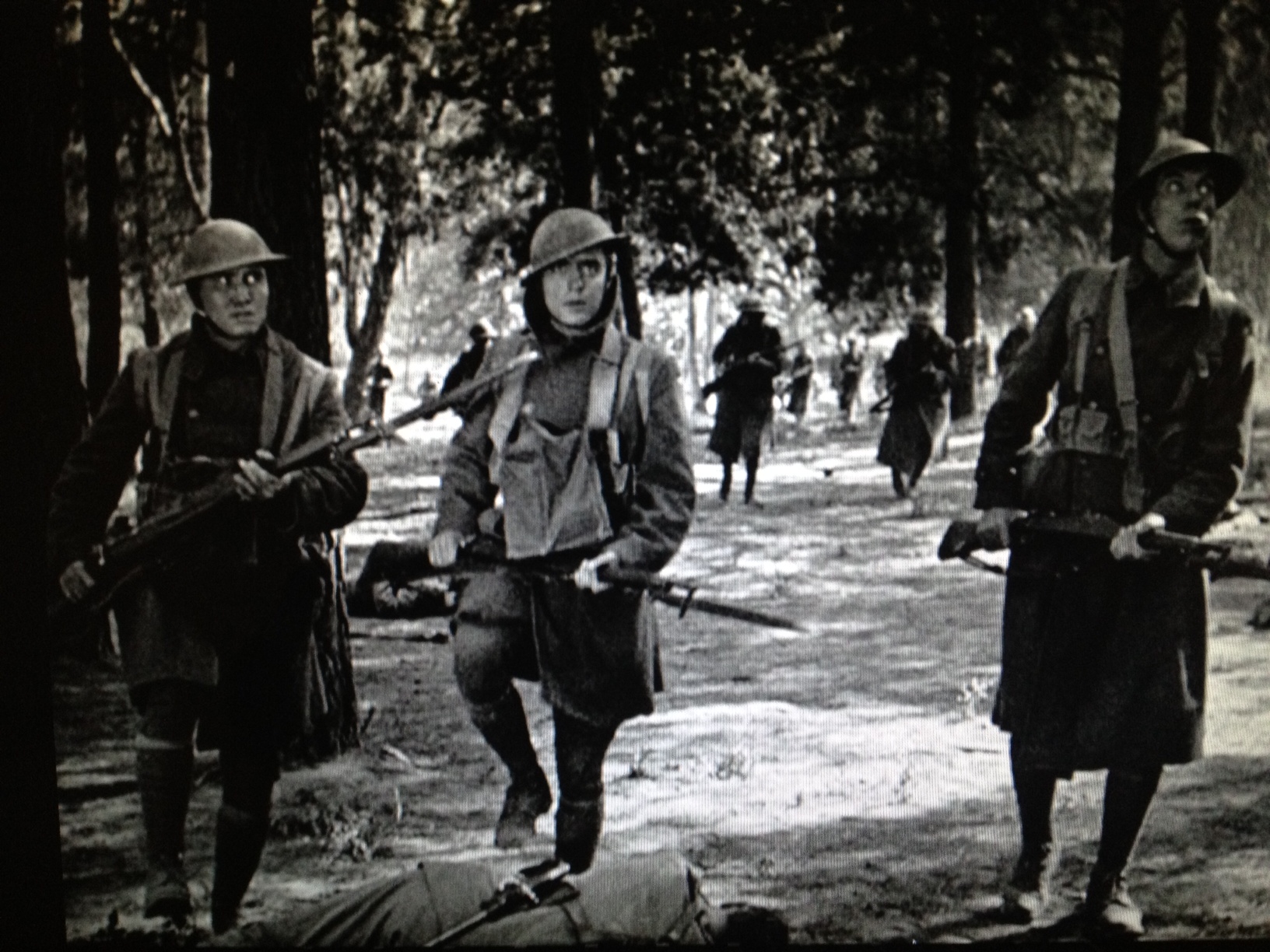
From “The Big Parade” (l to r): Tom O’Brien as Bull, John Gilbert as James Apperson, and Karl Dane as Slim
I declared as one of my New Year’s resolutions that I would watch more classic old movies, so each month I’m devoting an entry to how I’m doing with it. This month, the weather has warmed up slightly, and much of my limited TV time has been devoted to great dramas such as Downton Abbey and The Americans, but here are two oldies that I was able to sneak in:
The Big Parade (1925) (4 stars out of 4)
I don’t know how this one escaped my attention for all these years. King Vidor directed this 1925 silent classic starring John Gilbert as James Apperson, the son of a wealthy American family who joins the Army when the U.S. enters the First World War. It’s an excellent film that mixes humor, romance, drama, and tragedy.
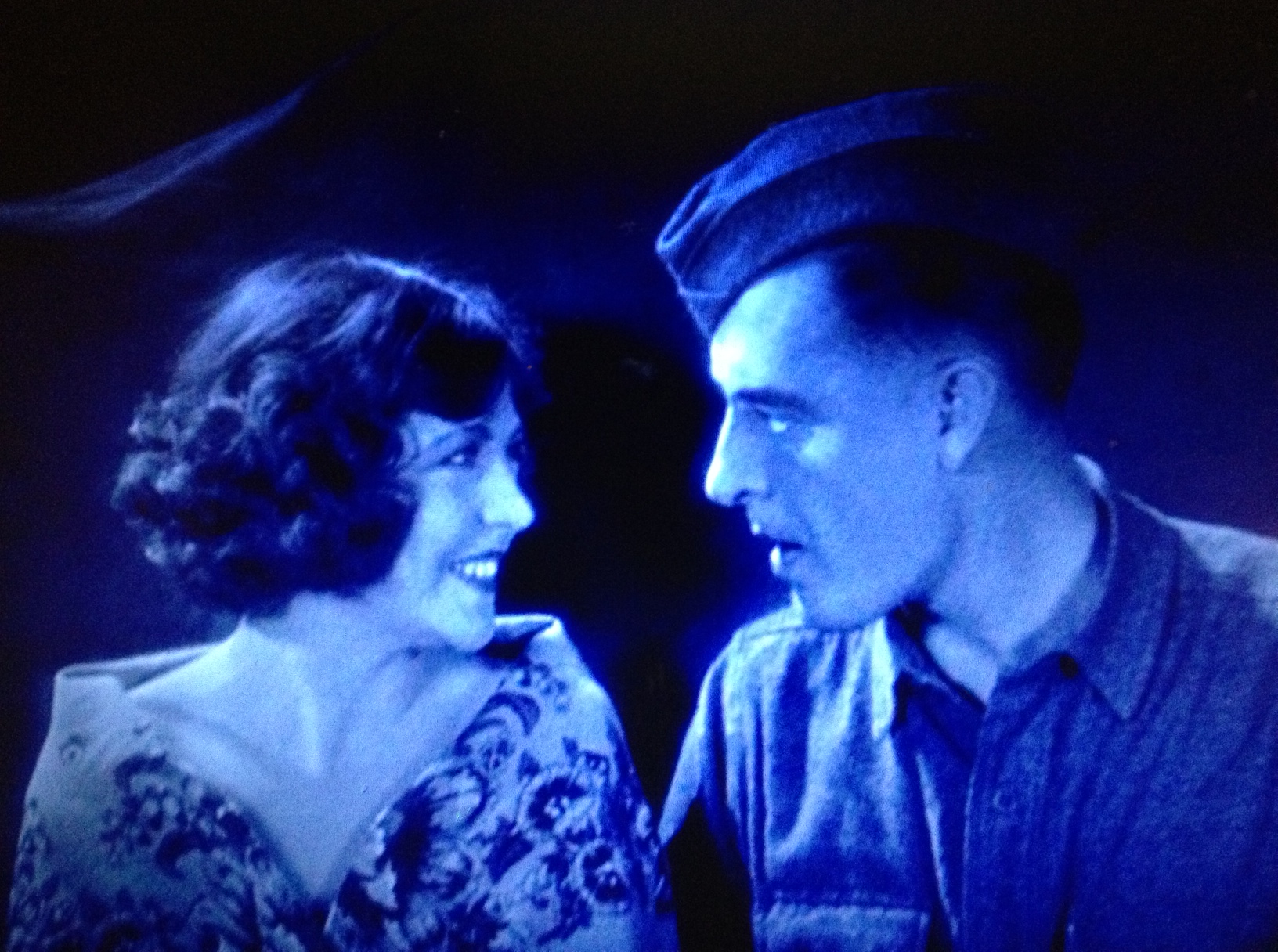
Renee Adoree (Melisande) and John Gilbert (James)
While deployed in France, Apperson meets a village farm girl, Melisande. Their wartime romance captures well how the silent movies could tell a story.

Part of the Big Parade
The “big parade” is not referring to a procession featuring the victorious heroes. Rather, it’s the march of men and war materiel going to and from the front. And as these photos attest, the ground war would be joined by a new weapon of destruction, the airplane.

Welcome to the 20th century
Strategic Air Command (1955) (3 stars out of 4)
Jimmy Stewart stars as an aging major league baseball star and a WWII veteran pilot who is called back into active duty with the Air Force to help develop America’s post-war bomber command. June Allyson plays his treacly sweet wife. It’s more of an interesting technicolor artifact than a genuine classic, reflecting a 50s Hollywood take on the Cold War. The perceived need for strategic bombing capacity helps to drive the story, but oddly there’s nary a mention of the Soviet Union or any other communist nation.
The flight scenes are the highlight of the movie. Aircraft geeks may especially enjoy watching the B-36 bomber, a slim, long plane with a huge wing span, powered by six propellers and four retrofitted jet engines. The B-36 preceded the B-52 as America’s primary long-range bomber, which happened to arrive on the scene the year the movie was released.
The flight scenes provide the drama, for the acting among the main characters is pretty stiff, even given that we’re talking about a story set in the military. For Stewart, this role somewhat reprised real life. He was an American bomber pilot during the Second World War.

From “Strategic Air Command,” a B-36 bomber
(All screen shots by DY, 2015)
On being a college sports fan: A waif’s journey
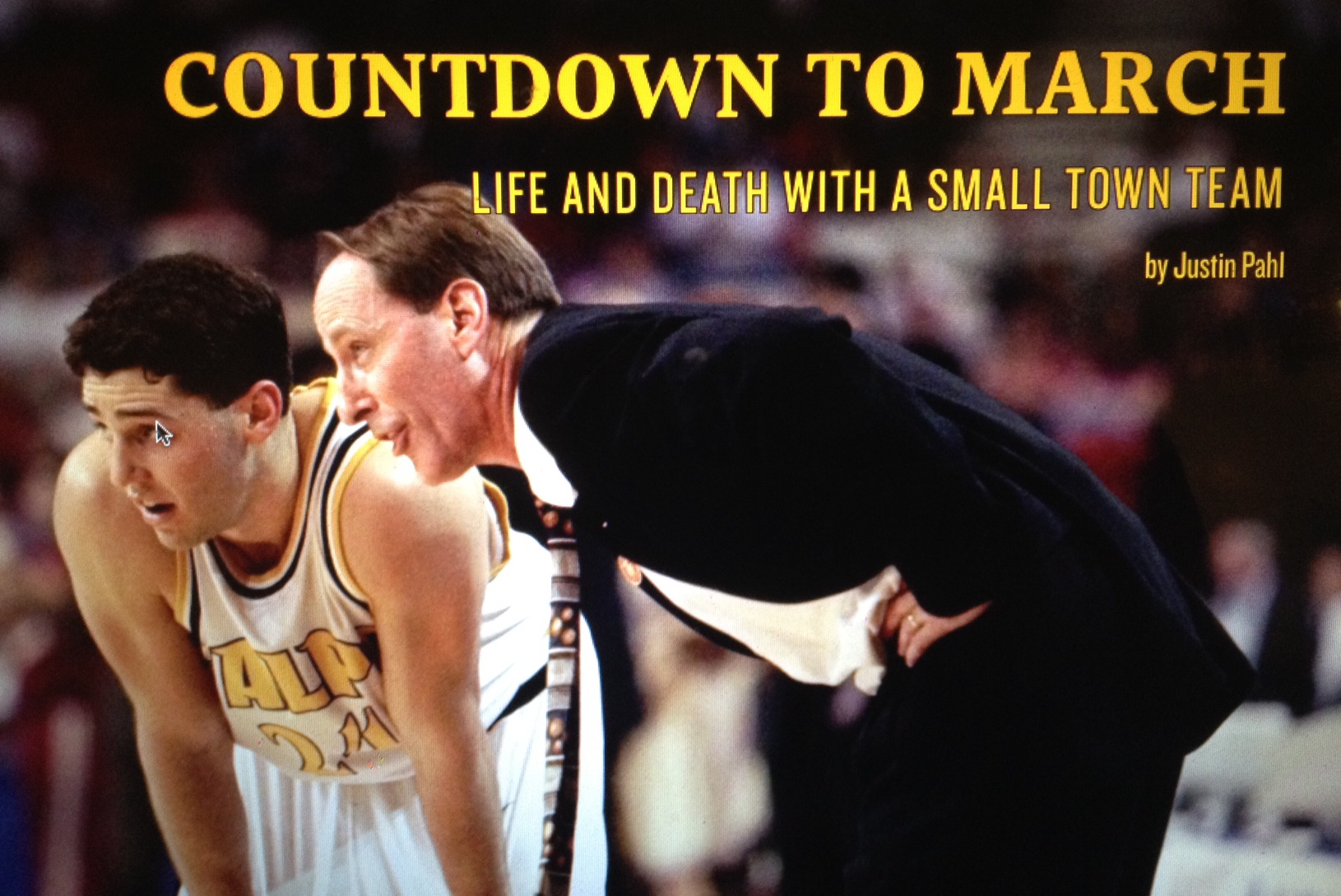
From SBNation.com
Although I’m a moderately serious sports fan, and I’ve been associated with a good number of colleges and universities over the years, I’ve never attended a school with a big-time sports program. On the pro side, I’ve maintained my strong affinity for Chicago teams (Cubs, Bears, and Bulls, oh my!), and been a fair-weather fan of the New York Mets (mid-80s), New York Knicks (80s-early 90s), and New England Patriots (Brady-Belichick era). However, when it comes to college basketball and football, I’ve been something of a waif.
I’ve been writing a lot about my college and law school experiences lately, so let’s take them from a sporting angle.
Starstruck and Bobcats
I received a very good classroom education at Valparaiso University, but its intercollegiate sports teams during the late 70s and early 80s were lackluster and not a big focus of campus life. VU had just made the jump to Division 1 basketball, and those early teams struggled for respectability. I went to only one game, against then-No. 1 ranked DePaul University, led by All American forward (and future NBA All Star) Mark Aguirre. When DePaul walked onto the court for warm-ups, the VU fans stood up — not to applaud or to jeer, but rather because we were starstruck that a top-ranked team was in our midst. The game itself played out as one might expect.
My next educational port of call was New York University for law school. During the early to mid 20th century, NYU enjoyed national success in both basketball and football circles, but by the time I arrived in 1982, intercollegiate sports had been de-emphasized to the point of irrelevance. It would relaunch its men’s basketball program at the Division 3 level during the mid-80s. They quickly assembled some good teams, even reaching the national championship game in the early 90s, and have remained competitive since then.
Each year I lived in New York, I would go to a few NYU hoops games, usually alone. D3 hoops games aren’t a big draw with the rest of Manhattan at your fingertips. Or maybe it was hard to get excited about a college team whose mascot is named after the library’s card catalog (Bobst Library Card Catalog, or Bobcat for short).
As for NYU’s football team, it remained undefeated throughout my years in the city, holding steady at 0-0. (Ba dum.)
Irrational fandom
Over the years, I’ve kept my affinity for Notre Dame football — a product of having grown up in Northwest Indiana. Fandom can be irrational; I’m neither Catholic nor a Notre Dame alum!
Because a dear friend is an Annapolis graduate (Class of 1953), I root for the Navy Midshipmen as well. Had some weird twist of fate ever led me to the Academy, I would’ve lasted about a week before getting booted out for continually questioning orders, so go figure.
During the 2000s, the University of Hawaii had a string of successful, fun-to-watch, pass happy teams, and I enjoyed pulling for them. The highlight of that run was an undefeated regular season in 2007, culminating in a Sugar Bowl appearance.
For reasons I can’t explain, I also follow from afar (usually by checking the box scores) the powerhouse Division 3 football team at the University of Mount Union in Ohio. Although they’ve been stymied in the national championship game in recent years by nemesis Wisconsin-Whitewater, they have compiled some of the most remarkably dominant seasons in the history of collegiate football.
Back to Valpo
As for college basketball, well, I’m now rooting for Valparaiso(!), which has become a very competitive mid-major D1 team since my days there. The foundation was set seventeen years ago, when the Crusaders enjoyed a storybook season, topped off by a trip to the 1998 NCAA tournament and a Cinderella run to the Sweet Sixteen. Its star player was guard Bryce Drew, the coach’s son, who hit a legendary, buzzer beating 3-point shot to upset powerhouse Ole Miss in the first round:
Drew followed his collegiate glory with a solid stint in the NBA. He is now the Valparaiso head coach, and when VU makes an appearance on one of the ESPN stations, I’ll often watch or record the game. They made the NCAA tournament this year, losing in the opening round to Maryland in a close game.
This month, SB Nation ran an excellent long form piece by Justin Pahl, son of a former VU faculty member, who wrote about growing up with the emerging, underdog VU basketball program during the 1990s. It’s a very good story about life and sports in a small, Midwestern university town. I took a screen shot and pasted it in above.
Before the college application process went haywire

New York Times columnist Frank Bruni is getting a lot of attention for his new book, Where You Go Is Not Who You’ll Be: An Antidote to the College Admissions Mania (2015), which urges young people and their families not to buy into the huge anxieties and nuttiness that surround the college application process. In essence, he’s saying that the people and communities that we bring into our lives have much greater bearing on life satisfaction than getting into a prestigious school.
I think the overall message is a sound one, but the topic is more complicated than first meets the eye.
A good number of friends around my age have gone through this process with their children. Especially for high school students aspiring to attend a highly-ranked school, the college admissions game has become a significant, part-time job for them and their parents, one wrought with adolescent emotions, adult anxieties, and difficult cost-benefit assessments.
Sadly, I don’t think this will change, especially in an America where families in the middle and upper-middle classes are fearful of their ability to maintain their stations in life, college costs have gone through the roof, and the promise that the kids will do better than their parents is looking more and more precarious.
As a non-parent, it’s easy for me to claim from my detached perch that I wouldn’t buy wholeheartedly into that mania, but in truth it’s very, very hard to ignore this dynamic. And the peer pressure and social expectations for young students and parents alike are significant in high school settings that are turbo-charged about college placement.
Nevertheless, as a nostalgic creature by nature, does this make me a little wistful for the days when the college application process wasn’t so riddled with anxiety?
As a high school senior, I assumed I’d go to college, but I took the process rather casually. I visited a few schools in my home state of Indiana, and I ended up applying to only one, Valparaiso University in northwest Indiana. It was a smaller school, emphasizing the liberal arts, and it seemed comfortable and close enough to home. I figured it would be good enough, and it appeared that my chances of admission were strong.
I was accepted, and that was the extent of my college “search.” Easy peasy, right?! Isn’t this a perfect example of how low key the college application process was back in the day?
But herein lies the truth behind much nostalgia: It becomes a little, well, rose-colored fictitious. Even before the U.S. News rankings of colleges became ubiquitous and top 10/50/100 lists of schools started popping up everywhere, there was a rough sense of which schools were considered among the elite. And my story of applying to only one school and basically assuming I’d get admitted is exactly that, only mine. In the meantime, thousands of others who had more focused aspirations and their sights set on certain schools were sweating out the process.
In fact, five years later, I would ramp up my own anxieties when I applied to law schools. I was considerably more invested in the process, and I took active responsibility for researching law schools and identifying which ones might be good for me. Now, that’s the generic description. In truth, I became obsessed with the whole deal, and full of the kind of self-absorption that can inflict an ambitious young person during such life chapters. The moment I received New York University’s letter of acceptance, I pretty much knew I would go there, as I had many reasons to believe it would be a very good match for me.
So how do these schools look in the rear-view mirror some 30 years later? I’ve written on this blog many times about my experiences at Valparaiso (here, for example). My relationship with it has changed much for the better over the years, in large part because I have a greater appreciation for the quality education it gave me, and I have treasured friendships from those years that I know will be lifelong. As for NYU Law School, I am deeply grateful for the experiences, friendships, and opportunities it provided. In many ways, it was the right place at the right time for me. (You can read a bit more about that, here.)
As I reflect on all this, maybe Frank Bruni’s title — Where You Go Is Not Who You’ll Be — is overstating it, even if we welcome its underlying message. Many of us have been shaped profoundly by the schools we attended, though not necessarily because they were/weren’t considered “prestigious” in the eyes of others. The deeper questions associated with the college application process are more vital and complicated ones, fostering considerations about how much we should allow markers of prestige to shape our beliefs, decisions, and experiences.
In sum, for anyone who believes that upward mobility and “success” are, generally speaking, worthwhile aspirations, but that a good life embodies much more than collecting trophy lines on resumes, this conversation may be rife with honest and very human contradictions and inconsistencies. Easy peasy it ain’t.
Throwback Thursday: Discovering Jack Finney’s “Time and Again”

You may have to be a bookworm to fully appreciate a soggy, nostalgic Throwback Thursday post about, well, reading a book, but here it is: About 30 years ago, I discovered Jack Finney’s Time and Again (1970), an illustrated novel about a Manhattan advertising artist named Si Morley who is enlisted in a U.S. Government project experimenting with time travel.
No spoiler alerts are necessary to give you a preview. Let me first quote from the back cover of my paperback edition (pictured above): “Did illustrator Si Morley really step out of his twentieth-century apartment one night — right into the winter of 1882?” I’ll say no more about the story, except to say that if you love New York City and enjoy time travel stories, then this book is for you.
I discovered Time and Again in 1985. I had not heard of the book when I kept glancing at it during repeated visits to Barnes & Noble’s giant sale annex at 5th Avenue and 18th Street, but finally I decided to buy it. As I was reading along, soon I realized that it was becoming one of my favorite books. (It remains so.) Again, I’ll skip the details, but Chapters 7 and 8 provided some of my most cherished reading moments ever.
To grasp such a geeky memory, it helps to understand where I was in my life. In the fall of 1985, I had just graduated from NYU’s law school, I was living in Brooklyn, and I was working as a public interest lawyer in Manhattan. I had also become completely smitten with New York City. I doubt that I will ever again experience such deep affection for a place. If a big part of me will always be a New Yorker, then those early years in NYC will have a lot to do with it.
Time and Again spoke to that love of New York, and its story captivated me. Finney had a knack for writing the time travel tale — as his other books and short stories also attest — and he got it just right with this one. It may be as close to genuine time travel as I’ll ever get, a reading experience approached only by Stephen King’s 11/22/63 (2011). (In fact, in the Afterword to his book, King calls Time and Again “the great time-travel story.”)
So, if a tale of discovering olde New York is to your fancy, then you might give Time and Again a try. I think you’ll be glad you did. Don’t forget to close your eyes and see what Si Morley saw.
Bowing to my middlebrow appetite: Give me a good diner any day

Silver Diner, Reston, Virginia (Photo: DY)
When it comes to food, my tastes are distinctly middlebrow. Fancy French meals? Nah. Pricey steakhouses? Ok, but I don’t crave them. A place setting with multiple forks, spoons, and glasses? Too confusing.
If there’s a type of restaurant that best captures my appetite, it’s a good quality diner, with a menu featuring sandwiches & burgers, comfort food entrées, salads without too much junk in them, and day-long breakfast offerings.
Oh, I can enjoy pizza and seafood. And Asian food agrees with me, as do many other ethnic cuisines.
But there’s something about diner fare that I just like.
Pictured above is the Silver Diner in Reston, Virginia, part of a small chain in the Washington D.C. metro region. When I visit friends in Northern Virginia, a meal at the Silver Diner is usually part of my stay. Breakfasts, burgers, dinner platters, desserts — all very good, at decent prices.

The Cozy Soup ‘n’ Burger, Broadway & Astor Place, NYC (Photo: DY)
When I moved to New York City in 1982, it seemed that diners were everywhere, especially in Manhattan! Many are simply gems, and my favorite is the Cozy Soup ‘n’ Burger on Broadway & Astor Place in Greenwich Village.
My law school pal Joel introduced me to the Cozy during our second year at NYU, and I was a regular customer throughout my years in New York. I still go there almost every time I’m in the city, sometimes twice! My order is usually the same: Turkey burger (I top it with ketchup and cole slaw), a cup of split pea soup (really awesome), and occasionally an order of rice pudding (rich & creamy).
Oh boy, this is making me hungry. And I’m writing this post here in Boston, where diner fare is scarce. You see, although Boston has its share of good eateries, it is woefully lacking in quality diners. I think a city has to be more of a 24-hour kind of place to support a multiplicity of diners, and that’s just not Boston.
I’m sure I’ll find something else to my liking. In the meantime, if the owners of the Cozy Soup ‘n’ Burger or Silver Diner want to open a restaurant close to my home or work, I pledge to be a loyal customer.
 Musings of a Gen Joneser
Recent Comments