Campus nostalgia
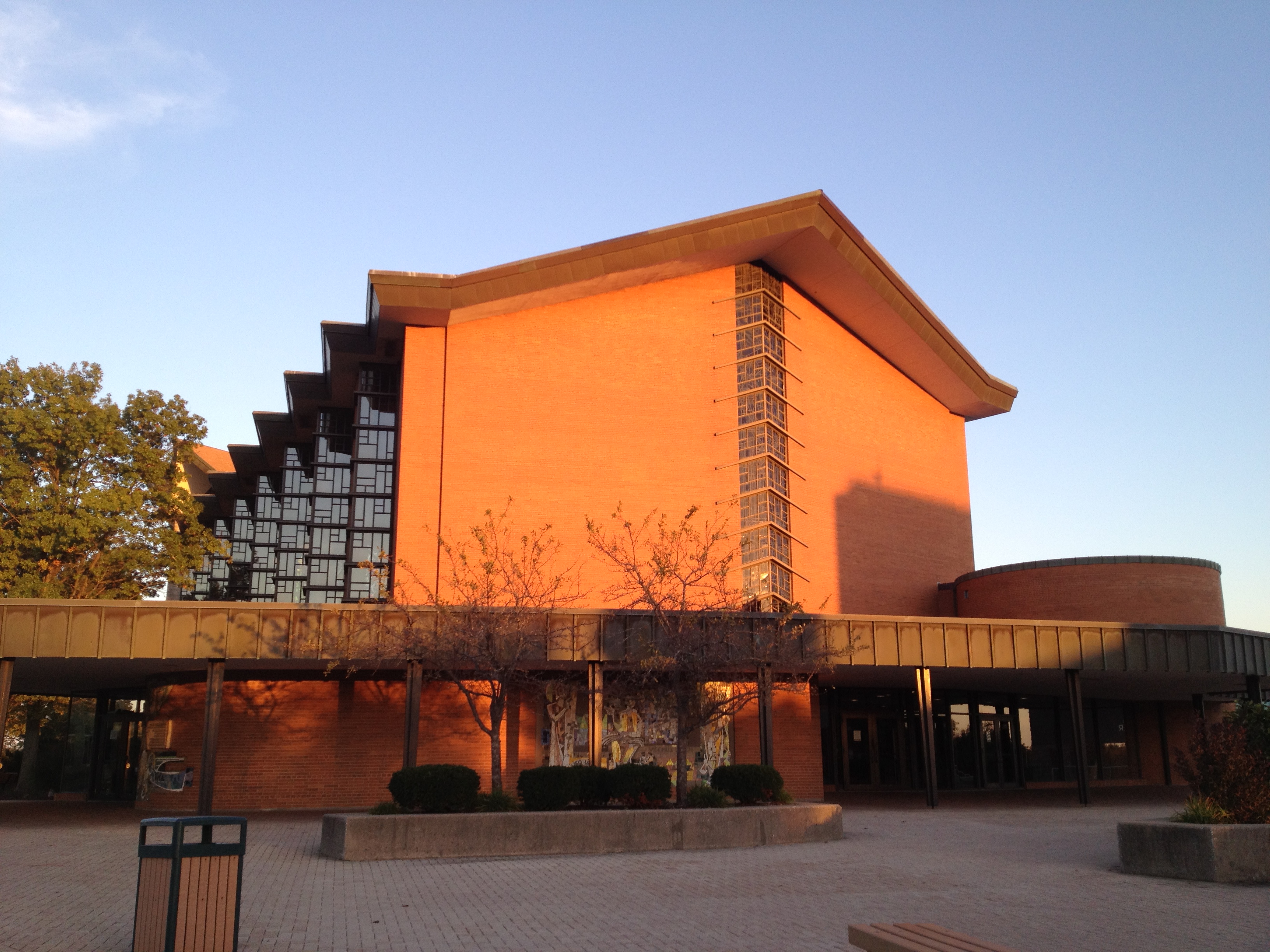
Valparaiso University’s Chapel of the Resurrection at sunset, Fall 2016 (photo: DY).
I spent much of last week attending a conference on psychological health and safety in the workplace, held at the University of Washington in Seattle. Mostly because of my terrible sense of direction (even with Siri and Google maps at my disposal), I saw a lot of this large, beautiful campus. I imagined how lovely it must be to walk these grounds every day as a student.
Furthermore, traipsing around this college campus activated my strong sense of nostalgia for my own undergraduate years at Valparaiso University in northwest Indiana. So if you have a few minutes, please indulge this trip down memory lane….
The modern VU presents an appealing campus and aligns the downtown of a small city that has come a long way since my student days. But when I matriculated in the fall of 1977, the city of Valparaiso was considered to be on the far outskirts of the Chicagoland region. It felt like something of an outpost.
The campus itself was in great need of repairs and upgrades, with a lot of old, ramshackle structures actively used to hold classes, host cultural and sporting events, and house faculty offices. I can now romanticize about the overall shabbiness of the place, but in truth, much of the physical plant was a showpiece of deferred maintenance.
Its rundown appearance aside, Valparaiso University of that time delivered a quality classroom education, thanks to many dedicated, able professors who cared about helping undergraduates of widely varying levels of maturity find their ways forward. Although few were prolific scholars (punishing teaching loads made sure of that), many were true intellectuals.
Two aspects of my VU years were especially meaningful and life changing: Serving as a department editor of The Torch (VU’s student newspaper), and spending my final semester at VU’s study abroad center in Cambridge, England. In addition, Valparaiso planted seeds of many friendships that are now lifelong.
These elements would infuse the heart of a 2017 essay, “Homecoming at Middle Age,” which contains deeper remembrances of, and reflections on, my VU years. The process of writing the piece — inspired by several weeks spent on campus during a research sabbatical the year before — clarified the long-term meaning of my college years in gratifying ways. Rather than trying summarize all of that, I’ll simply invite you to click here for the published version in The Cresset, VU’s long-time review of literature, the arts, and current events.

Literary origins
More recently, I have found the college experiences of some close VU schoolmates to be much more interesting than my own. Among other things, I see in their VU days a clear path to creative and literary passions that animate them to this day.
Sorting through a box of mementoes recently, I unearthed an issue of The Darkling Thrush, an indie literary magazine published by VU pals as an alternative to the university-funded undergraduate journal. In the era before desktop publishing programs would offer their multiple fonts, templates, and fancy graphics, publications like The Darkling Thrush had a definitely home brewed look. I don’t know if the term zine was in use during the early 1980s, but this lovingly photocopied and stapled publication certainly qualified for the label.
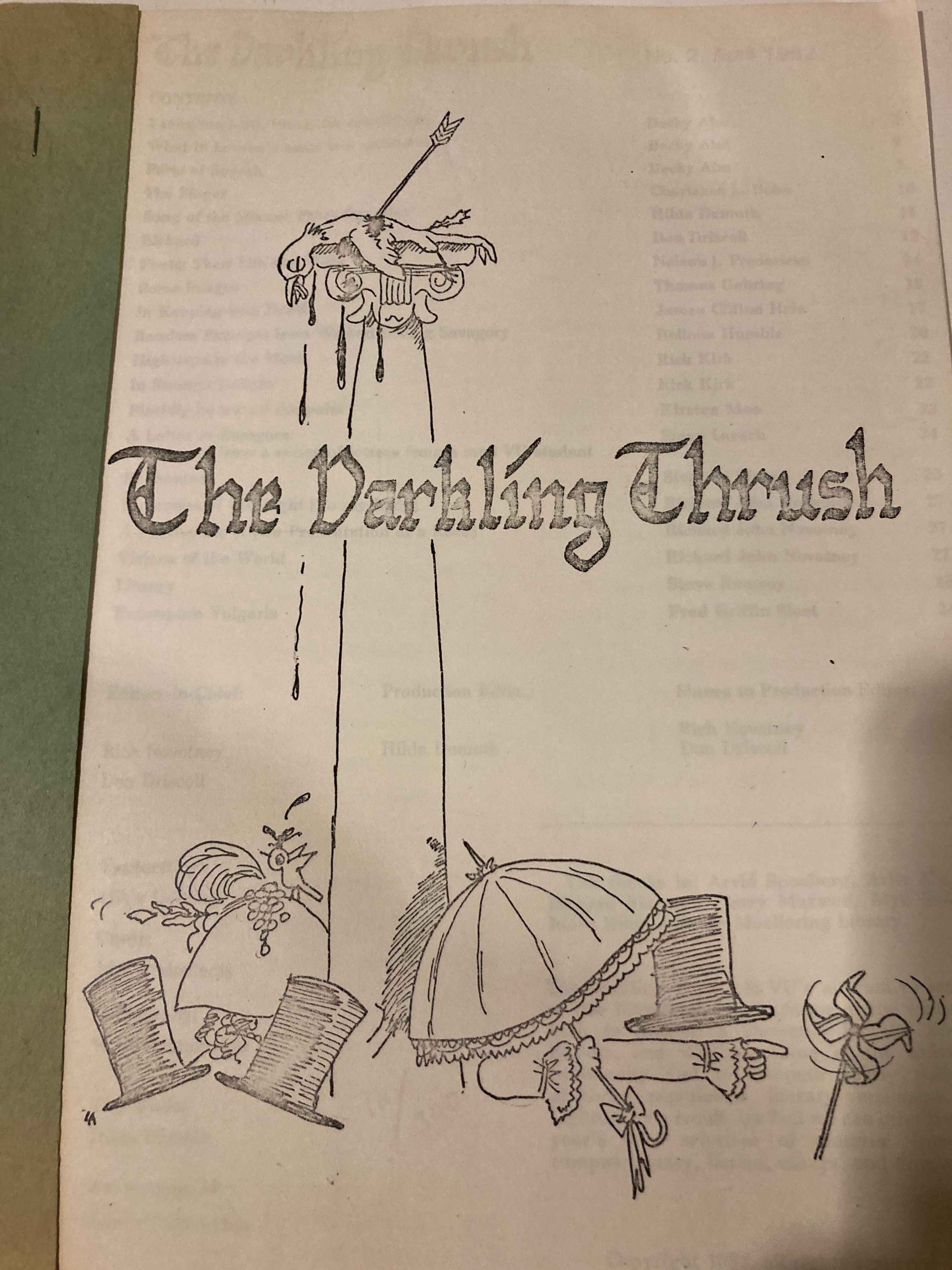
Photo: DY

Photo: DY
And talk about origin stories! The table of contents and editorial masthead — click the photo on the right — listed names of several dear friends whose literary interests still burn brightly. To wit:
Hilda Demuth-Lutze has authored several published volumes of historical fiction, with her next work coming out soon. Rich Novotney is a published author with several promising works of fiction in progress. Jim Hale became a reporter at a couple of daily newspapers. (I suspect that a creative writing project or two may come from Jim as well.) Don Driscoll has long been a discerning and prolific reader of fiction and history, and he is often asked to comment on drafts written by our friends.
***
By comparison, you won’t see my byline in any campus literary journal from our VU days. Unlike my more cultured schoolmates, I was not a very intellectual collegian, nor did I want to be one. I greeted literature and the fine arts with a Philistine phalanx of resistance so strong that even my awakening semester abroad in England could barely make a dent. Why, I protested, should we bother with a Shakespeare play or an art museum, when we can hang out and talk about our favorite TV show theme songs instead? (I’m happy to report that my cultural tastes have expanded and matured since then.)
Overall, I was a striver, not a scholar. I worked hard to get good grades because I wanted to go to law school, with plans to pursue a career in public interest law and politics. Happily, the law school part worked out very well. A year after graduating from VU, I would pack my bags for New York City to pursue my law degree at New York University. But omigosh, I was a pretty callow young man when I made my way to the East Coast.
***
Among my VU friends mentioned above, Hilda and Rich are working on book projects with the university as a featured location. I’ve seen from their posted Facebook comments and photos describing recent visits to the VU campus that those days of yore carry a lot of meaning for them.
Perhaps like me, but with literary panache, they are writing in part to more deeply understand the meaning of our collegiate years and those early chapters of our lives generally. I know that writing the 2017 reflection on my VU days was so clarifying that I closed the piece this way:
We cannot change the past, but subsequent events, new understandings, and mature reflection can change how we regard it. It took me many years, and some negotiation, to recognize VU as my alma mater in the truest sense of the term. Today I am grateful for this renewed and positive relationship, which includes a quality education of lasting impact and a cohort of treasured, lifelong friends. After all, in a world more uncertain and fractured than it was some thirty-five years ago, we need these healthy human and institutional connections to help us navigate it.
Thus, I will be very curious to read my friends’ respective takes on their student lives at our shared alma mater. And because their VU days were a lot livelier than mine, I won’t blame them if their tales are safely fictionalized to protect the guilty, and perhaps even relocated in time. It will make for some fun speculation.
Barcelona Dispatch
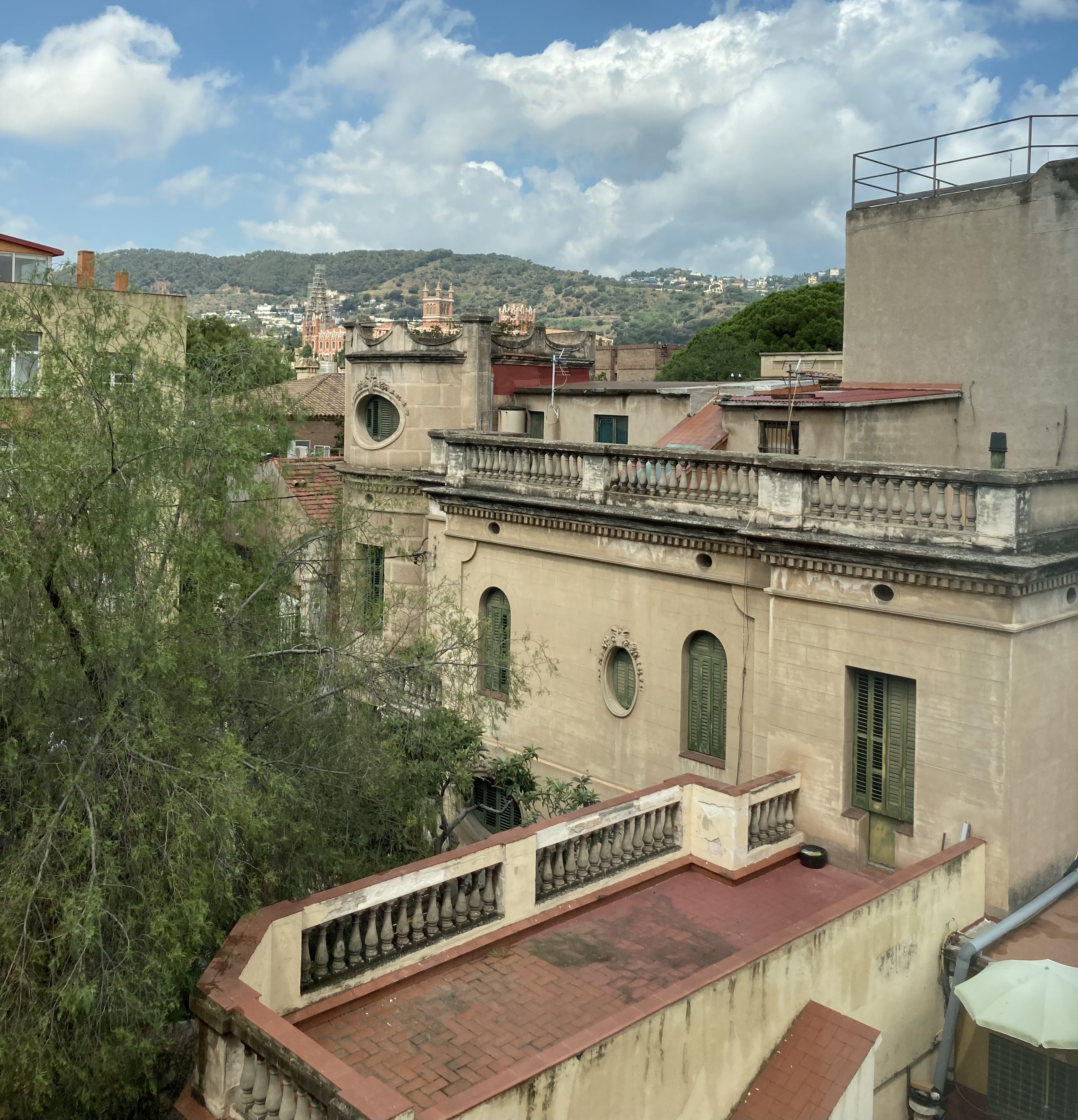
Hotel room view, Barcelona
I’m writing from a café in Barcelona, Spain, having spent the last week at the University of Barcelona Faculty of Law, attending and participating in the International Congress on Law and Mental Health. The Congress is a biennial conference organized by the International Academy of Law and Mental Health, held in different major cities. It attracts a global assemblage of scholars, practitioners, judges, and students, drawn heavily from fields such as law, psychology, psychiatry, and social work.
I’ll be flying back to Boston tomorrow morning. In the meantime, I’m sharing my three big takeaway reflections from this little sojourn.
First, among this historically literate group of conference goers, there was a strong sense that we are living in dangerous times. Although the Congress’s focus is not on large-scale politics and statecraft, its big-picture frame envelops the rule of law, human rights, individual and societal well-being, and psychological trauma. Attendees from around the world shared deep concerns about the rise of authoritarian leaders, which frequently infused conversations during session breaks and over meals.
The U.S. presidential campaign loomed large. Indeed, a Canadian friend and fellow conference participant was the first to text me that President Biden had withdrawn as the presumptive Democratic nominee. People are paying attention to what happens, deeply concerned about the critical damage that a Trump presidency would do to democracy, freedom, and the environment on a global scale.
Second, the conference itself served as an important reminder that for academics and others whose work is enriched by sharing our latest research and analyses, in-person gatherings still matter. The people drawn to this conference are doing compelling work in the broad intersections of law, public policy, mental health, and psychology. (For more on that, go here to read a short piece I posted to my professional blog.) While the pandemic, especially, has taught us that presentations can be delivered effectively via Zoom, in-person conferences and workshops create better space for informal conversations that stoke ideas, research, and practice and can lead to future collaborations.
And if the gathering is a good one, meaningful human connections emerge. Through this conference, I have met, and become friends with, so many remarkable individuals.
Finally, on a more personal level, I see changes in how I’m now regarding travel, especially the long-distance variety. This conference marks my first overseas journey since the 2019 International Congress held in Rome. Although the Congress is one of my favorite events, I opted not to attend the 2022 offering in Lyon, France, still feeling uncertain about the COVID situation. But I told myself that the Barcelona conference was the time to get back into global travel mode.
When I was doing my price comparisons, I found that I could save a bit of money by paying for another hotel night in Barcelona to avoid a more expensive return plane ticket. The extra time to enjoy Barcelona would be a bonus. But with the conference having concluded two days ago, and – more importantly — the special people with whom I spent so much time having departed, suddenly this worldly, historic, beautiful city has felt rather empty to me. Indeed, as an unintended experiment, my briefly extended stay has confirmed that (1) my sense of wanderlust diminished during the heart of the pandemic; (2) now when I travel, it’s much more about the who and the why, and less about the where.
And so, instead of spending my last sunny afternoon here doing more sightseeing, I’m hanging out in this café, with my thoughts veering back across the ocean. I’m catching up on emails, looking ahead at my schedule for the coming week, and — at least in my head — morphing back into regular life.
Forty summers ago, a first-ever trip to NYC

Forty summers ago around this time, I was packing a small suitcase in preparation for a first-ever trip to New York City. This was to be a reconnaissance mission of sorts, an initial exploration of what would be my new home for at least the next three years. (It turned out to be more like twelve.)
After having grown up in Northwest Indiana and attended college at Valparaiso University, located in the region’s outskirts, I yearned to spend time in another part of the country. This desire was fueled by a final collegiate semester at VU’s overseas study center in Cambridge, England, which greatly expanded my horizons.
Plans to attend law school provided an opportunity to satisfy that exploratory vibe, and initially I was looking very intently at the West Coast. Back then, I harbored great ambitions of having a career in politics, and I figured that California might be a good launching pad for that. But when New York University extended an offer to attend its well-regarded law school, located in the heart of a Manhattan neighborhood called Greenwich Village, I opted to go in the opposite direction.
My impressions of NYU and New York City in general were mostly on paper, supplemented by images drawn from television shows and movies set in the city. You see, I had never been to New York. The meager state of my finances was such that I had done all of my research about potential law schools by poring over admissions brochures and published commercial guidebooks. I had accepted NYU’s offer of admission sight unseen.
With my first year of law school beckoning in the fall, I figured I should check out what I had gotten myself into. So I planned a short summer trip to New York.
I booked a tiny room at the Vanderbilt YMCA on 47th Street in Manhattan. The bathroom was down the hall. The guest rent was $18 a night. At least it was an upgrade from my youth hostel travels during my semester abroad.
I’ve kept the guidebook I used to help plan my trip. In Frommer’s 1981-82 Guide to New York, author Faye Hammel writes:
You should be advised that there is one dangerous aspect of coming to New York for the first time: not of getting lost, mobbed, or caught in a blackout, but of falling so desperately in love with the city that you may not want to go home again. Or, if you do, it may be just to pack your bags.
Well, that’s pretty much what happened. My short visit didn’t allay all of my anxieties about moving to another part of the country to experience the rigors of law school, but the city immediately started to work its magic on me. I did some of the standard tourist stuff, including visits to the Empire State Building, the United Nations, and the wonderful Strand bookstore. And I spent time at NYU, checking out Vanderbilt Hall (the main law school building) and Hayden Hall (the residence hall where most first-year law students lived), both located on historic Washington Square.
I returned from my brief sojourn believing that I had made the right choice. This first impression would prove to be correct. New York and NYU were the right matches for me.
Later that summer, I used my little portable cassette player to tape this classic Sinatra number from the radio, and I would play it over and again. The lyrics spoke to me, as they have for countless others who have found their way to New York, for stays short and long.
I now live in Boston, and this city is home for me, quite possibly for the duration. Its smaller scale, slightly slower pace, and bookish, “thinky” vibe are more in line with who I am today. But New York will always be a part of me as well, starting with that summer 1982 visit.
Pandemic Chronicles #26: Old postcards as time travel experiences

The pandemic has prompted me to revive a boyhood hobby of stamp collecting, as I’ve shared in my new blog on lifelong learning and adult education (here and here). It has been an enjoyable and relaxing pastime, and I’m sure I’ll be sticking with it for the longer run.
Among other things, I’m creating an album of postal covers and postcards that represent places and themes of my life. Toward that end, I’ve been searching eBay for old postcards of Valparaiso University (my undergraduate alma mater) and New York University (my law school alma mater), and I’ve scored several good deals averaging a few dollars a piece.
One postcard pictures VU’s Lembke Hall, opened in 1902 as a dormitory. By the time I arrived in 1977, it housed faculty offices, including those of the political science professors, my major. Perhaps my memory exaggerates, but I recall it as being quite the ramshackle building, a model of what real estate folks and contractors might call deferred maintenance. It felt like the whole thing might simply collapse. I don’t know when VU tore it down, but the equivalent of a strong wind may have been sufficient.
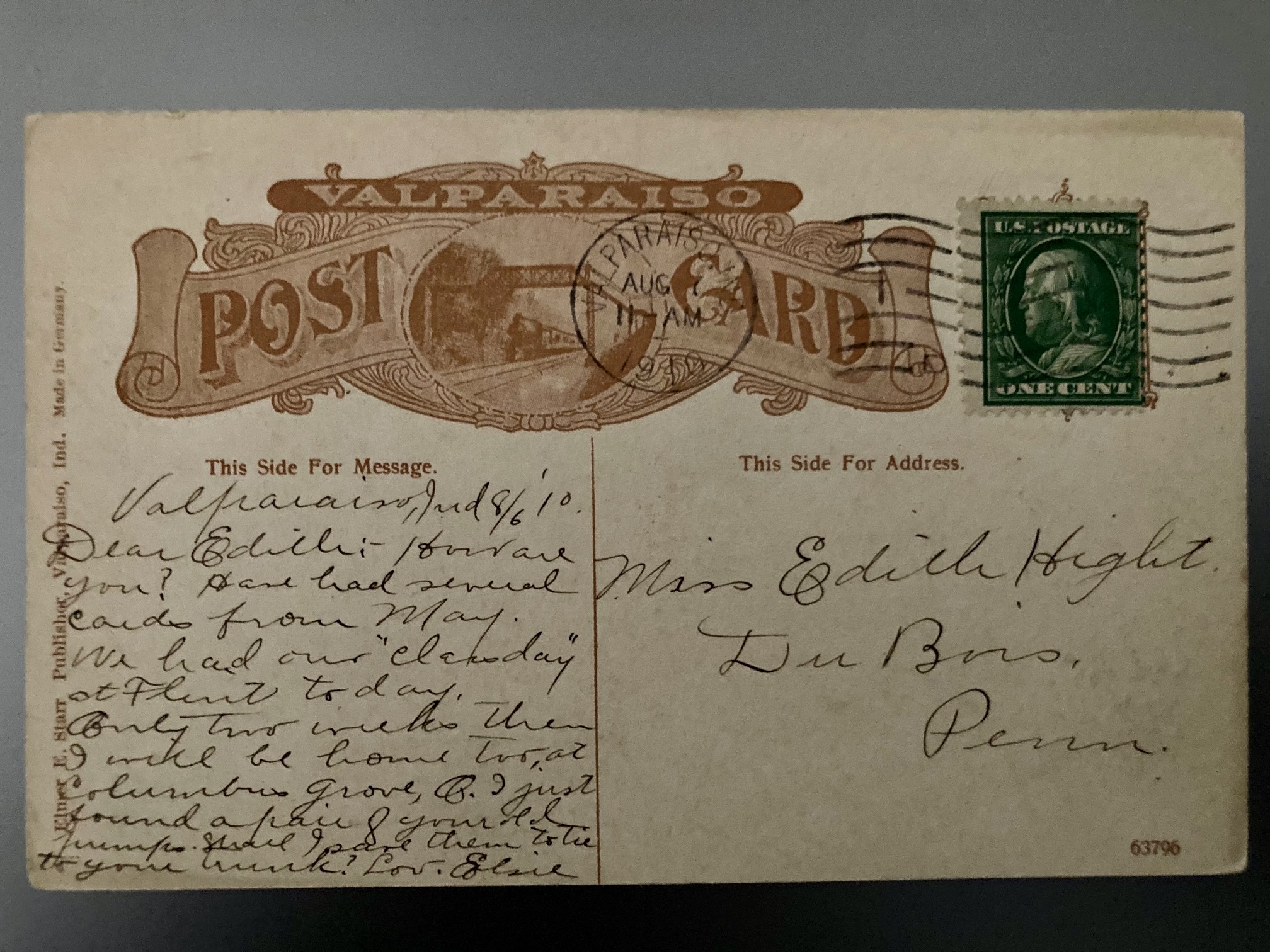
Anyway, this postcard is especially cool because it is postally used. The back reveals a quick little note penned by one Elsie to her friend Edith in Pennsylvania. It was postmarked from Valparaiso on August 7, 1910. What a neat snapshot of everyday life over a century ago!
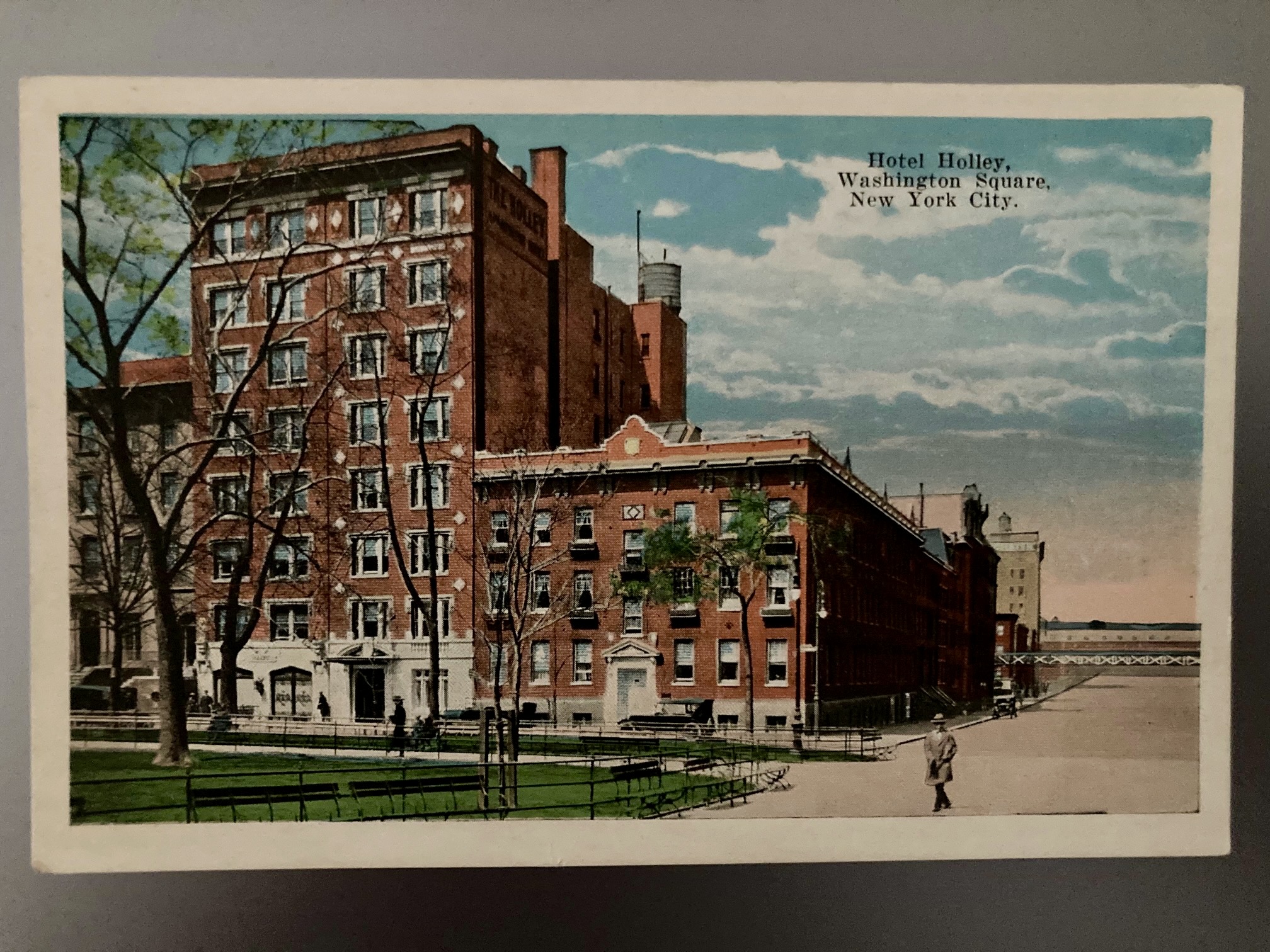
Below is a postcard depicting the Hotel Holley on Washington Square West, in the heart of Manhattan’s Greenwich Village neighborhood. There’s no date on it, but from the automobiles in the illustration and its overall design, it’s clearly from the early 1900s. Also pictured is the northwest corner of Washington Square Park. Alas, this postcard was never used, so I can only imagine who purchased it and why.
In the early fifties, NYU would buy the hotel and convert it to a residence hall for law students. It was designed to complement the opening of Vanderbilt Hall, the main law school building occupying the southwest corner of the Square. The new dorm was named Hayden Hall. Some 30 years later, I would live in it during my first year at NYU. The rooms were quite plain, shared with a roommate. But each room had a bathroom, and most had small study nooks to enable an early riser or a night owl to work without disturbing their roommate. Hayden Hall also had a cafeteria and group TV room on the ground floor, and it is via gatherings there with my classmates that I made many new friends.
Unless I win the lottery, Hayden Hall also happened to be the fanciest address that I will ever claim: 33 Washington Square West. (The ghost of Henry James must approve!) Here’s a shot of the building from one of my NYC visits several years ago.

Hayden Hall, contemporary view (photo: DY)
It struck me the other day that during the pandemic, I have returned to a hobby that allows me to travel over distance and time. My years at both VU and NYU yielded many good memories and planted seeds of future endeavors, cultural interests, and lifelong friendships. I’m glad that I can capture some of these memories in a stamp album.
Pandemic Chronicles #25: Monet, London fog, and memory at the Museum of Fine Arts

Monet and Boston exhibit, Museum of Fine Arts, Boston (photo: DY)
A greater appreciation for the cultural amenities of my home town of Boston and its surroundings has been an unintended but welcomed benefit of this otherwise awful pandemic. Yesterday this manifested in a short visit to the city’s venerable Museum of Fine Arts, which reopened for visitors earlier this year.
I spent most of my time at a special exhibition celebrating the work of impressionist painter Claude Monet. Among my favorites was his 1900 oil painting of the Charing Cross bridge in London. You can check out the photo above and the story behind the painting below.

Museum of Fine Arts, Boston (photo: DY)
It was an exceedingly pleasant visit, including lunch at one of the museum’s cafés and a stop in its bookshop. I’ll be back for more visits during the months to come. Among other things, later this year, MFA is reopening its redesigned galleries covering Ancient Greece and Rome, two historical periods of interest to me.
Soggy nostalgia
Monet’s Charing Cross painting triggered a bout of nostalgia, for London has long been one of my favorite cities, a huge yet walkable metropolis steeped in history, tradition, culture, and entertainment. I first discovered it during my 1981 semester overseas as part of Valparaiso University’s Cambridge, England study abroad program. My grainy, first-ever photo of London is below.
That semester would draw me to city life forever. No doubt those days spent in London would pave the way for my decision to go to law school at New York University, located in the heart of Manhattan.
When I began teaching in the 1990s, a week-long, spring break visit to London was made affordable by $300 round trip tickets from the East Coast. My fascination with the city and the relative affordability of traveling there made for some great visits during my younger days. I haven’t been to London in some time, but it’s definitely on my bucket list for a return trip.
(I will save for another writing the explanation behind the once extremely unlikely prospect that I would ever write with affection about a visit to an art museum. For now, let me say that the backstory also traces its origins to my semester abroad and what was, by far, my lowest grade in any college course!)

My first-ever snapshot of London, January 1981 (photo: DY)
“Have I not enough without your mountains?”
In 1801, Charles Lamb, essayist, poet, and lifelong Londoner, declined an invitation from friend and fellow poet William Wordsworth to visit him in England’s northwest countryside, explaining:
The lighted shops of the Strand and Fleet Street; the innumerable trades, tradesmen, and customers, coaches, wagons, playhouses; all the bustle and wickedness round about Covent Garden; the very women of the Town; the watchmen, drunken scenes, rattles; life awake, if you awake, at all hours of the night; the impossibility of being dull in Fleet Street; the crowds, the very dirt and mud, the sun shining upon houses and pavements, the print shops, the old bookstalls, parsons cheapening books, coffee-houses, steams of soups from kitchens, the pantomimes – London itself a pantomime and a masquerade – all these things work themselves into my mind, and feed me, without a power of satiating me. The wonder of these sights impels me into night-walks about her crowded streets, and I often shed tears in the motley Strand from fullness of joy at so much life.
Ultimately, Lamb asked, “Have I not enough without your mountains?” (You may read the full letter here).
Now, unlike Charles Lamb, I’m not so totally stuck on cities that I cannot appreciate a beautiful countryside. But I get where he’s coming from in terms of being stimulated by city life. I’ve lived in cities my whole adult life, first New York (1982-94), then Boston (1994-present). And if New York has been my stateside London, then Greater Boston has been my stateside version of the historic university city of Cambridge (UK variety).
In short, I’ll probably be a city dweller for the duration.
A Foggy Day
Because I’ll use any excuse to listen to Sinatra, I will close with his perfect rendition of Gershwin’s “A Foggy Day (in London Town).” Enjoy.
Yeah, I loved TV dinners

Processed, chemically enhanced goodness
My childhood years overlapped with an era that a twisted nutritionist might call the Golden Age of Processed Foods. Convenience was the touchstone, and frozen, canned, and packaged food containers helped to deliver the product. (During this time, the organic and natural food gods apparently were being held hostage, perhaps in the basement restroom of a remote General Foods plant.)
Many moms of America’s burgeoning middle class, including my dear mom, were quick to take advantage of these easy-to-prepare meals. My favorites were TV dinners, like the Swanson Salisbury steak dinner pictured above. Mom was a much better cook than she ever gave herself credit for being, but when she’d announce to my brother and me that we were having Swanson frozen dinners for our evening meal, it was cause for small celebration.
I don’t know why I was so happy to be served a TV dinner. But there was something about those tin foil containers of food, typically featuring a good-sized chunk of some sort of meat, as well as a nice little dessert to wrap up the feast, that appealed to me.
Of course, I wasn’t looking at food labels back then. So I was blissfully unaware that each TV dinner tended to contain, oh, about a month’s recommended intake of salt, as well as a list of chemicals that rivaled the periodic table. But seriously, something had to be added to those foods to keep them “freezer fresh” for months on end.
While my food intake is hardly ideal today, I am happy to report that I’ve moved on from TV dinners. I must confess, however, that if a Swanson dinner suddenly popped up in my freezer, I’d be inclined to heat it up and give it a try.
Nostalgia trigger: Tower Records is back (sort of)

I’m taking a short break from my Pandemic Chronicles entries to indulge in some deep nostalgia, prompted by a Facebook ad touting the online revival of Tower Records, the one-time brick & mortar retail shrine for music lovers. The announcement immediately set me off on a time travel journey going back some 38 years.
Tower’s massive store on 4th Street and Broadway in Manhattan’s Greenwich Village appeared in 1983. In the early 1980s, Broadway was the dividing line between the Village proper and the “frontier” of the East Village. I was a law student at New York University back then, and the law school’s Mercer Street residence hall happened to be only a few minutes walk from Tower. Even though discretionary spending under my tight budget was mainly devoted to exploring New York’s many wonderful bookstores, Tower became a draw as well.
Of course, back then I had no real music set-up, not even a boom box. Throughout law school, my cassette Walkman was my stereo system. Nevertheless, that didn’t stop me from periodic visits to Tower in search of music bargains. I was in awe of the selection. Imagine the endless rows of cassette tapes in every musical category!
I was hardly alone in recognizing Tower’s significance. In a 2016 piece for Medium, “When Tower Records was Church,” David Chiu waxed nostalgic about visits to Tower in the Village:
When you walked into the Tower Records store in New York City’s Greenwich Village neighborhood back in the day, you just didn’t go in there to buy an album and then rush off to leave. To me, going to Tower was like visiting the Metropolitan Museum of Art or attending a baseball game — it required a certain investment of time.
Sometimes it was the overall experience of being inside the store that mattered more than the purchases: the act of walking through the aisles and aisles of music, finding out what the new releases displayed out front, and hoping to meet an musician who was doing an in-store appearance. There was always a sense of anticipation as you went through Tower’s revolving doors underneath the the large sign displaying its distinctive italicized logo because you just didn’t know what you’d discover.
Sigh. The new Tower is online, and even though the variety may well exceed what the brick-and-mortar stores had to offer, it’s not the same. Similar to how I’m feeling about online booksellers and music & video streaming these days, what’s missing now is that wondrous sense of anticipation that came with entering a record store, bookstore, or video store, and making new discoveries. I can’t say that I’d trade in the vast warehouse of popular culture available to us today in return for that on-the-ground retail experience, but it’s a closer call than first meets the eye.
Pandemic Chronicles #12: This fall, my “back to school” experience is a computer screen

I had a feeling it might be this way. Back in March and April, when people in the know started sharing possible timelines for coronavirus treatments and vaccines, it quickly became obvious to me that we might be in this stay-at-home mode through the calendar year and perhaps going into 2021.
For many of us in higher education, this fall means teaching online. Last spring, when my university decided to teach remotely for the rest of the semester, we quickly had to adapt to this online environment, right as the emerging pandemic began to swirl around us.
Commencing an academic year in an online modality is a different kind of experience. There’s no opportunity to establish a face-to-face rapport, so we must do our best to create a positive classroom vibe with our faces on the screen. I’m very happy to report that my students have been engaged and interested in our Zoom classes so far, and that says a lot about their ability to adapt and to make the best of the situation.
Missing is the normal ritual of how the start of a school year parallels the shift from summer to fall. With the exception of my six years of full-time legal practice and an interim year between finishing college and entering law school, I’ve been living on a school or academic calendar continuously since kindergarten. I still keep my schedule and appointments in a hard copy annual planner that runs from July through June.
This fall will be different, however. Although the New England weather is already showing signs of cooling down, the fall will be more observed than experienced, because of the pandemic. As I’ve written in previous entries, Massachusetts (and Boston especially) has been a brutal hotspot for COVID-19, and it has taken a lot of self-discipline and painful sacrifice to bring down our infection rates. To avoid a recurrence of what we experienced during the spring, we will have to limit the degree to which we re-open.
All of which triggers a bit of soggy nostalgia for me. Thinking of grade school and childhood anticipation of the fall holidays, especially Halloween. And then there’s football (American, that is), with all the pageantry of the college game, and Sundays and Monday nights featuring the NFL. Add to that memories of fall semesters in college and law school, wondering what the coming year would bring. All of these memories are fueled by living in parts of the country — the Midwest and Northeast — where we have seasonal weather changes.
I’m grateful for technologies that allow for live interaction on the screen. This is truly “space age” stuff when viewed from my grade school days and our visions of what the future might bring. Nonetheless, it’s not the same. I do hope that next fall will be more reminiscent of days gone by.
Pandemic Chronicles #7: Adventures lost

Our study abroad group at Coventry Cathedral, England, 1981
A couple of weeks ago, our study abroad group from college met for a Zoom-enabled happy hour/mini-reunion. It was the latest gathering of our spring 1981 semester abroad cohort from Valparaiso University’s program in Cambridge, England.
I can think of no other chapter in my life that so instantly flips on my personal nostalgia channel. I’ve written about that special semester many times on this blog (such as here, “First-time sojourn across the pond”). Here’s a snippet of what I wrote in 2016:
I was embarking on the most formative educational experience of my life. The semester would create enduring memories, new perspectives, and lifelong friendships. The seeds it planted permeate my life today, ranging from the way I live, to my choice of vocation, to how I spend my typical day.
One of the great sadnesses of the current coronavirus pandemic is how many thousands of college students may be denied similar opportunities. Right now, it’s highly questionable whether their main campuses will even be open for residential classes in the fall, much less offering study abroad options. Even when those possibilities begin manifesting themselves again, a lot of students (and their parents) may understandably be hesitant to take the plunge.
I dearly hope that a combination of smart public health practices and new developments in medicine will control the ravages of this virus sooner than later. Saving lives, preserving health, and re-opening our economic and civic society are, of course, our main priorities. The return of life-changing opportunities to spend meaningful time in other parts of the world would be welcomed, too, along with a renewed sense of adventure to take advantage of them.
Pandemic Chronicles #5: Sports-inspired nostalgia
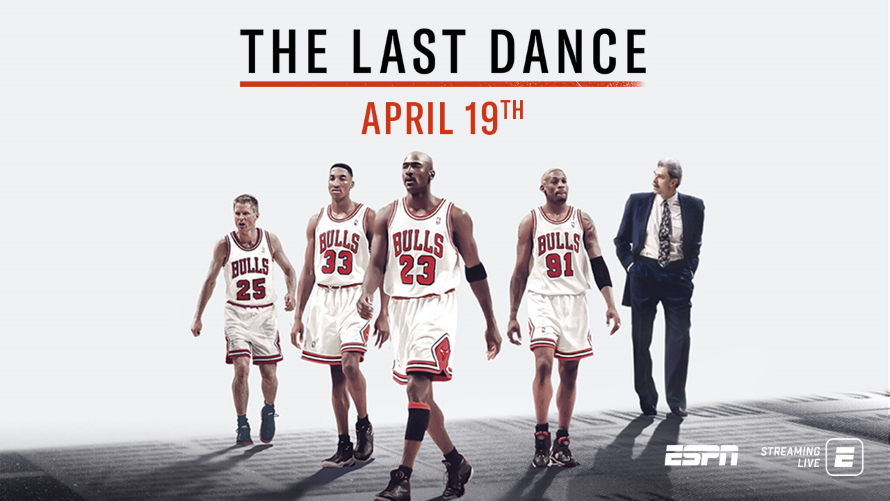
L to R: Players Steve Kerr, Scottie Pippen, Michael Jordan, Dennis Rodman, coach Phil Jackson
I know I’m hardly alone in spending more time watching television during this public health crisis. As I wrote a couple of a weeks ago, I’ve sharply reduced my watching of TV news, and that decision has held. Instead, I’ve been spending time with assorted series, especially highly-regarded police procedurals and historical dramas. Last night, however, I checked out the first episode of “The Last Dance,” a 10-part ESPN documentary series about the Chicago Bulls of the National Basketball Association, centering around the final championship season (1997-98) of its iconic, superstar guard, Michael Jordan.
The series is being televised in weekly installments, rather than being released in its entirety. That said, I already understand why “The Last Dance” is drawing accolades from sports writers and fans desperate to feed the beast while professional and college leagues are shut down due to the pandemic. (As further evidence, the just-completed National Football League annual draft of collegiate standouts earned its highest-ever ratings.) It’s a basketball junkie’s delight. If you’re a sports fan, and especially if you followed the great 1990s Bulls teams, then you’re in for a treat.
For me, “The Last Dance” is prompting a major nostalgia trip. The Jordan-era Bulls teams overlapped with important events and transitions in my life. Jordan first joined the Bulls for the 1984-85 season, which happened to cover my final year of law school at New York University. Even in New York, the sometimes snobby sports intelligentsia knew that this guy in Chicago was something special. Jordan immediately became one of the league’s best players. I began closely following his career and the fortunes of the Bulls from afar.
Alas, Jordan had joined a team in a deep state of mediocrity. The Bulls of the late 1970s and early 1980s were a pretty sad bunch. It would take several years of key player acquisitions and coaching changes — most notably star swingman Scottie Pippen and head coach Phil Jackson — before the team became a serious playoff contender. In fact, not until 1991 would the Bulls win their first NBA championship, the first of six during the halcyon 90s.
By then, I had been practicing law for six years in New York City, first as a Legal Aid lawyer, then as an Assistant Attorney General for New York State. But in 1991, my career was about to shift. I had accepted an appointment as an entry-level instructor in NYU’s Lawyering Program, an innovative legal skills curriculum for first-year law students, starting that fall. I was tremendously excited to be returning to my legal alma mater,as a faculty member, no less! I didn’t know it at the time, but it was the start of an academic career.
I would decamp from New York to Boston in 1994 to accept a tenure-track position at Suffolk University Law School, where I’ve remained since. My devotion to the Bulls followed me, and watching the team’s successes provided welcomed breaks from the demanding workload of a new assistant professor.
The academic calendar would provide greater flexibility in my own schedule, with added opportunities for travel. My fond memories of that team include visits to home in Indiana. My mom, of all folks, had become an ardent Bulls as well. We would watch games together in the TV room, cheering on what would become one of the sport’s legendary dynasties.
As a lifelong Chicago sports fan who puts those great Bulls teams on a pedestal, I look forward to watching the rest of “The Last Dance.” I’m sure it will continue to inspire nostalgic episodes as well. It’s all good, as we comb the memories of our lives during this challenging time.
 Musings of a Gen Joneser
Recent Comments