“I want it all” (Grown up edition)
In the course of a life, can we really have it all?
The YouTube video above — featuring a song from the 1980s Broadway show “Baby” — captures our wishful thinking, especially when we’re younger. In this scene, three women of different ages and life circumstances — but all on the south side of 40 — meet by chance in a doctor’s office. In a sweet and clever number performed by Liz Calloway, Catherine Cox, and Beth Fowler at the 1984 Tony Awards, they share how they want it all.
Getting real
Way back in 1985, Norman Redlich, the dean of NYU Law School, referenced those Broadway lyrics in his remarks at our graduation convocation. His message: It sounds great, but most of us can’t have it all. There are choices to make and realities to navigate in a life that moves all too quickly.
So there we were, sitting among family and friends in beautiful Carnegie Hall, feeling a bit heady about ourselves, while thinking that the world was ours to conquer — and here’s our dean throwing cold water on us and suggesting that it’s probably not going to happen in the way we’re imagining it.
Among the sea of forgettable graduation speeches that I’ve heard over the years, I guess it means something that I remember this one.
Instead…how about a meaningful life?
Rather than chasing such an elusive goal, let’s focus on what makes for a good and meaningful life, while respecting the fact that we’re not able to control everything.
For some, that meaningful life may be grounded in raising a family, caring for a loved one, or pursuing an avocation. For others, it may mean devotion to a career or a cause, or perhaps creating something artistic or delicious. And still others may find meaning in overcoming significant personal or family challenges.
A lucky few may achieve a zen-like blend that allows them to check all the boxes. But for most of us, it will involve some juggling, choosing, compromising, and hopefully succeeding more than failing.
And if we are fortunate and play our cards well, we will get to do a lot of good things during the time we’re here.
Sorting through clutter
For some, sorting and tossing clutter — objects, emotions, experiences, what have you — may be a key to that meaningful life, especially when we reach a certain age. (Fill in number here.)
Okay, I’m the last person in the world who should be talking about reducing clutter. I’ve been a saver and collector all my life. (I’m a classic Cancerian in that sense.)
But that’s what I’m doing now, tossing a lot of stuff. You wouldn’t know it from the current look of my office or condo, but believe me, this year I’ve been offloading!
And you know something, it feels good. I have a pretty clear sense of what brings meaning to my life, and I am jettisoning or recycling the stuff that doesn’t connect with who I am and where I want to go.
Generation Jones
These thoughts are especially pertinent to many Gen Jonesers. As I’ve written before, for our generation, it’s game time. As a group, we’ve still got a lot of fuel left in the tank, but we need to be open to how we can create really great years ahead and define our personal legacies.
***
This is a considerably reworked and augmented version of a 2011 post from my professional blog Minding the Workplace.
The communal experience of watching a great movie or TV show
One Sunday night during my first semester of law school at New York University, I had reached my fill of studying, so I decided to catch a movie. I checked the Village Voice and saw that “Singin’ in the Rain,” the classic 1952 musical starring Gene Kelly, was playing at the Theatre 80 St. Marks movie house in the East Village. I had never seen the movie before, but I thought I’d enjoy it.
So I trekked over to the theatre and plunked down my five bucks at the ticket window. I expected that the theatre would be pretty empty — I mean, c’mon, who goes to see a 30-year-old movie on a Sunday night? — but lo and behold, hardly any free seats remained!
Within a half hour into the screening, I knew I was watching what would become my favorite movie. I was thoroughly entertained, enchanted, and uplifted. And what added so much to the experience was that people were clapping, enthusiastically, after each of the iconic musical numbers, such as Gene Kelly’s signature performance of the title song (click above!) and Donald O’Connor’s dazzling, funny song-and-dance number, “Make ‘Em Laugh.”
I had never before been at a theatre where strangers cheered scenes of a movie in each other’s company. We reveled in that film, and obviously it made for a lifetime memory.
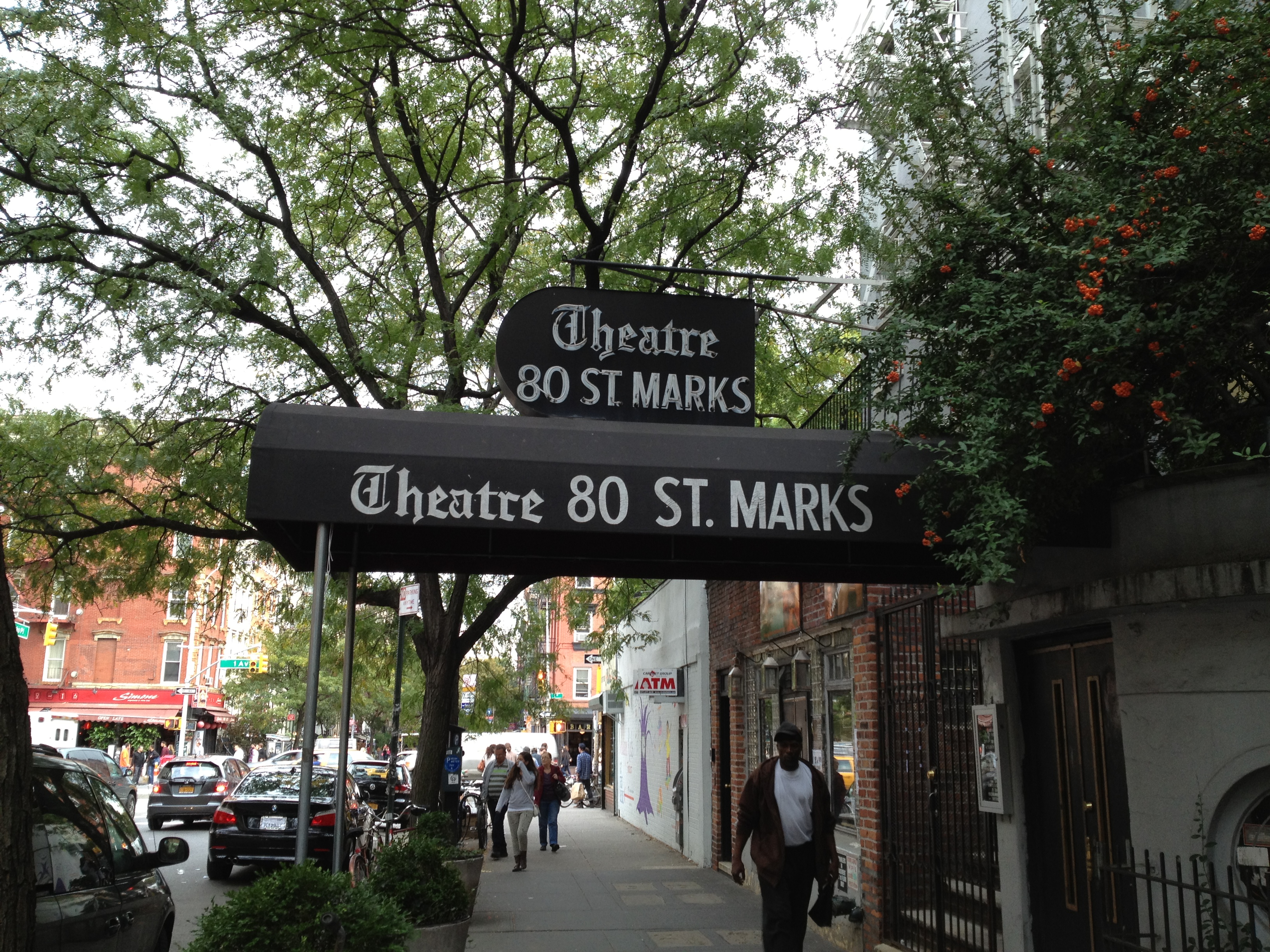
Theatre 80, East Village, Manhattan (photo: DY)
Going to see movies at Theatre 80 and other revival movie houses would become a staple of my New York experience. At times I would drag someone along, and on other occasions I’d just go by myself. How cool it was to watch classic old movies on a big screen!

Seasons 1 & 2 are on DVD
At the risk of sounding like the first year of law school was a cakewalk (rest assured, it wasn’t), another good memory of communing before a screen occurred every week in the Hayden Hall dormitory where most first-year law students lived. The dorm had a TV room, and dozens of us would gather to watch “Hill Street Blues” and “Cheers” as a group study break.
“Cheers” was at the start of its long run, and we enjoyed it. But it was “Hill Street Blues” — a cop show that anticipated just how good TV dramas could become — that most captured our attention. Largely unknown actors such as Daniel Travanti (Capt. Frank Furillo), Bruce Weitz (Sgt. Mick Belker), and Betty Thomas (Sgt. Lucy Bates) made for one of the best ensemble casts in television history, and the developing storylines maintained our interest from week to week.

Hayden Hall, NYU, Washington Square: Back in the day, lots of cockroaches, but a nice TV room (Photo: DY)
Such communal viewing experiences are few and far between these days. The old Theatre 80 still stands and is used for performing arts events, but it’s no longer a movie theatre. The widespread availability of VCRs pretty much killed off the revival houses, and with them went the experience of watching a classic movie in the company of others.
I have no idea if the TV room in Hayden Hall is still around, but even if it is, I’d be surprised if it plays the same community-enhancing role for the undergraduates who now live there. Most of them probably have their own TVs or use their laptops to watch the latest small screen programs.
As the rows of DVDs running along my bookshelves and my Netflix subscription attest, I appreciate being able to pop in a disc of a favorite movie or TV show. But I know it’s not the same as applauding with others for “Singin’ in the Rain” at Theatre 80, or rooting with friends for Captain Furillo and his squad to catch the bad guys and survive City Hall politics on “Hill Street Blues.”
Ordering Chinese delivery: Hitting the Food Wall
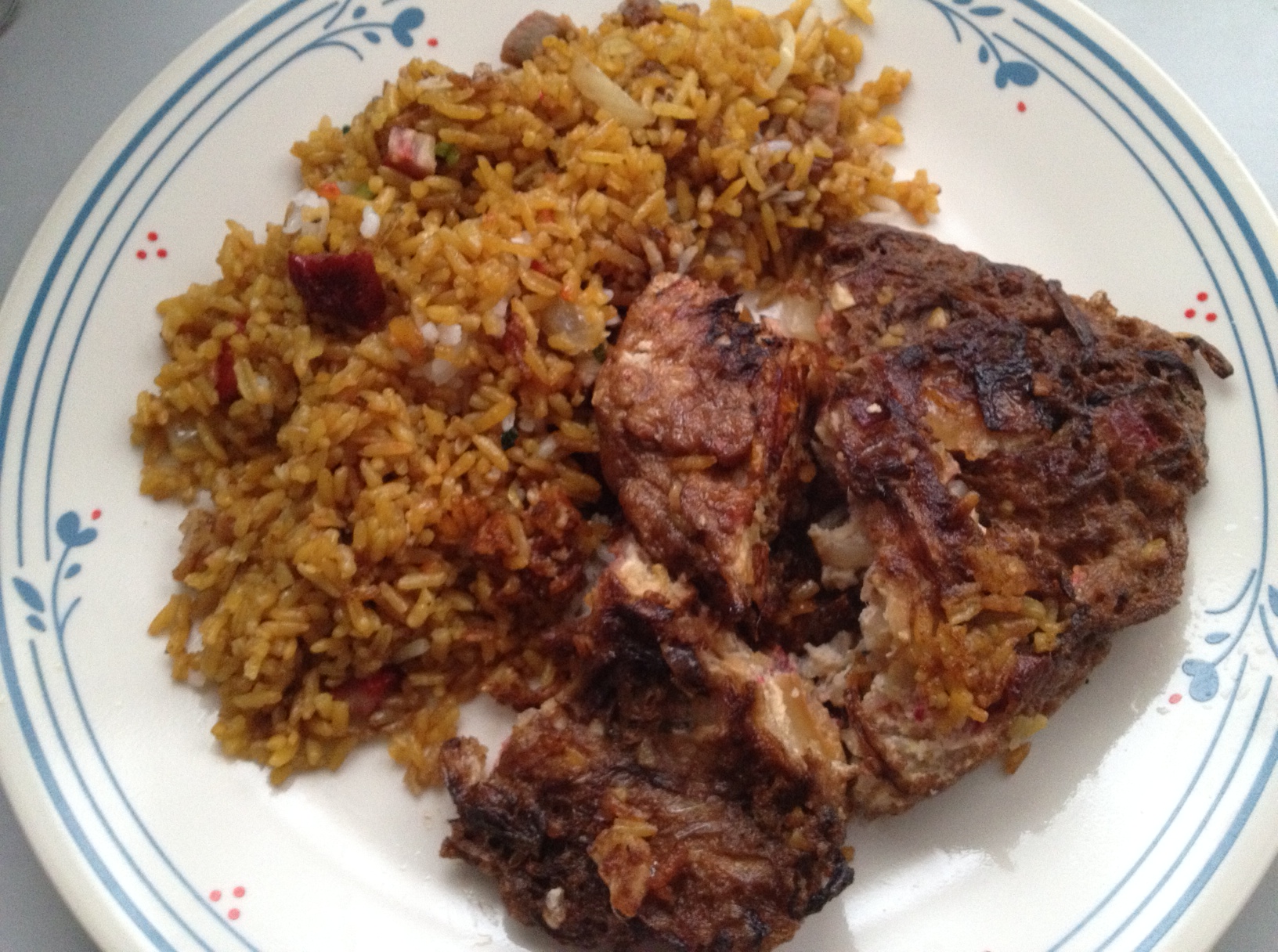
Delicious Chinese leftovers!
Ordering in Chinese food is one of my simple pleasures. Whether it’s after coming home from teaching an evening class, or during the weekend when a glance inside the fridge shows nothing resembling a meal, the ritual is basically this: Survey the menu, call in the order, wait for the delivery, and remove goodies from the bag.
Typically, one plate isn’t enough, so seconds follow. Then I close up the containers and pop the leftovers into the fridge for later meals.
I got hooked on Chinese delivery in law school. New York and Chinese food go hand in hand, and the local choices in NYU’s Greenwich Village neighborhood were abundant, tasty, and cheap. Even a modest order would yield several meals.
Today, my Chinese delivery venue of choice is called Food Wall, located in my Boston ‘hood of Jamaica Plain. I’m far from alone in this category. Val Wang featured Food Wall in her 2012 National Public Radio series on Chinese takeout places:
When you spend as much time inside of Chinese takeouts as I do, you start to notice some patterns. Like, every takeout has its regulars, people for whom the takeout is an essential part of their lives.
Food Wall in Jamaica Plain is one example. It has inspired something of a cult following. I walked up and down the street one afternoon asking people who work nearby how often they stop in. . . .
“At least once a week,” said Saul Cifuentes, owner of Beauty Masters Salon and Supply.
“Lately I’ve been going at least three to four times a week,” said Josiah Simmons of theVideo Underground.
James Norton of Revolution Bikes is trying to cut back, but “it used to be almost daily.”
None can top Fat Ram of Pumpkin Tattoo. He claims he’s eaten there “Eleven days a week for 10 years. It’s too much. Too much Food Wall. I hit the Food Wall.”
Pictured above is some very basic Cantonese fare from Food Wall: Egg foo young and fried rice. I usually opt for spicier Szechuan dishes, but not to worry, it’s good stuff. I cleaned that plate quickly.
Da Bears (1985 ed.)

I’m not obsessed, really.
So the Chicago Bears are playing the Green Bay Packers on Monday Night Football tonight. This inevitably means that I’ll have at least one or two memories about my favorite sports team of all time, the 1985 Chicago Bears.
Across the nation, but especially in the Chicagoland area, a large cohort of middle aged men (and some women, too!) carry with them a fierce, nostalgic devotion to a football team that has etched a permanent place in their hearts and minds. That devotion can be activated in a millisecond, whenever names like “Payton,” “McMahon,” “Ditka,” “Singletary,” “Danimal,” “Mongo,” or “The Fridge” are uttered, or when a sports broadcast plays a snippet of a very bad rap video, “The Super Bowl Shuffle.”
The 1985 Chicago Bears are regarded as one of the top two or three teams in National Football League history. They dominated the regular season with a 15-1 record. They then trounced the Los Angeles Rams and New York Giants in the playoffs, before thoroughly, utterly flattening the New England Patriots in the Super Bowl. It’s not just their won-loss record that matters; it’s how they won, with a tightly controlled offense and the most dramatic, overpowering, fun-to-watch defense the game has ever seen.
It’s a team that gave back to the Windy City its swagger, years before Michael Jordan would lead the Bulls to six NBA championships. It’s a team full of memorable characters and stories.
A memorable year for me, too
Memories good and bad rarely stand in isolation. I have no doubt that my devotion to this team connects to where I was at that time in my life. I had just graduated from NYU Law School, and I was fulfilling my wish of working as a public interest attorney, practicing at the Legal Aid Society in Manhattan.
I shared an apartment in Brooklyn, earned a little over $20,000 (not much even by 1985 standards, especially in New York), and was absolutely smitten with the wonders of New York City. It was a rougher town during those days, and the decade was marked by a high crime rate and the arrival of crack cocaine. But one could still enjoy city life on a meager budget.
In the meantime, my longstanding affinity for Chicago sports teams — having grown up in Northwest Indiana — had not disappeared. By following the newspapers and Sports Illustrated, and by watching the Bears games that were televised on the East Coast (via a foil-enhanced black & white TV set), I watched that magical season unfold.
In addition to collecting the stuff pictured above, somewhere in a storage trunk I’ve saved the Chicago Tribune edition from the day after the Super Bowl victory. One of the headlines is etched in my mind: “Bears Bring It Home.”
Revisiting my collegiate alma mater

Valparaiso University, Indiana: This building once housed The Torch, the campus newspaper, and WVUR, the campus radio station. (Photo: DY, 2012)
“The past is obdurate. It doesn’t want to change.”
So we are told in Stephen King’s 2011 time travel epic, 11/22/63, which takes us back to the years leading up to the assassination of President Kennedy. The main protagonist — a school teacher — learns that even when we go back in time, the past mightily resists our attempts to change it.
I have no idea if time travel and changing the past are even possible, so I’ll put my fascination with the subject aside to make a more accessible point: We may not be able to change the past, but we can change how we regard it. Historians revisit the past practically every day, and not infrequently they alter and sometimes substantially revise our perceptions of it. At times, subsequent events and reflections contribute to those changed understandings.
This occurs even more frequently at a personal level. In fact, that’s what I’d like to explore here, by taking a look back at my undergraduate alma mater, Valparaiso University (also known as “Valpo” or simply VU) in northwest Indiana. For readers unfamiliar with it, Valpo is a small-to-medium sized Lutheran-affiliated school, noted for its strong liberal arts curriculum and attention to undergraduate education. Most students live on or near the campus, which is located on the outer edges of the small city of Valparaiso.
If relationships with institutions over time could be described in Facebook-like terms, mine with Valpo would get the “It’s complicated” tag, without question! Indeed, this topic reminds me of how our emotional ties with institutions can be quite powerful and evolve over time.
College days
In 1981, I graduated from Valpo with a B.A. degree and a political science major. During my time there, I was a very engaged student. I did well academically, worked as a department editor of the weekly campus newspaper, and served in various student government positions. I also spent a life-changing study abroad semester in England.
Taking all that into account, one might reasonably assume that I enjoyed an idyllic, residential, Midwestern-style collegiate experience. But for many years I harbored attitudes toward VU that alternated between resentment and anger, grounded in grievances about its limited political, social, and racial diversity and its lack of national renown.
Now, let’s be honest here. It’s not as if I arrived at the VU campus in 1977 with a very cosmopolitan personal history. I was born and raised in Northwest Indiana. A handful of family trips to visit relatives in Hawaii were the closest things in my life to “multicultural experiences.” In addition, I started college as a Republican, and my political opinions were a hodgepodge of reactive, inconsistent thinking. Although I had endured racial taunts growing up in Indiana neighborhoods, I wasn’t exactly a trailblazer for civil rights.
However, my worldview was changing, and by the time I graduated, Valpo’s campus culture wasn’t as good a fit for me. My work for the campus newspaper, The Torch, was especially enlightening. I wrote dozens of articles for it, including some hefty investigative pieces about campus life. It served as my primer to the insular wackiness that characterizes many university cultures and decision making processes, though at the time I erroneously attributed these traits uniquely to VU. (Believe me, I since have been corrected on that point!) My writing for the paper also gave me a closer look at some of the diversity issues at VU, and I became acutely aware of how black students experienced the predominately white campus and surrounding community.

Valparaiso University, Indiana: Brandt Hall dormitory where I lived during my sophomore, junior, and senior years. (Photo: DY, 2012)
By the time I graduated from Valpo, I was disenchanted with it and blamed it for all the things that it was not. Throughout college I had planned on going to law school, and eventually I began to see it as an opportunity to sink roots into a different part of the country. Despite many rewarding college experiences and friendships, I was determined to put Valparaiso way back in my rear view mirror.
When, some 10 years after graduation, I received from VU a detailed questionnaire for “diverse” alumni/ae about their student experiences, I filled it out and added a long letter explaining some of my answers. I was very blunt. Looking back, I regret the tone of my responses, but at the time, I saw it as an opportunity to unload.
Decamping for the East Coast
Predictably, the lion’s share of my law school applications were filed at schools on the two coasts. Originally I had designs on heading to California, and the Bay Area seemed especially hospitable to my evolving left-leaning political views. But ultimately I opted to head east to New York University, located in the heart of Manhattan’s Greenwich Village. It was the right move, both at the time and in retrospect.
New York quickly became my Wonder City. NYC of the 80s was a more raw and edgy place than it is today, but it also was possible to enjoy it on a shoestring budget. Its many bookstores, revival movie houses showing old classics, and endless array of ethnic eateries were among the offerings that competed for my attention.
I have lived on the East Coast since the early 1980s, first in New York City, and now in Boston. Given the past 30 years, it’s fair to say that I am more city boy than country boy, though at times I think that it might be nice to live in a traditional “college town.” In any event, while I have long described myself as an “East Coast person,” I now understand and appreciate that I am the product of many different places.
Valpo revisited: More than rose-colored glasses
My moves aside, my Valparaiso story didn’t end with faded images in the rear view mirror. Rather, I have experienced a gradual but in some ways significant change in how I regard that past. Perhaps the rose-colored glasses of time have contributed to that change, but it’s more than that.
You see the people in the photo below? We were together for a memorable spring 1981 semester in VU’s study abroad center in Cambridge, England. There were about 20 of us in all. We have reunions every five years, and each time over half of our group has attended. The photo was taken at our 2011 reunion. I count a good number of these folks as lifelong friends, and I value my associations with all of them.
How many other study abroad groups hold reunions every five years? That question, and my knowing answer (very few), have played an important role in changing my relationship with my alma mater.
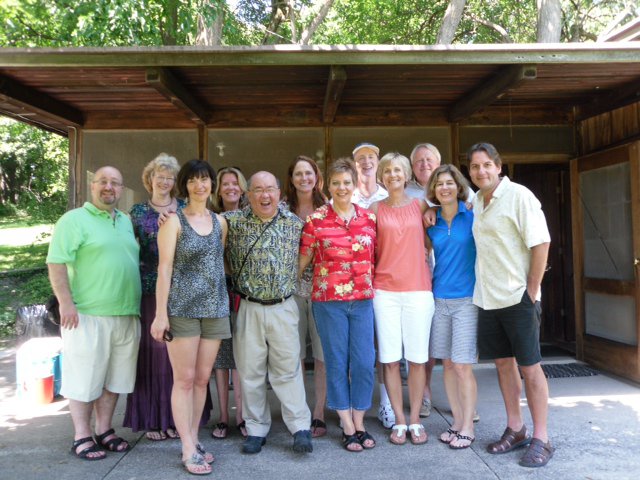
Summer 2011: The 30th year reunion of our study abroad group. (Photo courtesy of Anne Walsh Gorski)
A few years ago, I realized that my attitudes toward Valpo were changing. It wasn’t due to a conscious effort on my part, nor had I forgotten the issues I had with the school. Rather, I was beginning to appreciate what it had given to me.
Most importantly, I have continuing friendships that were forged during those years. They have evolved, matured, and renewed over the decades, and they manifest themselves in ways ranging from periodic get-togethers, to back-and-forth e-mails, to playing in fantasy sports leagues. And through the Internet (and social media in particular), I now count among my friends a fair number of folks I knew only casually during our student days.
In addition, I received an excellent classroom education at VU. I have been a teacher in higher education settings for over 20 years. As a law professor, I’ve seen the undergraduate results of many types of colleges and universities. I now understand that the academic experience at Valparaiso compares well with any of them.
In fact, I likely underestimated VU’s higher ed street cred as a student. In the various reputational surveys and assessments of colleges and universities that started to become popular in the late 1980s, Valpo has fared quite respectably.
Working on The Torch honed and developed my writing skills in ways that continue to deliver today. Any success I have at writing for a less specialized audience — especially via my Minding the Workplace blog — has direct roots in that experience. The Torch also served as the wider social base I didn’t have during my first two years of college. (Suffice it to say that some of us practically lived in The Torch offices.)
Lastly, the study abroad semester I spent in England was the most formative educational experience of my life. So much of my personal culture and the way I live today can be traced back to those five months overseas. My natural penchant for nostalgia notwithstanding, I generally do not yearn to relive even the best experiences of my life. My semester abroad is an exception; I would access Stephen King’s time travel wormhole in a heartbeat to revisit that experience.
My writing for VU periodicals didn’t stop with The Torch. In 1996, I penned a long essay about my study abroad experience in England for the university’s literary and current affairs journal, The Cresset. More recently, I published an article titled “Workplace Bullying and Ethical Leadership” in the VU business school’s Journal of Values-Based Leadership.
A different view
The issues I had with Valpo as a student and recent graduate were legitimate, and some remain relevant to the school today. But with the gifts of hindsight and maturity, I am grateful for many of my collegiate experiences and for the related friendships and opportunities that are a part of my life now.
I’ll leave it to the physicists to determine if we can change the past, but I know from experience that we can change how we think about our own. Sometimes, as here, those changes can be good ones.
Time travel: Some favorite destinations

Remember “The Time Tunnel,” the short-lived but fascinating television time travel drama from the mid-60s? Every new episode would find scientists Tony Newman and Doug Phillips landing in a different historical setting, usually on the eve of some major event, such as the sinking of the Titanic, the Battle of Little Big Horn (General Custer and Crazy Horse), or the bombing of Pearl Harbor. (Unfortunately, they never could persuade folks that disaster loomed.) To this day, I credit that show for helping to stoke a lifelong interest in history and to fuel my imagination with thoughts of going back in time.
What if time travel was possible? What places and times would I want to visit? Here’s an off-the-top-of-my-head list, not exactly an exotic one, but it sure would be a fascinating set of journeys. Feel free to add yours in the comments!
***
New York City, 1880s — My favorite time travel novel, Jack Finney’s captivating Time and Again (1970), is set in early 1880s Manhattan. There’s a scene in the book when his protagonist, Si Morley, realizes that he made a successful journey back. It remains one of my most favorite reading moments, ever.
New York City, 1920s — I’d be at everything and anything by George Gershwin, Rodgers & Hart, and Cole Porter. I’d be at the jazz clubs of Harlem. I’d be at Yankee Stadium watching Ruth & Gehrig. I’d be hanging out in Greenwich Village. I’d also want to check out student life at New York University, my law school alma mater. The 1920s is one of my favorite decades, and NYC of that time would make for a grand visit.
New York City, post-war 1940s and early 1950s — I can’t imagine a better place to drink in the spirit of America’s post-war optimism. I’d also venture out of Manhattan to Ebbets Field in Brooklyn, where I’d watch Jackie Robinson break baseball’s modern color barrier. I’m sure I’d spend plenty of time and money at the dozens of used bookstores in the city. And yes, I’d hang out in the Village during this period, too.
Chicago, 1893 — Chicago hosted the Columbian Exposition World’s Fair. The photographs of it look stunning, a city bathed in light. It also marked Chicago’s arrival as a major city.
Chicago, 1920s — When I was a kid, one of my favorite books was Albert Harper’s Chicago Crime Book (1969), which told tales of Al Capone and other famous gangsters. Thus was born a fascination with Chicago’s Roaring Twenties.
San Francisco and Berkeley, California, mid-to-late 1960s — I’d like to experience the whole California Dreamin’ thing. I’d be the squarest person in Berkeley’s People’s Park, but at least I’d be able to take good pictures.
London, late 1880s — Yeah, I’d sleuth around the East End to discover the identity of Jack the Ripper. I’d be drawn to the sinister side of Victorian London. I’ve also read about the food carts of the era and would like to give them a try.
London, 1940 — London during the Battle of Britain and the Blitz. It’s such an iconic, defining, dramatic moment in British history. Just thinking about it has me imagining Edward R. Murrow’s radio broadcasts from London as the German bombs were falling around them.
Paris, 1920s — I probably wouldn’t stay long, but I’d want to check out that whole Left Bank scene and the Lost Generation. I’d hang out in Paris cafes and do a bit of writing. (Challenge: No outlets for my laptop.)
Washington D.C., 1861-65 — Washington during the American Civil War. Hot, miserable, and menacing. But fascinating nonetheless. And somehow I’d finagle a way to have a short chat with Abraham Lincoln.
Boston, Revolutionary Era — I live in a city where evidence of the early years of the American Revolution is all around us. How cool it would be to see Boston of that era, perhaps bumping into the likes of John Adams, Samuel Adams, and other remarkable figures of the day.
Salem, Massachusetts, 1600s — Will we ever know the full truth about the events surrounding the Salem Witch Trials? It would be fascinating to find out.
Ancient Athens — I’d follow Socrates as he traipses around the Athenian marketplace. I’d want to get some first hand lessons in how the ancient Greeks lived, and trace some of the origins of Greek mythology and philosophy.
Hawaii, 1920s — Among my treasured Hawaiian collectibles is a February, 1924 National Geographic magazine with 16 pages of incredible color illustrations of the Islands. I can only imagine seeing those sights in person! If I was on Maui during October 1926, I’d go to the hospital in the small town of Paia to say hi to the newborn baby who someday would be my mom. While on Maui, I’d take a train ride on the narrow-gauge Kahului Railroad.
Hawaii, 1950s — After WWII, Hawaii was making its way toward eventual statehood. Large passenger airplanes — still propeller-driven, as the jets wouldn’t arrive in the early 60s — now made air travel to the Islands a safe reality. The idea of Hawaii as America’s Pacific paradise was in full bloom.
Valparaiso, Indiana, early 1910s — Valparaiso University, my collegiate alma mater, was rescued by the Lutherans in the 1920s after a period of decline. Before that, however, it was a thriving, no-frills, secular college known as the “Poor Man’s Harvard” that provided collegiate, professional, and trade courses to young people who aspired to join America’s emerging middle class.
Hammond, Indiana, 1950s — Hammond was my hometown from grade school through high school, from the late 60s through late 70s. By then it was a city in decline, its jobs base shrinking due to the decline of steel mills and manufacturing in Northwest Indiana. But during the 50s it was a thriving small city and an emerging outer suburb of Chicago.
Airplanes — I would love to fly in two legendary, early passenger airplanes, the Ford Trimotor (late 1920s) and the DC-3 (mid 1930s).
Trains — How fun it would be to take the Pioneer Zephyr, one of the first modern diesel passenger trains, on its popular Chicago-to-Denver run during the 1930s.
***
I’m struck by the fact that this list doesn’t have much to do with my current work. Hardly anything about law, the labor movement, politics, and the like. Not much about war, either, despite that I read a lot about the Civil War, WWI, and WWII. I’m not sure quite what that says about my choices, but unless science develops affordable time travel during my lifetime, this is not a pressing matter.
 Musings of a Gen Joneser
Recent Comments