Geek out: A visit to the National Postal Museum
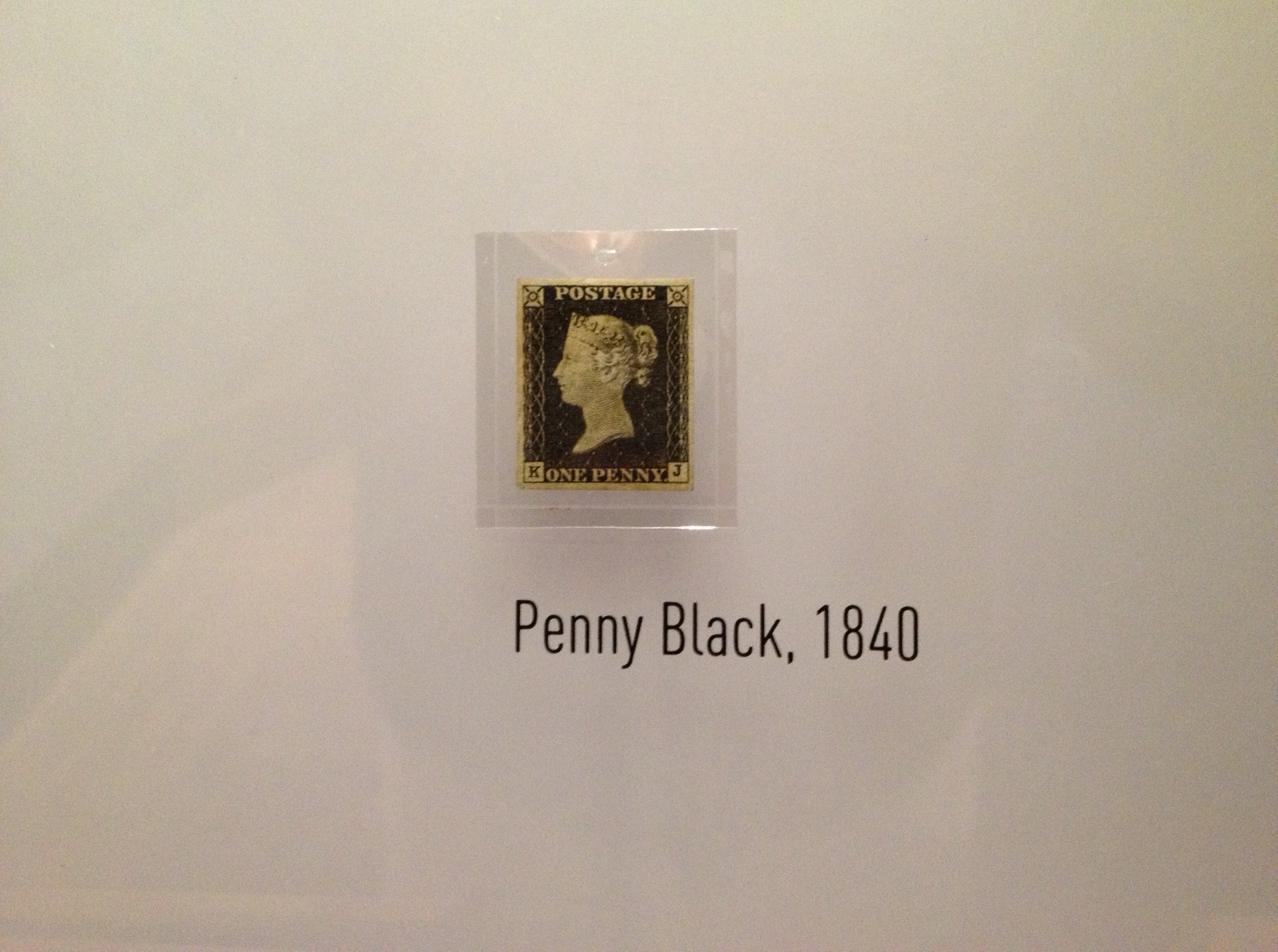
From Great Britain, the first adhesive postage stamp (All photos: DY, 2014)
During a quick trip to Washington, D.C. to speak at a program sponsored by the American Psychological Association’s Center for Organizational Excellence, I proved once again why my nickname should be Mr. Excitement: Given a free afternoon, among all of D.C.’s many cultural and historic attractions, I chose to visit the National Postal Museum, adjacent to Union Station.
In other words, I spent my time looking mainly at old postage stamps.
Now, in my defense, I should explain that the weather was lousy, I didn’t have unlimited time, and both my hotel and the APA program were near Union Station. More importantly, on the merits, this museum is a hidden treasure for history buffs and stamp collectors alike. It’s also free, uncrowded, and can be enjoyed in an hour or two.
During grade school, I was an avid stamp collector. So even today I understood how neat it is to see a specimen of the Penny Black (above), the first modern postage stamp. And as a lifelong student of American history, viewing the Pony Express cover below stoked my imagination about the Old West.

It took blazing saddles to get the mail delivered in the Old West
You see, stamp collecting’s biggest fascinations for me were the stories told by the stamps themselves and the imagined journeys of the letters and parcels to which they were affixed. I learned a lot about history, geography, culture, and famous people of all stripes and colors through stamps.
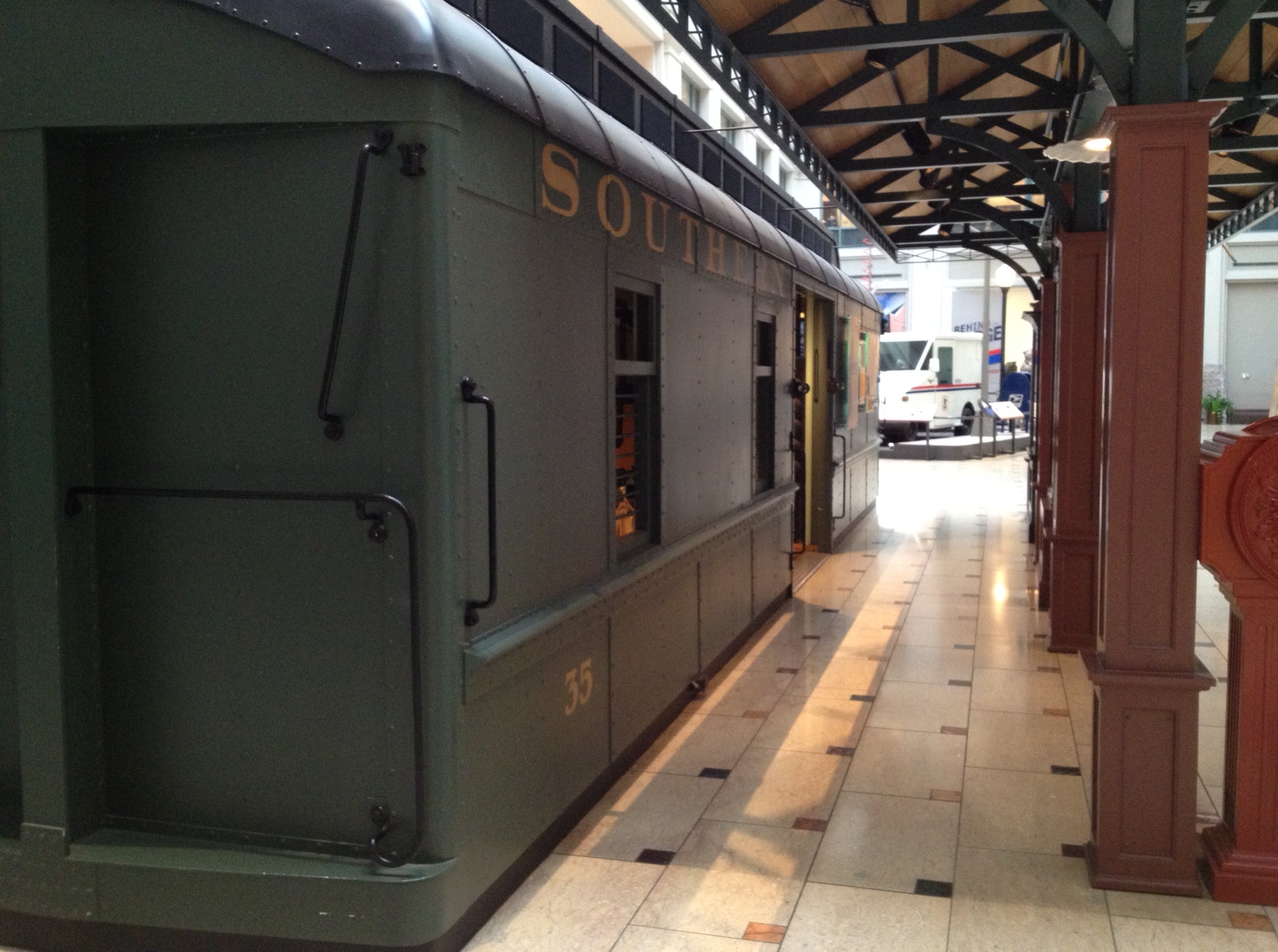
An old railway mail car
As a young boy who loved trains and airplanes, stamp collecting played right into those affinities. At the museum, you can step right into the old mail car pictured above and imagine postal clerks sorting letters and packages as the train zips along the tracks.
You can also gaze at this vintage, post-World War I de Havilland biplane and picture the daring young flyers who pioneered early air mail delivery.

This was air mail, back in the day
The cover below was the only piece of mail carried by the first airplane to cross the Atlantic Ocean from the U.S. to Europe in 1919. I read about this historic flight when I was a kid!

Here’s when early air mail went right…
The letter below also has great historic significance. It was salvaged from the wreckage of the Hindenburg, the famed German airship that caught fire and burned to the ground as it was completing its transatlantic flight at Lakehurst, New Jersey, in 1937. (You can watch a YouTube video of the Hindenburg’s final flight and demise here.)
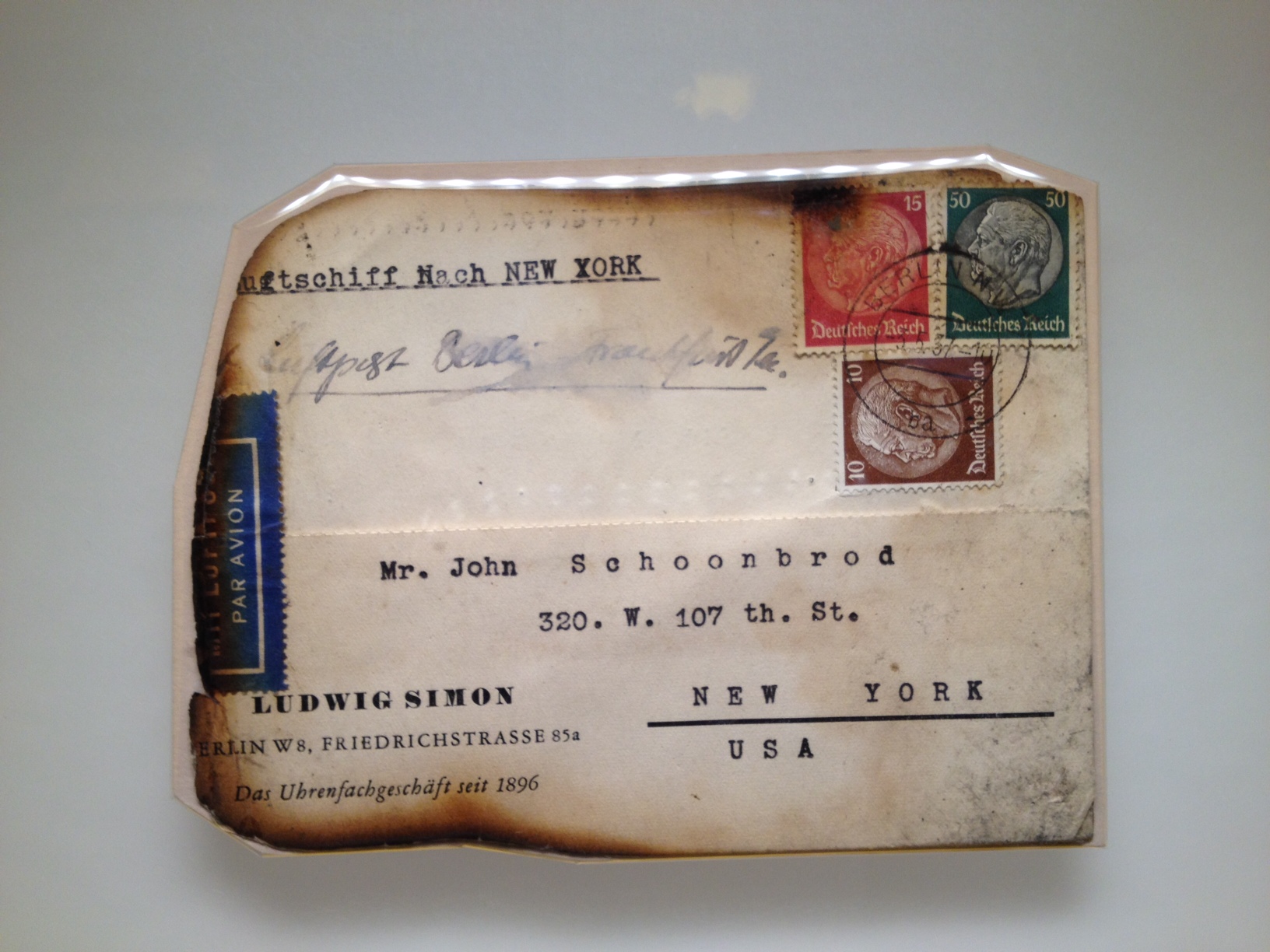
…and here’s when early air mail didn’t go so well
Given that both sides of my family are from Hawaii, I’ve long been fascinated by Hawaiian history. Postage stamps are a part of that story, and some collectors specialize in them.
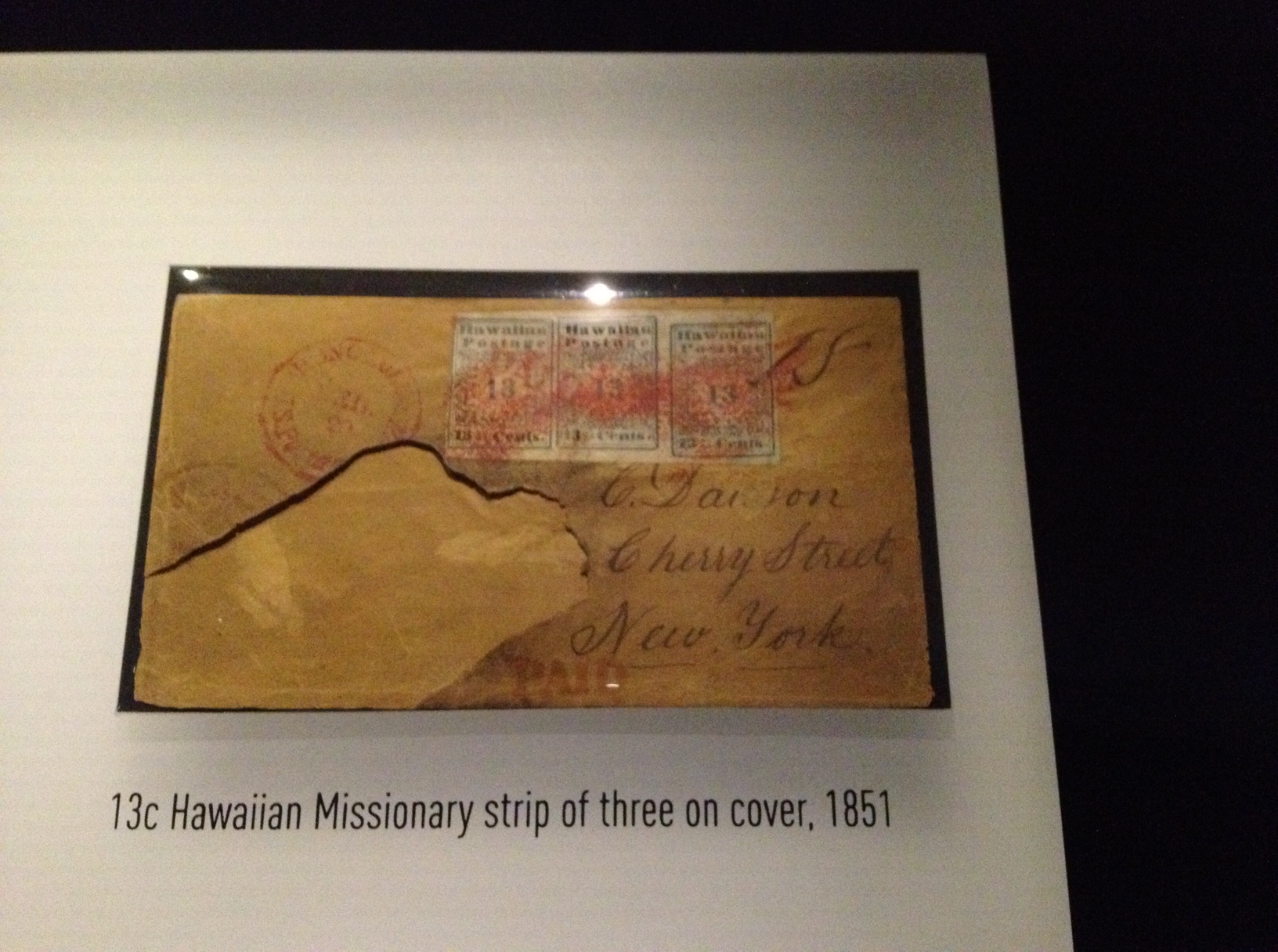
Early Hawaii had its own stamps
In fact, one of my stamp collecting keepsakes is an unused private parcel stamp from the late 1890s, for use on the Kahului (Maui) railroad line. My late Aunty Elaine gave it to me years ago when I was stamp collecting. When our family visited Maui in 1966, we went on the very last train ride of the old Kahului railroad, a treasured memory to this day.

Aww….I wonder how many cats auditioned for this gig?
I shouldn’t dwell solely on the older stamps, so here’s a more recent one that caught my eye. This adorable little critter was one of ten cats and dogs selected for a postal commemorative series celebrating the adoption of rescue animals.
About a decade ago, I attempted to get back into stamp collecting, but I found that work and other activities got in the way of this studious and more reflective hobby. Over the years, however, I’ve continued to pick up stamp issues and covers here and there. Somewhere within me the stamp collector still lurks, and this was proven to me again by my enjoyable visit to the museum.
Memorial Day weekend edition: Victory at Sea
Many students of history will recognize this iconic opening theme of Victory at Sea, the celebrated 1952 television documentary series about naval warfare during the Second World War. The 26-part series first aired on NBC, and it garnered Emmy and Peabody Awards. With extensive archival film footage of WWII naval operations, the steady, serious narration by Leonard Graves, and the beautiful score by Richard Rodgers, Victory at Sea was a television milestone that has held up to this day.
VAS has been part of three distinct chapters of my life. The first was as a grade schooler in the late 60s, when a local television station would rerun episodes every week. These years marked the beginning of my lifelong enjoyment of history, and I couldn’t get enough of the series.
The second was when I bought a cassette tape of the VAS soundtrack at the Barnes & Noble on 5th Avenue and 18th Street in Manhattan during law school. While others may have walked the city streets grooving to the latest creations from East Village bands on their Walkman portable cassette players, I bopped around town listening to the soundtrack from a 1952 documentary. Geekdom, indeed.
More recently, I’ve enjoyed watching VAS episodes when visiting one of my dear friends, retired naval officer and fellow history buff Brian McCrane. Brian grew up during the WWII era and later entered the U.S. Naval Academy at Annapolis, followed by a distinguished career as an officer and captain on destroyers during the Cold War. It’s fun to watch these episodes with someone whose own career contributed to the making of history.
When first available on VHS and then DVD formats, the complete set of Victory at Sea was somewhat pricey. But now, a full DVD edition, re-released in 2012, lists at $9.98, well within the budgets of most viewers. It remains a stirring, impressive work of documentary filmmaking on a vitally important chapter of history.
Jonesing for the Eighties

I’m now into a slightly extended binge viewing of Season 1 of “The Americans,” an FX drama series featuring Keri Russell and Matthew Rhys as a Soviet couple operating as deep cover spies in Washington D.C. during the early 1980s, the decade leading to the end of the Cold War.
It’s a great series, and a vivid reminder of U.S.-Soviet tensions of the era. But irrespective of its dramatic quality, I was won over by the opening scene, a bar in which Quarterflash’s “Harden My Heart” is playing in the background.
Yeah, it pushed my Eighties nostalgia buttons, and I was hooked.
If you’ve followed my posts here, you know that I get nostalgic even for historical eras I am too young to have experienced. But the Eighties are very much my time, and I regard the decade fondly.
Okay, so it may not have been the best years for America. This was the decade of trickle-down economics, “greed is good” (a philosophy popularized by financier Ivan Boesky, who landed in prison for overdoing what he preached), the emergence of the Middle East as a dominant hot spot, and a lot of political corruption. Many of the challenges we face today have their roots in those years.
Personally, however, I think of the Eighties as a comparatively innocent, wide-eyed time of my life. It covered the heart of my 20s, starting with my last year of college at Valparaiso University, then through law school at NYU, and finally post-law school life and work in New York City. Though I was barely masquerading as an adult during that time, I experienced a lot of growth and memorable times during the decade.
Moving to New York was a big deal, for I was a pretty sheltered Midwesterner. (To clarify, not all Midwesterners are sheltered, but I sure was.) I fell for New York completely, and during those years it was possible to explore the city on a tight budget. To be young and broke in New York wasn’t a terrible thing back then; there was a sort of gritty romance about making it on a shoestring.
Anyway, back to the “The Americans”: Season 1 opens in 1981, right after the inauguration of Ronald Reagan. A few episodes into the series, we see American and Soviet intelligence operatives scrambling madly to respond to the March assassination attempt on the President. Although the would-be assassin, John Hinckley, turned out to be a mentally ill man whose actions had nothing to do with Cold War politics, neither side knew that in the immediate aftermath of the shootings.
I recall that time well. We all lived under the nuclear threat. It was part of our existence.
Yesterday it was about the Cold War, the nukes, and the Soviets. Today it’s about terrorism, airport security, and Al-Qaeda. And the economy and jobs, always. The beat goes on.
The (American) Revolution will be televised
AMC probably should send me a little thank-you e-mail for this, as I’m touting an upcoming new series as an act of faith, but a new Revolutionary War spy drama premiering on April 6, TURN, looks very promising. From the show’s website, here’s a brief description:
Based on Alexander Rose’s book Washington’s Spies, AMC’s TURN tells the untold story of America’s first spy ring. A historical thriller set during the Revolutionary War, TURN centers on Abe Woodhull (Jamie Bell), a farmer living in British-occupied Long Island who bands together with his childhood friends to form the Culper Ring — an unlikely team of secret agents who not only went on to help George Washington turn the tide of the war but also gave birth to modern spycraft.
TURN is getting positive advance reviews. The Week newsmagazine featured it as its “Show of the week,” calling it a “suspenseful new series” about “America’s first spy unit.”
Quality dramas about the American Revolution are few and far between, on either the big or small screen, contributing to a sense of distance from this historical era. HBO’s excellent John Adams series, based on David McCullough’s biography, is about the best thing out there, but the overall offerings are thin. The Patriot, starring Mel Gibson, is an entertaining movie, but it’s not great history. So maybe TURN will breathe some needed dramatic life into this historical period.
“The Civil War” on PBS

Some 24 years have passed since the premiere of the groundbreaking PBS documentary series, “The Civil War,” by Ken Burns. It stands as probably the best historical documentary series ever made. Burns mixed photos, graphics, interviews, readings, music, and pitch-perfect narration by historian David McCullough to create an evocative and gripping story of America’s Civil War, fought from 1861 to 1865.
At the time it aired, I was a broke-as-hell public interest lawyer in New York, with no cable and a rabbit-eared black & white television set given to me by friends. The lack of decent TV reception made no difference; I knew I was watching an instant classic. Burns and his team pulled off the seemingly impossible. In nine episodes totaling roughly eleven hours, they made an era come alive in documentary form. No CGI. No Civil War re-enactors. Just brilliant content.
Of course, the series was criticized by some partisans for North and South alike for what it did or didn’t do, but the overall response to “The Civil War” was abundant, enthusiastic praise. It helped to rekindle a national interest in Civil War history that endures to this day. It certainly had that effect on me.
The producers of “The Civil War” brilliantly selected a modern piece of music with a 19th century feel, “The Ashokan Farewell” by Jay Ungar, as the series theme. Here’s Ungar playing a rendition with a folk band just a few years ago. It’s a beautiful, haunting tune, perfect for the series, and well worth five minutes of your time:
Even better, rent or pick up the series and watch it. You’ll get the whole deal, a documentary that breathes heart and soul into a story of one of the signature events in American history. And you’ll never tire of hearing “The Ashokan Farewell” over and again.
***
I have to toss in a side note about series narrator David McCullough, one of America’s leading popular historians. Several years ago, McCullough spoke at Boston’s Old South Meeting House — a key stop on the city’s “Freedom Trail” of historic Revolutionary-era sites — to preview one of his upcoming books. He started his talk by looking up at the packed house, opening up his arms wide, and warmly proclaiming “Aren’t we lucky to be here!?” It was his own way of celebrating how we all could share our love of history in this significant building. For a history buff like me, it was such a great, fun moment.
Photo of DVDs: DY, 2014
Earthy, historic, mysterious, delicious New Orleans

New Orleans has a mythology, a personality, a soul, that is large, that has touched people around the world. It has its own music (many of its own musics), its own cuisine, its own way of talking, its own architecture, its own smell, its own look and feel.
-Tom Piazza, Why New Orleans Matters (2005)
At least during those five months of the year when it isn’t unbearably hot and humid, I can’t think of a more fascinating American city to visit than New Orleans.
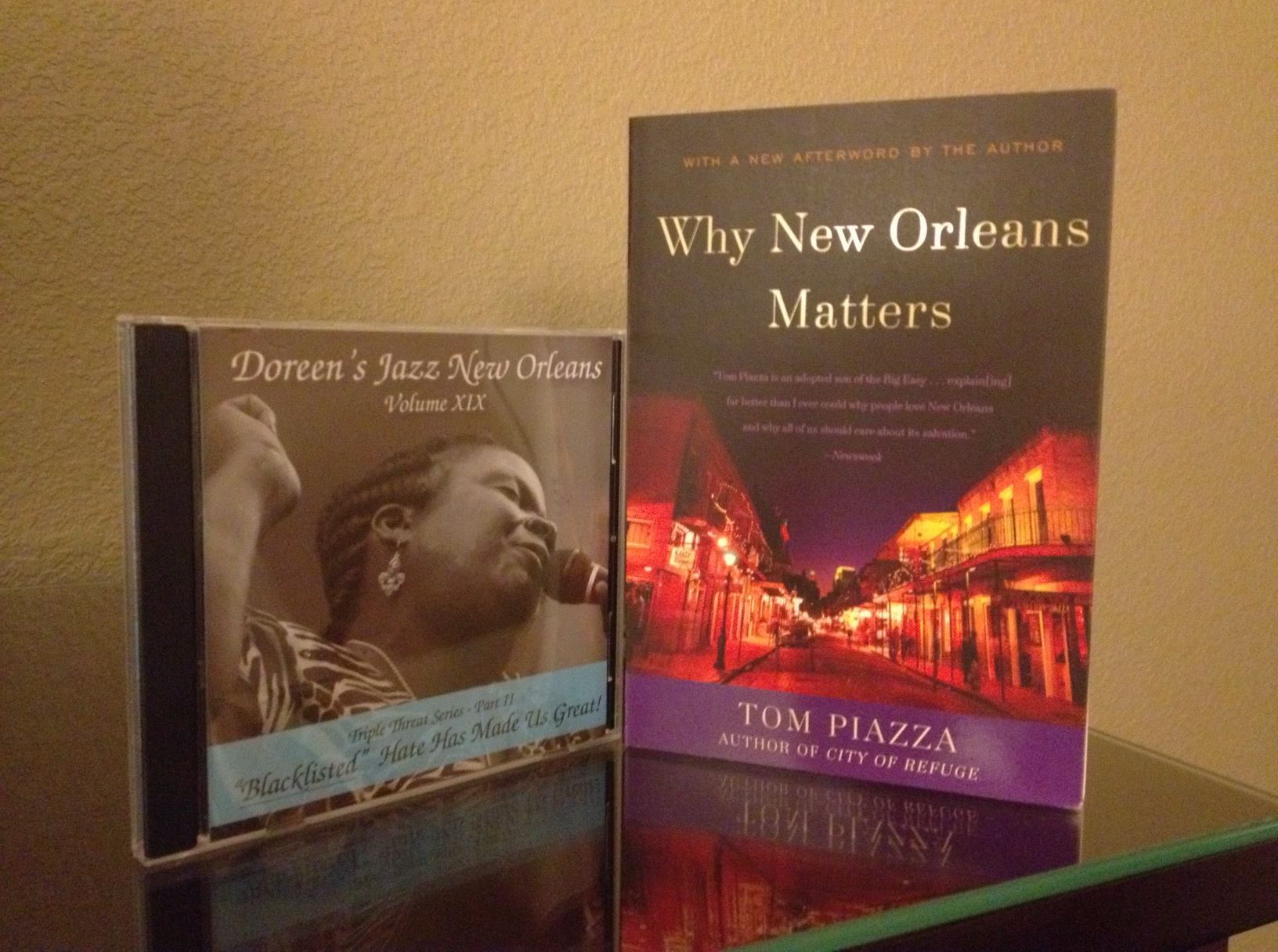
I’ve been in New Orleans for a conference, and it’s my first trip to the city in 15 years. Obviously NOLA (as they call it) has been through a lot in the post-Katrina years, but it retains the unique look and feel that Tom Piazza wrote about in his eloquent tribute to the city as it struggled to recover from the storm and flooding.
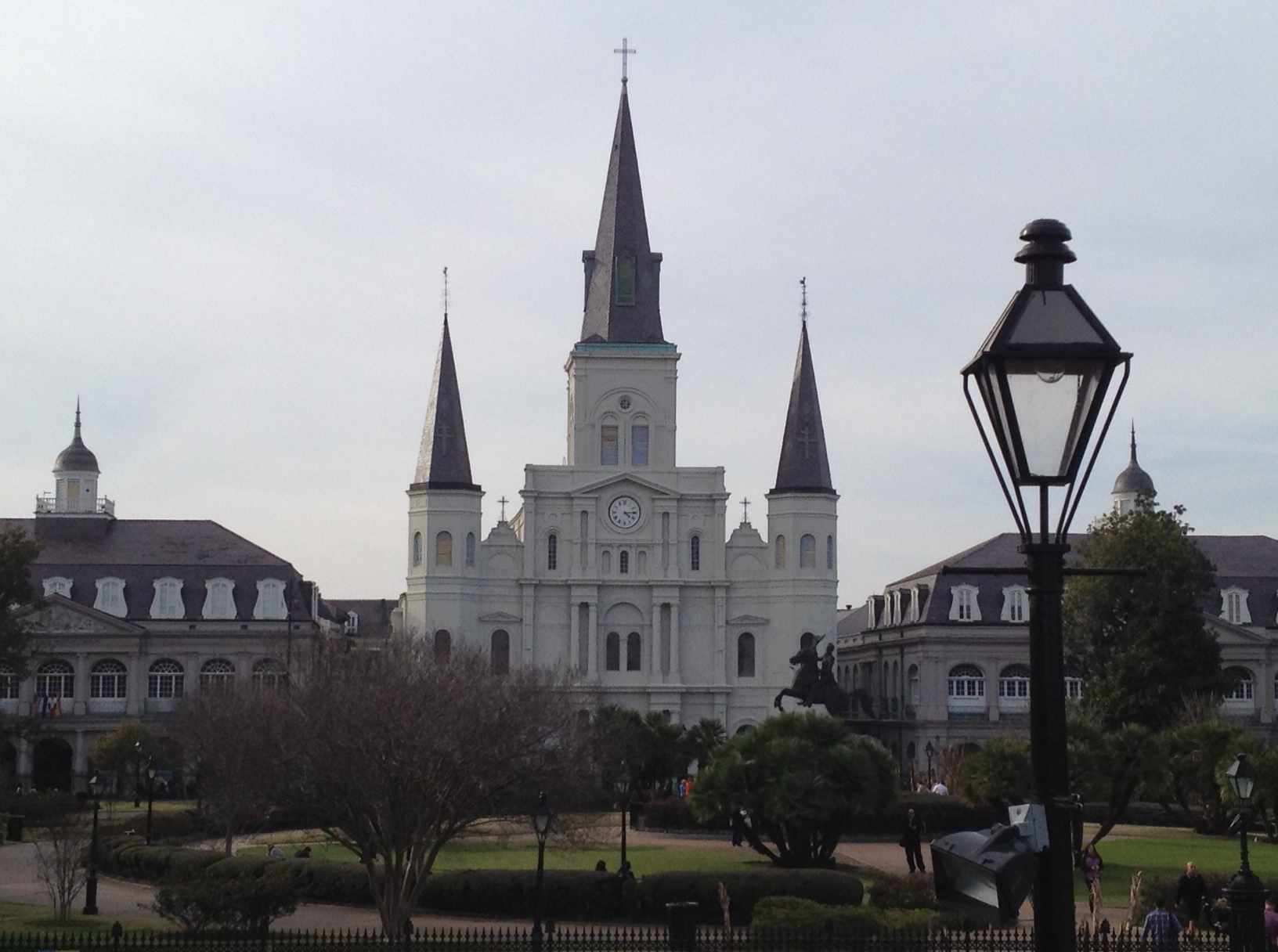
Lately my vacations have been limited to extended weekend trips and add-on days to work-related travel, and thus I tend to explore places I visit in short stretches. Fortunately I can dig into a city like New Orleans, especially its historic French Quarter, even if I have only a couple of days to do so. For starters, I took a great walking tour of the Quarter sponsored by Friends of the Cabildo, a non-profit organization dedicated to preserving Louisiana’s history. From that tour, here’s a shot of the St. Louis Cathedral, the oldest operating cathedral in North America:
Some of my college pals who read this blog know all-too-well how much our semester abroad in England and accompanying post-semester sojourns imprinted themselves on me. Ever since, I’ve welcomed opportunities to re-experience the adventure of youthful European travel, however briefly, and New Orleans allows me to do just that without need of a passport! Seeing artists displaying their work in Jackson Square reminded me of my first visit to Paris over 30 years ago.

Being the bookstore hound that I am, I had to seek out a few of the city’s bookstores. Here’s Beckham’s Bookstore on Decatur Street, a great used bookstore with piles of books next to filled-up shelves that, well, sorta reminded me of my condo!

Beckham’s comes replete with its own resident cat, who apparently commandeers whatever space is convenient in order to get in a well-earned nap.

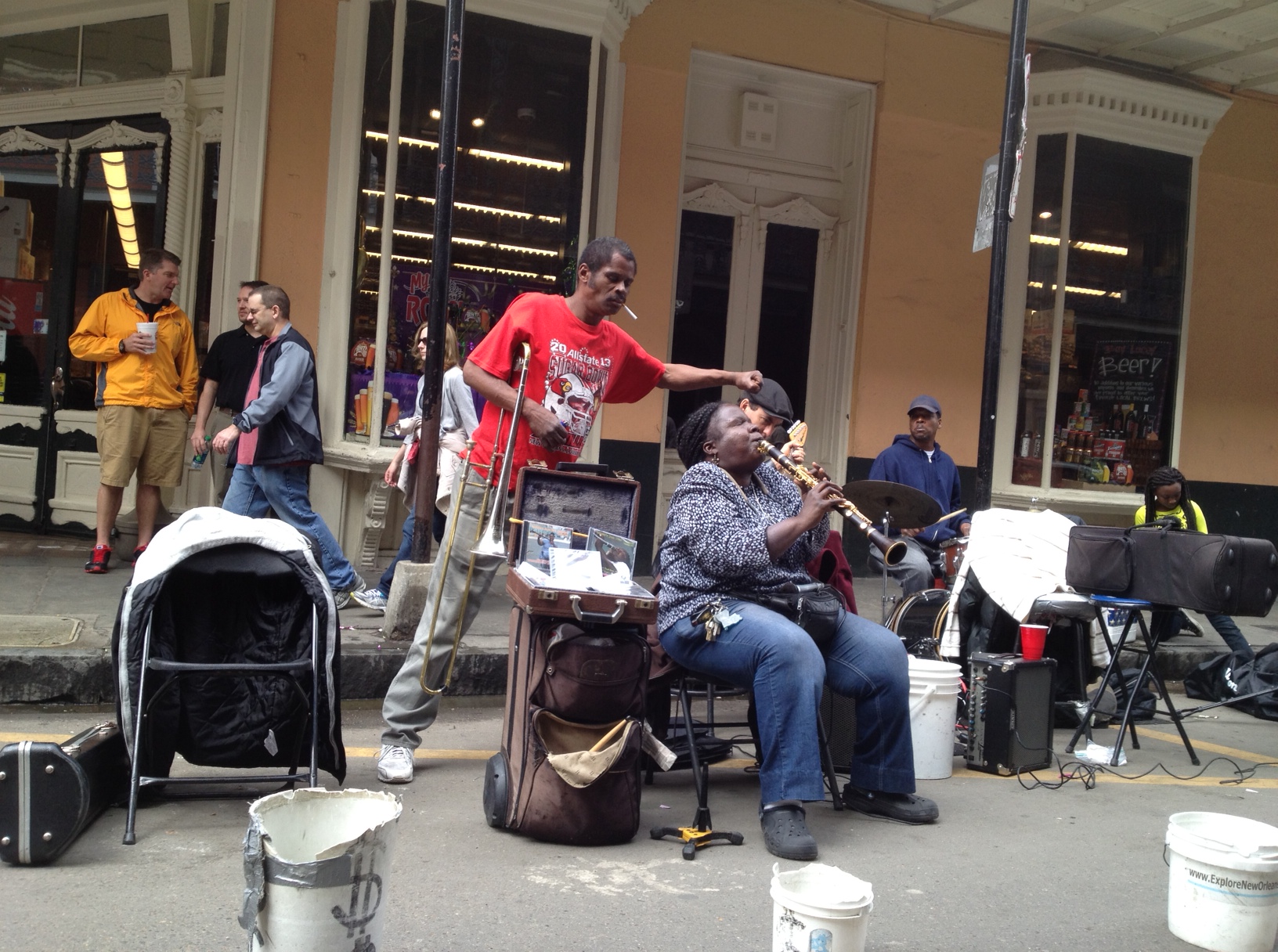
NOLA is home to some incredibly talented musicians. Here’s a great jazz band playing on Royal Street.
They’re so good, I picked up one of their CDs, pictured here with the Piazza book:
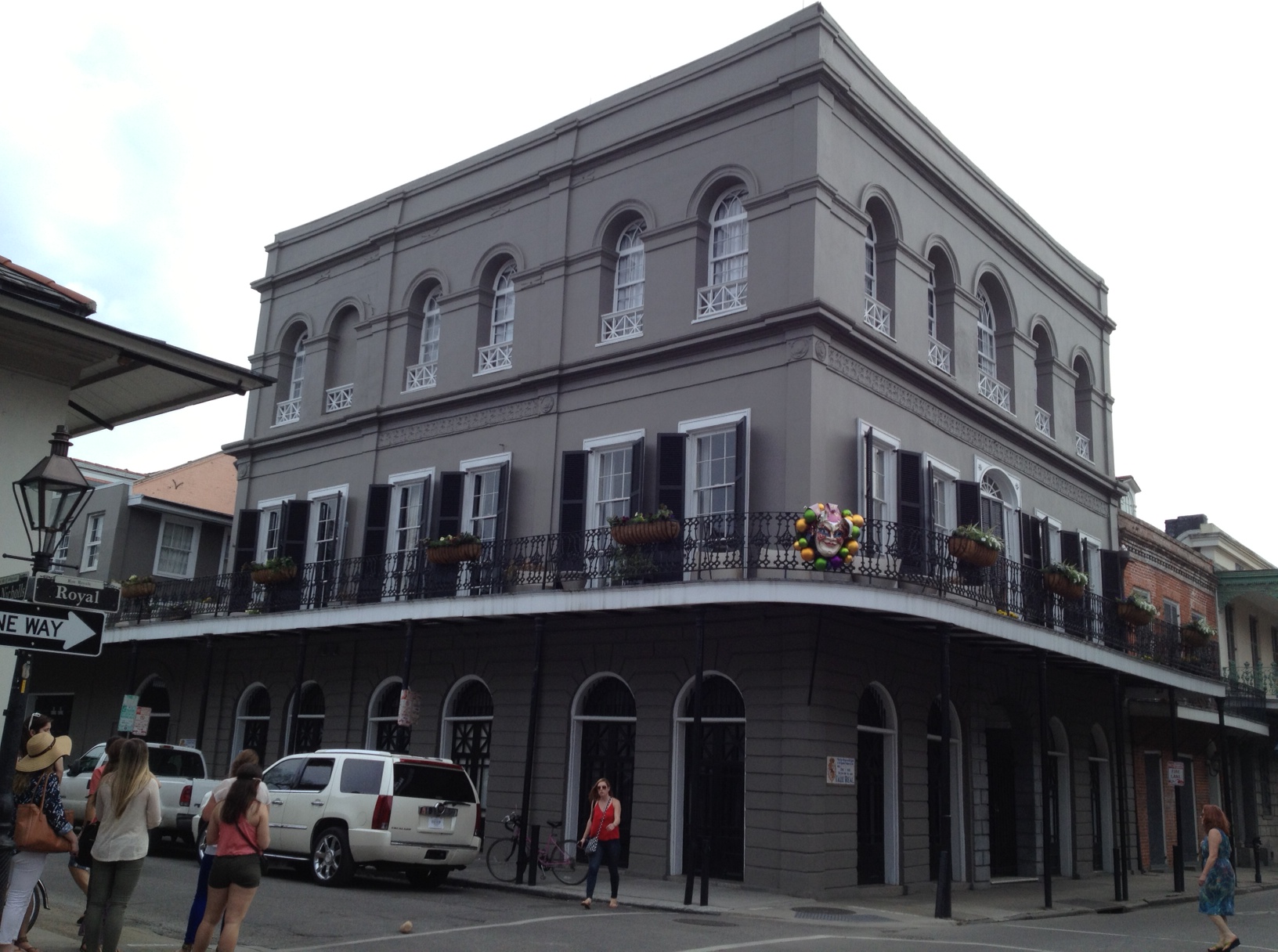
NOLA’s history has its ghastly side that, not surprisingly, sometimes turns ghostly. For example, pictured here is the house of Madame Delphine Lalaurie, who is said to have committed horrific acts of torture on her slaves during the 1830s. Though some claim that she has been unfairly indicted in the court of history, the most authoritative book that I’ve encountered on the topic, Carolyn Morrow Long’s Madame Lalaurie, Mistress of the Haunted House (2012), sides with the accusers. Naturally, the house is a favorite stop on the countless French Quarter ghost tours, and though I didn’t encounter anything supernatural when I was clicking away with my camera, I wouldn’t be eager to spend a night there.
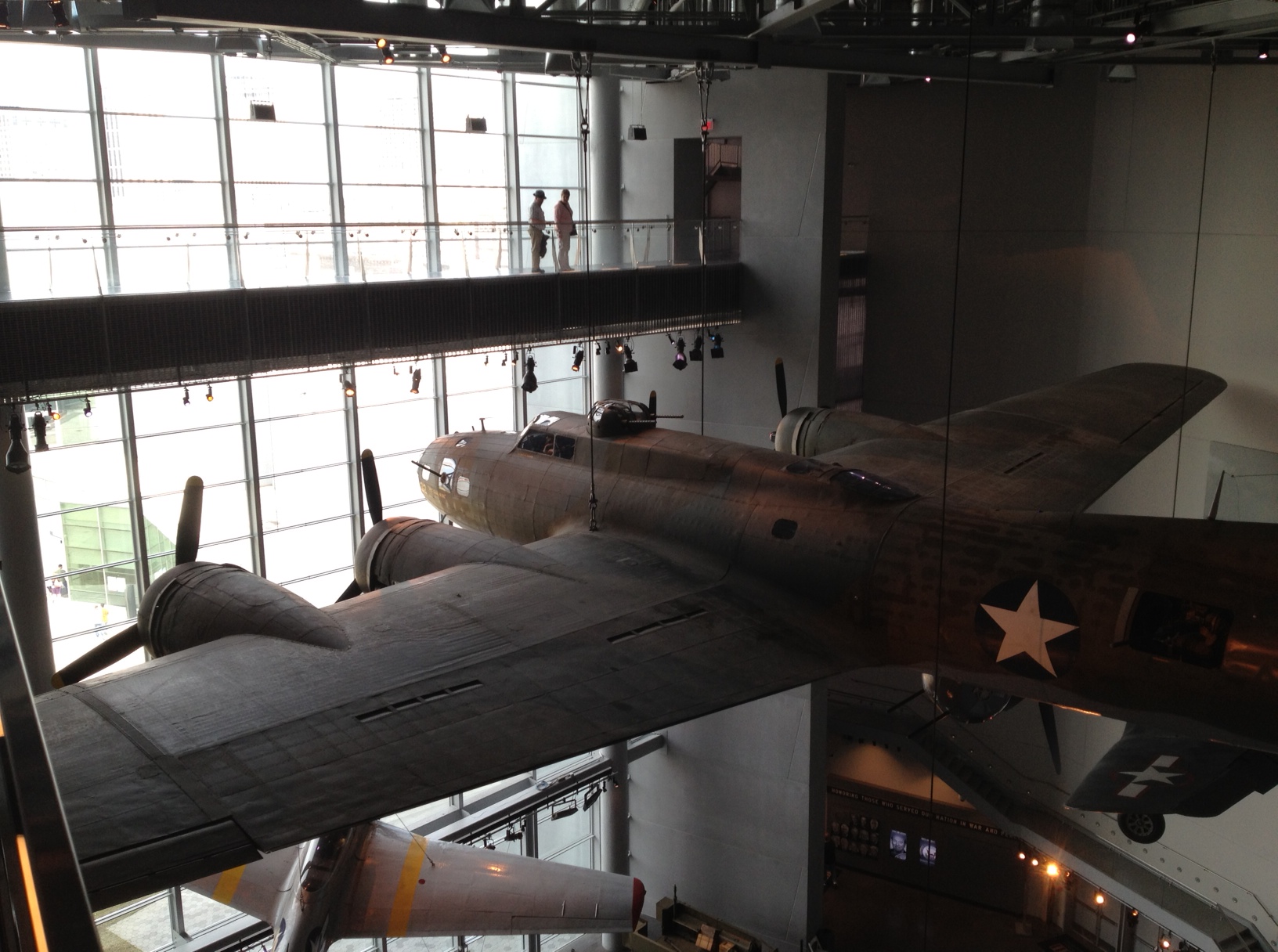
Not all of the historical offerings are uniquely local. New Orleans also is home to the impressive National World War II Museum, co-founded by noted historian Stephen Ambrose, who taught at the University of New Orleans and whose books about D-Day and the European Theatre inspired the HBO series “Band of Brothers.” The museum, which continues to expand, includes a large hall containing vintage aircraft. Here is a B-17 “Flying Fortress,” an iconic U.S. bomber plane of the era.
Of course, a visit to New Orleans typically involves good food. The city has a collection of fancy restaurants, but I ended up being a repeat customer at less expensive eateries, including The Grill, pictured here…
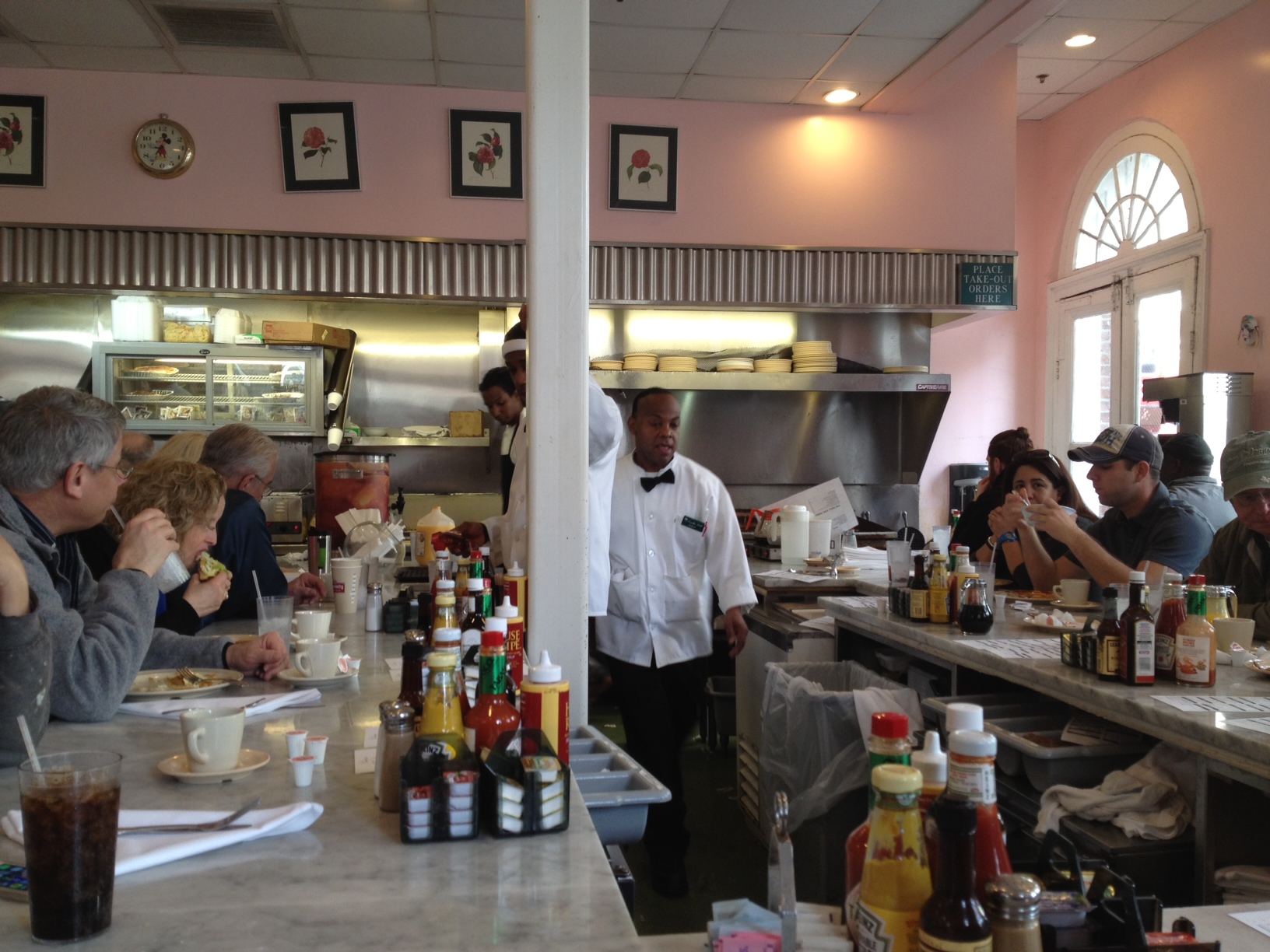
…and Jimmy J’s Cafe, whose wonderful cinnamon French toast is pictured here.

I think an order of French toast is a good way to conclude this blog post. Enjoy!
***
For a short piece on the psychology & law conference that brought me to New Orleans, go here.
All photos: DY, 2014
1914 and all that
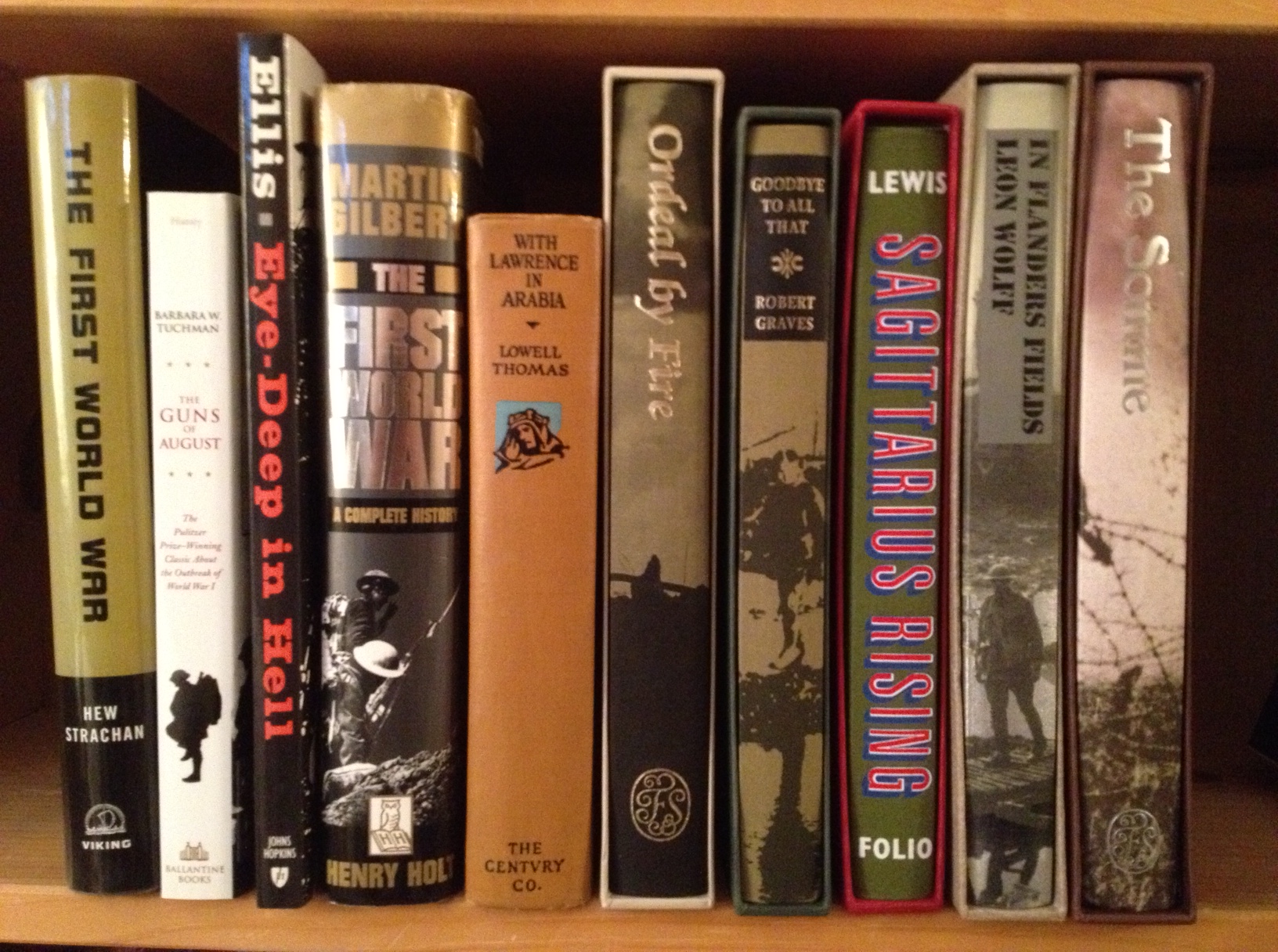
To most Americans, even those with some appreciation for history, the centennial anniversary of the start of the First World War may not resonate very strongly. After all, the U.S. didn’t enter the war until 1917, a year before it ended. But especially for those in Europe, and many other parts of the world as well, the year 1914 symbolizes seismic changes, and not for the better.
Those who seek neatly packaged narratives within the course of history may find the First World War elusive and tragic. Historians continue to debate how it all started. And rather than being sharply defined by epic battles, stories of the fighting in WWI often converge on the horrors of trench warfare, with two sides murderously slugging it out over the same patches of bloodied landscape. The war’s end came suddenly, and historians can’t agree on the reasons behind that, either.
Perhaps we could find some solace in that suffering if it had led to a lasting peace, but this was not to be. At the risk of vastly oversimplifying things, it’s fair to say that the unfinished business of WWI created diplomatic, economic, and military waves that culminated in the start of the Second World War some two decades later.
While every war involves horrific suffering, WWI specially captures a deep sense of sorrow and no small amount of sheer folly. Understandably, we might be tempted to look away, but that would be a mistake. Rather, the First World War presents lessons to be learned, however painful. In fact, this 100th anniversary has been marked by many assessments noting the similarities of the international landscape of today with that of 1914, on the eve of the war’s outbreak.
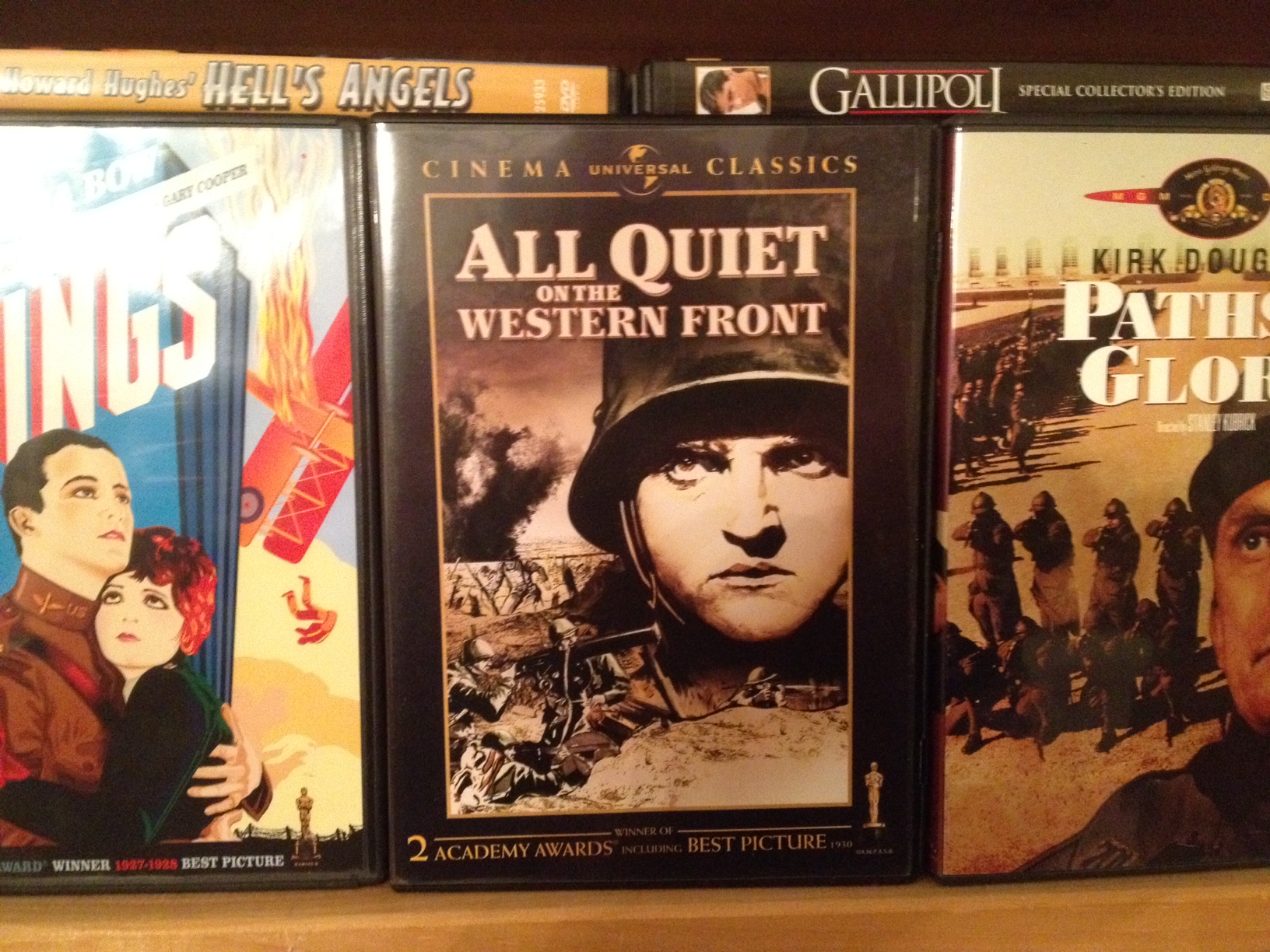
If you want to learn more, there are books, documentaries, and movies galore, with a pipeline to follow during the next four years. I’ve included pictures of some of the items in my library. In particular, if you’re unfamiliar with WWI and its emotional and physical toll, you might want to watch the Academy Award-winning classic from 1930, “All Quiet on the Western Front.” If you feel a haunting sense of tragedy after a viewing, then you’ve started to scratch the surface of what the war did to the generations who experienced it.
A dark and snowy night in Boston

Downtown Boston tonight: Corner of Washington & School streets, with the historic Old South Meeting House, center (Photo: DY)
Boston’s historic look & feel is one of its most appealing features. Much of the city’s colonial and early 19th century past is preserved for all to see. The photo above, for example, includes the Old South Meeting House, where rebellious colonists planned the Boston Tea Party in December 1773.
When an evening snowfall hits, this quality can become downright Old World, like something out of a Charles Dickens novel. The reference is fitting, as Dickens himself visited Boston twice, staying in the Parker House Hotel, not far from where I took this picture tonight. It’s likely that he crossed this very intersection during his visits.
These blends of atmosphere, sights, and history are among the reasons why I find older cities so appealing. For a brief moment, I can look around and transcend time.
The snowfall we’re experiencing right now has been unexpected in its intensity. It grew into a small storm that led to a lot of early school closings and many cancellations of events around the city. When I got home, I had some shoveling to do, which took a bit of the novelty out of the evening and made me doubly glad that I snapped the photo to preserve the moment.
What now, not what if
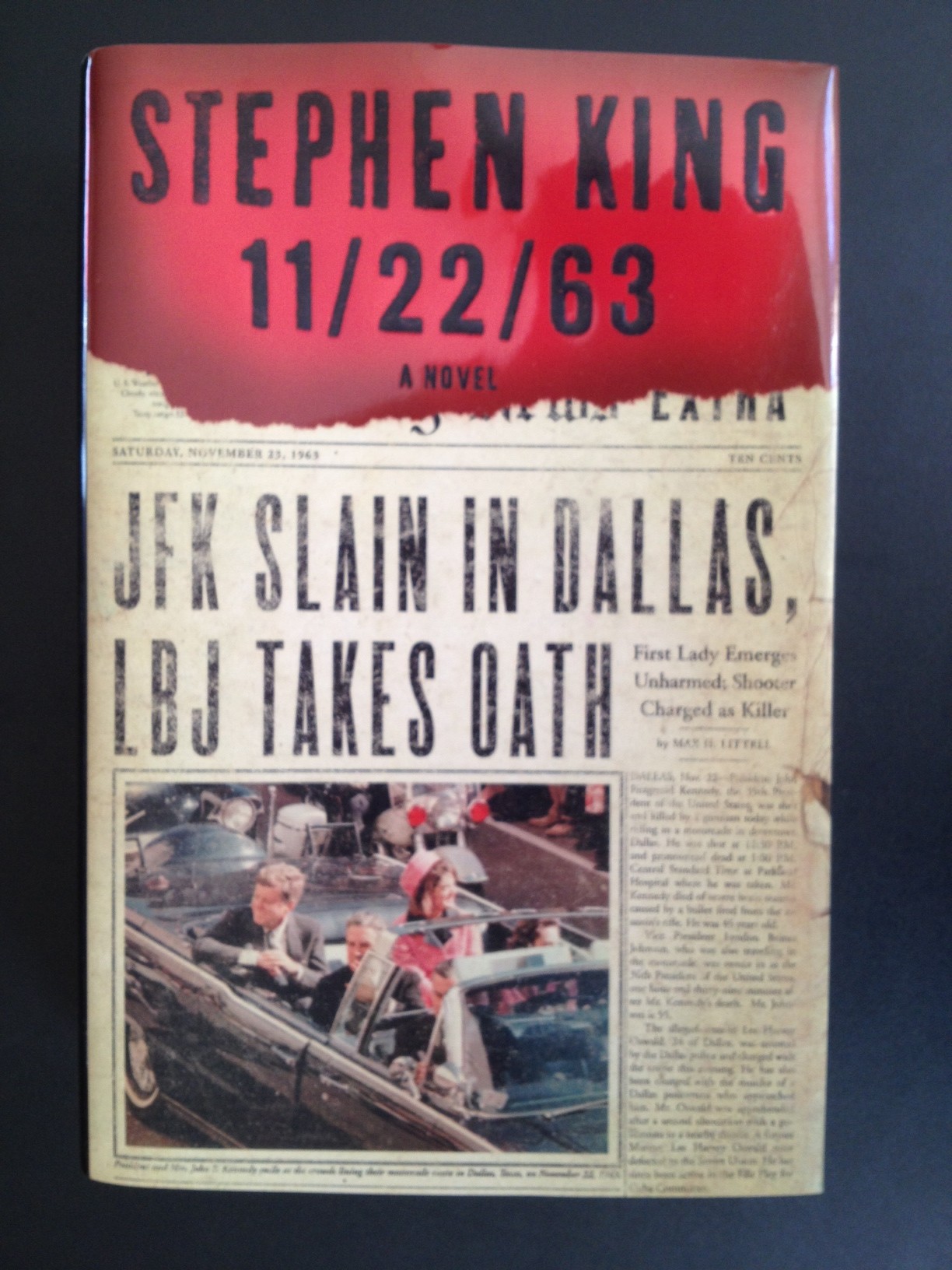
Currently stored on my DVR are a PBS program and a National Geographic docudrama about President Kennedy, both produced to coincide with the 50th anniversary of his assassination. Although I’m a devotee of history, I have a feeling that I won’t be watching them.
I was way too young to understand the tragedy of the assassination when it occurred. Today, however, I regard those events with a deep sense of loss and a light snuffed out. Kennedy’s three years in office were marked by large successes and failures, but he appeared to be hitting his stride by the time he met his demise in Dallas. The “what ifs” are both tantalizing and sad to contemplate. It is oh-so-tempting to imagine what might have been had he lived.
Nevertheless, watching television programs devoted to Kennedy and his death seems like wallowing in a past that cannot be changed. That lesson was reinforced to me in Stephen King’s 2011 time travel epic, 11/22/63, which takes us back to the years leading up to the assassination of President Kennedy. The main protagonist — a modern-day school teacher — learns that when we go back in time, our attempts to change the past may have unintended consequences.
Perhaps I shouldn’t be drawing such fundamental lessons from a bestselling novel, but I’ll take the chance. Even hardcore nostalgia addicts like me must recognize that what’s done is done. And to a generation raised with options, the what-ifs — the speculations over the roads not traveled — can consume us if we let them.
Rather, what counts is how we live today, including the measures we undertake to better our lives and those of others. This point applies in the realms of public affairs, our personal lives, everything. We take the world as it is and do our best to move forward. It’s the best choice we have.
***
This article is cross-posted with my professional blog, Minding the Workplace.
Time travel: Some favorite destinations

Remember “The Time Tunnel,” the short-lived but fascinating television time travel drama from the mid-60s? Every new episode would find scientists Tony Newman and Doug Phillips landing in a different historical setting, usually on the eve of some major event, such as the sinking of the Titanic, the Battle of Little Big Horn (General Custer and Crazy Horse), or the bombing of Pearl Harbor. (Unfortunately, they never could persuade folks that disaster loomed.) To this day, I credit that show for helping to stoke a lifelong interest in history and to fuel my imagination with thoughts of going back in time.
What if time travel was possible? What places and times would I want to visit? Here’s an off-the-top-of-my-head list, not exactly an exotic one, but it sure would be a fascinating set of journeys. Feel free to add yours in the comments!
***
New York City, 1880s — My favorite time travel novel, Jack Finney’s captivating Time and Again (1970), is set in early 1880s Manhattan. There’s a scene in the book when his protagonist, Si Morley, realizes that he made a successful journey back. It remains one of my most favorite reading moments, ever.
New York City, 1920s — I’d be at everything and anything by George Gershwin, Rodgers & Hart, and Cole Porter. I’d be at the jazz clubs of Harlem. I’d be at Yankee Stadium watching Ruth & Gehrig. I’d be hanging out in Greenwich Village. I’d also want to check out student life at New York University, my law school alma mater. The 1920s is one of my favorite decades, and NYC of that time would make for a grand visit.
New York City, post-war 1940s and early 1950s — I can’t imagine a better place to drink in the spirit of America’s post-war optimism. I’d also venture out of Manhattan to Ebbets Field in Brooklyn, where I’d watch Jackie Robinson break baseball’s modern color barrier. I’m sure I’d spend plenty of time and money at the dozens of used bookstores in the city. And yes, I’d hang out in the Village during this period, too.
Chicago, 1893 — Chicago hosted the Columbian Exposition World’s Fair. The photographs of it look stunning, a city bathed in light. It also marked Chicago’s arrival as a major city.
Chicago, 1920s — When I was a kid, one of my favorite books was Albert Harper’s Chicago Crime Book (1969), which told tales of Al Capone and other famous gangsters. Thus was born a fascination with Chicago’s Roaring Twenties.
San Francisco and Berkeley, California, mid-to-late 1960s — I’d like to experience the whole California Dreamin’ thing. I’d be the squarest person in Berkeley’s People’s Park, but at least I’d be able to take good pictures.
London, late 1880s — Yeah, I’d sleuth around the East End to discover the identity of Jack the Ripper. I’d be drawn to the sinister side of Victorian London. I’ve also read about the food carts of the era and would like to give them a try.
London, 1940 — London during the Battle of Britain and the Blitz. It’s such an iconic, defining, dramatic moment in British history. Just thinking about it has me imagining Edward R. Murrow’s radio broadcasts from London as the German bombs were falling around them.
Paris, 1920s — I probably wouldn’t stay long, but I’d want to check out that whole Left Bank scene and the Lost Generation. I’d hang out in Paris cafes and do a bit of writing. (Challenge: No outlets for my laptop.)
Washington D.C., 1861-65 — Washington during the American Civil War. Hot, miserable, and menacing. But fascinating nonetheless. And somehow I’d finagle a way to have a short chat with Abraham Lincoln.
Boston, Revolutionary Era — I live in a city where evidence of the early years of the American Revolution is all around us. How cool it would be to see Boston of that era, perhaps bumping into the likes of John Adams, Samuel Adams, and other remarkable figures of the day.
Salem, Massachusetts, 1600s — Will we ever know the full truth about the events surrounding the Salem Witch Trials? It would be fascinating to find out.
Ancient Athens — I’d follow Socrates as he traipses around the Athenian marketplace. I’d want to get some first hand lessons in how the ancient Greeks lived, and trace some of the origins of Greek mythology and philosophy.
Hawaii, 1920s — Among my treasured Hawaiian collectibles is a February, 1924 National Geographic magazine with 16 pages of incredible color illustrations of the Islands. I can only imagine seeing those sights in person! If I was on Maui during October 1926, I’d go to the hospital in the small town of Paia to say hi to the newborn baby who someday would be my mom. While on Maui, I’d take a train ride on the narrow-gauge Kahului Railroad.
Hawaii, 1950s — After WWII, Hawaii was making its way toward eventual statehood. Large passenger airplanes — still propeller-driven, as the jets wouldn’t arrive in the early 60s — now made air travel to the Islands a safe reality. The idea of Hawaii as America’s Pacific paradise was in full bloom.
Valparaiso, Indiana, early 1910s — Valparaiso University, my collegiate alma mater, was rescued by the Lutherans in the 1920s after a period of decline. Before that, however, it was a thriving, no-frills, secular college known as the “Poor Man’s Harvard” that provided collegiate, professional, and trade courses to young people who aspired to join America’s emerging middle class.
Hammond, Indiana, 1950s — Hammond was my hometown from grade school through high school, from the late 60s through late 70s. By then it was a city in decline, its jobs base shrinking due to the decline of steel mills and manufacturing in Northwest Indiana. But during the 50s it was a thriving small city and an emerging outer suburb of Chicago.
Airplanes — I would love to fly in two legendary, early passenger airplanes, the Ford Trimotor (late 1920s) and the DC-3 (mid 1930s).
Trains — How fun it would be to take the Pioneer Zephyr, one of the first modern diesel passenger trains, on its popular Chicago-to-Denver run during the 1930s.
***
I’m struck by the fact that this list doesn’t have much to do with my current work. Hardly anything about law, the labor movement, politics, and the like. Not much about war, either, despite that I read a lot about the Civil War, WWI, and WWII. I’m not sure quite what that says about my choices, but unless science develops affordable time travel during my lifetime, this is not a pressing matter.
 Musings of a Gen Joneser
Recent Comments