From blast offs to smartphone launches, from payloads to downloads

“We have lift off” — Gemini 8 heads for the sky (1966) (photo: NASA via Wikipedia)
Watching the launches and splashdowns of manned space missions is one of the shared experiences of being a kid during the 1960s. For many, it meant gathering with family members or schoolmates in front of a television, anxiously awaiting the successful blast off or the safe recovery of a space capsule and its heroic astronauts.
The minutes before a launch were full of excitement. As the countdown proceeded, we’d eagerly listen to newscasters talk about the mission’s duration and the spacecraft’s payload, in addition to what the astronauts were doing in the capsule to ready themselves.
The Mercury, Gemini, and Apollo space missions were designed to lead us to successful moon landings, and that they did in 1969. If you want to be reminded of the drama and excitement that accompanied this effort, then rent the 1983 film “The Right Stuff.” And take a look at this excerpt (about four minutes) of President Kennedy’s famous 1962 speech at Rice University:
Today, we don’t have that communal excitement about exploring space. We don’t show up to the breakfast table, work, or school the next day talking in breathless tones about a mission to the moon.
Instead, we talk excitedly about smartphone launches. We share recommendations about great new apps. And we await new versions of gadgets that will render our current ones, purchased just a year or two ago, “old.”
Yup, I marvel at what my laptop and iPad can do. And though I dislike cellphones, I bow to their remarkable capacities.
But we’ve also lost something in the way that our excitement over science and technology has become a more private affair, in some cases sharply limited to those who can afford the gadgets. Perhaps the pioneering space missions are destined to remain the stuff of childhood memories, but I lament the passing of shared awe and wonder over how great advances in scientific know-how can enrich our lives beyond our last download.
Revisiting my collegiate alma mater

Valparaiso University, Indiana: This building once housed The Torch, the campus newspaper, and WVUR, the campus radio station. (Photo: DY, 2012)
“The past is obdurate. It doesn’t want to change.”
So we are told in Stephen King’s 2011 time travel epic, 11/22/63, which takes us back to the years leading up to the assassination of President Kennedy. The main protagonist — a school teacher — learns that even when we go back in time, the past mightily resists our attempts to change it.
I have no idea if time travel and changing the past are even possible, so I’ll put my fascination with the subject aside to make a more accessible point: We may not be able to change the past, but we can change how we regard it. Historians revisit the past practically every day, and not infrequently they alter and sometimes substantially revise our perceptions of it. At times, subsequent events and reflections contribute to those changed understandings.
This occurs even more frequently at a personal level. In fact, that’s what I’d like to explore here, by taking a look back at my undergraduate alma mater, Valparaiso University (also known as “Valpo” or simply VU) in northwest Indiana. For readers unfamiliar with it, Valpo is a small-to-medium sized Lutheran-affiliated school, noted for its strong liberal arts curriculum and attention to undergraduate education. Most students live on or near the campus, which is located on the outer edges of the small city of Valparaiso.
If relationships with institutions over time could be described in Facebook-like terms, mine with Valpo would get the “It’s complicated” tag, without question! Indeed, this topic reminds me of how our emotional ties with institutions can be quite powerful and evolve over time.
College days
In 1981, I graduated from Valpo with a B.A. degree and a political science major. During my time there, I was a very engaged student. I did well academically, worked as a department editor of the weekly campus newspaper, and served in various student government positions. I also spent a life-changing study abroad semester in England.
Taking all that into account, one might reasonably assume that I enjoyed an idyllic, residential, Midwestern-style collegiate experience. But for many years I harbored attitudes toward VU that alternated between resentment and anger, grounded in grievances about its limited political, social, and racial diversity and its lack of national renown.
Now, let’s be honest here. It’s not as if I arrived at the VU campus in 1977 with a very cosmopolitan personal history. I was born and raised in Northwest Indiana. A handful of family trips to visit relatives in Hawaii were the closest things in my life to “multicultural experiences.” In addition, I started college as a Republican, and my political opinions were a hodgepodge of reactive, inconsistent thinking. Although I had endured racial taunts growing up in Indiana neighborhoods, I wasn’t exactly a trailblazer for civil rights.
However, my worldview was changing, and by the time I graduated, Valpo’s campus culture wasn’t as good a fit for me. My work for the campus newspaper, The Torch, was especially enlightening. I wrote dozens of articles for it, including some hefty investigative pieces about campus life. It served as my primer to the insular wackiness that characterizes many university cultures and decision making processes, though at the time I erroneously attributed these traits uniquely to VU. (Believe me, I since have been corrected on that point!) My writing for the paper also gave me a closer look at some of the diversity issues at VU, and I became acutely aware of how black students experienced the predominately white campus and surrounding community.

Valparaiso University, Indiana: Brandt Hall dormitory where I lived during my sophomore, junior, and senior years. (Photo: DY, 2012)
By the time I graduated from Valpo, I was disenchanted with it and blamed it for all the things that it was not. Throughout college I had planned on going to law school, and eventually I began to see it as an opportunity to sink roots into a different part of the country. Despite many rewarding college experiences and friendships, I was determined to put Valparaiso way back in my rear view mirror.
When, some 10 years after graduation, I received from VU a detailed questionnaire for “diverse” alumni/ae about their student experiences, I filled it out and added a long letter explaining some of my answers. I was very blunt. Looking back, I regret the tone of my responses, but at the time, I saw it as an opportunity to unload.
Decamping for the East Coast
Predictably, the lion’s share of my law school applications were filed at schools on the two coasts. Originally I had designs on heading to California, and the Bay Area seemed especially hospitable to my evolving left-leaning political views. But ultimately I opted to head east to New York University, located in the heart of Manhattan’s Greenwich Village. It was the right move, both at the time and in retrospect.
New York quickly became my Wonder City. NYC of the 80s was a more raw and edgy place than it is today, but it also was possible to enjoy it on a shoestring budget. Its many bookstores, revival movie houses showing old classics, and endless array of ethnic eateries were among the offerings that competed for my attention.
I have lived on the East Coast since the early 1980s, first in New York City, and now in Boston. Given the past 30 years, it’s fair to say that I am more city boy than country boy, though at times I think that it might be nice to live in a traditional “college town.” In any event, while I have long described myself as an “East Coast person,” I now understand and appreciate that I am the product of many different places.
Valpo revisited: More than rose-colored glasses
My moves aside, my Valparaiso story didn’t end with faded images in the rear view mirror. Rather, I have experienced a gradual but in some ways significant change in how I regard that past. Perhaps the rose-colored glasses of time have contributed to that change, but it’s more than that.
You see the people in the photo below? We were together for a memorable spring 1981 semester in VU’s study abroad center in Cambridge, England. There were about 20 of us in all. We have reunions every five years, and each time over half of our group has attended. The photo was taken at our 2011 reunion. I count a good number of these folks as lifelong friends, and I value my associations with all of them.
How many other study abroad groups hold reunions every five years? That question, and my knowing answer (very few), have played an important role in changing my relationship with my alma mater.
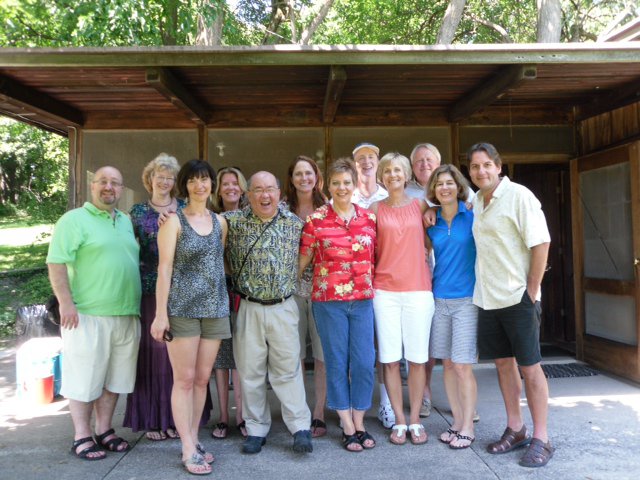
Summer 2011: The 30th year reunion of our study abroad group. (Photo courtesy of Anne Walsh Gorski)
A few years ago, I realized that my attitudes toward Valpo were changing. It wasn’t due to a conscious effort on my part, nor had I forgotten the issues I had with the school. Rather, I was beginning to appreciate what it had given to me.
Most importantly, I have continuing friendships that were forged during those years. They have evolved, matured, and renewed over the decades, and they manifest themselves in ways ranging from periodic get-togethers, to back-and-forth e-mails, to playing in fantasy sports leagues. And through the Internet (and social media in particular), I now count among my friends a fair number of folks I knew only casually during our student days.
In addition, I received an excellent classroom education at VU. I have been a teacher in higher education settings for over 20 years. As a law professor, I’ve seen the undergraduate results of many types of colleges and universities. I now understand that the academic experience at Valparaiso compares well with any of them.
In fact, I likely underestimated VU’s higher ed street cred as a student. In the various reputational surveys and assessments of colleges and universities that started to become popular in the late 1980s, Valpo has fared quite respectably.
Working on The Torch honed and developed my writing skills in ways that continue to deliver today. Any success I have at writing for a less specialized audience — especially via my Minding the Workplace blog — has direct roots in that experience. The Torch also served as the wider social base I didn’t have during my first two years of college. (Suffice it to say that some of us practically lived in The Torch offices.)
Lastly, the study abroad semester I spent in England was the most formative educational experience of my life. So much of my personal culture and the way I live today can be traced back to those five months overseas. My natural penchant for nostalgia notwithstanding, I generally do not yearn to relive even the best experiences of my life. My semester abroad is an exception; I would access Stephen King’s time travel wormhole in a heartbeat to revisit that experience.
My writing for VU periodicals didn’t stop with The Torch. In 1996, I penned a long essay about my study abroad experience in England for the university’s literary and current affairs journal, The Cresset. More recently, I published an article titled “Workplace Bullying and Ethical Leadership” in the VU business school’s Journal of Values-Based Leadership.
A different view
The issues I had with Valpo as a student and recent graduate were legitimate, and some remain relevant to the school today. But with the gifts of hindsight and maturity, I am grateful for many of my collegiate experiences and for the related friendships and opportunities that are a part of my life now.
I’ll leave it to the physicists to determine if we can change the past, but I know from experience that we can change how we think about our own. Sometimes, as here, those changes can be good ones.
When fast food was a treat, not a staple

McDonald’s Big Mac (Photo: Wikipedia)
Remember the days when a trip to McDonald’s was considered a treat, rather than a staple of our weekly food consumption?
A special event
When we were kids in the late sixties and early seventies, a McDonald’s meal (and to a much lesser extent, Burger King and later Wendy’s), was a bit of an event, even if our folks saw it as a matter of convenience. At times, it may have involved something as special as a birthday celebration.
If we were eating at home, there was a certain anticipation in waiting for the designated adult to return with bags full of goodies. And it was especially neat when we got to order shakes with our meals! (Yeah, admit it, some of you can relate!)
While it may sound bizarre to think of savoring fast food, as kids that’s what we did.
Nowadays…not so special
Today, we call it fast food because of the time it takes to serve it and the way in which we gulp it down.
With fast-food restaurants so ubiquitous in modern life, the idea of a burger, fries, and a drink isn’t much of a novelty, and in terms of public health, Americans consume way too much of this stuff.
Compare the lunch lines at the typical food court. I bet you’ll find the lines at McDonald’s among the longest, perhaps with (healthier) Subway possibly giving it a run for its money. The others usually aren’t even close in terms of numbers of customers.
The OMG extreme
I’m not sure when we reached the tipping point of fast food becoming a regular part of our diet, but I certainly was given, umm, food for thought when I saw this ABC News piece about a seemingly fit 64-year-old salesman and Vietnam vet who claims to have eaten 10 Big Macs a week over the past 30 years:
Dennis Rosenlof has special sauce coursing through his veins.
“My first meal of the day is always at about 10:30, when they open up the Big Macs,” Rosenlof, 64, told ABC News.
. . . “I enjoy what I eat,” he said. “It tastes good, so I order the same thing every day.”
. . . “Mondays I always eat a Big Mac, two on Tuesdays, one on Wednesdays, two on Thursdays, one or two on Fridays, and two every Saturday,” he explained.
I suppose if we want to rediscover how to savor a fast-food burger, we probably could find no better adult example than to follow Mr. Rosenlof to his local McDonald’s — assuming he isn’t too busy fielding requests to be the subject of medical journal articles.
Comfort movies: What are your favorite subclassics?
(Photo: DY)
Do you have a list of movies that might not make it onto the critics’ all time great lists, but that you can watch over and again?
I have some favorite movies that just happen to be classics. Singin’ in the Rain (1952) is my favorite movie ever, and I’ll be sharing a memory about that one soon. The Civil War movie Glory (1989) may be the best of its genre. Woody Allen’s Manhattan (1979) brilliantly captures both a great city and some of its neurotic people. For humor, Mel Brooks’s The Producers (1967 version) is at another level, while The Exorcist (1973) still rings the fear bell for me. And Hitchcock’s Vertigo (1958) gets me every time with that twisty story and gorgeous Bay Area cinematography.
But whenever I watch and enjoy these movies and others like them, there’s a part of me that feels obliged to study them, too. They’re so darn good, I need to appreciate them at an aesthetic level, as well for their pure entertainment value.
The subclassics
But then there are the comfort movies, what I call my subclassics, that I can watch repeatedly, without feeling tugged by my inner film critic.
They’re the movies that may get a solid three stars from the critics, though rarely four. They’re not dumb movies, but they don’t overly tax my brain either. I can miss a few lines and not worry about missing the whole point of the film.
War movies
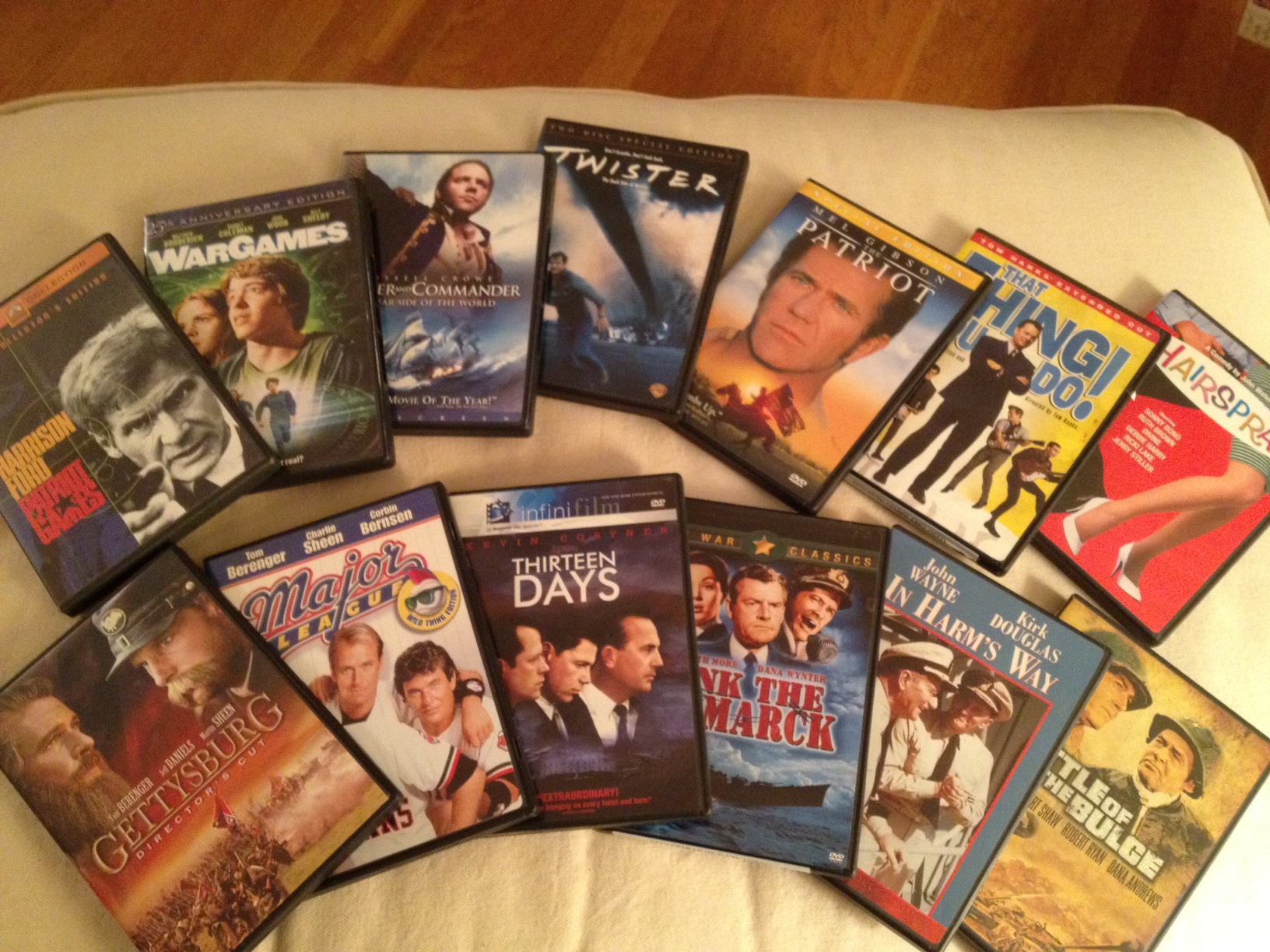
Several World War II movies make my subclassics list. In Harm’s Way (1965) is a WWII naval flick, with John Wayne and Patricia Neal leading a star-studded cast. Its opening scene takes place in Hawaii on the eve of the Pearl Harbor attack. Sink the Bismarck (1960) portrays the British mission to sink Germany’s most powerful battleship, starring Kenneth More and the incredibly lovely Dana Wynter. And Battle of the Bulge (1965) depicts Germany’s final major offensive effort of the war, featuring Henry Fonda and lots of other Hollywood stars.
As a Civil War buff, I’ve given Ron Maxwell’s Gettysburg (1993) repeated viewings. And going back in historical time, The Patriot (2000), a highly fictionalized story of the American Revolution, and Master and Commander (2003), a rousing naval actioner about the Napoleonic Wars, have received similar attention on my DVD player.
And more…
I’ll accept the twist of a blue state liberal enjoying war movies, but I like other types of movies as well.
For late Cold War-era humor and suspense, WarGames (1983) is thoroughly entertaining period piece, starring Matthew Broderick and Ally Sheedy as privileged teens who get caught up in the possibility of computer-generated nuclear war. I also love seeing the early 80s personal computer gadgetry playing a key role in the movie.
For more serious Cold War stuff, I love Thirteen Days (2000), the story of the 1962 Cuban Missile Crisis as seen from the Kennedy White House (with a little bit too much Kevin Costner). And for fake international intrigue, there’s Patriot Games (1992), a Tom Clancy novel turned into celluloid, featuring Harrison Ford as Jack Ryan.
Another subclassic favorite, Twister (1996), stars Helen Hunt and Bill Paxton as diehard storm chasers and weather researchers. I’m fascinated by tornadoes and have gone on five storm chase tours since 2008, and I can watch this (scientifically shaky) flick anytime. And the steak dinner scene at Aunt Meg’s never ceases to arouse my taste buds.
On the funny side, Major League (1989) is a favorite and hilarious sports flick (anything with Bob Uecker usually qualifies), and Hairspray (1988 version), starring a young Ricki Lake in one of John Waters’ tamer productions, blends slightly gross humor and great tunes. And That Thing You Do! (1996) is charming and funny story of a small Pennsylvania band that suddenly hits the big time, starring Tom Hanks, Tom Everett Scott, and Liv Tyler.
And yours???
There are many others I could add to the list, but you get the idea. These are the movies that put us in a good place or give us a respite from everyday stuff.
Feel free to add yours, either here or when I post this to Facebook!
75 reasons you may be a Gen Joneser

1. You know what happened on “a three hour tour” (and can finish the theme song!).
2. You got annoyed when corn kernels spilled into the dessert compartment of your TV dinner.
3. You first knew of John Glenn as an astronaut.
4. You know that Laura Petrie came before Mary Richards.
5. You were ecstatic to have access to an electric typewriter to do your term papers.
6. You looked at beaches differently after seeing “Jaws.”
7. You were a member of the Columbia House Record and Tape Club.
8. You’ve flown on a four-engine propeller passenger plane.
9. You remember baseball before the designated hitter.
10. You know Fred and Wilma, Barney and Betty.
11. You remember, as a kid, simply “going out to play.”
12. You once got all excited about the new frontiers of FM radio.
13. You held back tears during the premiere of “Brian’s Song.”
14. You know the difference between a flash cube and a flash bulb.
15. You know that “Have it your way” is not to be confused with As You Like It.
16. You huddled under your covers while reading “‘Salem’s Lot.”
17. You can finish from memory the song that starts with “Doe, a deer, a female deer…”
18. You know that Felix and Oscar were just apartment mates, though Felix might’ve given you pause.
19. You recall how “You’ve come a long way baby” was used to sell cigarettes to women, and you remember the tune!
20. You owned Silly Putty.
21. You understand the brilliance of “Tapestry” by Carole King.
22. You lobbied your mom to buy a new product called “Buitoni’s Instant Pizza.”
23. You’ve literally dialed a phone number.
24. You debated the merits of Billie Jo, Bobbie Jo, and Betty Jo (“Lots of curves, you bet…”).
25. You know why CNN, MSNBC, and Fox News together don’t add up to one Walter Cronkite.
26. You know that Dr. J came before Air Jordan.
27. You associate “There’s got to be a morning after” with a sinking ship (not the Titanic).
28. You know which President was a peanut farmer.
29. You remember the battle over the Equal Rights Amendment.
30. You remember how the arrival of a Baskin Robbins ice cream store in your neighborhood was an event.
31. You first laughed at Flip Wilson’s jokes listening to an LP album.
32. You now get hives at the thought of “Seventies music.”
33. You now start twitching when you think about “Seventies television.”
34. You woke up early on Saturday mornings, in breathless anticipation of your favorite cartoon shows.
35. You recognize the names Hoss, Little Joe, and (wincing…) Hop Sing.
36. You had an ant farm or Sea Monkeys.
37. You know who used the Cone of Silence.
38. You got all excited about the Bicentennial.
39. You had a Bobby Sherman poster in your room.
40. You had that Farrah Fawcett poster in your room.
41. You remember when yogurt was considered kind of exotic.
42. You remember when acupuncture was considered extremely weird.
43. You watched the grainy live video of the first moon landing.
44. You once filled your car with leaded gasoline.
45. You know that “Fischer v. Spassky” was not a lawsuit.
46. You were just a tad too young to fully grasp all those protests during the 60s.
47. You debated the merits of Davy Jones vs. David Cassidy.
48. You’ve ingested Jiffy Pop, Space Food Sticks, and Tab.
49. You used mimeographed and ditto master handouts in grade school.
50. You watched an American President resign on national TV.
51. You’ll take Olivia Newton-John over any of today’s pop tarts.
52. You get all of the jokes in the movie “Airplane!”
53. You read Tiger Beat magazine.
54. You read Mad Magazine.
55. You made Creepy Crawlers and ate ’em.
56. Your first understanding of death came out of JFK’s funeral.
57. You remember Howard, Frank, and Dandy Don.
58. You know why Leno, Letterman, and Conan together don’t add up to one Johnny Carson.
59. You know that “Got to Be There” came before “Thriller.”
60. You read My Weekly Reader and Ranger Rick magazines in grade school.
61. You debated amnesty for draft resisters.
62. You know that Shirley Chisholm came before Hillary Clinton.
63. Your head automatically starts playing the music from “Charlie Brown Christmas” every holiday season.
64. You daydreamed of owning all the toys in the Sears Wish Book catalog.
65. You regard the theme song from “Hawaii Five-0” as one of the best of all time.
66. You sent away for stuff advertised in comic books.
67. You rank Ball Four as one of the greatest and funniest sports books ever.
68. You played lots of board games with friends and family.
69. You have (possibly vague) memories of cities rioting.
70. You rooted for Billie Jean King or Bobby Riggs (but not both!).
71. You thought that quotes from the TV show “Kung Fu” were so profound.
72. You wrote and received real handwritten letters from friends and family.
73. You skipped watching “That 70’s Show” because it was too been there, done that.
74. You can explain, even today, the sibling rivalry between Marcia and Jan.
75. You easily can add a half dozen of your own items to this list!
******
If you can say YES to more than half of the items on this list without using Google or Wikipedia, there’s a darn good chance that you’re a card-carrying American member of Generation Jones!
Please feel free to add your own in the comments!
(And for those wondering about any of these pop culture references, searches on either of those two online sources will fill in the details. I fully concede that this list favors those who watched too much television as kids!)
Gilligan’s Island image: Wikipedia
The stories of our lives
(Photo: DY)
For me, the best part of embracing (or at least not resisting!) middle age is the feeling that I’ve finally sorted out my core priorities and values. I’m not suggesting that change is undesirable or impossible at this stage. Rather, I believe that real, positive change is best built on a grounded base of earlier experiences and lessons we’ve learned from them.
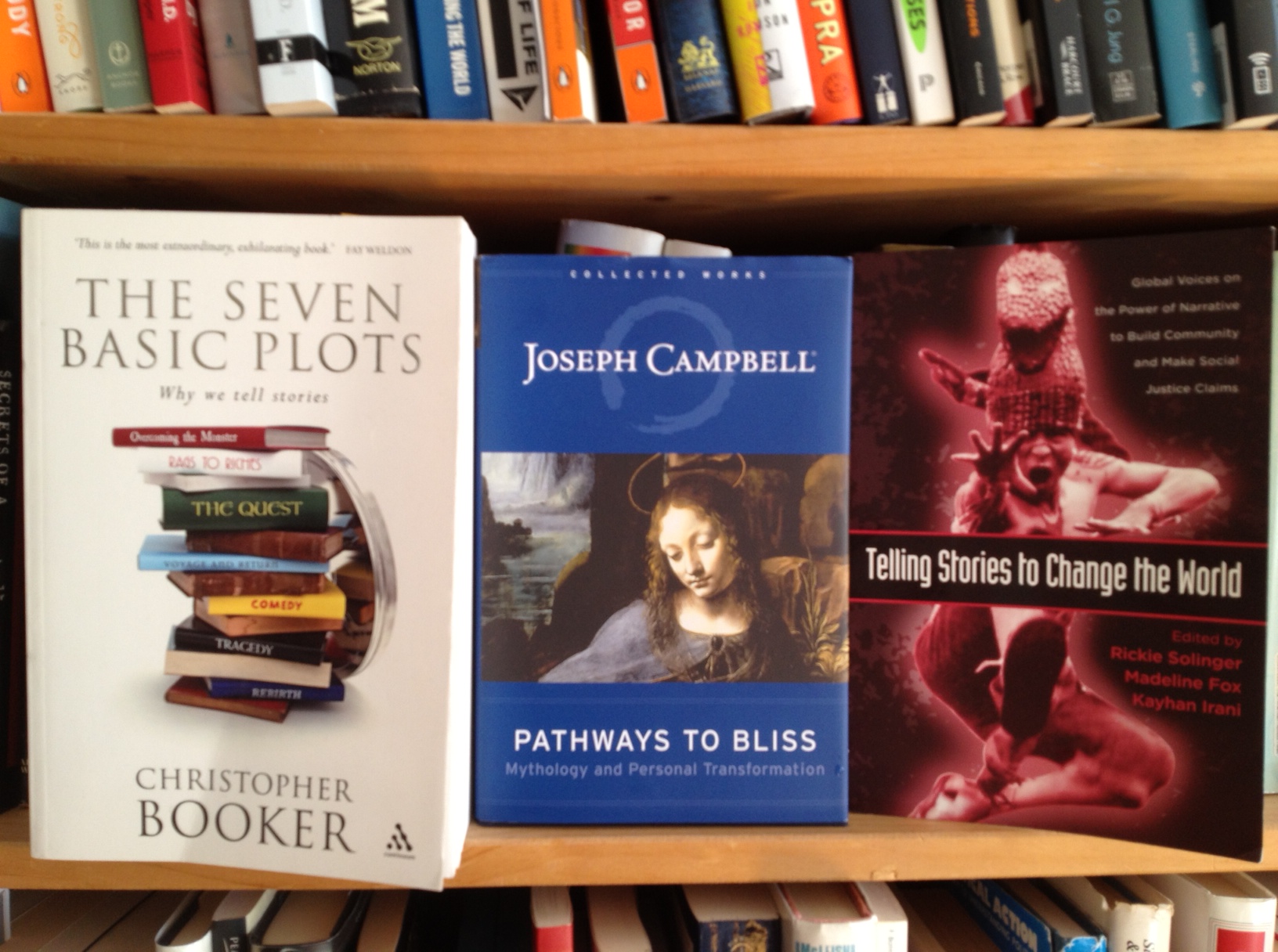
On that note, a short passage from Pathways to Bliss: Mythology and Personal Transformation (2004), a collection of writings by the late Joseph Campbell, is instructive. Campbell wrote:
In a wonderful essay called “On an Apparent Intention in the Fate of the Individual,” [philosopher Arthur] Schopenhauer points out that, once you have reached an advanced age, as I have, as you look back over your life, it can seem to have had a plot, as though composed by a novelist. Events that seemed entirely accidental or incidental turn out to have been central in the composition.
I don’t know if I’m fully at that point yet, but I do understand the passage in ways I would not have a decade ago.
Story plots
In this context, it’s helpful to think about the stories of our lives. In The Seven Basic Plots: Why we tell stories (2004), Christopher Booker posits that seven basic plot lines continually recur in literature and drama:
- “Overcoming the Monster”
- “Rags to Riches”
- “The Quest”
- “Voyage and Return”
- “Comedy”
- “Tragedy”
- “Rebirth”
Let’s apply these seven types to our own story arcs, and attempt to change the narratives if they aren’t going our way. Only one of the seven — tragedy — is negative on its face. And with the exception of comedy, the rest encompass seizing opportunities, meeting challenges, overcoming obstacles, and recovering from setbacks.
Beyond ourselves
Our stories also may include reaching out beyond our own lives and striving to better the world around us.
My friend Kayhan Irani, an award winning cultural activist based in New York (she’s way too young to be a Gen Joneser, but who’s counting!?), co-edited with Rickie Sollinger and Madeline Fox a volume of essays, Telling Stories to Change the World (2008). The book gathers narratives and reflections on social justice from around the world.
Whether it’s the immigrant experience in New York’s Hudson Valley, teaching about genocide in Darfur, women living in Muslim cultures, or a host of other settings, Telling Stories to Change the World draws us out of ourselves and, in the process, invites us to think about how we can make a difference in our own lives. Especially for those of us whose life experiences have been more conventional (in the American middle class sense of the term), this is a book of differences and possibilities.
When I started this blog a few weeks ago, I asked How will Generation Jones make its mark? During the years to come, I believe that part of that answer will include contributing toward positive change in our communities. We have a lot of good chapters left to write, I’d say.
The Wizard of Oz and Generation Jones
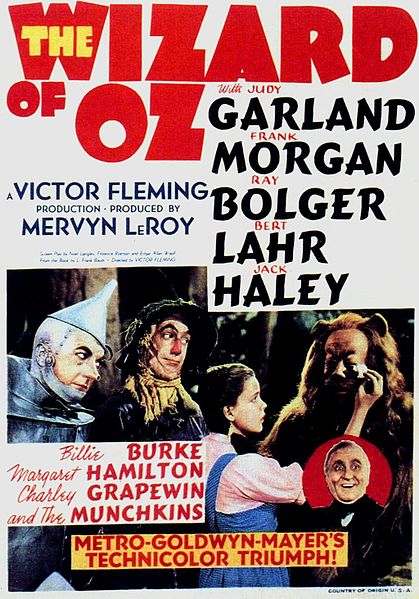
No single generation can lay claim to “The Wizard of Oz” (1939), but I certainly can attest that it holds iconic status in the eyes of many Gen Jonesers.
It’s a movie that we associate with our childhoods, replete with the annual anticipation of its fall screening on TV. It was an event in our lives, right there on the small screen. The songs became etched in our minds, especially “Over the Rainbow,” “Ding, Dong, the Witch is Dead,” and “If I Only Had a Brain.” The scary parts, most notably the tornado scene, anything to do with the Wicked Witch, and the flying monkeys, had us huddled together on our couches.
And how many times have variations of memorable lines from the movie entered into our everyday sayings and quips? Such as:
- “Lions, and tigers, and bears! Oh, my!”
- “Pay no attention to that man behind the curtain.”
- “I’m melting! melting!”
- “…we’re not in Kansas anymore”
- “Shucks, folks, I’m speechless.”
- “There’s no place like home!”
(See the imdb.com entry for more!)
“It’s a twister! It’s a twister!”
Over the past five years, I’ve gone on a number of storm chase tours in an effort to learn more about severe weather in America’s heartland. The tours are led by expert storm chasers, and these experiences have put me in touch with dozens of other chasers, severe weather enthusiasts, and storm geeks.
Whenever we talk about the roots of our passionate interest in tornadoes, the twister scene in “The Wizard of Oz” inevitably comes up, early and often.
Spanning our emotions
Very few movies of our childhood so envelop a range of emotional qualities: Joy, longing, belonging, friendship, caring, love, fear, courage, shame, kindness, evil. We care about and identify with the core characters. Each has a quest, a challenge, and we root for them.
Yup, I could wile away the hours (sorry!) thinking about the lasting imprint of this movie on my generation.
***
Movie poster: Wikipedia
Time travel: Some favorite destinations

Remember “The Time Tunnel,” the short-lived but fascinating television time travel drama from the mid-60s? Every new episode would find scientists Tony Newman and Doug Phillips landing in a different historical setting, usually on the eve of some major event, such as the sinking of the Titanic, the Battle of Little Big Horn (General Custer and Crazy Horse), or the bombing of Pearl Harbor. (Unfortunately, they never could persuade folks that disaster loomed.) To this day, I credit that show for helping to stoke a lifelong interest in history and to fuel my imagination with thoughts of going back in time.
What if time travel was possible? What places and times would I want to visit? Here’s an off-the-top-of-my-head list, not exactly an exotic one, but it sure would be a fascinating set of journeys. Feel free to add yours in the comments!
***
New York City, 1880s — My favorite time travel novel, Jack Finney’s captivating Time and Again (1970), is set in early 1880s Manhattan. There’s a scene in the book when his protagonist, Si Morley, realizes that he made a successful journey back. It remains one of my most favorite reading moments, ever.
New York City, 1920s — I’d be at everything and anything by George Gershwin, Rodgers & Hart, and Cole Porter. I’d be at the jazz clubs of Harlem. I’d be at Yankee Stadium watching Ruth & Gehrig. I’d be hanging out in Greenwich Village. I’d also want to check out student life at New York University, my law school alma mater. The 1920s is one of my favorite decades, and NYC of that time would make for a grand visit.
New York City, post-war 1940s and early 1950s — I can’t imagine a better place to drink in the spirit of America’s post-war optimism. I’d also venture out of Manhattan to Ebbets Field in Brooklyn, where I’d watch Jackie Robinson break baseball’s modern color barrier. I’m sure I’d spend plenty of time and money at the dozens of used bookstores in the city. And yes, I’d hang out in the Village during this period, too.
Chicago, 1893 — Chicago hosted the Columbian Exposition World’s Fair. The photographs of it look stunning, a city bathed in light. It also marked Chicago’s arrival as a major city.
Chicago, 1920s — When I was a kid, one of my favorite books was Albert Harper’s Chicago Crime Book (1969), which told tales of Al Capone and other famous gangsters. Thus was born a fascination with Chicago’s Roaring Twenties.
San Francisco and Berkeley, California, mid-to-late 1960s — I’d like to experience the whole California Dreamin’ thing. I’d be the squarest person in Berkeley’s People’s Park, but at least I’d be able to take good pictures.
London, late 1880s — Yeah, I’d sleuth around the East End to discover the identity of Jack the Ripper. I’d be drawn to the sinister side of Victorian London. I’ve also read about the food carts of the era and would like to give them a try.
London, 1940 — London during the Battle of Britain and the Blitz. It’s such an iconic, defining, dramatic moment in British history. Just thinking about it has me imagining Edward R. Murrow’s radio broadcasts from London as the German bombs were falling around them.
Paris, 1920s — I probably wouldn’t stay long, but I’d want to check out that whole Left Bank scene and the Lost Generation. I’d hang out in Paris cafes and do a bit of writing. (Challenge: No outlets for my laptop.)
Washington D.C., 1861-65 — Washington during the American Civil War. Hot, miserable, and menacing. But fascinating nonetheless. And somehow I’d finagle a way to have a short chat with Abraham Lincoln.
Boston, Revolutionary Era — I live in a city where evidence of the early years of the American Revolution is all around us. How cool it would be to see Boston of that era, perhaps bumping into the likes of John Adams, Samuel Adams, and other remarkable figures of the day.
Salem, Massachusetts, 1600s — Will we ever know the full truth about the events surrounding the Salem Witch Trials? It would be fascinating to find out.
Ancient Athens — I’d follow Socrates as he traipses around the Athenian marketplace. I’d want to get some first hand lessons in how the ancient Greeks lived, and trace some of the origins of Greek mythology and philosophy.
Hawaii, 1920s — Among my treasured Hawaiian collectibles is a February, 1924 National Geographic magazine with 16 pages of incredible color illustrations of the Islands. I can only imagine seeing those sights in person! If I was on Maui during October 1926, I’d go to the hospital in the small town of Paia to say hi to the newborn baby who someday would be my mom. While on Maui, I’d take a train ride on the narrow-gauge Kahului Railroad.
Hawaii, 1950s — After WWII, Hawaii was making its way toward eventual statehood. Large passenger airplanes — still propeller-driven, as the jets wouldn’t arrive in the early 60s — now made air travel to the Islands a safe reality. The idea of Hawaii as America’s Pacific paradise was in full bloom.
Valparaiso, Indiana, early 1910s — Valparaiso University, my collegiate alma mater, was rescued by the Lutherans in the 1920s after a period of decline. Before that, however, it was a thriving, no-frills, secular college known as the “Poor Man’s Harvard” that provided collegiate, professional, and trade courses to young people who aspired to join America’s emerging middle class.
Hammond, Indiana, 1950s — Hammond was my hometown from grade school through high school, from the late 60s through late 70s. By then it was a city in decline, its jobs base shrinking due to the decline of steel mills and manufacturing in Northwest Indiana. But during the 50s it was a thriving small city and an emerging outer suburb of Chicago.
Airplanes — I would love to fly in two legendary, early passenger airplanes, the Ford Trimotor (late 1920s) and the DC-3 (mid 1930s).
Trains — How fun it would be to take the Pioneer Zephyr, one of the first modern diesel passenger trains, on its popular Chicago-to-Denver run during the 1930s.
***
I’m struck by the fact that this list doesn’t have much to do with my current work. Hardly anything about law, the labor movement, politics, and the like. Not much about war, either, despite that I read a lot about the Civil War, WWI, and WWII. I’m not sure quite what that says about my choices, but unless science develops affordable time travel during my lifetime, this is not a pressing matter.
Bookmarking middle age

Recently I showed how I’ve accepted the identity of “middle aged” when I bookmarked the Next Avenue website on my computer.
Click & add. Call it a form of Digital Age self-therapy.
Hosted by PBS, Next Avenue is a content-rich source of articles and blog posts containing information and advice especially for folks who have reached the age 50 threshold. Its main menu includes categories such as “Health & Well Being,” “Money & Security,” “Work & Purpose,” “Living & Learning,” and “Caregiving.”
I first clicked to the site with the grudging ‘tude of every 50+ guy who thinks of himself as being 25 at heart. Once I discovered what was there, however, I kept going back.
Finally, after repeated visits, I realized it was time to make the ultimate digital commitment: I bookmarked it, on multiple devices, no less.
Now and tomorrow
Next Avenue maintains a healthy focus on the present and the future. Its contents are immediately relevant to me. I can’t say that I follow all the sage advice provided — witness the cinnamon roll I polished off for breakfast the other day — but it’s there for the taking.
In addition, as someone on the younger end of Next Avenue‘s intended base audience (an increasingly unusual situation), it provides me with a preview of the years to come. We Americans, especially, are socially programmed to resist, even dread, anything to do with aging. But one welcomed aspect of my creeping emotional maturity is the realization that the experiences, insights, and stories of folks a generation ahead of us can yield a lot of helpful lessons.
Generation Jones, 9/11, and a formative decade
Here in the U.S., today is marked by the annual observances of the attacks of September 11, 2001. Several friends and family members who were more directly affected by 9/11 — in New York, Boston, and elsewhere — are readers of this fledgling blog. I know that this is an especially meaningful and hard day for them.
Those who study the beliefs and attitudes of different generations often seek to identify shaping mega-events. For Americans of two generations, it’s pretty easy: The Depression and World War II for the “Greatest Generation,” and numerous points along the whole Sixties arc for classic Baby Boomers.
And what of Generation Jones? For my generation, I believe that the 9/11 attacks were a signature event and the beginning of a defining decade.
I lived in New York City from 1982 to 1994, and for six of those years had practiced law in lower Manhattan, within easy walking distance of the Twin Towers. New York was my first chosen home, a place I have loved from my first forays into Manhattan. The images of the day — via TV screens here in Boston — felt like a hard body blow. And I knew, in ways I couldn’t fully anticipate, that the ground had shifted under us.
For many Gen Jonesers, that day shook us out of the complacency of lives formed largely in the 1970s and 1980s. Most Americans have been fortunate to escape the risks of upheaval and terrorism that continually confront millions of others around the globe. For us, 9/11 launched a new reality and a tumultuous decade, capped by the financial meltdown.
That decade likely will reverberate throughout our years. Regardless of one’s politics, the “war on terror” has changed the way we live and created challenging, unresolved questions for public policy and foreign affairs. During the last years of the 2000s, our focus shifted to economics, and brutally so. Our financial system went into near collapse, and although economists have proclaimed the Great Recession “over,” millions of people are still trying to recover.
The two preceding generations experienced their formative events relatively early in their lives. For Gen Jonesers, I think we’ll look back and see that the last decade created our new worldview, well into our adulthoods. And far from being the stuff of soggy nostalgia, we’ll be living with these realities for the long term.
******
The YouTube link above is the opening montage from Woody Allen’s 1979 film, “Manhattan.” Its beautiful black & white cinematography, accompanied by Gershwin’s luscious “Rhapsody in Blue,” capture the indomitable spirit of this great city.
 Musings of a Gen Joneser
Recent Comments