“The Big Lift”: World War and Cold War meet up in Berlin

In the aftermath of the Second World War, the victorious Allies divided the city of Berlin into zones controlled by the Americans, British, French, and Russians. The first major international crisis of the Cold War was triggered by a 1948 Russian blockade of Western goods and supplies into Berlin, and resulted in the Western countries joining together in the Berlin Airlift, a massive airlift of food, fuel, and other necessities for a German populace still suffering from the ravages of the war. The blockade was lifted in 1949, with Germany divided into separate Eastern and Western states.
The Big Lift (1950) is a raw, authentic, fascinating movie built around the Berlin Airlift. Montgomery Clift leads the cast as an Air Force sergeant who becomes involved with a Berliner, played by German actress Cornell Borchers. Paul Douglas, in a lead supporting role, plays an American sergeant who carries deep anger and contempt toward the Germans. All other military roles were played by actual members of the U.S. Armed Forces.
The Internet yields mixed reviews for this movie, mostly due to supposedly uneven plot lines. However, I find the personal stories to be smartly layered into the time and place, and both lead and supporting cast members deliver convincing performances. The film’s interactions between the Americans and Germans are emotionally and politically complex, capturing how tensions fueled by both the Second World War and the Cold War shaped personal relationships.
But the real star here is post-war Berlin, where most of the movie was filmed in 1949. Some four years after the war ended, Berlin was still rebuilding from Allied bombings, and much of the city remained as piles of rubble. The movie wholly captures that reality. In addition, the aerial shots of Allied supply planes flying into and taking off from Berlin’s Templehof airport are like a documentary from the era. Scenes in the Berlin subway and city streets are gritty and real. You feel like you’re watching history.
The movie was produced as a portrayal of a major international event, but now it serves as a unique, remarkable time capsule. The Big Lift gets my vote as one of the most underrated historical dramas ever. I just finished a repeat viewing, and I’m sure it won’t be the last time.
***
Go here for a version posted to YouTube.
Go here for the Wikipedia article on The Big Lift (spoiler alert on the summary)
Go here for the Wikipedia article on the Berlin blockade.
“Grand Central”: Postwar stories from one of the old familiar places
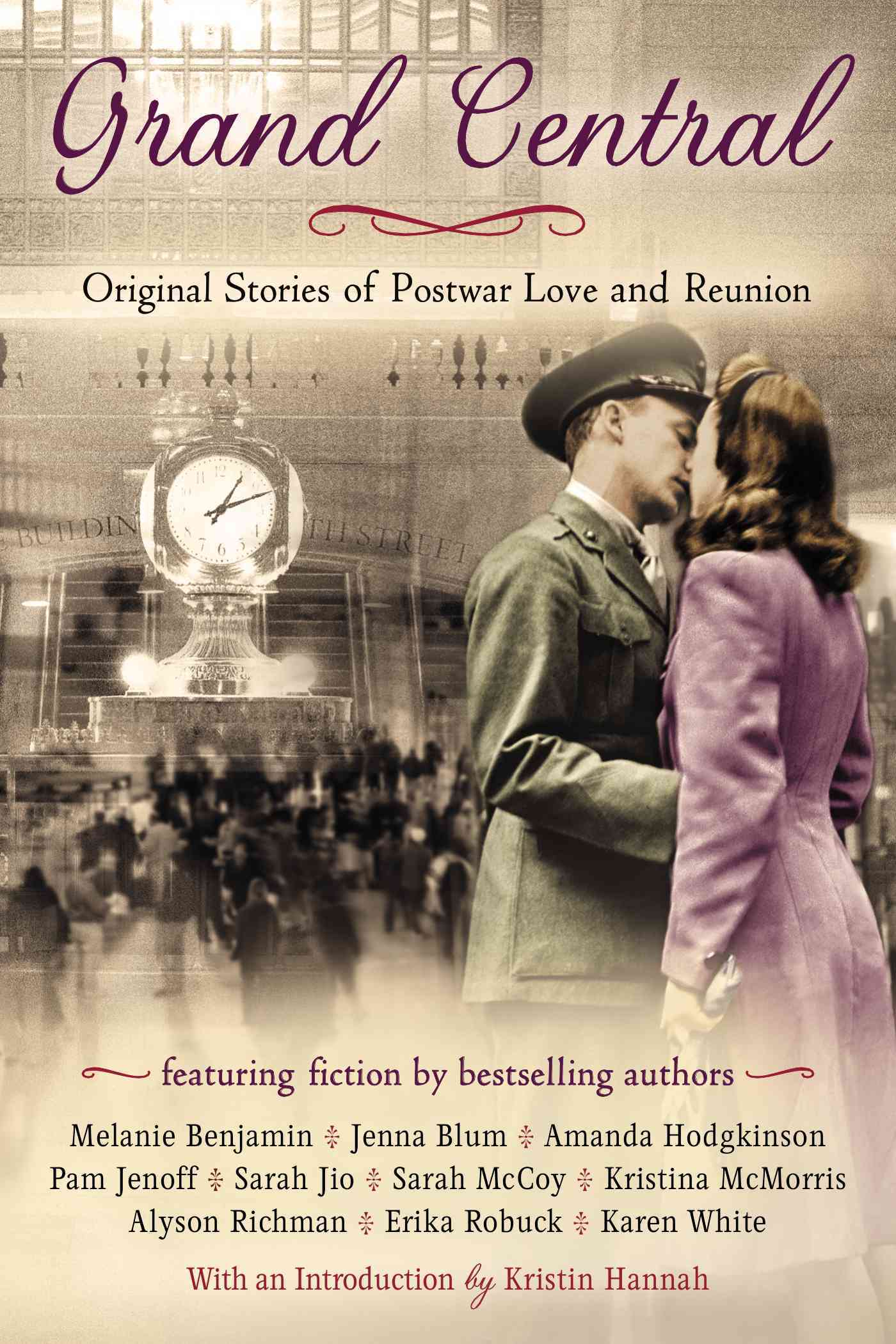
I’ve just started reading Grand Central: Original Stories of Postwar Love and Reunion (2014), a newly-released anthology of short stories by ten writers, with the iconic train station playing a role in each one. Last night I read “The Lucky One” by Jenna Blum, author of two very successful novels, Those Who Save Us and The Stormchasers. I count Jenna among my dear friends, so perhaps I’m biased, but if her contribution is a harbinger of things to come, I’m in for a treat.
I began with Jenna’s story because, well, I saw it as sort of a test. WWII. Train station. Love and reunion. In the wrong hands, such a collection could easily become a soggy nostalgia fest, conjuring up images of a couple having a final embrace before the one left behind runs along the departing train. Because I’m a big fan of Jenna’s work, I figured her story would give me an idea of what to expect.
Jenna’s “The Lucky One” is about a Jewish concentration camp survivor who works at Grand Central’s famous Oyster Bar restaurant. He sees a customer who looks like his late mother. . . .
Enough said. I’ll simply opine that “The Lucky One” is a superb, knowing, heartfelt contribution from a writer whose ability to tell a great story with nuanced emotional intelligence is one of her distinguishing gifts. It also is the work of someone who learned about the Holocaust by interviewing survivors for Steven Spielberg’s Survivors of the Shoah history project. Jenna has infused a lot of historical understanding into her short story.
Okay folks, I know I’m betraying my own limitations when I confess that I cannot recall ever diving into a volume of short stories with a cover showing a couple kissing in a train station! But I will be the loser if I don’t spend more time with this one. And I have a strong feeling that the next time I step into Grand Central Station, some of these tales will come to mind.
Summer means…football pre-season magazines!

Especially after I whined about the brutal winter we experienced here in Boston, it may seem odd that the summer months fill me with anticipation for the start of fall football season. But I can’t help it — I’ve been a football fan since junior high school — so around this time of the year I start checking the magazine stands for the usual rush of pre-season pro and college football previews.
I’m more into the pro game than the college game, but I load up on pre-season mags for both, as well as a fantasy football guide or two.
On the pro side, I’ve been devoted to the Chicago Bears since I started to follow the game, over a decade before the awesome, wondrous 1985 championship season. When a Bears game is televised here in Boston, I make every effort to watch it. I still get psyched when they win, and I get a tad down when they lose. Since moving to Boston in 1994, I’ve also become a fair weather New England Patriots fan. It’s easy to root for the Pats when they are Super Bowl contenders practically every season! I don’t know what I’ll do when coach Bill Belichick and quarterback Tom Brady call it quits, however.
On the college side, it’s Notre Dame for me. Growing up in NW Indiana, I couldn’t help but gain an affinity. Although I’m neither Catholic nor a Notre Dame alum, I’m drawn into the whole Notre Dame football mystique. I also root for the University of Hawaii and Navy, even though I have no official connections to either of those schools! Fandom is not logical.
Personally, I’ve never attended a big name football school. Valparaiso University, my undergraduate alma mater, is known more for its successful mid-major basketball program than for its football team. New York University, my law school alma mater, hasn’t played the game in decades, although early in the last century NYU had a significant football program.
On the fantasy football side, my Jamaica Plain Storm won its league in 2012 and generally has been pretty competitive. I pay moderately serious attention to my fake football team. Such are the priorities of willfully prolonged adolescence.
Throwback Thursday: First Manhattan visit, Summer 1982
Thirty-two summers ago, I paid my first visit to New York City. The main occasion for my trip was to check out New York University, where I would be starting law school that fall.
While it may sound odd in this day and age for someone to say this, I had accepted NYU’s offer of admission sight unseen, based largely on its overall reputation and strong support for students who wanted to enter public interest law. You see, I also was pretty broke, and I didn’t have the funds to visit the law schools to which I was applying. Having opted happily for NYU from a distance, I wanted to preview the situation firsthand, so I scheduled a late June visit to New York City.
I reserved a room at the Vanderbilt YMCA on 47th Street. It was like staying in a youth hostel, reminiscent of my semester abroad in England the year before. Another adventure begins!, I thought to myself.
During my short trip, I spent a lot of time around NYU and its Greenwich Village surroundings. I discovered some of the cheap local eateries that would get a lot of my business during the years to come, I did some hanging out in Washington Square Park in the heart of the Village, and I paid my first of hundreds of visits to the remarkable Strand bookstore.
Of course, I also checked out NYU, including Vanderbilt Hall, the main law school building, and Hayden Hall, the residence hall where most first-year law students lived, both located right on Washington Square. I could feel the butterflies churning in my stomach in anticipation of what was to come, and a little voice inside me wondered if I was in over my head.
I did standard tourist stuff as well. Going up the Empire State Building. Taking a guided tour of the United Nations. Becoming bewildered by the city’s labyrinth of a subway system. (If you’ve ever been lost in the Dante-esque middle level of the West 4th Street stop in the Village, you know what I mean.)
My NYC recon trip confirmed that in terms of sophistication, I was a babe in the woods. I wasn’t totally unfamiliar with big cities, having grown up in northwest Indiana right outside of Chicago and having spent chunks of time in major European cities during my semester abroad. However, New York seemed overwhelming to me, ranging from its apparent vastness (in actuality, Manhattan is a mere island!) to its exorbitant prices. (Upon my return, I would report breathlessly to friends and family that a fancy ice cream place called Häagen-Dazs was charging one whole dollar for a small cone!)
Nevertheless, I also had a gut feeling that I was making the right choice. I knew that New York would fascinate me, and — nerves notwithstanding — I had a good feeling about my decision to attend NYU. My instincts would prove to be right. New York and NYU were the right places at the right time for me.
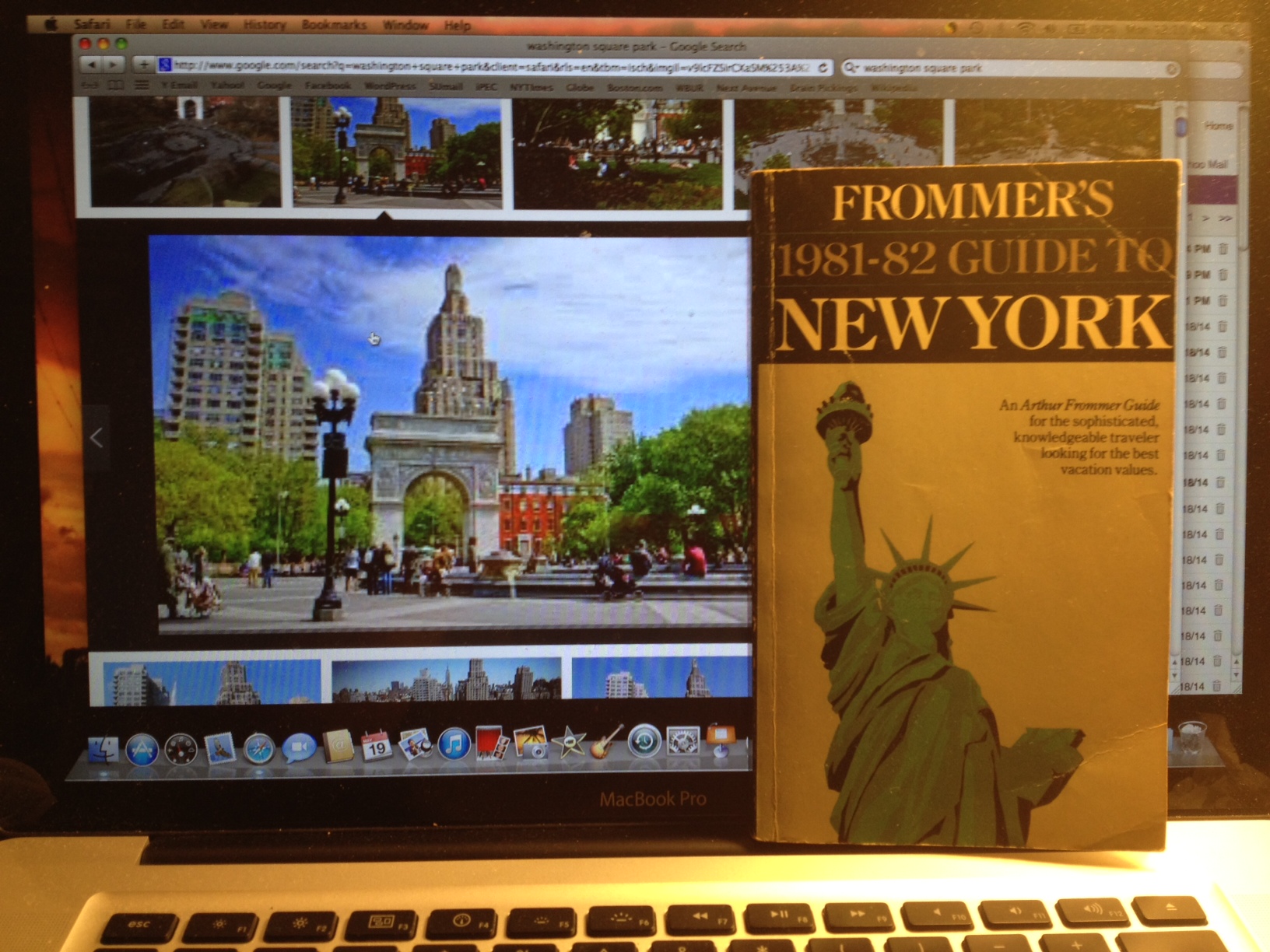
I didn’t take any photos of that visit, but I’ve held onto the guidebook I used to traipse around Manhattan. In Frommer’s 1981-82 Guide to New York, author Faye Hammel writes:
You should be advised that there is one dangerous aspect of coming to New York for the first time: not of getting lost, mobbed, or caught in a blackout, but of falling so desperately in love with the city that you may not want to go home again. Or, if you do, it may be just to pack your bags.
That quote captured how I would feel about New York for years. As would this song:
With the Sunday paper in a Boston café
(Photo: DY, 2014)
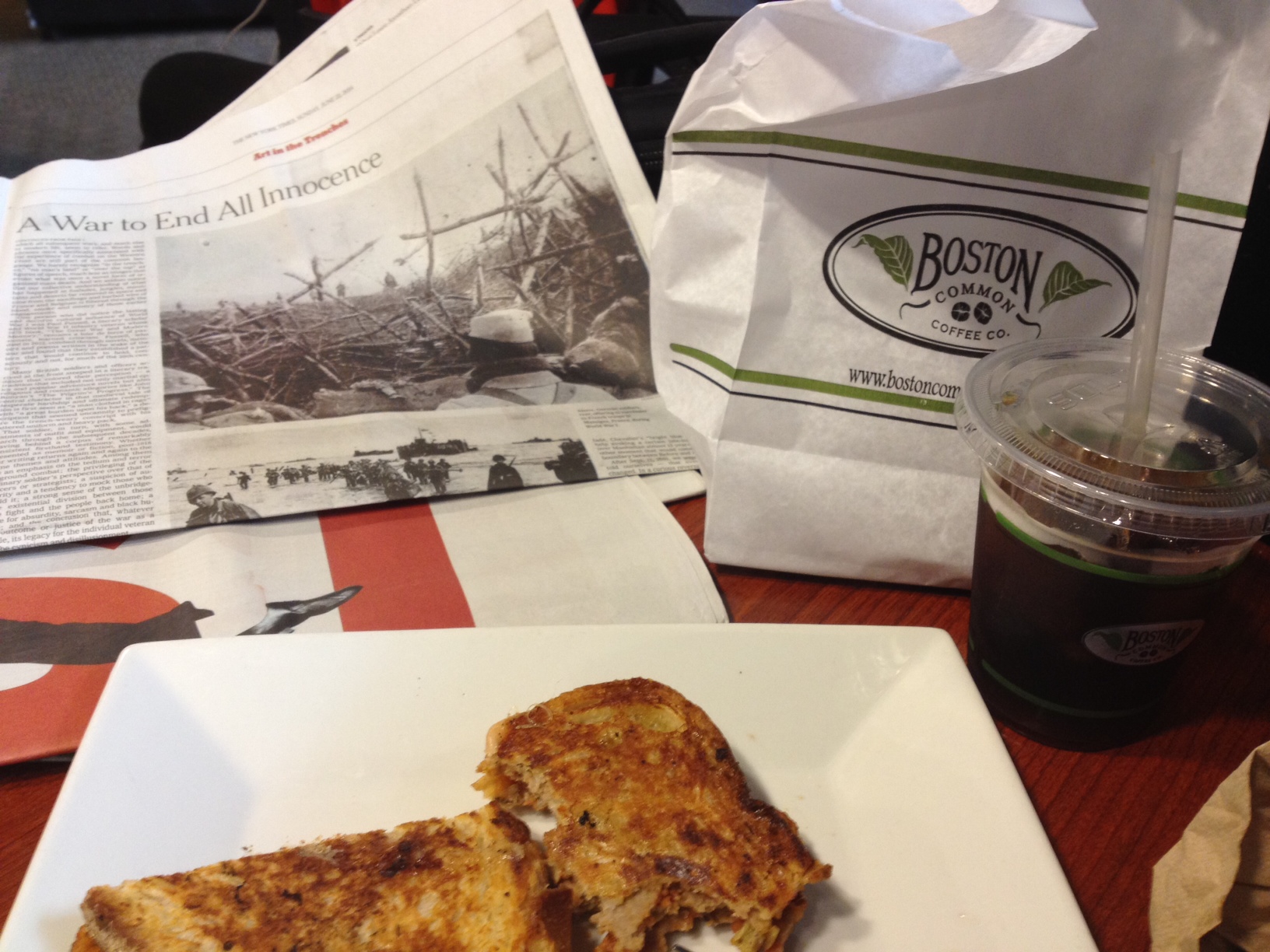
Before heading into the office today to pick up some work (I’m one of those academicians who embraces quirky work hours), I stopped by the Boston Common Coffee Company, a downtown café, for a late lunch. It is there, while enjoying a sandwich & greens, iced coffee, and part of a cookie, that I realized how weird I have become. No, it’s not that I’ve changed all that dramatically over the years. Rather, it’s how the world has changed around me.
You see, while sitting at a small table with my food, drink, and a few sections of the Sunday newspaper, I looked around and realized that among the 20 or so people in the café, I am the only one reading a newspaper. In fact, I’m the only one reading any kind of hard copy material at all. Just about everyone else, whether alone or in a small group, has a gadget or laptop out.
Of course, it was a younger group of customers, as befits a coffee place located among buildings of two urban colleges with dorms full of summer visitors. So the generational thing certainly was at play. By contrast, when I was in law school at NYU some 30 years ago, on any given Sunday you could go to a neighborhood coffee shop and see students trading sections of the Times, Daily News, and Post over a (usually late!) breakfast or brunch.
Though I get a lot of my news online, spending time with a hefty Sunday newspaper remains a treat for me. There’s a small sense of adventure in flipping through the sections to see what awaits me. And when coffee and a bit of good food are added to the mix, it makes for an extraordinarily pleasant way to spend part of a day.
Throwback Thursday: Volunteering for the 1980 Presidential campaign of John B. Anderson

Yup, that’s me, speaking at a 1980 presidential debate sponsored by the Porter County, Indiana chapter of the American Association of University Women, wearing my best polyester suit. Note the cigarette smoke appearing in the photo!
As the boxes of papers in my condo unit storage area attest, I tend to save stuff! This stuff includes a small pile of mementos from the first Presidential candidate I ever supported and voted for, John B. Anderson of Illinois. I spent countless hours working as a volunteer for Anderson’s 1980 independent campaign, and it is one of my most memorable college experiences.
I’ve written earlier that during college and law school, I had every intention of launching a political career, so much that I was obsessed with the machinations of campaigns and elections. During this time, and especially through college, my own political views were very much in flux. I started college as an independent-minded Republican and finished as an independent-minded Democrat. But it’s also safe to say that my positions on issues were more knee-jerk than principled and well thought-out. regardless of whether I was leaning right or left!
Since then, my views have usually come out on the liberal side, but as to individuals I admire and respect in public life, I find myself drawn to people of character and integrity in ways that may transcend political partisanship. This may signify that I have come full circle, because John Anderson had those qualities in abundance.
In a way, my own political journey tracked that of Anderson, who for most of a long career in the House of Representatives was a strong conservative, rising to party leadership positions and representing a Rockford, Illinois district that returned him to office time and again. But in the wake of Vietnam and the social upheaval of the 60s and early 70s, Anderson began moving to the left, to the point where he entered the 1980 GOP primaries as a “liberal Republican,” a designation that would be virtually impossible today.
Anderson made a splash in the primaries and was gaining a following that cut across political lines, but he knew that his chances of winning the nomination — eventually secured by Ronald Reagan — were practically non-existent. So he decided to mount an independent Presidential campaign. He engaged in the arduous effort to get on the ballot across the country, and he picked a running mate, former Wisconsin Governor Patrick J. Lucey, a Democrat.
Although polling data showed Anderson with double digit support through the summer of 1980, he faded in the fall and garnered 7 percent of the November vote, far behind Reagan and the Democratic incumbent, Jimmy Carter.
I served as the Northwest Indiana coordinator for the Anderson/Lucey campaign, an area covering Lake and Porter counties, two fairly heavily populated areas of the state. My position signified the degree to which the campaign had to rely on green volunteer talent. I coordinated a small organization of volunteers, served as a representative to the statewide campaign committee, participated in a couple of local debates, and even did some local radio interviews.

Mementos from the 1980 independent Presidential campaign of John B. Anderson
Some of the mementos pictured above are self-explanatory, but let me say a bit about three of them:
(1) The ALL CAPS letter on the left is a mailgram sent by Vice Presidential candidate Patrick J. Lucey to core Indiana volunteers, thanking us for a furious and ultimately successful petition effort to put him on the state’s November ballot. Lucey had been added to the ticket as Anderson’s running mate after petitions for Anderson had been submitted, so the Indiana courts required us to mount a second petition effort to secure his place as the VP candidate on the ballot.
(2) The newspaper article at top is a summer 1980 piece by the Gary Post-Tribune, featuring our small band of Anderson volunteers. It was one of my earliest press interviews about anything, and I recall how nervous I was speaking to the reporter! The article mentions an older couple, John and Kim Glennon, who served as den parents to our young volunteer group. Mrs. Glennon had attended law school with Anderson at the University of Illinois.
(3) The letter on the right was sent to key Anderson supporters after the November election, thanking us for our efforts on behalf of the campaign. I didn’t know if Anderson personally signed it or whether a robo-signing machine was used, but it was nice to receive the letter after working so hard for the campaign.
The 1980 election will forever be associated with President Reagan’s election and the nation’s rightward political shift, but I believe that Anderson’s story also symbolizes that change. After many years as a Republican loyalist, Anderson’s politics were moving left as his party’s positions were moving right. Anderson’s campaign platform was a mix of liberal social positions, strong support for workers’ rights, and moderate-to-liberal economic policies. His departure from the GOP anticipated the sharper ideological divisions that continue to confront America today.
In the years following the election, Anderson did a lot of teaching and lecturing, eventually becoming a law professor at Nova University in Florida and serving in leadership positions for various advocacy groups. He’s in his early 90s now. I’m not sure if he is still active as a teacher and advocate, but I hope he knows that his campaign made a strong impact on those of us who were fortunate to be a part of it.
Derby-Pie, baseball bats, and a Gatsby-esque hotel in Louisville
Featuring Scott, Big Al, and maybe a ghost or two (photo: DY, 2014)
I was reminded how travel is one of the benefits of my work when I made a quick trip to Louisville, Kentucky to speak last Friday at a continuing legal education program sponsored by the University of Louisville’s Brandeis School of Law.
It was my first visit to this historic old riverboat city, and I hope that I’ll be able to return for a longer one.
Seelbach Hotel
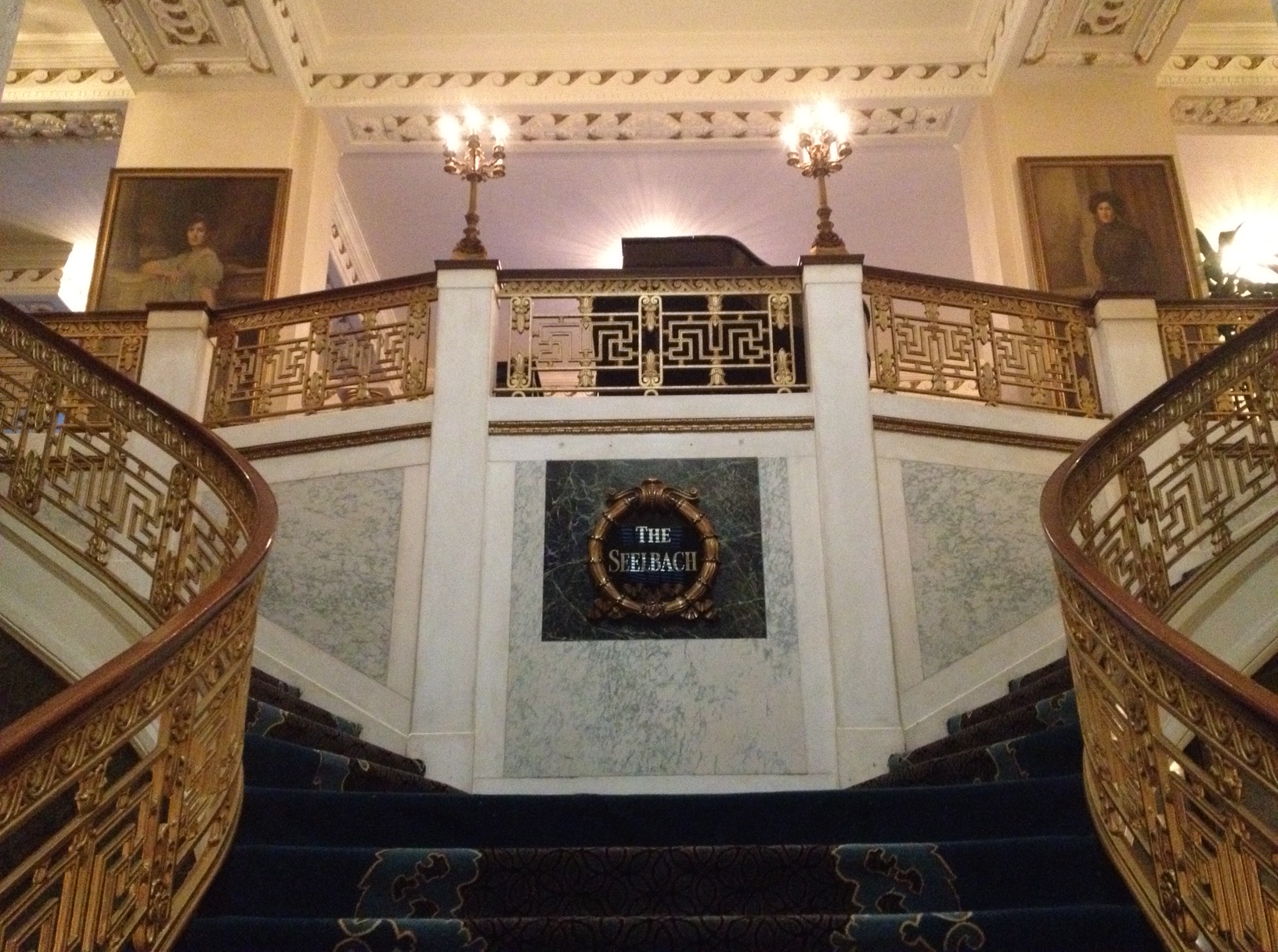
The conference was held at the Seelbach Hilton Hotel in downtown Louisville. I’m sufficiently clueless about interior aesthetics that I rarely notice much about hotels I stay in, but the Seelbach is a beautiful place with lots of history. F. Scott Fitzgerald spent time there and was so taken by it that he used the hotel as the setting for Tom and Daisy Buchanan’s wedding in The Great Gatsby. Prohibition era gangster Al Capone was a frequent visitor as well.
And as befits any classic old hotel, ghost sightings have been reported at the Seelbach. Local history expert Nicholas Howard writes:
The first ghost sighting was in 1987 when a cook spotted a woman in a blue dress with long dark hair walk into the elevator and disappear; the catch was the doors were closed the whole time. A maid spotted the same woman the same day. With some investigating, it is believed she is the spirit of a woman that died there in 1931. . . .
A guest in 1985 also called the desk saying she felt something rubbing her legs when she got into her bed; nothing was ever found in the room. There are also reports of guests TVs being turned on in the middle of the night, the air conditioners coming on and reports of an old woman roaming the halls.
Baseball bats
I believe the first time I ever heard of Louisville was in connection with baseball bats. You see, “Louisville Slugger” is the name of an iconic brand of baseball bat, and the company still has its headquarters in the city. Walking along Main Street, you’ll see Louisville Slugger plaques and baseball bats making for the “Walk of Fame.” As a baseball fan, I got a big kick out of this!
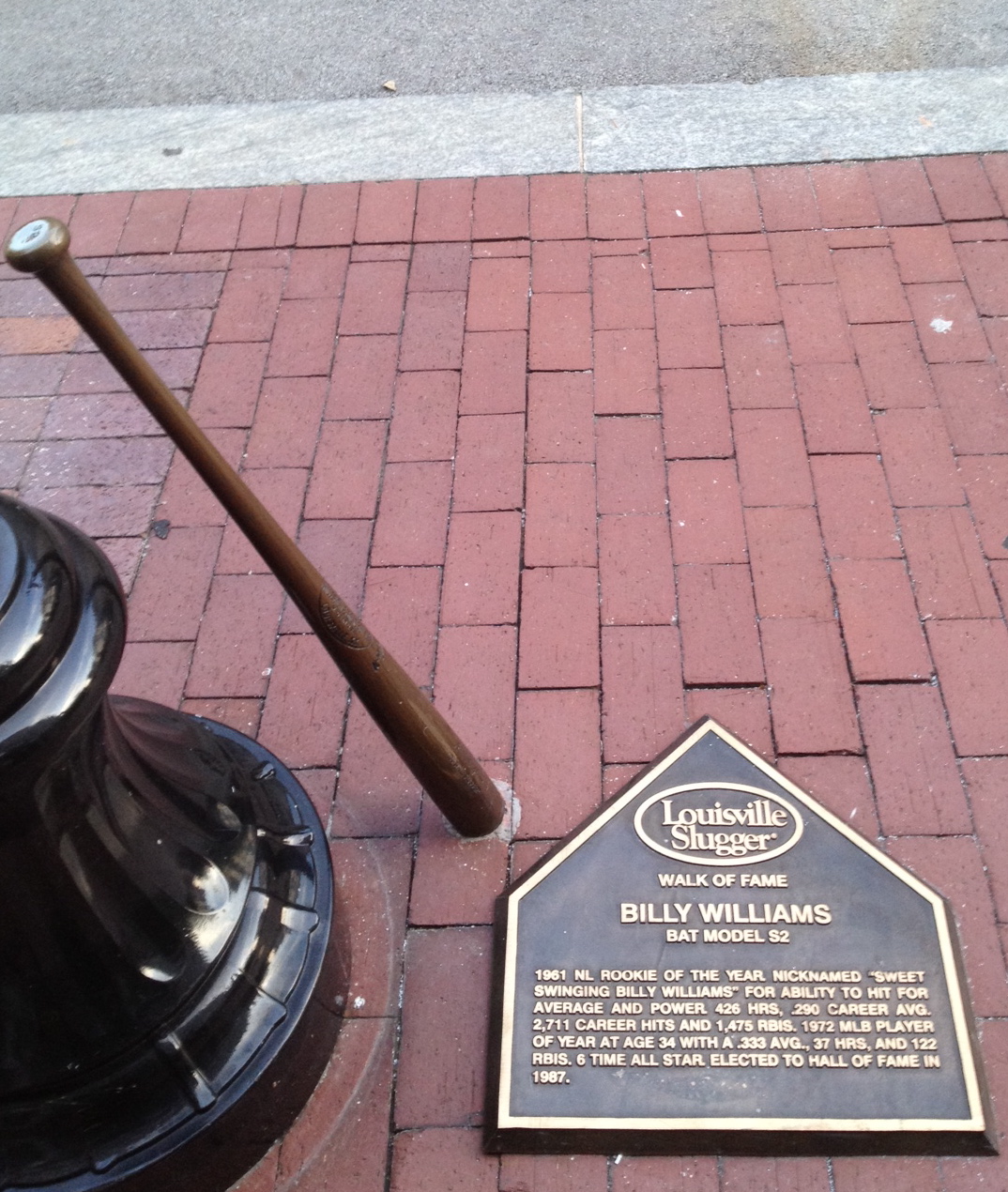
Honoring Hall of Fame outfielder Billy Williams, one of my favorite Chicago Cubs (photo: DY, 2014)
Derby-Pie
The conference organizers hosted a lovely dinner for program speakers at the Bristol Bar & Grill, and the highlight for me was a local dessert known as Derby-Pie, which I can best describe as a sort of walnut & chocolate chip pie with a flaky crust.

From derbypie.com
Derby-Pie is one of the best desserts I’ve ever tasted! On a plate in a dimmed dining room, it looks like just another dessert, but after one bite…
Throwback Thursday: Playing baseball and discovering “dinosaur bones” on Baring Parkway

Baring Parkway, Hammond, Indiana (Cropped & magnified version of photo originally taken by Edwin Rivera — thanks Edwin, and blame the blurs on me!)
Baring Parkway makes up two big rectangular plots of grass and trees in the Woodmar neighborhood of Hammond, Indiana, the small northwest Indiana city where I grew up. For me and many others during the late 60s and early 70s, it was our baseball diamond, football field, and — on one occasion — archeological dig.
Fields of dreams
Some of my best memories of those days are of playing pick up baseball games with improvised rules and teams made up of guys who showed up on any particular afternoon or early evening. It was slow pitch hardball; a batter could strike out but couldn’t wait out a walk. If we didn’t have enough players for full teams, a ball hit to an uncovered part of the outfield was considered an automatic out. There were no fences, so a home run had to be earned by hitting the ball far and running fast. (Umm, my home runs were few and far between.)
I spent chunks of five or six summers playing in those pick up games on Baring Parkway. When I started, I was pretty terrible. I could barely hit the ball, and my fielding skills were pretty bad too. Early on, if there was an odd number of players, I’d be designated the “official catcher,” which meant that I caught the slow lob pitches for both teams and didn’t get to bat. 😦 But I was becoming quite a baseball fan, so I stuck with it, enough so that I could hold my own at bat and in the field. Such improvements are the little things that can build a kid’s self-confidence.
Baseball was still America’s national pastime. Although I don’t want to over-romanticize those days, a love of the game was very much a part of the culture of this gritty little industrial city. Youth baseball leagues were very popular, and a fair number of future high school and even college standouts cut their teeth that way.
Our Baring Parkway games harbored no such sporting ambitions. We played for the fun of it, and by and large, the experience delivered. Furthermore, we mostly got along with each other, with only an occasional disagreement blowing up into fisticuffs.
The photo above shows a lush green park. Our makeshift baseball diamonds made Baring Parkway less picturesque, with carved out bases and basepaths pockmarking the landscape. But on a nice summer day, you could see kids enjoying themselves with a game of baseball, which I think was a good tradeoff.
Football was less popular those days, but occasionally we’d turn a stretch of the Parkway into a makeshift gridiron. We played both touch and tackle varieties, adding necessary rules such as minimum counts before a defender could rush the passer (“one Mississippi, two Mississippi…”). We usually played without safety equipment, but I cannot recall any injuries of note other than some bumps and bruises.
In search of dinosaurs
One early fall — I’m pretty sure as we were starting the 6th grade — a big utility company dug up much of the Parkway to do some work on the underground pipes. This meant a temporary suspension of its use as a playing field, but what we discovered there caused us to shelve our growing obsession with sports.
Unlike today, when fences, orange tape, and big signs will warn people (er, kids) to stay away, we could simply walk right into the work site. I cannot recall who first ventured into the excavation area, but I remember how quickly the news traveled among our small group of friends: There are lots of bones down there, as in bones from big animals.
And so we went, with small shovels and garden tools in hand, during early evenings and the weekends when the workers weren’t on site. And we dug up these big bones and all thought, whoa, I wonder if these are dinosaur bones???!!! We took bags of them to show & tell at our grade school, breathlessly speculating about whether they were the remains of giants that once roamed the planet.
Well folks, it turns out that none of our archeological discoveries will be found at your local natural history museum. Indeed, the fact that we also dug up rusty horseshoes at the site should’ve told us that we weren’t on the trail of a mighty T-Rex. But our excitement over this discovery allowed us to suspend disbelief, and also would make for a good childhood memory along the way.
Kids and unstructured time
Back in the day, a childhood for a someone born into America’s emerging middle class or robust working class came with free time, especially during summers after the school year ended. Sure, for some there were activities such as scouting, church groups, organized sports, and the like, but overall our days didn’t seem quite as packed as those of today’s young folks.
Although I’m not a parent, I understand how modern child raising often involves a lot more structured, adult-supervised activities than we saw with earlier generations. Still, it saddens me a bit that the kind of self-organized play that we engaged in on Baring Parkway is less and less of a typical kid’s experience. This was an era when parents (usually moms) could tell their kids to go outside and play, and about the only mild concern was whether you’d be home in time for dinner. Yup, times have changed.
Pursuing your passion (realism edition)
If only!!!
The title of Marsha Sinetar’s Do What You Love, The Money Will Follow (1989) is perhaps the world’s easiest eight-word commencement speech, and it has been repeated, mantra-like, in countless pep talks and career counseling sessions. At least before the Great Recession hit, the book was extraordinarily popular in college career services offices, especially for liberal arts majors.
In fact, it’s a pretty good read and worth a look for anyone in a career/life shifting or changing mode. However, the message conveyed by the title may sound downright starry-eyed and naive to those juggling rent payments or a mortgage, kids, car payments, a grocery bill, and the rest…maybe to the point where you’re saying to yourself, oh c’mon, what a load of fertilizer.
And yet, we go around only once in this lifetime, and it strikes me as being a terrible shame for folks to give up on what activities engage and excite them. So here’s what I call the Realism Edition of Pursuing Your Passion:
First, it may be possible for you to turn your passion into a job. Is there a demand for what you like to do? Are your talents sufficient to satisfy that demand? Will the income pay the bills? It could take you a while to answer these questions, but if the answers lean toward yes, then maybe you can make a go of it.
Second, even if the prospects of turning your passion into a full-time job are limited or doubtful at this juncture, can you start by doing it as a side gig or perhaps as an avocation? You’ll be able to derive enjoyment from the activity, maybe earn some income from it (or at least cover expenses), and plant possible seeds for turning this into your next career.
Third, if your passion doesn’t necessarily translate into income, can you pursue it as a hobby? With the busy demands of everyday life, we’ve lost sight of hobbies as a meaningful, important activity. Maybe it’s not in the stars, at least for now, for you to be a pro basketball player, famous clothes designer, or featured nightclub singer. But how about joining a hoops league at the Y, setting up a knitting space in a spare corner, or participating in a local singing group?
In some cases, Do What You Love, The Money Will Follow may be more dreamy invocation than hard reality. But even if your passion isn’t meant to be your main income source, there should be a way to bring the core joys of that activity into your life. There are no guarantees, of course, but wouldn’t it be a shame not even to try?
June 6, 1944: Why it matters for those of us born much later

Photograph of D-Day landings (from National WWII Museum, New Orleans)
Seventy years ago, Allied forces landed on the beaches of Normandy, France, signaling the beginning of the major campaign to reclaim Europe from Hitler’s Germany. If you’ve ever wondered how terms such as “D-Day” and “first wave on the beach” became parts of our cultural vocabulary, look no more.
The veterans of D-Day are aging, and many have passed on. But this remains a signature event in history. Had the invasion failed and the Allied forces been pushed back across the English Channel, the war likely would’ve gone on for years. Instead, it ended the next May in Europe and the next September in the Pacific.

German defenses watched Allied troops landing on Normandy beaches from these fortifications (from National WWII Museum, New Orleans)
Most of us have been spared the experience of armed combat, but if you want a sense of what it was like to be in that first wave of troops on the beach, the opening sequence of Saving Private Ryan, Steven Spielberg’s 1998 depiction of a squad of American soldiers assigned to a special mission, is about as close as you’d want to get.
If you’d prefer popular historical overviews of D-Day, then Stephen Ambrose’s D-Day (1994) and Walter Lord’s The Longest Day (1959) are good book choices. The 1962 screen adaptation of Lord’s book (also titled The Longest Day), while very much a Hollywood war movie, tells the story well, too.

In my previous post, I observed that some of us would benefit by finding greater meaning in the common, ordinary, and mundane pieces of our lives, rather than always working toward or anticipating the next big event. Many of the men who returned home from D-Day and other places of battle understood that notion implicitly. They had seen enough of the world’s conflicts and drama; many wanted nothing more than to lead quiet, comfortable, and relatively uneventful lives.
I try to remember this whenever I look back at WWII, while simultaneously yearning for a greater sense of shared purpose in our fragmented society. It’s awfully easy to romanticize the war era through a rose-colored lens some 70 years old. But I can’t imagine anyone who survived the beaches of Normandy getting too soggy about a global war that left millions of casualties. D-Day matters for a lot of reasons, not the least of which is how it reminds us of the blessings of living in peace.
 Musings of a Gen Joneser
Recent Comments