Time travel: Boston by streetcar, early 1900s
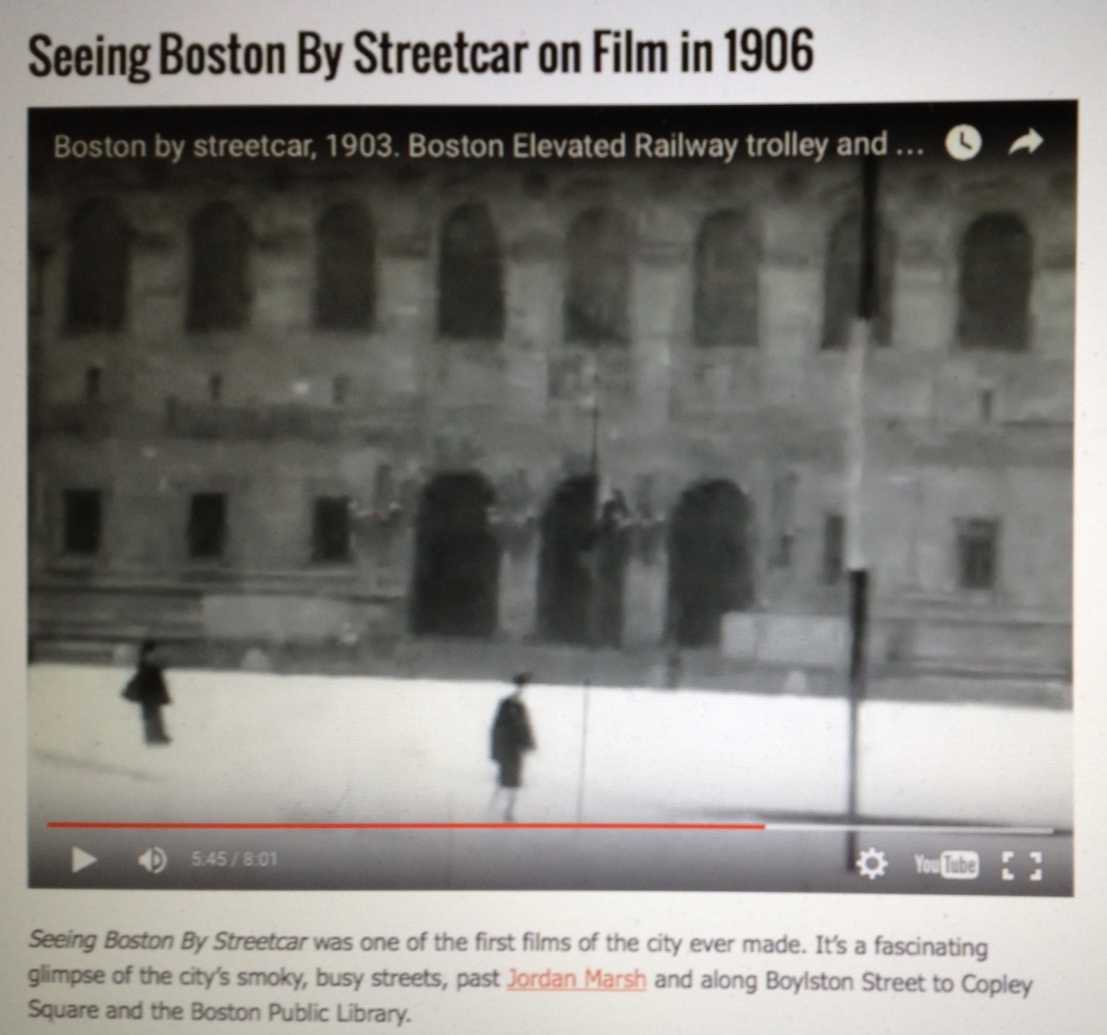
Screenshot of New England Historical Society webpage
If you have eight minutes to spare for a fun little historical video, go to this New England Historical Society page to view a streetcar ride in the heart of Boston during the early 1900s.
Those familiar with Boston will recognize a fair number of buildings that remain intact (more or less) today, including the Central Branch of the Boston Public Library, pictured above. With some unfortunate exceptions, mainly parts of the city where a myriad of “urban renewal” projects and other monstrosities (like the unsightly City Hall) supplanted fine old buildings, a lot of Boston’s vintage structures are still with us. Some happen to be of great historical significance.
As you watch the video, notice how the people are dressed. Perhaps reinforced by the grainy quality of the black & white video, they look very much the same. I was tempted to attribute this to Boston’s historic lack of fashion variety. But I think it has more to do with the fact that some 110 years ago, a lot fewer people expressed their individuality through choice of clothing, at least to the point where it would be noticeable on old film footage.
I love old films like this. They are typically raw, soundless, and absent any sense of story, but they’re the next best thing to being able to jump into a time machine for a quick walk through a city over a century ago.
***
Hat tip to Rosina-Maria Lucibello for this video.
First-time sojourn across the pond
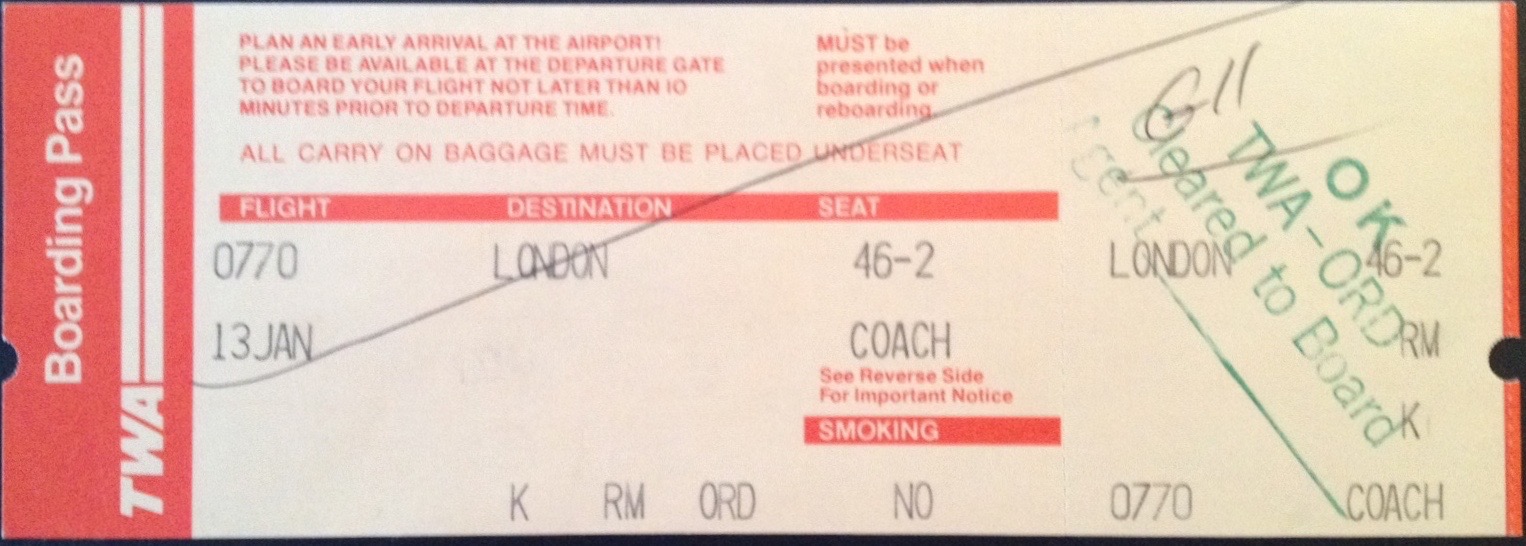
Thirty-five years ago, I joined a group of fellow Valparaiso University students at Chicago’s O’Hare airport, where we would board a TWA flight to London. We were to be the 27th group of VU students to spend a semester at the University’s overseas study centre in Cambridge, England, and the long flight was the first big step of our journey.
We landed in London the next morning and boarded a coach for Cambridge. Later that evening, bleary-eyed but hungry, we would gather for the first of many group dinners, this one featuring American-style pizza at a place called Sweeney Todd’s.

I was embarking on the most formative educational experience of my life. The semester would create enduring memories, new perspectives, and lifelong friendships. The seeds it planted permeate my life today, ranging from the way I live, to my choice of vocation, to how I spend my typical day.
As I have written here before, despite my penchant for nostalgia, there aren’t many times of my life that I’d actually like to relive. But if I could enter a time machine to relive this one, I’d jump in right away and fasten my seatbelt.

Among study abroad offerings, a semester in England spent largely in the company of fellow American students ranks with the gentlest invitations to get beyond one’s comfort zone. Nevertheless, for a young man born and raised in northwest Indiana and not particularly adventurous by nature, those five months away were life changing and world expanding.
Our academic fare was pretty basic, a cluster of survey-type courses in British history, British drama, European geography, and art appreciation designed largely to introduce us to our new surroundings. Group trips, extended weekends, spring break, and the weeks following the end of the semester allowed for travel and exploration. I did a spring break trip through Scotland and Ireland, as well as a brisk three-week, post-semester jaunt through Western Europe (France, Switzerland, Austria, and Germany), traveling alternately with fellow VU students and on my own.
However, I was not a frequent weekend sojourner; I enjoyed the old university city of Cambridge and tended to stay there. When I did travel, London was by far my favorite destination. I felt very much in my element in those two places.

I loved going to movies, plays, bookstores, and lectures in Cambridge. I joined the Cambridge Union Society, a famous debating and cultural activities club run by ambitious University undergraduates, some of whom already had set their sights on election to Parliament! The day I joined, I attended a formal debate on British economic policy. Among the speakers was economist John Kenneth Galbraith, who would become one of my intellectual heroes.

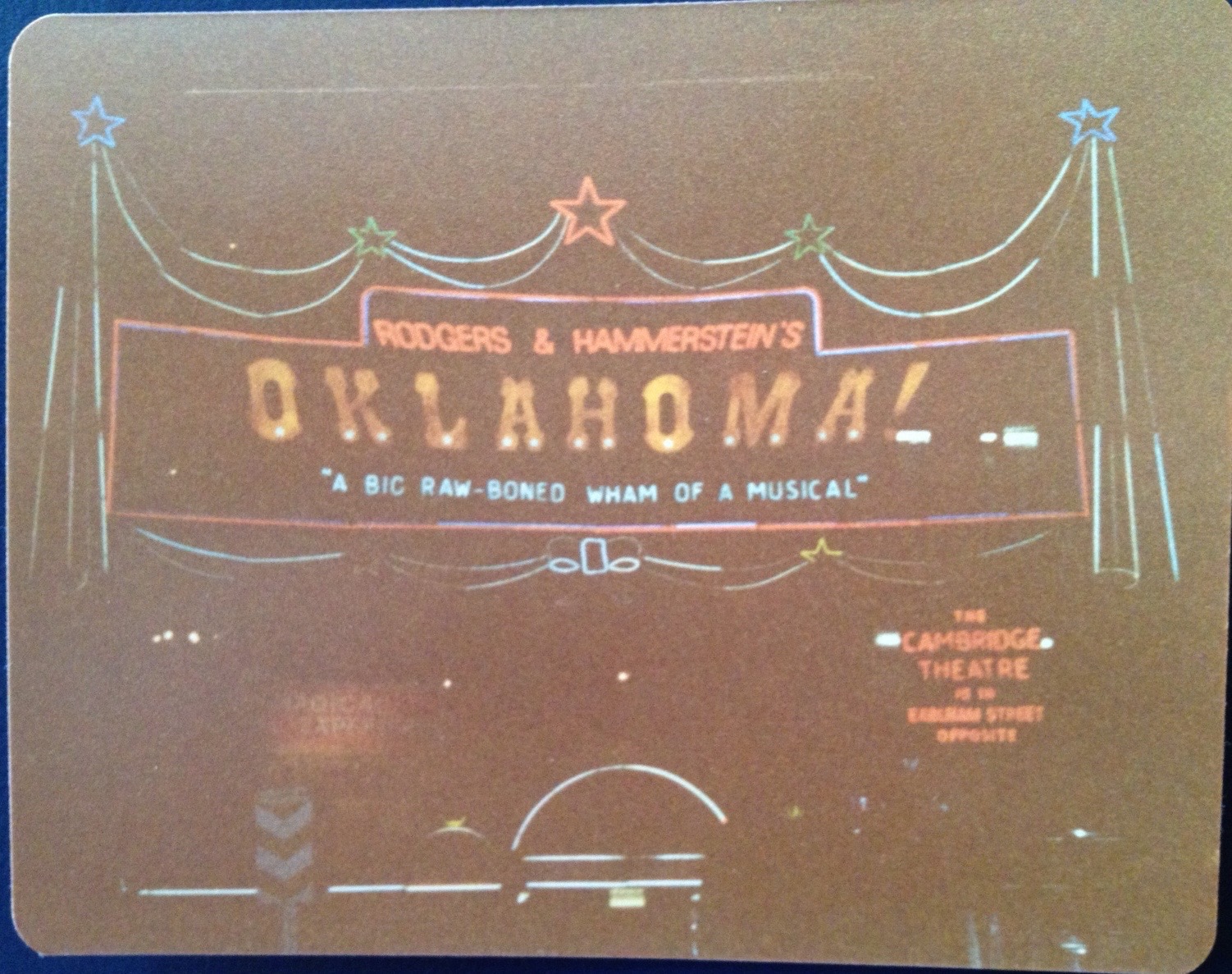
During visits to London, museums and plays were my main focus. Our theatre course required that we write a series of play reviews. It is only fitting, given my parochial outlook, that my first review was of a West End production of “Oklahoma!,” the classic American musical.
Given the personal significance of this experience, one might guess that I had planned to participate in a study abroad program from the time I first stepped on campus. Not so! I signed up mainly because good friends with whom I worked on the campus newspaper were going, and I wanted a change of scenery.
During my interview for admission to the Cambridge semester program, I managed to sling some mildly articulate fertilizer about expanding my intellectual horizons, but truthfully I had no idea what I was talking about. This thin level of cultural depth, matched by a healthy dose of post-adolescent callowness, followed me overseas, where I made most of my plans at the last minute and often tagged along with others who were more informed about what to see and do….

…As in tagged along, went along, or sometimes practically dragged along! On group tours to places like Warwick Castle, York, and Stonehenge, I went because they were on the schedule. During spring break stops in Edinburgh, Loch Lomond, Loch Ness, and other parts of Scotland, I went because five of us rented a car and drove north. (My own choices led to questionable decisions, such as heading over to Belfast, Northern Ireland, during a tumultuous and violent time there.)
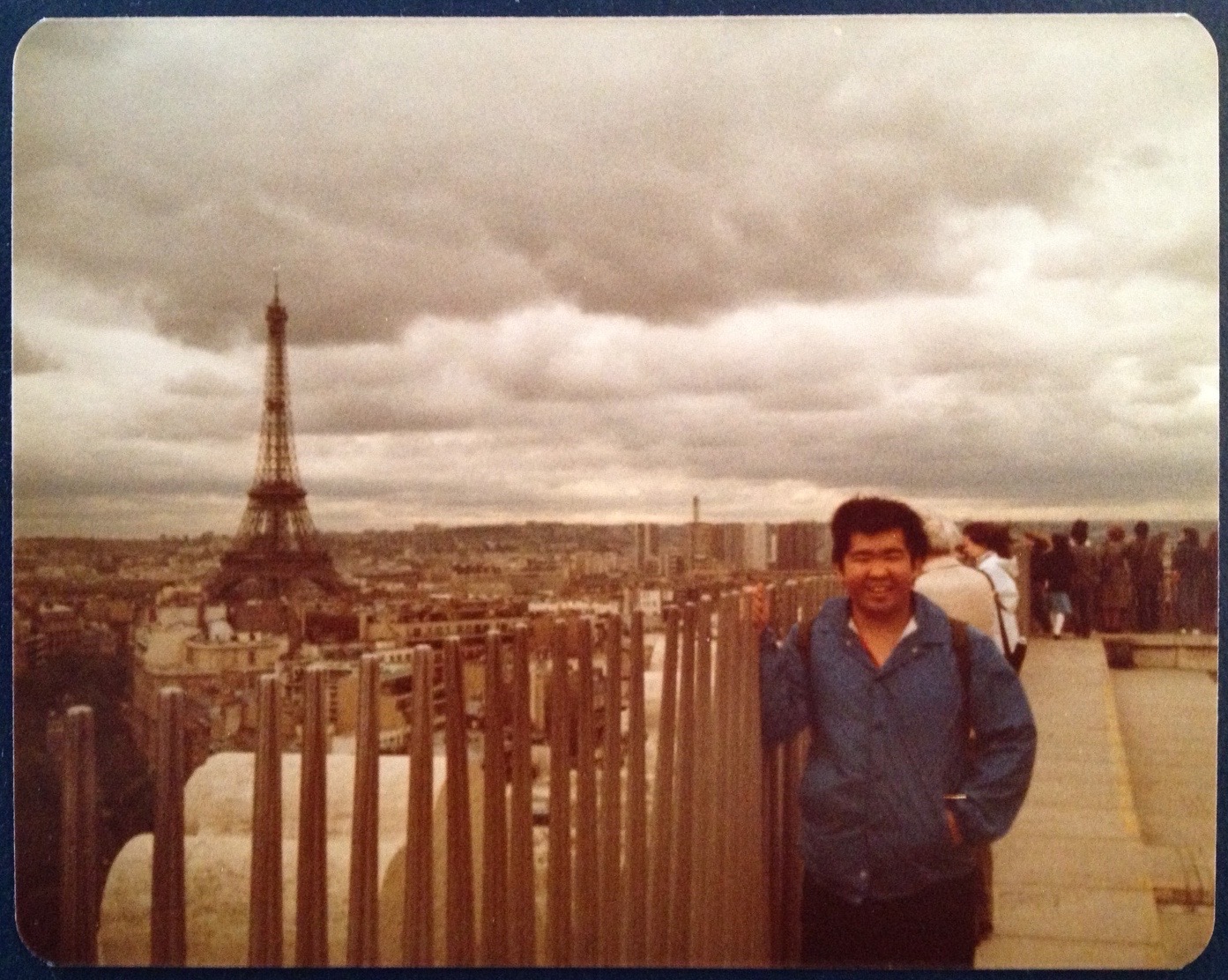
I was hardly more intentional during my post-semester trip to the European continent. I explored the Left Bank of Paris, hiked in the Swiss Alps, and went on “The Sound of Music” guided bus tour in Salzburg mostly because that’s what my friends wanted to do. (I did take a memorable solo trip to Berlin, with the Wall still intact.)
But it all stuck and left deep impressions. I will give my young self credit for understanding this as the semester went on. I knew that I was very, very fortunate to be having that experience.
Of course, I realize that in waxing nostalgic about my semester abroad, I am something of a cliché. The world is full of American collegians who hopped on a plane bound for Europe and returned with a boatload of breathless stories about visits to “amazing,” “incredible,” and “fascinating” sites that, umm, countless millions of others have seen as well.
But I can’t help it. That semester had a fundamental impact on me, and I cannot imagine what my life would be like had the opportunity passed me by. I know that others in our cohort feel the same way, though perhaps with a bit less intensity.
Which leads me to a final, very important point: I had no idea that I would stay in touch with so many people from this group, yet lifetime friendships emerged from our semester together. In fact, every five years we gather for a group reunion, which typically includes sharing many of the same old stories, accompanied by lots of laughter. We’re now planning our next reunion for this summer.
And so, I plead guilty to being among those who look back at such times with great fondness and gratitude. Amazing, incredible, and fascinating, indeed.
Are used bookstores making a comeback?

Are used bookstores on the comeback trail? Michael Rosenwald reports for the Washington Post that this may be the case. He starts his piece with a tale of an entrepreneurial book lover who is opening a new store:
Early next month, Pablo Sierra is opening a used bookstore in Northwest Washington — an unlikely bet in the digital age made even more inconceivable, given that his only experience with books is reading them.
“I guess it is pretty crazy,” Sierra said, echoing an observation shared by some of his friends.
Or maybe not. Sierra, like other book lovers, has read articles about slowing e-book sales and watched as independent bookstores such as Politics and Prose thrive, catering to readers who value bookish places as cultural hubs and still think the best reading device is paper.
He adds that “(w)hile there are no industry statistics on used-book sales, many stores that survived the initial digital carnage say their sales are rising.”
We can only hope that this is true. The vitality of used bookstores is a leading indicator of whether we live in a literate, reading, thinking society. They offer a chance to obtain new treasures that may be out of print today, not to mention provide an opportunity to recycle books that have outlived their usefulness to their original owner. When you walk into a used bookstore, you never know what discoveries await you.
Singing in the New Year

Performing a Rodgers & Hammerstein classic at open mic night (Photo courtesy of Adeline Moya)
In looking back at 2015, one of the highlights for me was doing more singing. Previously I’ve written about the weekly singing classes I’ve been taking for years at an adult education center in Boston (e.g., here and here). From those classes has emerged a cohort of folks who have moved their singing up a notch to participate in cabaret-style open mic nights at a nearby club. It means that during some weeks, we’re standing up to sing in front of others on multiple occasions!
Most of us are not experienced performers; many among our group haven’t done any real singing since school days. We have all felt the butterflies in facing an audience to sing alone. Yet we are drawn to this activity because it brings us great satisfaction and enjoyment. For me, it’s a chance to revel in the old standards that I’ve been drawn to for years. Give me the Great American Songbook stuff from the 20s through 50s any day, and I’ll be happy.
There is a therapeutic component as well. Singing is a form of mindfulness practice for me. It’s an invitation to be in the moment, doing something enjoyable. In both singing class and open mic nights, enthusiastic, supportive applause is the norm, with not a boo to be heard. Both settings provide safe, positive environments, shared with a wonderful group of people.
With these experiences at the core, I’ve noticed that singing has manifested itself in other venues of my life as well, including karaoke nights with (of all people) law professors and lawyers, an annual workshop on human dignity, and even a traditional Thanksgiving feast with family and friends. It’s good for the soul, and I look forward to doing more of it during the year to come.
Welcomed year-end perspectives from across the pond

Visits to England over the years have given me a great appreciation for two venerable news periodicals published there, The Economist and The Guardian. A venerable staple in England, The Economist, has become very popular in the U.S. The Guardian, a long-time British daily newspaper, now offers a weekly edition perfect for those of us in other nations.
Of the two, The Economist is the better known. Published since 1843, it favors free-market economics and globalization, while staking moderate and occasionally liberal positions on social issues. All articles and editorials are unsigned, and great care is taken to produce each issue with a consistently understated, analytical, and often witty tone of voice. For liberals like me, it offers a thoughtfully reasoned, contrasting point of view.
The Economist‘s holiday double issue has long been an annual treat. Loaded with features on lively, quirkier, more offbeat topics than its normal fare — see the pieces under “Christmas Specials” from this year’s holiday issue — it’s an enjoyable way to spend a more contemplative turning of the calendar.
The Guardian has made a big American visibility push in recent years, especially online, with increasing coverage of major news events in the U.S. With its generally liberal social, political, and economic perspectives and a punchier style of writing, its weekly edition — global in scope and drawing from the Observer, Washington Post, and Le Monde — is emerging as an informative, left-leaning counterpart to The Economist.
The Guardian Weekly‘s year-end issue isn’t quite as elaborate as The Economist‘s, but it, too, is an informative assessment of the year behind us and in front of us.
Both periodicals are somewhat pricey as print subscriptions, so some may prefer to check them out online. For news junkies like me, they offer interesting, informed, and global alternatives to so much of the celebrity-driven drivel of typical American “news” coverage and the noisy, sound-bite yammering of our cable news stations.
Hawaii calls: My first bout of nostalgia
Given my frequent bouts of nostalgia, I thought I’d delve way back into my boyhood to trace how this has been a natural state of affairs for me. Indeed, while we often associate nostalgia with memories of people, events, and experiences of long ago, I recall having these feelings as early as my grade school years.
In fact, my original bouts of nostalgia were grounded in family trips to see relatives in Hawaii, when my brother Jeff and I were very young. These visits occurred every few years, and they created lasting memories. When one of the local Chicago area TV stations would run episodes of “Hawaii Calls,” a syndicated travel program that included many of the touristy Hawaiian songs we learned during our visits, I would find myself holding back tears over memories of our own travels to the Aloha State — memories that may have been only a year old!
By the time I entered my teen years, and proceeding into my college days, nostalgia was a natural, common state for me. During those years I also discovered my penchant for historical nostalgia, that is, feeling a very emotional connection to defined stretches of the past that preceded my arrival. America’s “Roaring Twenties” constituted the first such period to capture my fascination. No doubt that my enjoyment of history is fueled by this energetic tie.
As I alluded to above, like many, I associate memories with music. My nostalgic episodes, real and historic, typically have strong musical connections. It’s appropriate that I would link in this post a couple of classics from Don Ho, one of the iconic performers of popular Hawaiian songs. Both were favorites during our visits to Hawaii many years ago.
Adding a Little Free Library to my favorite store in the ‘hood

LittleFreeLibrary.org is a non-profit organization devoted to promoting, well, Little Free Libraries, tiny, handcrafted wooden boxes that invite anyone to take a book or leave a book. From their website, here’s the short version of how they got started:
In the beginning—2009–Todd Bol of Hudson, Wisconsin, built a model of a one room schoolhouse as a tribute to his mother, a former school teacher who loved reading. He filled it with books and put it on a post in his front yard. His neighbors and friends loved it. He built several more and gave them away. Each one had a sign that said FREE BOOKS. Rick Brooks, of the University of Wisconsin-Madison, saw Bol’s do-it-yourself project while they were discussing potential social enterprises. Together, the two saw opportunities to achieve a wide variety of goals for the common good. Each brought different skills to the effort, Bol as a creative craftsman experienced with innovative enterprise models and Brooks as a youth and community development educator with a background in social marketing.
Recently I arranged with the co-owners of City Feed & Supply, one of the wonderful, socially conscious businesses in my Boston neighborhood of Jamaica Plain, to place a Little Free Library in their Boylston Street store. City Feed is a popular neighborhood gathering spot, offering a variety of coffee drinks, freshly-made sandwiches, and health-minded groceries, and I thought it would be a perfect home for a Little Free Library.
I took a snapshot of the first collection of books to be included in the box. I also posted announcements to some of the J.P. online bulletin boards and Facebook pages. In less than a week, it’s already attracting some reader traffic!
Of course, I must confess my ulterior motives in promoting this idea. I have way too many books, and being able to share some of them with others helps me to thin the herd. I could spend most of the next ten years simply reading the books I’ve accumulated and still not get through them all.
I forgot to take a new exterior shot of City Feed to go with the photo above, but here’s a scene from two winters ago. It’s a fitting view. After all, as the weather grows colder, the temptation to curl up with a good book, a cup of coffee, and a nice little morsel will be all the greater!

Imagining the Ye Olde English coffee houses
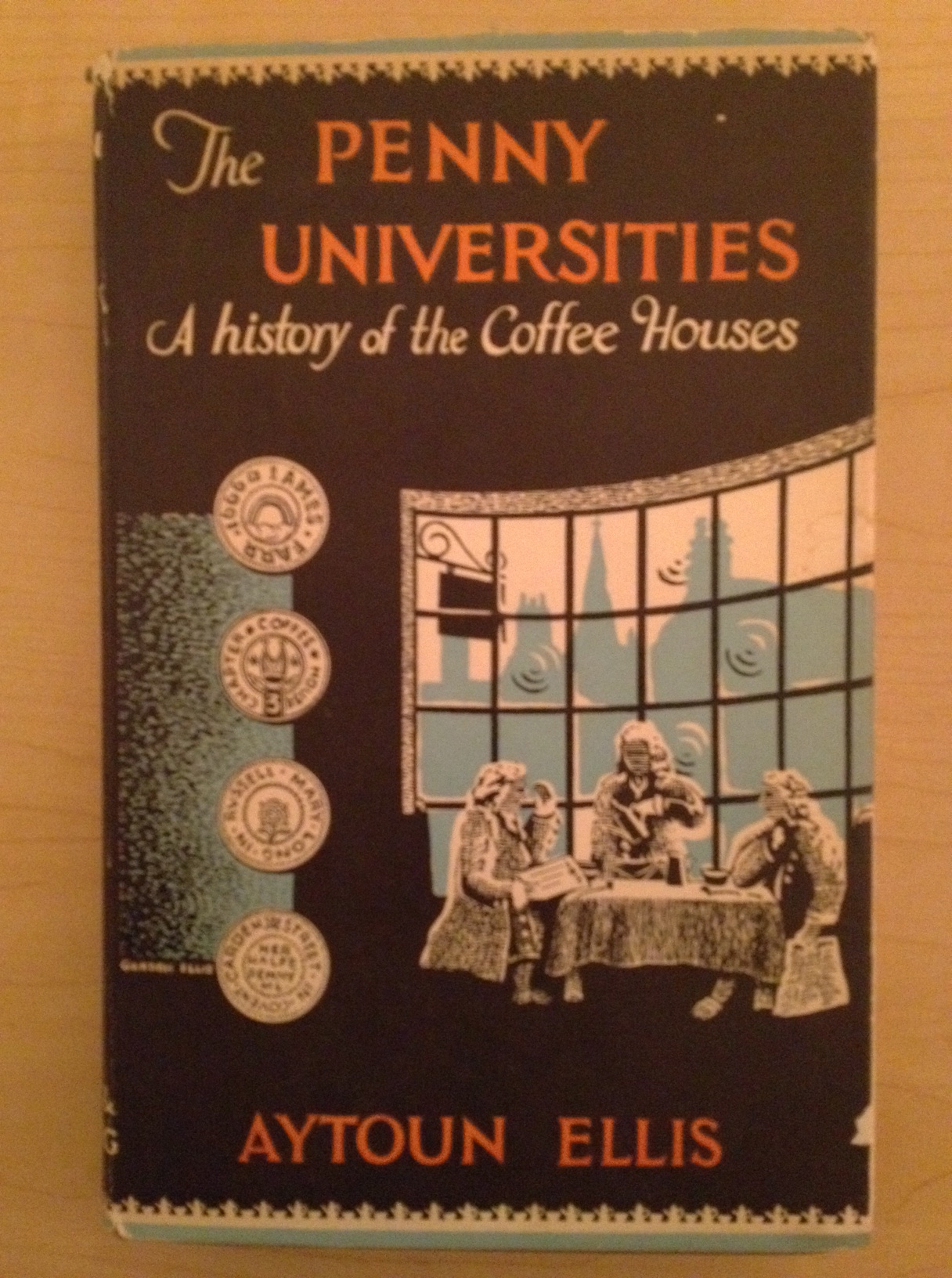
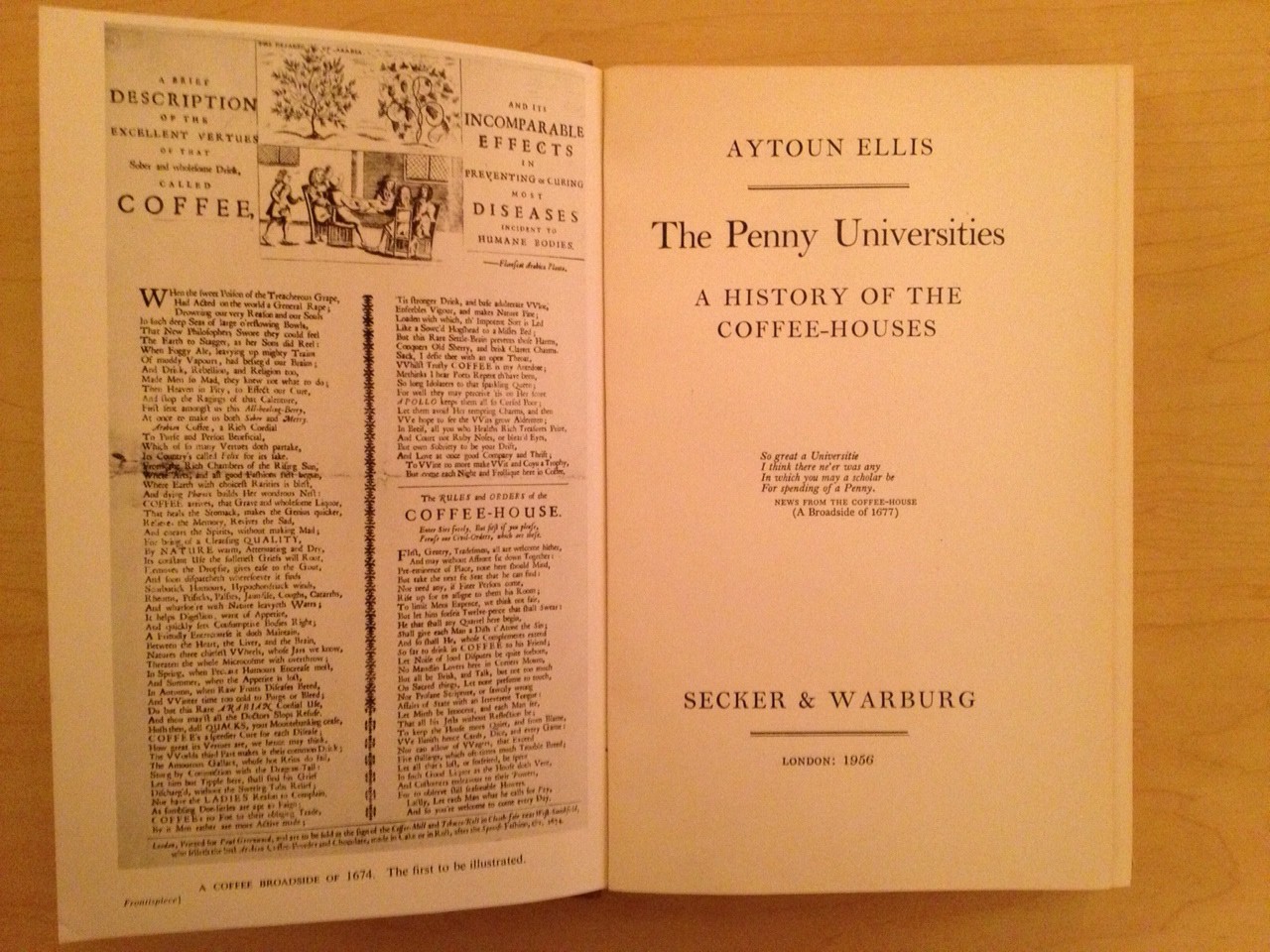
In 1750, the first coffee house in England opened in Oxford, and it wouldn’t take long for the concept to take hold across the country. According to Aytoun Ellis’s The Penny Universities: A History of the Coffee-Houses (1956), by the end of that century, London was home to over 2,000 coffee houses, located throughout the city!
Ellis used the term “penny university” because a penny would gain entrance to a place of strong brew, the newspapers and periodicals of the day, and lively discussions about politics, literature, and commerce. Not surprisingly, when it came to ambience, location mattered a lot. Coffee houses located near universities filled with intellectual exchange. By contrast, much business would be conducted at coffee houses located in commercial districts. And still others would be host to gambling and other less refined activities.
Though I’d enjoy a quick time machine visit to a few of these old coffee houses, I doubt that I’d long to spend much time in them. I imagine that many were pretty loud and boisterous places, whereas my ideal of a coffee-consuming establishment is a café quiet enough to read or do a little work. Some brew to help awaken the mind and a place to sit down and read (or think) big thoughts . . . I like that.
What are your TV series binge-viewing pleasures?
In the era of DVDs, DVR devices, and streaming services, binge-viewing (or binge-watching) is a guilty and comparatively affordable pleasure. The term is usually applied to marathon viewings of television shows, but movies, mini-series, and documentaries also count.
For this post I’ll stick with TV series. Here are some of my favorite binge-viewed series from over the years:
- “The Wire” — David Simon’s compelling depiction of gritty Baltimore is a cop show on the surface, but in reality much more. This places high on a lot of binge-view lists.
- “Homicide” — If “The Wire” wasn’t David Simon’s masterpiece, then “Homicide” — a more conventional cop show set in Baltimore — would be in the running for that honor.
- “Prime Suspect” — Helen Mirren as DCI Jane Tennison. This intense series excels on so many levels.
- “The West Wing” — The final season and a half, featuring the home stretch of the Bartlett Administration and the campaign to elect his successor, is terrific political drama, not to mention a sad reminder of our current real-life civic discourse.
- “Downton Abbey” — I didn’t know what all the hoopla was about until I sat down with season 1 and quickly got hooked. I am going to massively miss the upstairs and downstairs folks alike.
- “Horatio Hornblower” — Great, great seafaring tales, with superb cinematography and entertaining historical story arcs.
- “Foyle’s War” — Michael Kitchen’s Christopher Foyle is like a Sherlock Holmes with a stiff upper lip masking a soft heart, unraveling crime mysteries in the south coast of England during WWII and the Cold War.
- “Adventures of Young Indiana Jones” — Superb early 20th century history lessons wrapped into colorful tales of Young Indy, with lots of documentary extras on the historical figures and events depicted in the episodes.
- “Hill Street Blues” — A cop show from the 80s that elevated the genre and network television in general. Still compulsively watchable.
- “The Dick Van Dyke Show” — The only sitcom on this list! A classic in television history, also a depiction of a much more innocent world.
Someday…
I’ve never watched an episode of “Breaking Bad,” but I will someday. Friends have raved about it.
“China Beach,” set in the Vietnam War and starring the most excellent Dana Delany as nurse Colleen McMurphy, is one of my favorite shows ever, but I’ve never binge-viewed it. I will. I’m very curious to see whether it holds up.
Strange, but I’ve never watched “The Sopranos” and have no desire to give it a try.
An experiment
For years I was part of a wonderful, episode-by-episode e-mail exchange with college chums about “24,” featuring Kiefer Sutherland as the seemingly indestructible Jack Bauer. Thus, I never got a chance to binge-view any portion of the series. I’ve wondered what it’s like to binge-view a season in close to real time: Does watching “24” in something resembling its 24-hour cycle changes the experience of the series?
Okay, to be honest, this is an experiment for the day when I’ve got a lot more free time on my hands…but still, I’d like to try it.
The end
Binge-viewing does have its costs, not the least of which is that a given season or series must come to an end.
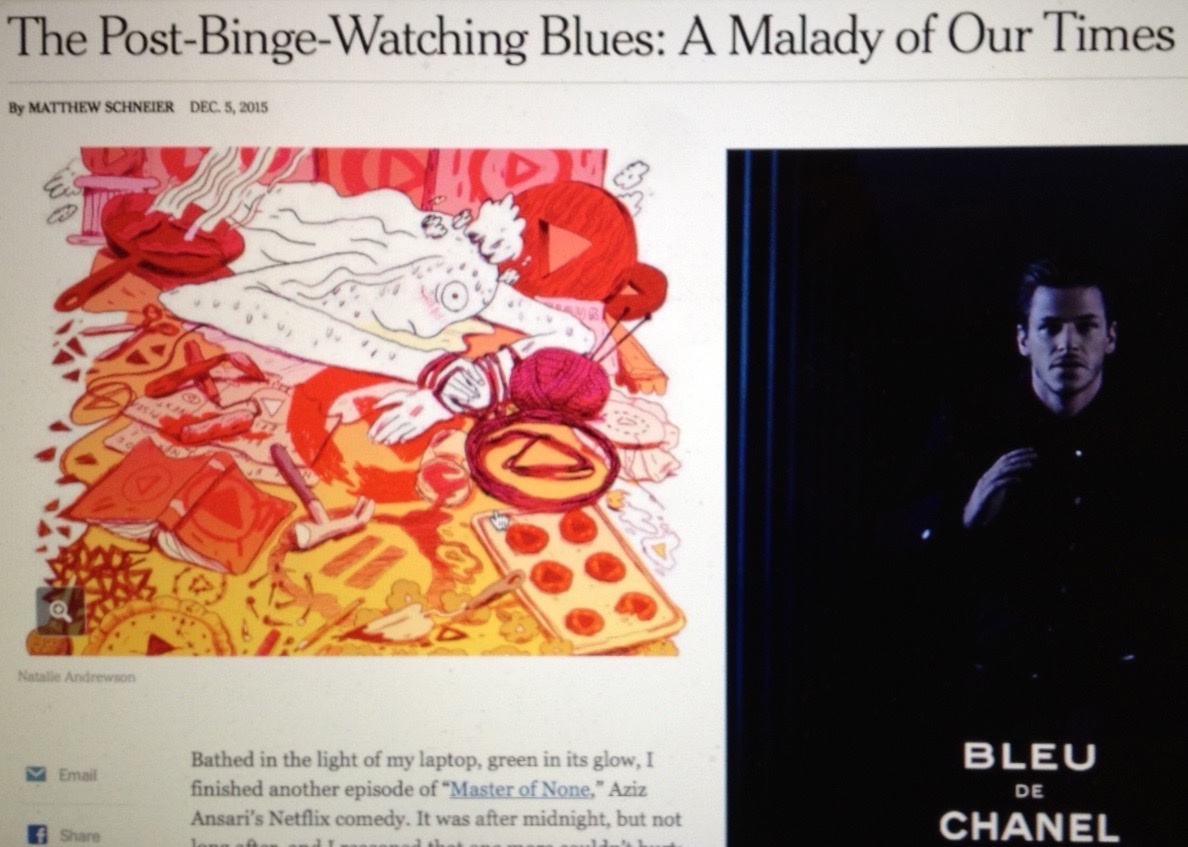
Matthew Schneier, writing for the New York Times, shared his feelings about approaching the end of a binge view of Netflix’s “Master of None” season 1:
I felt anxious, wistful, bereft in advance; I’d eaten up nine episodes in only a few days, liking them more than I’d expected to. Once finished, there’d be no more until the next season — if there was a next season, which has still not been officially announced. Unlike on network TV, where my fix would be parceled out week by week over the course a season, I had binged.
After concluding that he is not alone in lamenting the end of a binge view of an engaging television show, he put a label on it: Post-binge malaise.
In TV world, as in many instances of real life, all good things must end. And so we must deal with the final credits of a favorite series passing before our bleary, binge-viewed eyes.
Big Apple ghosts

Flatiron Building, 23rd Street, Manhattan (photo: DY)
Of all the places I have lived for long stretches of time — Northwest Indiana, New York City, and Boston — the Big Apple has made the deepest, lasting personal impression. I lived, went to law school, and worked in New York for 12 years, and the place simply imprinted itself on me.
Following a Thanksgiving visit to New York, I traveled to the city again for an annual workshop sponsored by Human Dignity and Humiliation Studies, a global network of scholars, practitioners, writers, activists, and students dedicated to advancing human dignity and reducing the experience of humiliation. It was an enjoyable and intense couple of days, spent in the company of a remarkable group of people.
The visit gave me a chance to spend a couple of extra days in New York. As usual, I got together with my awesome cousins (cousin Al, his wife Judy, and their youngest son Aaron), this time for a couple of super duper meals. But I also took some time to walk around the city.
For me, walks in Manhattan are a weird mix of the present and the past. I enjoy visiting New York for its own sake; it remains one of the most stupendous (and expensive) places on Earth. But I also see ghosts of the past everywhere: Ghosts from my years living there, ghosts from past visits, ghosts of a New York that I never experienced personally. So many Manhattan sites bring back an assortment of random, vivid memories.
One of my long-time friends, also a New York ex-pat, commented on Facebook that I’ll always be a 1980s New Yorker. She was spot-on with her observation. Although I was a pretty clueless young man back then, there’s something about that decade, lived in that city, that forever will be a big part of me.
But here’s a twist. I don’t yearn to move back there. I love my visits to New York, and if someone benevolently dropped a big pile of money into my lap, I’d consider returning. Nevertheless, I’d be ambivalent about moving back to a place that I so strongly associate, however positively, with my past. Does that sound odd?
For me, Boston has been more of an acquired taste, quite unlike New York, which I fell for immediately. But Boston also has been where I’ve done my most important work and met some wonderful people. Will I stay here forever? Who knows!? For now my present is much more grounded in Boston, and thus it is home.
Besides, despite my penchant for soggy nostalgia, I know that we often make the past look better by adjusting the rear-view mirror. It sometimes makes for a softer but less-than-accurate view….
 Musings of a Gen Joneser
Recent Comments