Classic movie report: April 2015

I declared as one of my New Year’s resolutions that I would watch more classic old movies, so each month I’m devoting an entry to how I’m doing with it. Here are my two selections for April:
WarGames (1983) (3.5 stars out of 4)
WarGames may not be a great movie, but I find it so eminently entertaining and re-watchable that I have to give it 3.5 stars.
Matthew Broderick stars as David Lightman, a young computer maven and high school student who manages to hack into the U.S. Defense Department’s new super computer. In doing so, he engages its artificial intelligence in a way that almost causes a nuclear war. Ally Sheedy plays his adorable sidekick, Jennifer Mack, and the two become partners in crime.
The chief adults in the movie are Dabney Coleman as Dr. John McKittrick, the computer expert who persuaded the government to adopt the new mainframe, and John Wood as Dr. Stephen Falken, a withdrawn scientist whose theories become central to the story.
WarGames has its serious side. On occasion it has been cited by scholars as an excellent pop culture depiction of how Cold War mentalities and an uncritical worship of the “wisdom” of computer technology could lead us down a disastrous path.
But it’s also a ton of fun. Broderick and Sheedy are well-paired in this movie, and their scenes together include some hilarious high school moments and (now) nostalgic depictions of early personal computing and video games.
For me it pushes nostalgia buttons as well. I first saw WarGames when it was at the movie theaters in the summer of 1983. It was right after my first year of law school, and I was living in one of the law school dorms. In consultation with a couple of friends, we picked it out of the Village Voice listings and decided to give it try. I enjoyed it from the opening scenes, and I’ve watched it many times since then.
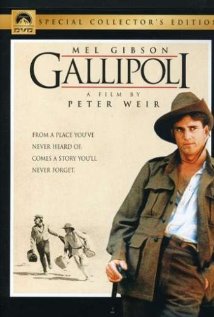
Gallipoli (1981) (3.5 stars)
Mel Gibson and Mark Lee co-star as young men from Western Australia who enlist in the Australian Army during the First World War. They find themselves deployed to the Ottoman Empire (now modern day Turkey), as part of the Allied Gallipoli Campaign in 1915.
The film starts as something of a buddy movie with some 80s-style artistry, but by the time the climactic battle scenes arrive, it is a story of the terrors of trench warfare. It also reinforces a common First World War theme of utter futility, with senior officers repeatedly ordering their troops to go “over the top” in charges met by murderous machine gun fire.
Gallipoli isn’t the best of the WWI movies, but it belongs on a list of “should watch” films about the war, including the classic All Quiet on the Western Front and the excellent Paths of Glory.
In terms of 20th century history, I relate more strongly to the Second World War than to the First, but that gap is closing as I learn more about the Great War during this period of centennial observation (1914-18). It is a fascinating historical story, one infused with a haunting sense of loss due to the brutality of trench warfare, as well as the knowledge that the terms of surrender eventually imposed on Germany would help to fuel the rise of Nazism in the decades to come.
The Apple Watch: Cool, but too close to being a computer implant for my taste

Screen shot of the Apple Watch webpage
So if the hype is accurate, the Apple Watch is the Next Big Thing in digital gadgetry. According to the product descriptions, it’s basically a mini-computer that doubles as a wristwatch.
I’m betting that the Apple Watch will be very popular. Once it creates a new market for watches that do everything except walk and chew gum — and Apple has a knack for creating new markets — it will spawn many imitators as well. (Surface Watch, anyone?)
While I own my share of Apple devices, I’m gonna take a pass on this one. When it comes to smaller e-gadgetry, I’m already ambivalent about cellphones, to put it kindly. Especially if I’m not traveling, many days can go by without my bothering to check my smartphone. To me, the Apple Watch seems to be only a step or two away from surgically implanting computers into our brains.
I know this is an overreaction from a 50-something who now sounds like a Luddite. But I’m really not anti-technology. I’m on my computer for hours each day. And hey, I do write two active blogs. It’s just that personally speaking, there’s a point at which the gadgetry is too close to becoming a part of me, literally and figuratively.
As for my friends who are drooling to get their paws on an Apple Watch, I do get it, because that’s how felt about the iPad. I would go into Apple stores and play with the machines there, while trying to convince myself that so long as laptops were around, these tablet thingies would be expensive indulgences at best. My thriftier instincts lost out, however. Fortunately the iPad would prove to be much more than a plaything, and now it often goes wherever I go.
I read an entire, hard copy book — and enjoyed it!
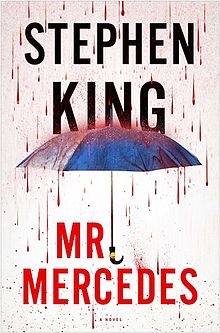
This is a rather pathetic title for a blog post, especially by someone who calls himself an avid reader. But lately my reading has been very task-oriented, both books and articles alike, and almost entirely of the non-fiction variety.
So I credit Stephen King for serving up a novel that I eagerly read from start-to-finish over a week’s time. Mr. Mercedes (2014) is King’s foray into hard-boiled detective fiction, and it’s a good one. The main protagonist is a retired police detective, Bill Hodges, who gets caught up in an unsolved multiple homicide. The perpetrator — identified very early in the story (no spoiler alert necessary) — is a pretty messed up dude with serious mommy issues.
I enjoyed this book, and easily place it in the “didn’t want it to end” category. Thus I’m delighted that King launched it as the first of a planned trilogy featuring Hodges and his sleuthing pals, with the next title expected sometime next year.
Back in January, I sang the praises of the latest incarnation of Amazon’s Kindle e-reader, especially for folks who travel often. However, last weekend I decided to take this hardcover edition of Mr. Mercedes with me for a quick out-of-town visit with friends, even though it took up precious backpack space. (Although this is not among King’s longer works, it still clocks in at a hefty 440+ pages.) I’m glad that I did. Reading Mr. Mercedes as a printed book rather than as an e-book was such a pleasure. Hey, it’s not often when you’re wishing the plane ride was just a little bit longer so you can squeeze in another chapter!
I know it has become something of a cliché for those who love the printed page to say they prefer the tactile experience of reading a physical book to the convenience of using an e-reader. Nevertheless, count me among them. Even with my fifty-something eyesight (oy…) and frequent travel schedule, there remains something very cool about reading an old fashioned printed book.
Have our gadgets sapped some of the adventure out of travel?

You’ll find a lot of advice about gadget management in today’s leading travel guidebooks
During my recent trip to Chicago, I was talking with one of my friends about how our digital gizmos — cellphones, tablets, laptops, and so forth — have changed the experience of travel. In some ways, they have greatly enhanced travel in terms of access to information, safety & security, and keeping in touch with folks back home. But at the same time, I suggest that they have sapped some of the adventure out of travel by shrinking the world so much that it’s harder to get that sense of exploring the Great Elsewhere.
You could be visiting a wondrous National Park, while talking to a friend back home on your cell. You could be gazing at a beautiful European cathedral, while texting a family member with a reminder to water the plants at home. You could be sitting on a beach with the Pacific Ocean before you, while reading an e-mail about a pending project.
The fact that our electronic gadgets now tend to follow us everywhere is hardly a cutting-edge insight. But I submit that we haven’t fully appreciated the trade-off between the advantages of instantaneous communications and the sense of being away that even the most modest of sojourns once could deliver more easily.
Perhaps you have to be of a certain age to get this. If you are old enough to have experienced travel during the B.C.E. (Before Cellphone Era), then it’s much more likely that you understand where I’m coming from.
My most formative travel experience was a semester abroad in England back in 1981 B.C.E. Now, I would’ve killed to have access to something like the Internet back then, when even long-distance international phone calls were student budget busters. But I also know that the sense of distance I felt, while sometimes a source of homesickness and anxiety, was part of the grandness and personal growth of the experience. It also was a time when the art of letter writing was not lost on us, and daily mail deliveries were filled with anticipation. Quite a different experience than checking your inbox.
Sometimes our gadgets create interesting twists. A few summers ago, I was part of a storm chase tour in the heart of America’s Tornado Alley. While the storm we were on showed promise of developing into something big, the real action was back in Massachusetts, where a freak severe tornado captured the weather headlines for the day. Two of us on the tour were from Boston, and we followed the breaking news with cellphones and iPads. Cool that we could do this, but it distracted our attention from what was right in front of us.
We can’t go back on this one. Oh, I suppose it’s possible that on my next longer trip, I could leave behind anything that has a microchip and requires recharging, but I know darn well that I won’t. And try as I may to ration my time online, I’ll be taking regular looks at my e-mail and favorite Internet sites. Even progress has its compromises.
Throwback Thursday: Aloha to an old warhorse

Two weeks ago I wrote that my old television set had seen its best days and that I was awaiting a replacement. I’m all set now, with a new flatscreen unit and a technologically upgraded cable package. As I made the transition, I decided it was time to say goodbye to my 22-year-old VCR machine. Here it is, pictured above, unplugged and soon to be disposed of, after many years of steady service.
Despite my enjoyment of movies, I was a latecomer to VCRs. Living in New York, I was happy to see old films in the city’s several revival movie theaters, and I was living on a tight budget to boot. But as VCRs became commonplace and more affordable, I finally took the plunge. In the summer of 1992, I went to an electronics store, pretty much arbitrarily picked out a VCR (my usual quick-hit approach to shopping), and set it up in my Brooklyn apartment.
I wouldn’t want to estimate how many hours I spent watching movies using my VCR that summer, as the answer would be highly suggestive of addictive behavior. Suffice it to say, however, that I was a loyal supporter of video stores near work and home. As I wrote last year in a lament over the closing of Blockbuster video stores, it was such a treat to survey the shelves of these stores in search of old favorites and new discoveries.
Given how many movies have played on that machine, it’s something of a miracle that it lasted so long. Over the past decade, of course, I’d morphed over to DVDs, but on the few occasions when only a VCR version of a movie or show was available, I could pop in the cassette and watch it.
I tend to be resistant to jumping to new technologies right away, so these days I find myself preferring DVDs to streaming video. My Netflix subscription still includes the discs, and I continue to get a short spark of little-kid-like happiness when a red envelope shows up in my mailbox. Alas, my luck with DVD players has not been as good, and it looks like I’ll be buying a new one soon. Perhaps I’ll upgrade to a high-def model. They seem to have dropped in price in recent years, and now I have a TV set that justifies the purchase.

When the TV goes dark (Somehow, I’ve managed)

Free clip art courtesy of clker.com
For the past ten days, I’ve been without a functioning television set. This is not exactly the stuff of deprivation or sacrifice, but it is a tad inconvenient, especially now that the pro and college football seasons are in full swing. Fortunately, help is on the way. The other day, I went to an electronics store and ordered a new TV — a fairly basic and surprisingly affordable widescreen model — which should be delivered and set up by the end of the week.
The TV I ordered represents my first purchase of a brand new model since buying a $99 cheapo set some 20 years ago! Every other TV has been a discard or a used one, including the 15-year-old kaput model that will be carted away soon.
Many moons ago, I didn’t even have a TV. During law school, I went without. I listened to the radio a lot, and I really enjoyed talk radio programs at a time when that genre was more conversational and fun, rather than a stream of political soapboxes. On occasion I’d go to the TV room in the law school dorm to watch a favorite program or two, or maybe one of my friends would have us over to watch something, but that was about it.
Right after law school, I was working as a Legal Aid lawyer and was barely scraping by, so I didn’t have a TV until some benevolent friends gave me an old portable black-and-white set that had been gathering dust. It may seem hard to imagine that I was quite happy with the social and entertainment options in my life at the time without cable or a VCR (these were the pre-DVD and streaming days, folks), but it really was so.
You know what I’ve rediscovered during this brief time? Listening to football games on the radio can be fun, at least when your team wins. On Saturday I was pulling for Navy to beat Temple and for Notre Dame to beat Michigan. Good results there. But my beloved Chicago Bears took it on the chin against Buffalo, and the Patriots fell apart against Miami.
The weekend reminded me of when I was a kid, listening to games on the radio during a time when lots fewer games were televised.
Of course, this time around I also have the Internet, which I periodically accessed on Sunday to follow the fortunes of my two fantasy football teams. (Two wins there, baby!)
So…radio and the Internet. Old meets new.
Practically speaking, listening to games on the radio made it easier to get some work and chores done. I’m not glued to my TV set when it’s working, but even so I realize how easy it is to dump hours into gazing at the screen. I’ll keep that in mind once my new TV arrives and everything is up and running.
Video gaming now and then

From the Microsoft Store, Prudential Center, Boston (Photo: DY, 2014)
After spending good chunks of my 30s playing video games, I’ve kinda shrugged my shoulders at them since then. But the other day I walked by the Microsoft Store in Boston, replete with a demo of the latest Xbox system on a widescreen TV, and I couldn’t believe how good the whole thing looked.
Two kids were playing the EA Sports FIFA 14 soccer game, and the graphics were jaw dropping…sharp, authentic, and from a distance looking like a World Cup match. And the player movements, at least in the hands of these skilled game players, were incredibly realistic, again almost like watching a televised soccer match.
Back in the day…
Oh my, we’ve come a long way, baby, from the Sega Genesis and Super Nintendo systems that ate up many hours of my 30s!
Not to put down those classic game systems, which were the dominant platforms before the arrival of the Sony PlayStation. Both were powerful machines for their day, and developers squeezed every bit of computing power out of them to produce games that looked great and played deep.
It was on the Genesis, especially, that EA Sports carved out its dominant market share with titles like Madden Football and NBA Live, and I looked forward to every new release. But you didn’t have to be a sports fan to enjoy these gaming systems. Fantasy, adventure, arcade, strategy, and shoot-em-up titles also were in rich supply.
And then there was the original Nintendo Game Boy. Its graphics were primitive even by 1990s standards, but its portability and vast game library made it a hit.
The Genesis, Super Nintendo, and Game Boy systems also broke through to an older, mostly male market. The Game Boy was a favorite of male travelers, and on occasion articles about air travel trends noted how often flight attendants would encounter passengers too engrossed in their video games to notice the beverage cart going by.
And today?
I’m sure the graphics and game play of FIFA 14 are only the tip of the iceberg of today’s video game world. Presumably the library of games available today is even more appealing than back in the 90s, when I would frequent game stores.
As blown away as I was by this demonstration at the Microsoft Store, however, I didn’t find myself weighing a video game system purchase — at least not beyond a minute or two. Right now, video gaming wouldn’t fit into my already busy schedule. To really enjoy these games, it helps to be somewhat devoted to them. After all, the best video games have lots of depth to them, and the occasional player misses out on their richness.
But maybe someday, as other commitments and activities lighten, I’ll look over the popular gaming systems and rediscover the hobby. By then, Madden Football probably will come with virtual refreshments, so I can spare myself the real calories as I’m leading my Chicago Bears to their next (virtual) Super Bowl championship.
With the Sunday paper in a Boston café

(Photo: DY, 2014)
Before heading into the office today to pick up some work (I’m one of those academicians who embraces quirky work hours), I stopped by the Boston Common Coffee Company, a downtown café, for a late lunch. It is there, while enjoying a sandwich & greens, iced coffee, and part of a cookie, that I realized how weird I have become. No, it’s not that I’ve changed all that dramatically over the years. Rather, it’s how the world has changed around me.
You see, while sitting at a small table with my food, drink, and a few sections of the Sunday newspaper, I looked around and realized that among the 20 or so people in the café, I am the only one reading a newspaper. In fact, I’m the only one reading any kind of hard copy material at all. Just about everyone else, whether alone or in a small group, has a gadget or laptop out.
Of course, it was a younger group of customers, as befits a coffee place located among buildings of two urban colleges with dorms full of summer visitors. So the generational thing certainly was at play. By contrast, when I was in law school at NYU some 30 years ago, on any given Sunday you could go to a neighborhood coffee shop and see students trading sections of the Times, Daily News, and Post over a (usually late!) breakfast or brunch.
Though I get a lot of my news online, spending time with a hefty Sunday newspaper remains a treat for me. There’s a small sense of adventure in flipping through the sections to see what awaits me. And when coffee and a bit of good food are added to the mix, it makes for an extraordinarily pleasant way to spend part of a day.
In praise of the mundane and slow blogging

My triple decker condo building, on the right, Jamaica Plain, Boston (Photo: DY, 2014)
Commenting on my previous dramatic, pathbreaking post about coffee (NOT), one of my friends remarked on Facebook that I had a knack for making even mundane subjects sound engaging and interesting. That’s a real compliment for a personal blog — thank you, Holly!
That said, “mundane” isn’t exactly what inspired blogging, which first became popular roughly a decade ago as a way to publish breaking news and commentary on major events. In addition to serving that journalistic purpose, blogging also has grown into a medium for synthesizing information and for sharing analysis and opinion.
In any given week, I read a fair share of blogs for all of these purposes. And through my professional blog, Minding the Workplace, I attempt to contribute to that dialogue by writing about issues of employee relations, workplace bullying, and psychological health at work. On occasion, I even help to break a story within my realm of work.
However, I also find myself increasingly drawn to blogs about everyday life, hobbies, travel, memoirs, TV shows, books, sports, avocations, and anything else that isn’t about hard news, analytical thinking, and conflict. They offer interesting, entertaining, and sometimes fascinating windows into our daily lives. And since launching this personal blog last fall, I’ve come to enjoy writing about some of the more common or ordinary aspects of life, two words often used to define mundane.
Understanding “slow blogging”
To characterize these less momentous uses of blogging, I reference the term slow blogging, the philosophy and practice of which has been beautifully articulated in the Slow Blogging Manifesto by software designer and writer Todd Sieling. (He hasn’t updated his blog in years, but this post alone is worth keeping it online.) Here are a few snippets:
Slow Blogging is a rejection of immediacy. It is an affirmation that not all things worth reading are written quickly, and that many thoughts are best served after being fully baked and worded in an even temperament.
***
Slow Blogging is a reversal of the disintegration into the one-liners and cutting turns of phrase that are often the early lives of our best ideas.
***
Slow Blogging is a willingness to remain silent amid the daily outrages and ecstasies that fill nothing more than single moments in time, switching between banality, crushing heartbreak and end-of-the-world psychotic glee in the mere space between headlines.
The happily mundane
Maybe we need to make a more prominent place for slow blogging about the common and ordinary. We all want to live good, rewarding, purposeful lives. Many of us have a tendency to frame this in terms of milestones, such as major work accomplishments or family events. But perhaps we should spend more time appreciating and reflecting upon the everyday stuff as part of our search for that meaning.
So I leave you with this photo of my three-unit condo building in Jamaica Plain, Boston (“JP” to locals), taken on a dreary, wet, overcast day earlier this year. Having moved there in 2003, this is the longest I’ve lived anywhere since my childhood. Although my condo is nothing elaborate in terms of space, views, furnishings, or architecture, it’s a good home.
Equally important, as someone who doesn’t own a car, my place is a quick walk to subway (aka the “T” in Boston) and bus lines. The T’s Orange Line takes me into the city’s downtown area. Logan Airport and South Station (Amtrak) are short T rides away, a boon to frequent travelers such as myself.
My home is close to JP’s shops, stores, and restaurants. And when I’m hungry and don’t want to cook heat up something, I can bop across the street to the City Feed and Supply Store for a sandwich, order a pizza from Il Panino, or call in for Chinese delivery from Food Wall.
The photo above doesn’t capture the beauty of JP, a diverse, picturesque neighborhood in the southwest region of Boston. I was reminded of this a couple of weeks ago when I slept past my subway stop and got off at the next station, still in JP. To get home I walked along the Southwest Corridor Park, a linear park that runs roughly parallel to the T tracks through a long stretch of the city. It was a beautiful walk, the kind that makes you think “urban oasis.”
These are simple things that can make for an enjoyable day, and pleasant reminders — even for those of us too caught up in destinations at times — that the journey counts for a whole lot.
Your first personal computer
Do you get nostalgic about your first personal computer? Perhaps it is a sign of geekdom if the answer is yes. But if you’re a Gen Joneser, it’s very possible that you discovered computing on your own, making for a lot of good gee whiz discoveries and eventual memories.
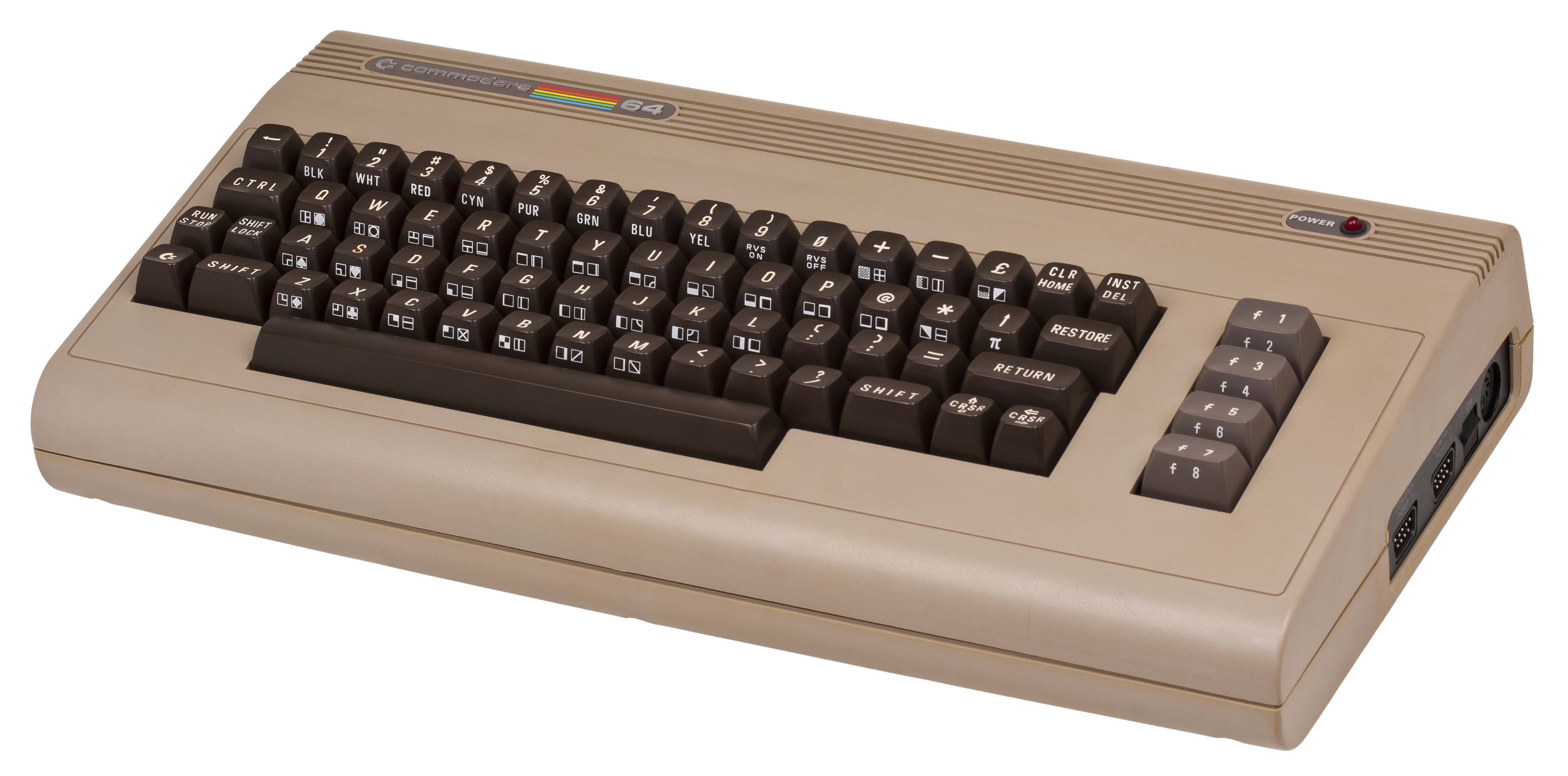
Commodore 64 computer (Photo: Wikipedia)
When I finally decided to buy a personal computer in 1988, I aimed for the low end: The venerable Commodore 64. By then, the IBM PC had already made its mark, and the Apple 128 was giving way to the Mac. Nevertheless, I was still working as Legal Aid lawyer in New York City, and I didn’t have a lot of money.
More importantly, the C64 had established itself as one of the best game machines around. Designers had squeezed everything they could out of its tiny amount of available memory, and the result was an incredible array of gaming software. I was especially partial to sports video and simulation games, and the choices were considerable.
Productivity software designers were similarly ingenious. For example, the C64 supported decent word processing programs that signaled the eventual demise of my electric typewriter. The C64 even managed to introduce me to online computing, however primitively. Powered by a 1200 baud modem, I dialed into Quantum Link, soon to become AOL.
Although I was among the last major wave of C64 buyers, I was in very good company. As this excellent Wikipedia article about the history of the C64 tells us, it was one of the bestselling computers of all time. Airplane buffs will understand the reference when I say it was the DC-3 of personal computers.
In the early 90s, I upgraded to a PC, and about five years ago, I morphed over to Macs. Yup, affordable personal computing power has come a long way during the past 25 years. For me, though, I don’t think that any computing experience will surpass the pure fun of booting up that C64.
 Musings of a Gen Joneser
Recent Comments