Picking the worst pop songs of the 70s: Where do I begin!?
When I was younger and went to loud parties more often, one of my frequent contributions to the festivities would be to croon bad songs from the Seventies. Although I’m not a drinker, I managed to fit in well with those who were en route to inebriation (or already there), and we would regale torture fellow partiers with our own versions of some of the worst pop tunes imaginable.
Of course, this may explain why I don’t get many party invitations anymore. Whatever.
Anyway, here’s the dilemma: How does one choose from the Bad Seventies Songbook??? It’s sort of the opposite of trying to pick the best of Sinatra or the Beatles. The choices are endless, in the worst ways.
Now, before anyone gets too cross with me, let me acknowledge that a ton of great groups and performers were part of that decade: Bands like Aerosmith and Queen. Singer-songwriters like Carole King and Billy Joel. It’s a long list.
But for some reason, the 70s also bore witness to some of the most horrible pop music in the history of humanity. For what it’s worth, here are some of my obvious choices, in no particular order, though concededly heavy on treacle:
- Anything by the Captain & Tennille
- Paper Lace, “The Night Chicago Died”
- Starlight Vocal Band, “Afternoon Delight”
- Paul Anka, “You’re Having My Baby” (perhaps the sequel to above)
- Anything by the Bay City Rollers
- Bo Donaldson, “Billy Don’t Be A Hero”
- Terry Jacks, “Seasons in the Sun”
- Michael Jackson, “Ben” (I mean c’mon, he’s singing to a rat)
- Morris Albert, “Feelings” (featured above, if you’re in a masochistic mood)
- A lot of stuff by Barry Manilow
- The Carpenters, “Merry Christmas, Darling” (though Karen Carpenter’s voice was a gift)
- Debby Boone, “You Light Up My Life”
For maximum pain infliction, you’ll find renditions of most of this stuff on YouTube.
And if you want more, Google around to find assorted lists attempting to select the worst of the worst, such as this one by Rolling Stone magazine or this one by RateYourMusic.com. I realize there’s room for disagreement here. For example, the RateYourMusic.com list includes some tunes I actually like, such as “Don’t Pull Your Love” by Hamilton, Joe Frank & Reynolds. (Also, I just can’t bring myself to put anything by Her Lusciousness Olivia Newton-John on my list.)
You may also disagree with the choices. Hey, maybe you’ve got Billy Joel on your “worst of” list! Indeed, if you’re a music company repackaging 70s songs into albums, you can use the same numbers for the “best of” and “worst of” collections! In fact, a couple of my NYU law school classmates had something of that idea in mind when they formed the “Seventies Preservation Society,” which they grew into a major label, Razor & Tie. Apparently there’s still money to be made off of these terrible tunes.
Throwback Thursday: Dorm living

End of semester: Packing boxes in Brandt Hall, Valparaiso University, 1980
This morning I clicked on a Facebook posting from New York University, my legal alma mater, to a short piece about dorm living for law students. A photo of one of the NYU Law dorm rooms (see below) reminded me once again that many universities have upgraded their residence hall accommodations considerably since back in the day, especially in terms of private rooms and bathrooms. (Of course, this has contributed significantly to rising tuition costs, but that’s for a more serious post….) In any event, the article sent me into a brief trip down nostalgia lane.
Valparaiso University
In many ways, dorm living tends to look better mainly with the passage of time, at least when it comes to furniture, décor, and creature comforts. During college at Valparaiso University in Indiana, I lived in dorm rooms throughout my stay, first in Wehrenberg Hall, and then in Brandt Hall, two rather plain vanilla buildings built sometime during the 50s or 60s. The VU dorms were typical of undergraduate dwellings of their era, offering small shared rooms with pullout beds and bathrooms down the hall. During my last year of college, I qualified for a shared Brandt Hall first-floor room with a private bathroom, a nod to the fact that I was a good student who managed to stay out of trouble.
In the photo above, I’m standing in front of my desk. The boxes and papers to the right obscure the mattress of the pullout bed. I was packing my boxes at the end of the fall semester of my senior year, in anticipation of departing after the holidays for a final semester in England. My roommate Chris’s furniture configuration was exactly the same, the main difference being that he was a very disciplined and neat pre-med student who periodically and politely would push my growing piles of books and papers to my side of the invisible Mason-Dixon Line, as we jokingly called it. Every evening, when Chris would dutifully turn in after watching the Johnny Carson monologue, I would gather my books, papers, and — if necessary — typewriter to join other more nocturnal students in the cafeteria, which served as a nighttime study hall.
NYU
When I got to NYU in 1982, I had a much fancier address, Hayden Hall at 33 Washington Square West (yes, that Washington Square). The toney Greenwich Village exterior masked the spare accommodations similar to those of my collegiate days, with a few New York cockroaches tossed in as free bonuses. At the time, Hayden Hall was the primary dorm for first-year law students. A converted old hotel, it had a few interesting nooks and crannies in addition to the drab rooms. Its first floor cafeteria and TV room provided opportunities for breaks and socializing.
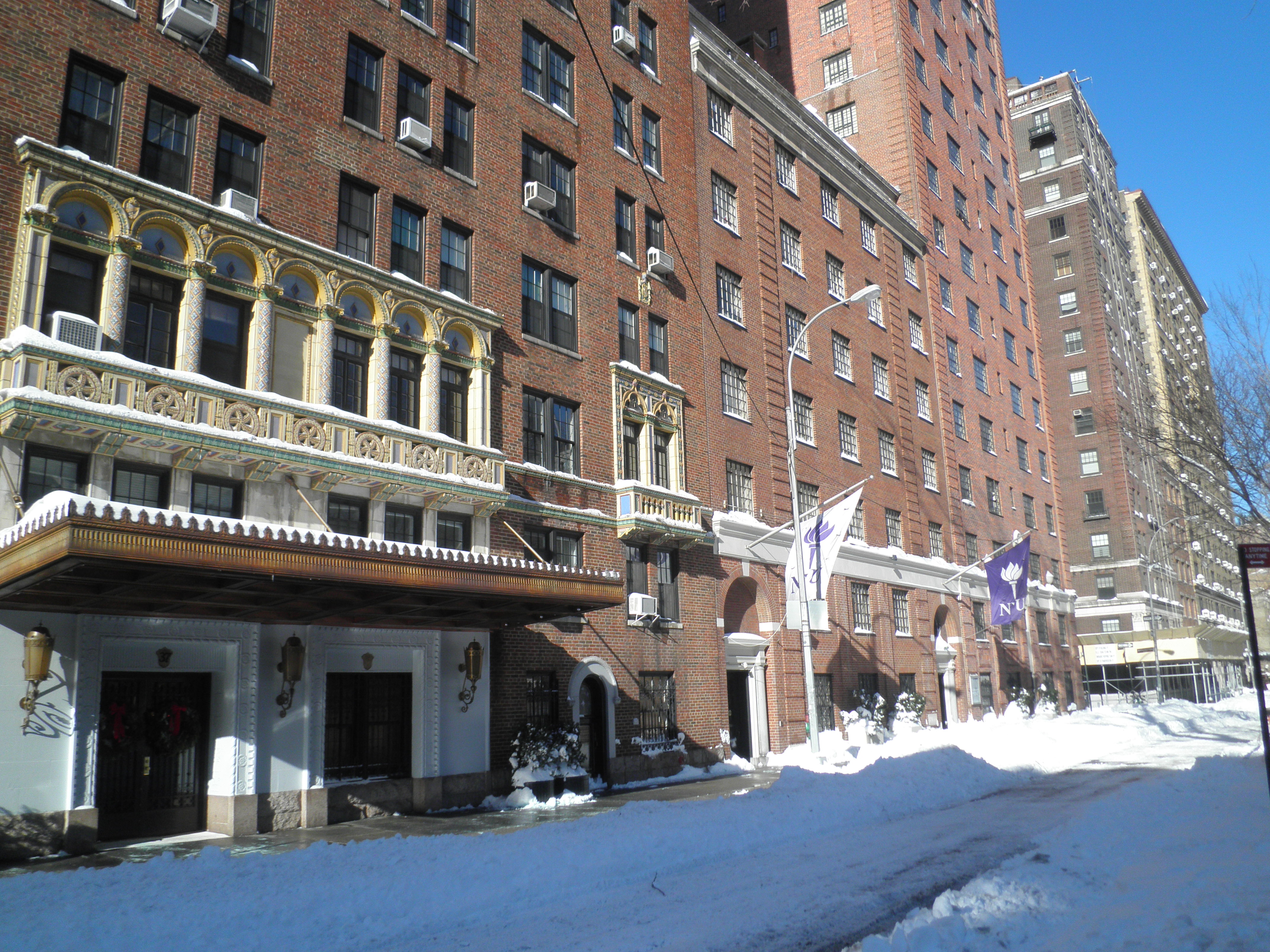
Modern view of NYU’s Hayden Hall (photo: DY)
I would spend my second and third years of law school living in NYU’s Mercer Street residence hall, a (then) brand-new building featuring small apartments with individual bedrooms and kitchenettes. While I didn’t do much cooking, the fridge and stove made it possible to store and heat up Chinese take-out and delivery morsels. With some physics-defying moving around of beds and furniture, apartment units could host pretty decent parties, replete with room for dancing to Michael Jackson, The Clash, and other 80s music artists. We also had waifs’ Thanksgiving and Christmas dinners for those of us too far or too broke to return home for the holidays. The Mercer dorm provided my nicest accommodations during 12 years in New York.
In fact, they remained among my nicest digs ever until I moved into my Jamaica Plain, Boston condo in 2003. For the longest time, I was satisfied with a sort of enhanced “grad student” standard of living. It took me until well into adulthood to do an upgrade!

A current NYU Law dorm room. (From http://blogs.law.nyu.edu/lifeatnyulaw/life-in-the-law-school-dorms/)
Throwback Thursday: Aloha to an old warhorse

Two weeks ago I wrote that my old television set had seen its best days and that I was awaiting a replacement. I’m all set now, with a new flatscreen unit and a technologically upgraded cable package. As I made the transition, I decided it was time to say goodbye to my 22-year-old VCR machine. Here it is, pictured above, unplugged and soon to be disposed of, after many years of steady service.
Despite my enjoyment of movies, I was a latecomer to VCRs. Living in New York, I was happy to see old films in the city’s several revival movie theaters, and I was living on a tight budget to boot. But as VCRs became commonplace and more affordable, I finally took the plunge. In the summer of 1992, I went to an electronics store, pretty much arbitrarily picked out a VCR (my usual quick-hit approach to shopping), and set it up in my Brooklyn apartment.
I wouldn’t want to estimate how many hours I spent watching movies using my VCR that summer, as the answer would be highly suggestive of addictive behavior. Suffice it to say, however, that I was a loyal supporter of video stores near work and home. As I wrote last year in a lament over the closing of Blockbuster video stores, it was such a treat to survey the shelves of these stores in search of old favorites and new discoveries.
Given how many movies have played on that machine, it’s something of a miracle that it lasted so long. Over the past decade, of course, I’d morphed over to DVDs, but on the few occasions when only a VCR version of a movie or show was available, I could pop in the cassette and watch it.
I tend to be resistant to jumping to new technologies right away, so these days I find myself preferring DVDs to streaming video. My Netflix subscription still includes the discs, and I continue to get a short spark of little-kid-like happiness when a red envelope shows up in my mailbox. Alas, my luck with DVD players has not been as good, and it looks like I’ll be buying a new one soon. Perhaps I’ll upgrade to a high-def model. They seem to have dropped in price in recent years, and now I have a TV set that justifies the purchase.

Throwback Thursday: Favorite childhood eateries?

(Photo: DY)
What are your favorite childhood eateries? Maybe a restaurant that served the best comfort foods? Or perhaps a place that was designated for special meals with your family?
One of my favorites is still around: Miner-Dunn Hamburgers in Highland, Indiana. It’s an old fashioned, diner style family restaurant that specializes in delicious varieties of burgers. The Miner-Dunn hamburger is pressed thin and wide before being grilled and then served on a big soft bun, with various toppings of your choosing. The platter comes with fries and — in a unique and tasty twist — a small cup of orange sherbet to top things off. (Of course, their desserts are good as well.)
Growing up, Miner-Dunn was a favorite family destination. Once we got our driver’s licenses, it became an occasional nighttime or after game hangout as well. During my occasional visits back to Northwest Indiana, I’ve made pilgrimages there to enjoy the good food, which remains very reasonably priced to boot.
Miner-Dunn has been around since 1932, and from what I can tell, they haven’t overly tinkered with recipes that work for them. Just writing this post is making me hungry…
***
I also realized that I have posted photos of two favorite burger places going back to years past in successive posts. Talk about being a meathead.
On my nostalgia addiction

Random nostalgia: The Cozy Soup ‘n’ Burger, Broadway & Astor Place, NYC, site of countless downed burgers during law school and thereafter (Photo: DY)
As someone who succumbs easily to nostalgia — supposedly this is common among those of us born under the Cancer sign — this blog permits me to hop into my personal time machine on a regular basis. And Throwback Thursday is a Hallmark card of an invitation to switch that machine into overdrive. Today I’m going to ponder why I find such indulgences so appealing.
It hurts so good?
Last year, John Tierney, writing for the New York Times, served up a fascinating piece on the role of nostalgia in our lives. He featured the research of psychology professor Constantine Sedikides (U. Southampton, U.K.), who challenges the popular notion that nostalgia must be associated with sad melancholy. Here’s a snippet:
Nostalgia has been shown to counteract loneliness, boredom and anxiety. It makes people more generous to strangers and more tolerant of outsiders. Couples feel closer and look happier when they’re sharing nostalgic memories. On cold days, or in cold rooms, people use nostalgia to literally feel warmer.
Nostalgia does have its painful side — it’s a bittersweet emotion — but the net effect is to make life seem more meaningful and death less frightening. When people speak wistfully of the past, they typically become more optimistic and inspired about the future.
He included a thought-provoking perspective from Dr. Sedikides:
“Nostalgia makes us a bit more human,” Dr. Sedikides says. He considers the first great nostalgist to be Odysseus, an itinerant who used memories of his family and home to get through hard times….
Writer and online “salon keeper” Stacy Horn, in her book Waiting for My Cats to Die: a morbid memoir (2001), calls nostalgia “both a self-inflicted wound and the morphine you take for the pain – a perfect reprieve from the cold, cruel light of an untampered-with day. It hurts, but it’s a good hurt.” I tend to agree, seeing nostalgia as a simultaneous pleasure/pain kinda thing.
Nostalgia scale
The online version of the Times article linked to Dr. Sedikides’s webpage. The webpage includes a questionnaire called the “Southampton Nostalgia Scale,” which defines nostalgia as a “sentimental longing for the past.”
I answered the survey questions, and I clearly score off the charts. I think about my past a lot. I think about historical events and eras a lot, and I yearn to experience them, even if they preceded me by decades. I probably could get soggy about the coffee I had with breakfast yesterday if the moment was right.
The weird thing is, I’ve been this way since I was a kid. As a grade schooler, I would get nostalgic about family vacations to visit relatives in Hawaii!
Take my “Yearbook Test”
Here’s my personal test for measuring one’s propensity for nostalgia: I call it the “Yearbook Test.”
Spend some time with a college or high school yearbook, maybe one grabbed from a friend’s bookshelf or rescued from the bargain bin at a used bookstore. Although it can be from a school you attended, it shouldn’t be one from your years there or the years immediately preceding or following them. (In other words, it cannot overlap with anyone you knew from your own student days.)
Do you find yourself feeling like you “know” people in the yearbook? Do you start imagining their lives? Can you guess at the groups and cliques that may have formed up? Do you find yourself wanting to step back into that time and place to experience it personally, just to see what it was really like?
If you’re inclined to answer yes to these questions, then I’d bet a fair amount of change that you’re a nostalgia junkie. I mean, let’s face it, if you can get all sentimental over the student experiences of those from another era, then you’re a goner when it comes to nostalgia.
For the record, I’ve used ebay to obtain a smattering of old yearbooks from my undergraduate alma mater, Valparaiso University, and from my law school alma mater, New York University, dating from the early to mid-20th century. I can get lost in them for hours. On occasion, I’ve Googled names of students in an attempt to see what became of them.
In other words, I’m hopeless.
History buff
I have no doubt that my nostalgic tendencies dovetail with my enjoyment of history. My status as a history buff has a strong emotional component to it. For example, last year I wrote about my affinity for the 1980s mini-series “The Winds of War.” The story starts in 1939, as war clouds are swirling about Europe. It follows the fortunes of the Henry family, headed by U.S. Navy officer Victor “Pug” Henry, along with his wife Rhoda, sons Warren and Byron, and daughter Madeline.
Joining them as major figures are renowned Jewish author and retired professor Aaron Jastrow and his niece, Natalie, who are living in an Italian villa. Also prominent is Pamela Tudsbury, a young British woman who travels the globe helping her father, foreign correspondent “Talky” Tudsbury, as well as foreign service officer Leslie Slote.
“The Winds of War” qualifies as a sweeping epic. It opens with Europe on the brink of another war, and it continues on through the Japanese attack on Pearl Harbor. Throughout the story, the major characters and others cross paths, move apart, face life-threatening danger, and fall in and out of love, in places as disparate as London, Berlin, Italy, Portugal, Washington D.C., Hawaii, the Soviet Union, and the Philippines, among many others.
I find myself caught up in that dramatic sweep, imagining the lives of the characters and the look & feel of the era. I watch the full mini-series roughly once a year, and it has an odd, comforting effect on me.
How “accurate” is our nostalgia?
I understand how we often create memories that make certain times appear a lot rosier in the rear view mirror. I know that the past is rarely what it’s cooked up to be.
When it comes to feeling sentimental about historical eras, I’d love to visit 19th century London or 1920s New York. But would I actually like to live during those times, for the long haul, with no “go back” button in the event I find myself, say, in a Dickensian workhouse or a Lower East Side tenement? And despite my affinity for the Second World War years, for an American of Japanese descent, a time machine return to that period would not be desirable.
As for my own past, there are few times in my life that I’d truly like to live over again, not because I’ve had a bad life, but rather because the “do overs” I yearn for — the ones with the benefits of wisdom, hindsight, and maturity — are impossible. I was reminded of this last week, when a brief Facebook exchange with college chums led to recounting favorite eateries near the campus. Now, if someone today offered me a few years to go back to school, think big thoughts, and enjoy campus life, I’d happily take it. But would I want to return to the post-adolescent anxieties of (in my case barely) early adulthood? No thanks!
So, the bottom line: I’ll continue to indulge my nostalgic tendencies. But at least I know that the rear view mirror often serves up a distorted picture.
***
Related post
Time travel: Some favorite destinations (2013)
***
This post borrows several big chunks from a 2013 piece published on my professional blog, Minding the Workplace.
Throwback Thursday: Where were you when Nixon resigned?
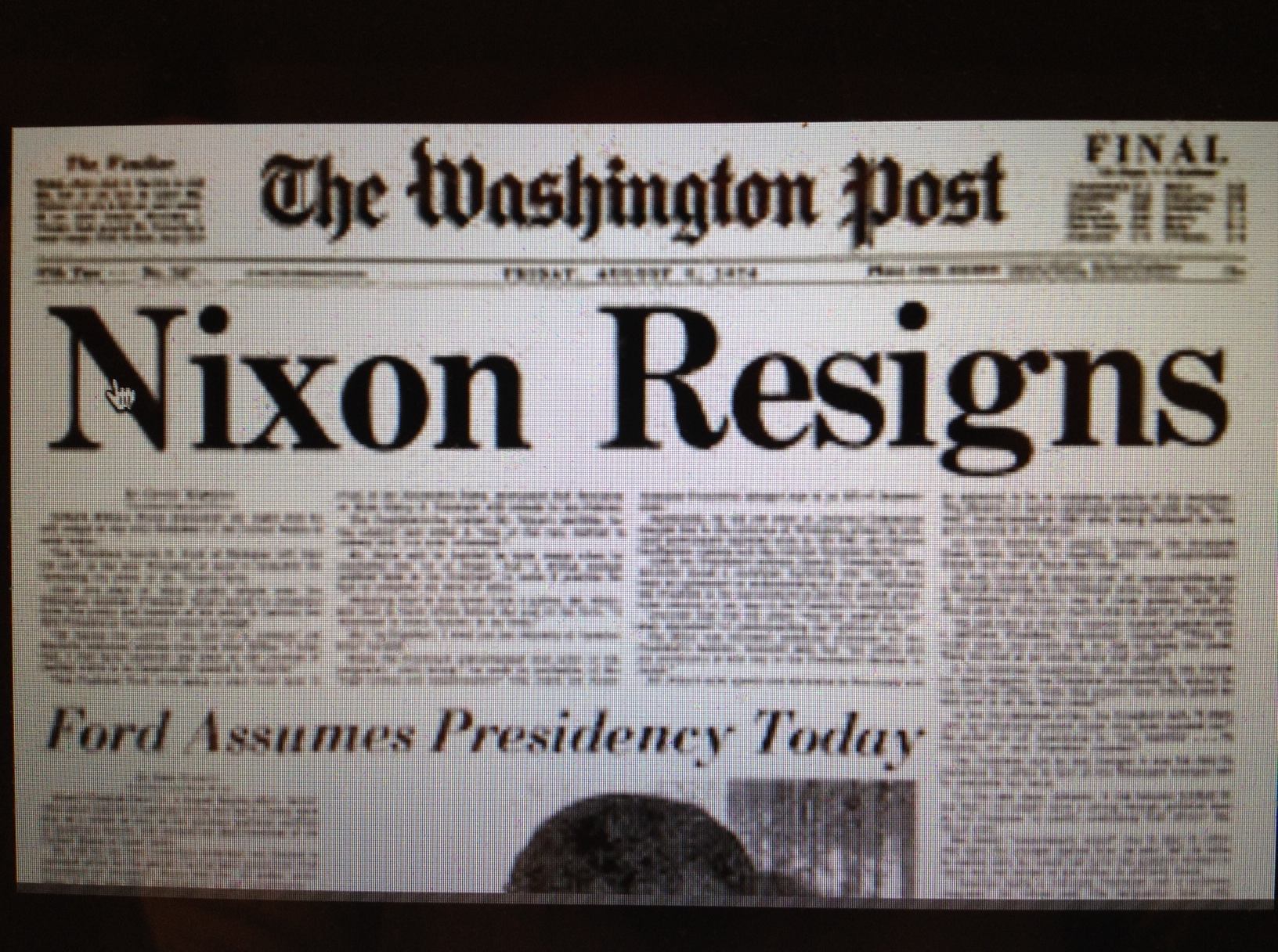
For those of you around during August 1974, where were you during when President Richard Nixon resigned from office in the midst of the Watergate scandal?
At the time, I was in high school, heading into my sophomore year. That night I happened to be watching a football game. The Jacksonville Sharks were playing the Hawaiians, both of the fledgling World Football League, an upstart, ragtag operation that was challenging the established NFL. The game was interrupted by Nixon’s resignation’s speech, which made for an odd return to the televised game action following such a momentous event!
For readers too young to understand the Watergate scandal, or for the sprinkling of international readers thankfully spared the ongoing saga back then, Nixon got in trouble when his Administration was linked to an illegal break-in at the Democratic National Committee headquarters in Washington D.C.’s Watergate Hotel during the 1972 election campaign. As is so often the case, the cover up was worse than the initial sin, and it led right to the Oval Office.
The Washington Post took the lead on investigating the Watergate scandal, and it served to launch the careers of two unknown reporters, Bob Woodward and Carl Bernstein.
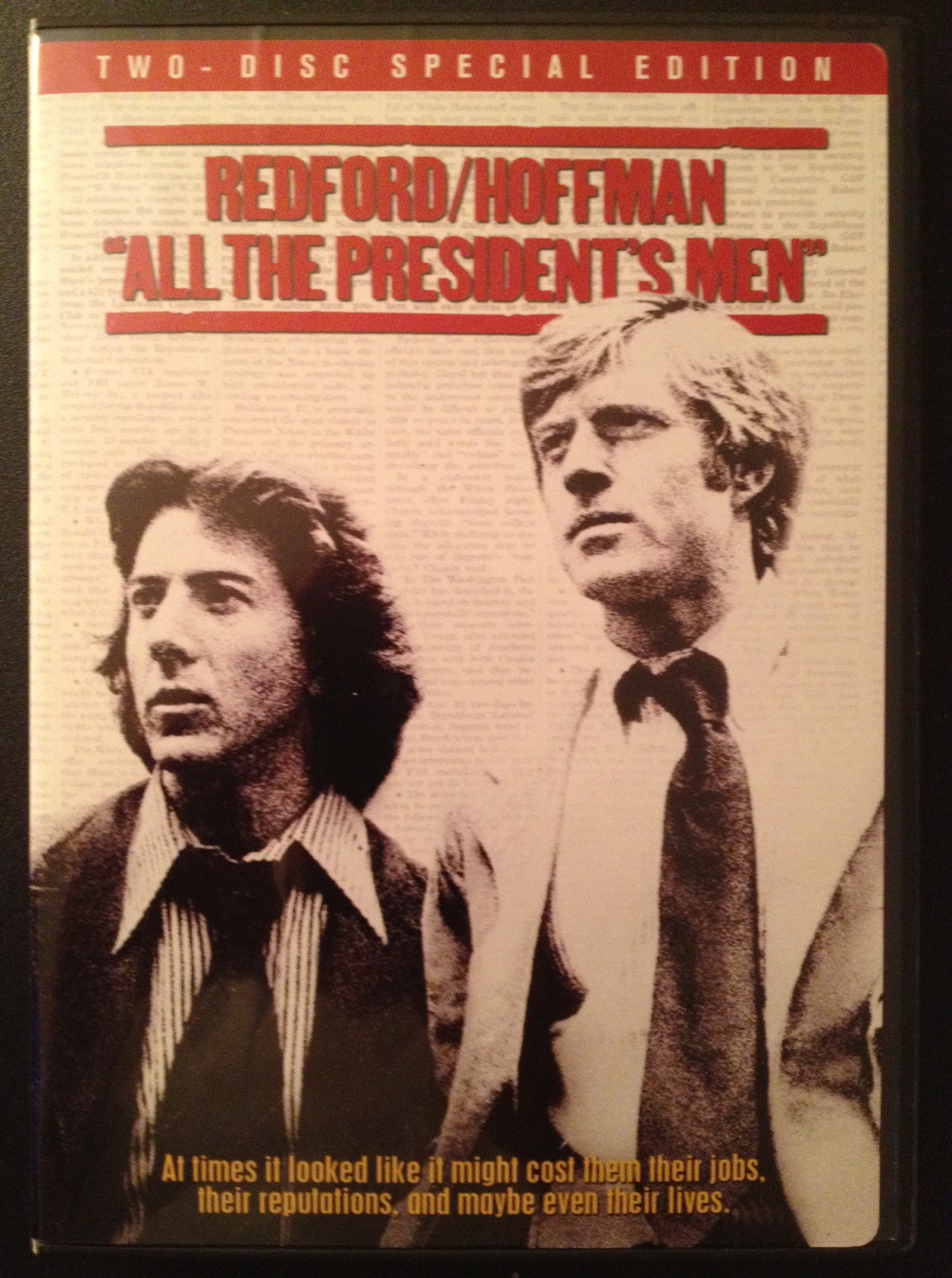
The movie “All the President’s Men,” starring Robert Redford (Woodward) and Dustin Hoffman (Bernstein), manages to tell the story of the Post‘s investigation with a sense of detail and drama that conveys the gravity of this historic event in American government and politics. It still holds up as an excellent movie.
Throwback Thursday: First Manhattan visit, Summer 1982
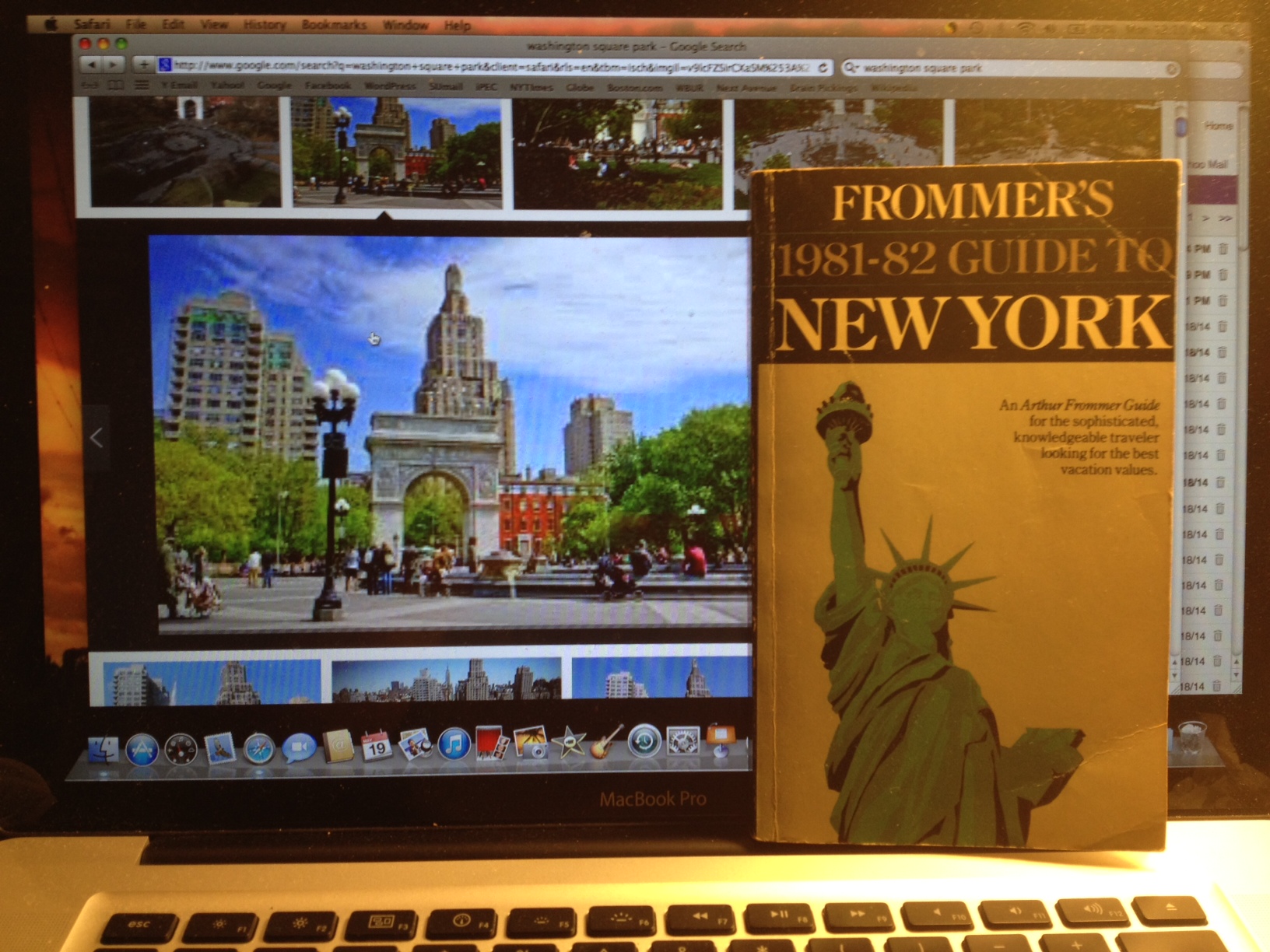
Thirty-two summers ago, I paid my first visit to New York City. The main occasion for my trip was to check out New York University, where I would be starting law school that fall.
While it may sound odd in this day and age for someone to say this, I had accepted NYU’s offer of admission sight unseen, based largely on its overall reputation and strong support for students who wanted to enter public interest law. You see, I also was pretty broke, and I didn’t have the funds to visit the law schools to which I was applying. Having opted happily for NYU from a distance, I wanted to preview the situation firsthand, so I scheduled a late June visit to New York City.
I reserved a room at the Vanderbilt YMCA on 47th Street. It was like staying in a youth hostel, reminiscent of my semester abroad in England the year before. Another adventure begins!, I thought to myself.
During my short trip, I spent a lot of time around NYU and its Greenwich Village surroundings. I discovered some of the cheap local eateries that would get a lot of my business during the years to come, I did some hanging out in Washington Square Park in the heart of the Village, and I paid my first of hundreds of visits to the remarkable Strand bookstore.
Of course, I also checked out NYU, including Vanderbilt Hall, the main law school building, and Hayden Hall, the residence hall where most first-year law students lived, both located right on Washington Square. I could feel the butterflies churning in my stomach in anticipation of what was to come, and a little voice inside me wondered if I was in over my head.
I did standard tourist stuff as well. Going up the Empire State Building. Taking a guided tour of the United Nations. Becoming bewildered by the city’s labyrinth of a subway system. (If you’ve ever been lost in the Dante-esque middle level of the West 4th Street stop in the Village, you know what I mean.)
My NYC recon trip confirmed that in terms of sophistication, I was a babe in the woods. I wasn’t totally unfamiliar with big cities, having grown up in northwest Indiana right outside of Chicago and having spent chunks of time in major European cities during my semester abroad. However, New York seemed overwhelming to me, ranging from its apparent vastness (in actuality, Manhattan is a mere island!) to its exorbitant prices. (Upon my return, I would report breathlessly to friends and family that a fancy ice cream place called Häagen-Dazs was charging one whole dollar for a small cone!)
Nevertheless, I also had a gut feeling that I was making the right choice. I knew that New York would fascinate me, and — nerves notwithstanding — I had a good feeling about my decision to attend NYU. My instincts would prove to be right. New York and NYU were the right places at the right time for me.
I didn’t take any photos of that visit, but I’ve held onto the guidebook I used to traipse around Manhattan. In Frommer’s 1981-82 Guide to New York, author Faye Hammel writes:
You should be advised that there is one dangerous aspect of coming to New York for the first time: not of getting lost, mobbed, or caught in a blackout, but of falling so desperately in love with the city that you may not want to go home again. Or, if you do, it may be just to pack your bags.
That quote captured how I would feel about New York for years. As would this song:
Throwback Thursday: Volunteering for the 1980 Presidential campaign of John B. Anderson

Yup, that’s me, speaking at a 1980 presidential debate sponsored by the Porter County, Indiana chapter of the American Association of University Women, wearing my best polyester suit. Note the cigarette smoke appearing in the photo!
As the boxes of papers in my condo unit storage area attest, I tend to save stuff! This stuff includes a small pile of mementos from the first Presidential candidate I ever supported and voted for, John B. Anderson of Illinois. I spent countless hours working as a volunteer for Anderson’s 1980 independent campaign, and it is one of my most memorable college experiences.
I’ve written earlier that during college and law school, I had every intention of launching a political career, so much that I was obsessed with the machinations of campaigns and elections. During this time, and especially through college, my own political views were very much in flux. I started college as an independent-minded Republican and finished as an independent-minded Democrat. But it’s also safe to say that my positions on issues were more knee-jerk than principled and well thought-out. regardless of whether I was leaning right or left!
Since then, my views have usually come out on the liberal side, but as to individuals I admire and respect in public life, I find myself drawn to people of character and integrity in ways that may transcend political partisanship. This may signify that I have come full circle, because John Anderson had those qualities in abundance.
In a way, my own political journey tracked that of Anderson, who for most of a long career in the House of Representatives was a strong conservative, rising to party leadership positions and representing a Rockford, Illinois district that returned him to office time and again. But in the wake of Vietnam and the social upheaval of the 60s and early 70s, Anderson began moving to the left, to the point where he entered the 1980 GOP primaries as a “liberal Republican,” a designation that would be virtually impossible today.
Anderson made a splash in the primaries and was gaining a following that cut across political lines, but he knew that his chances of winning the nomination — eventually secured by Ronald Reagan — were practically non-existent. So he decided to mount an independent Presidential campaign. He engaged in the arduous effort to get on the ballot across the country, and he picked a running mate, former Wisconsin Governor Patrick J. Lucey, a Democrat.
Although polling data showed Anderson with double digit support through the summer of 1980, he faded in the fall and garnered 7 percent of the November vote, far behind Reagan and the Democratic incumbent, Jimmy Carter.
I served as the Northwest Indiana coordinator for the Anderson/Lucey campaign, an area covering Lake and Porter counties, two fairly heavily populated areas of the state. My position signified the degree to which the campaign had to rely on green volunteer talent. I coordinated a small organization of volunteers, served as a representative to the statewide campaign committee, participated in a couple of local debates, and even did some local radio interviews.

Mementos from the 1980 independent Presidential campaign of John B. Anderson
Some of the mementos pictured above are self-explanatory, but let me say a bit about three of them:
(1) The ALL CAPS letter on the left is a mailgram sent by Vice Presidential candidate Patrick J. Lucey to core Indiana volunteers, thanking us for a furious and ultimately successful petition effort to put him on the state’s November ballot. Lucey had been added to the ticket as Anderson’s running mate after petitions for Anderson had been submitted, so the Indiana courts required us to mount a second petition effort to secure his place as the VP candidate on the ballot.
(2) The newspaper article at top is a summer 1980 piece by the Gary Post-Tribune, featuring our small band of Anderson volunteers. It was one of my earliest press interviews about anything, and I recall how nervous I was speaking to the reporter! The article mentions an older couple, John and Kim Glennon, who served as den parents to our young volunteer group. Mrs. Glennon had attended law school with Anderson at the University of Illinois.
(3) The letter on the right was sent to key Anderson supporters after the November election, thanking us for our efforts on behalf of the campaign. I didn’t know if Anderson personally signed it or whether a robo-signing machine was used, but it was nice to receive the letter after working so hard for the campaign.
The 1980 election will forever be associated with President Reagan’s election and the nation’s rightward political shift, but I believe that Anderson’s story also symbolizes that change. After many years as a Republican loyalist, Anderson’s politics were moving left as his party’s positions were moving right. Anderson’s campaign platform was a mix of liberal social positions, strong support for workers’ rights, and moderate-to-liberal economic policies. His departure from the GOP anticipated the sharper ideological divisions that continue to confront America today.
In the years following the election, Anderson did a lot of teaching and lecturing, eventually becoming a law professor at Nova University in Florida and serving in leadership positions for various advocacy groups. He’s in his early 90s now. I’m not sure if he is still active as a teacher and advocate, but I hope he knows that his campaign made a strong impact on those of us who were fortunate to be a part of it.
Throwback Thursday: Playing baseball and discovering “dinosaur bones” on Baring Parkway

Baring Parkway, Hammond, Indiana (Cropped & magnified version of photo originally taken by Edwin Rivera — thanks Edwin, and blame the blurs on me!)
Baring Parkway makes up two big rectangular plots of grass and trees in the Woodmar neighborhood of Hammond, Indiana, the small northwest Indiana city where I grew up. For me and many others during the late 60s and early 70s, it was our baseball diamond, football field, and — on one occasion — archeological dig.
Fields of dreams
Some of my best memories of those days are of playing pick up baseball games with improvised rules and teams made up of guys who showed up on any particular afternoon or early evening. It was slow pitch hardball; a batter could strike out but couldn’t wait out a walk. If we didn’t have enough players for full teams, a ball hit to an uncovered part of the outfield was considered an automatic out. There were no fences, so a home run had to be earned by hitting the ball far and running fast. (Umm, my home runs were few and far between.)
I spent chunks of five or six summers playing in those pick up games on Baring Parkway. When I started, I was pretty terrible. I could barely hit the ball, and my fielding skills were pretty bad too. Early on, if there was an odd number of players, I’d be designated the “official catcher,” which meant that I caught the slow lob pitches for both teams and didn’t get to bat. 😦 But I was becoming quite a baseball fan, so I stuck with it, enough so that I could hold my own at bat and in the field. Such improvements are the little things that can build a kid’s self-confidence.
Baseball was still America’s national pastime. Although I don’t want to over-romanticize those days, a love of the game was very much a part of the culture of this gritty little industrial city. Youth baseball leagues were very popular, and a fair number of future high school and even college standouts cut their teeth that way.
Our Baring Parkway games harbored no such sporting ambitions. We played for the fun of it, and by and large, the experience delivered. Furthermore, we mostly got along with each other, with only an occasional disagreement blowing up into fisticuffs.
The photo above shows a lush green park. Our makeshift baseball diamonds made Baring Parkway less picturesque, with carved out bases and basepaths pockmarking the landscape. But on a nice summer day, you could see kids enjoying themselves with a game of baseball, which I think was a good tradeoff.
Football was less popular those days, but occasionally we’d turn a stretch of the Parkway into a makeshift gridiron. We played both touch and tackle varieties, adding necessary rules such as minimum counts before a defender could rush the passer (“one Mississippi, two Mississippi…”). We usually played without safety equipment, but I cannot recall any injuries of note other than some bumps and bruises.
In search of dinosaurs
One early fall — I’m pretty sure as we were starting the 6th grade — a big utility company dug up much of the Parkway to do some work on the underground pipes. This meant a temporary suspension of its use as a playing field, but what we discovered there caused us to shelve our growing obsession with sports.
Unlike today, when fences, orange tape, and big signs will warn people (er, kids) to stay away, we could simply walk right into the work site. I cannot recall who first ventured into the excavation area, but I remember how quickly the news traveled among our small group of friends: There are lots of bones down there, as in bones from big animals.
And so we went, with small shovels and garden tools in hand, during early evenings and the weekends when the workers weren’t on site. And we dug up these big bones and all thought, whoa, I wonder if these are dinosaur bones???!!! We took bags of them to show & tell at our grade school, breathlessly speculating about whether they were the remains of giants that once roamed the planet.
Well folks, it turns out that none of our archeological discoveries will be found at your local natural history museum. Indeed, the fact that we also dug up rusty horseshoes at the site should’ve told us that we weren’t on the trail of a mighty T-Rex. But our excitement over this discovery allowed us to suspend disbelief, and also would make for a good childhood memory along the way.
Kids and unstructured time
Back in the day, a childhood for a someone born into America’s emerging middle class or robust working class came with free time, especially during summers after the school year ended. Sure, for some there were activities such as scouting, church groups, organized sports, and the like, but overall our days didn’t seem quite as packed as those of today’s young folks.
Although I’m not a parent, I understand how modern child raising often involves a lot more structured, adult-supervised activities than we saw with earlier generations. Still, it saddens me a bit that the kind of self-organized play that we engaged in on Baring Parkway is less and less of a typical kid’s experience. This was an era when parents (usually moms) could tell their kids to go outside and play, and about the only mild concern was whether you’d be home in time for dinner. Yup, times have changed.
College graduation day, May 1981: Long ago and far away

Lucerne, Switzerland, May 1981
Over the weekend, one of my college classmates (that’s you, Jon!) posted on Facebook a quick little remembrance of our graduation day from Valparaiso University on May 17, 1981. Of course, the mere mention of that time triggered a bout of nostalgia, a chronic condition that is both my blessing and curse.
Now, I wasn’t actually at our Commencement, which is how the seemingly random inclusion of this grainy snapshot of Lucerne, Switzerland figures into the story. I had finished up my undergraduate career with a spring semester abroad in Cambridge, England, and I was spending three weeks traveling on the European continent with my friends. My graduation day was spent with fellow VU sojourners David, Joanne, and Liana in Lucerne, where we took a boat ride and finished up the day with dinner at a waterside café, from where I snapped this photo.
Study abroad was a very different experience back in the day. No Internet, e-mail, or smartphones. Our primary connection to friends & family back home was the postal service, which made the daily mail delivery an important event. As study abroad sites go, England is about as safe & secure as they come, but we truly felt like we were on a foreign adventure.
My biggest technological novelty was an ATM card from a local British bank. I didn’t own a credit card. In the house designated as the residence for men, our music system was a small portable cassette player that my friend Don had “borrowed” from the office of the school newspaper back at VU, where we both had spent many hours as collegiate news scribes.
As I noted last fall in a remembrance of my years at Valparaiso, that semester abroad was the most formative educational experience of my life. I know I’m not alone with this sentiment. Since 1991, our study abroad group has held reunions every five years, and each time over half of our group has attended. (In addition to the aforementioned study abroad classmates, they have included Anne, Hilda, and Kathy, who also subscribe to this blog!)
Looking at that photo and applying rose-colored glasses, it’s easy to lapse into thinking of those days as being carefree and without anxiety, softened by images of vagabonding around Europe. Truth is, I was full of uncertainties and very much a work in progress. I had sufficient wisdom back then to know that I was very, very fortunate to have that study abroad experience, but my inner focus was impatiently and continually on the future and what it might bring.
I’ve reached the age where the fading old Kodak snapshots from my semester abroad look like something from another era, and for good reason. It really was long ago and far away when I celebrated my college graduation with friends at that Lucerne café. For nostalgic beings like me, I’ll take it as a memory to be treasured.
 Musings of a Gen Joneser
Recent Comments