Thirty years in Boston: A contemplation
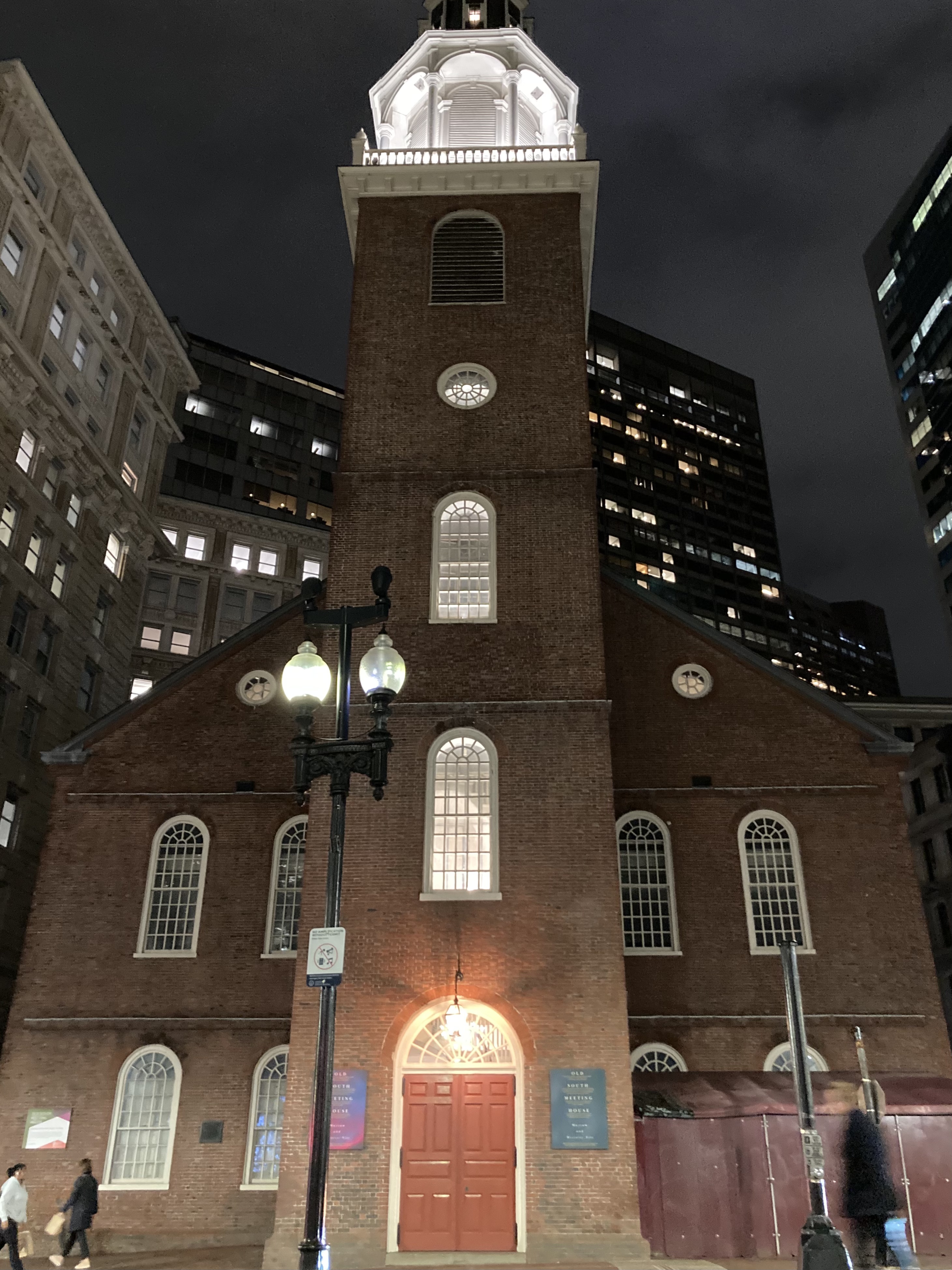
Old South Meeting House, Boston
Thirty summers ago, I packed my bags (and many dozen boxes — mostly books!) for a big move from New York City to Boston. The reason for my move was job-related. I had secured a tenure-track teaching appointment at Suffolk University Law School in downtown Boston.
This was the next step in what was turning out to be an unlikely academic career. In 1991, I returned to my legal alma mater, New York University, as an entry-level instructor in its first-year Lawyering program. That appointment came on the heels of six years of legal practice in the public interest sector. But I didn’t take the job because I thought of myself as an academic in the making. I just figured that it would be an engaging and fun opportunity.
However, I took to teaching immediately. It just clicked for me. Instructors in the Lawyering program were capped at three years, so during that time, I worked hard to make myself competitive for tenure-track appointments. I built a strong record of teaching and started publishing in the field of employment law. During the 1993-94 academic hiring cycle, I entered the tenure-track teaching market and eventually opted to take an offer from Suffolk. Located in the heart of Boston, and regarded as a law school with a historical legacy of opening doors to the area’s working class and emerging middle class populations, it looked like a good match for me.
I didn’t know much about Boston before I arrived here. Beyond a family trip to Boston during my early childhood, a few quick NYC-to-Boston trips to see baseball games at Fenway Park, and interviews at Suffolk Law, I had no on-site familiarity with the city. So, I assumed it was a sort of mash-up between a smaller version of New York City and a big university town, with a diverse, cosmopolitan look and feel.
Oh boy, was I in for a surprise.
Suffolk Law
You see, upon arriving in Boston, I quickly felt like I had moved to a city that seemed stuck in a time warp, characterized by a deep parochialism and struggles with issues of race. It was as if I had somehow traveled back in time some 20 years.
Unfortunately, the culture of Suffolk Law c.1994 was an insular one, very much embracing that regressive look and feel. It surely didn’t roll out the Welcome Wagon to newcomers — especially to those of us who weren’t part of its dominant demographic group.
Even as a pre-tenured professor, I openly confronted aspects of that culture, which led to some very stressful and lonely times. I won’t go into bloody detail here, other than to say that although my concerns were valid (or so agreed the American Bar Association, the Law School’s accrediting agency, in a scathing review of the school’s record of inclusion, prompted by a complaint I filed), they were not well-received by the institution. Accordingly, I knew that had to build a largely bulletproof tenure portfolio, and I did my best to make it so.
In 2000, I would earn tenure — only the second professor of color to do so at a law school that was then almost a century old. I certainly had some hard bruises to show for it. That’s why getting tenure felt more like a fist-pumping triumph over Suffolk than an achievement celebrated in partnership with it. The summer of my tenure year, I visited Maui, Hawaii, for a reunion of cousins. I came back with a large haul of Hawaiian shirts. I called them my “tenure wear” collection, a new wardrobe for teaching class. Out went the dress shirts and ties. I was making a statement: Hello, I’m baaaack!
To my surprise (and perhaps yours, dear reader), I have remained at Suffolk ever since. I still often wear my Hawaiian shirts to class, and my relationship with the institution has sloshed between pretty good and a Facebook-style “it’s complicated.” That said, Suffolk has served as my home base for a successful and satisfying academic career. I get to teach, write, and serve on terms over which I have a fair and appropriate say, protected and empowered by the tenets of academic freedom. That makes me very fortunate.
I hasten to add that there is plenty of good in the institution. Against the backdrop of its virtues and faults, Suffolk has an authentic quality. It is not a stuffy, ivory tower kind of place. It bridges and sometimes negotiates the human dimensions of older and newer Boston. The prototypical Suffolk law student is smart, hardworking, and grounded. Both the Law School and the rest of the university are closely in and of the legal, civic, business, and cultural landscapes of Massachusetts (and New England generally). For someone like me, a city dweller who enjoys operating at the line between research and ideas on one side, and action and application on the other, that makes for a good fit.
My teaching is centered on Employment Law, Employment Discrimination, and Law & Psychology. In three subject-matter areas — workplace bullying and abuse, unpaid internships, and therapeutic jurisprudence (a deep take on law and psychology) — I’ve made significant scholarly, advocacy, and service contributions. None of this was foreseeable when I started at Suffolk 30 years ago. I’ve been able to mature into my true calling during this time.
(For a closer look at some of my work, check out my faculty bio [click here] and my Minding the Workplace blog [click here].)
Boston
As for Boston generally, it has grown on me to a point where I now consider it more than simply an acquired taste. Although the city still exasperates me at times, today I better understand its many complexities. And there are aspects of it that I downright enjoy.
On a personal level, I find it notable that among my circles of friends, most of us grew up outside of Greater Boston — often well beyond Massachusetts. It remains the case that a lot of people born and bred here apparently do not recognize any naturalized paths to genuine Boston citizenship, if you get my drift. (As a Suffolk alumna who fled to the West Coast some 15 years ago quipped, the locals “aren’t taking applications.”)
The city’s challenges with inclusion, race, and tribalism have softened but persist. Boston’s neighborhoods remain fairly divided by their ethnic, racial, social class, and sexual identities. With women, people of color, and LGBTQ folks now asserting their political power, these tensions frequently play out in local elections. Although Boston has long been a solidly Democratic town, the left, liberal, and conservative factions often do battle in the party primaries. Politics remains a bloodsport here.
In keeping with its somewhat bifurcated nature, Boston’s insularity is matched by its intellectual and cultural worldliness. This remains a place where books, history, artistic expression, and innovative ideas still matter. Greater Boston abounds with colleges and universities, medical and scientific research centers, libraries and bookstores, theatre companies, concert halls, cultural and learned societies, and art, history, and science museums. It’s a nerdy place in the best of ways.
History, books, sports, music…and easy accessibility
Several of these intellectual and cultural qualities have a special, ongoing appeal to me.
First, history is ever-present here. In some parts of the city, one can walk on the same streets that Bostonians of the Colonial and Revolutionary eras traversed during their daily lives. Boston’s famous Freedom Trail features historic sites going back to the 1600s.
For a history geek like me, this is all very cool stuff. In fact, I recently joined the board of directors of Revolutionary Spaces, a non-profit organization that oversees two nationally significant historic buildings — the Old South Meeting House (pictured above) and the Old State House — and offers public education programs about freedom of expression, democracy, and the city’s history.
Second, there are books, tons of them. Greater Boston is home to leading public, private, and university libraries. Even in the retail era of online bookselling, the area offers great bookstores, new and used, general and specialized. Two of my favorite places are the central branch of the Boston Public Library, widely recognized as one of the world’s great public libraries, and the Brattle Book Shop, one of the nation’s oldest antiquarian book sellers.
Third, the current century has been a Golden Age for Boston’s professional sports teams. While I still celebrate my Chicago Bears pounding the New England Patriots in the 1985 season Super Bowl, I started following the Pats even before their remarkable run of NFL championships. And I enjoy rooting for the iconic Boston Celtics as well. (Sorry, but when it comes to baseball, I remain a Chicago Cubs fan. I’ve never warmed up to the Red Sox.)
And finally, Greater Boston makes a lot of music, of all varieties. You can go to prestigious conservatories to hone your vocal or instrumental skills. You can start or join a band. You can sing professionally or perform in local shows. If, like me, your music-making aspirations are more modest, then you can take voice lessons at an adult education center and croon tunes to friendly applause at a karaoke club or a piano bar.
These features are enhanced by a city that is both walkable and accessible — the latter via aging, but still decent subway, bus, and commuter rail systems. On this note, Boston has enabled a lifestyle that I discovered and embraced during a collegiate semester abroad in England: City living with a college town vibe, and no car to worry about because I could walk and take public transportation.
Looking ahead
And so, this city that I’ve cursed and struggled with, while coming to enjoy and appreciate, has become my home. Will I ever grow to love Boston? Maybe not, for we have too much of a history for that to happen. But I have come to be strongly “in like” with it, for sure. During my time here, I’ve grown into what I consider to be my best and most impactful self. These surroundings and experiences have contributed mightily to that.
Will the city remain my home for the duration? Well, you won’t see me retiring to a beachside community in Florida, or heading out to some Thoreauvian shack in the woods. But beyond those obvious “not in a million years” possibilities, who knows? For now, in any event, I’m settled in, with plenty more good works left to do, more books to read, and more songs to sing.
***
Editor’s note: This post was slightly revised in August 2025.
Pandemic Chronicles #28: And now, war in Europe

She’s now preparing to use her new AK-47 against Russian aggressors.
This evening, I watched Lesia Vasylenko, a Ukrainian Member of Parliament and self-described “working mom of 3 lovely humans, lover of freedom, travel and all things green,” tell PBS’s Christiane Amanpour that she and her family are ready to defend themselves and their homeland against the Russian invasion.
MP Vasylenko meant so literally: Along with other elected officials in her country, she now possesses an AK-47 assault rifle and other weapons. Martial law has been declared in Ukraine, and all able-bodied adults are expected to take arms, if necessary, against this unprovoked, unjustified act of Russian aggression.
Appearing in makeup and professional garb befitting an elected official being interviewed by a major news program, Vasylenko nonetheless had a look of grim, determined resolve. I felt a sad moment of dissonance, contemplating her current role as a civilian public servant and parent versus her anticipated role as a member of the home guard fighting Russian troops in the streets of her nation’s capital city.
I also felt a deep sense of admiration. Vasylenko confirmed my strong impression that the Ukrainians are not a soft people. It already appears that Ukrainian armed forces are putting up a valiant fight against a vastly superior military force. At the cost of many lives and considerable destruction, the Ukrainians may make the Russians pay for every foot of ground gained.
A world grappling with a global pandemic and the ongoing specter of climate change has been suddenly confronted by a war in Europe that carries scary echoes of Nazi occupation strategies of the late 1930s and the Cold War that commenced a decade later. This morning, I watched a very sobering webinar briefing by editors and writers of The Economist news magazine that connected the plausible diplomatic dots for how this war could expand deeper into Europe and eventually become a global one. This is an extraordinary perilous time for anyone who cares about democratic rule.
Pandemic Chronicles #20: Witnessing “The Troubles” 40 years ago

Belfast, Northern Ireland, 1981 (photo: DY)
With vaccinations on the increase and safer travel becoming a realistic possibility during the months to come, memories of past sojourns have become prominent in my nostalgic mind. Chief among them is my final undergraduate semester in 1981, spent at Valparaiso University’s study abroad centre in Cambridge, England. I have written with great affection about this formative time on this blog (e.g., “First-time sojourn across the pond,” here) and highlighted that experience in a reflective essay on my college years published in the university’s literary journal (“Homecoming at Middle Age,” The Cresset, here). Suffice it to say that seeds planted during that semester took hold in so many ways, shaping my sense of vocation and personal culture for a lifetime.
This writing finds myself contemplating a specific set of memories about that semester. Forty years ago this week, I was spending a part of our spring break in Northern Ireland and the Republic of Ireland, which at the time were marked by “The Troubles,” a span of great and violent political and nationalistic discord over the status of Northern Ireland as part of the United Kingdom. My brief visit occurred during a period of hunger strikes by Irish prisoners being held at Maze Prison in Northern Ireland, known as “H-Block” because of its physical configuration. Ten of these prisoners would die of starvation.

Photos of “H-Block” hunger strikers, Belfast (photo: DY)
Upon arriving in Belfast by bus, I felt very lost as I gazed around, with map in hand, wondering how to find the youth hostel where I planned to stay for a couple of days. Apparently I looked very lost as well, because a man approached me and asked if he could direct me somewhere. I explained that I was looking for the hostel, and he offered to give me a ride there. I readily accepted his offer. (Keep in mind that hitchhiking was a common practice for students studying abroad back then.)
In the car, I introduced myself and added that I had become interested in the political strife surrounding Northern Ireland. Well, that opened up a conversation. It turns out that this fellow was a BBC reporter, and he explained that he had just finished interviewing members of the Irish Republican Army, the paramilitary organization that was challenging British rule in Northern Ireland. He then asked if I had a few minutes to spare, offering to take me on a quick driving tour through parts of working class Belfast where he had talked to IRA members. Being a college newspaper scribe and fancying myself as a sort of foreign correspondent, of course I said yes.
I took the two snapshots above during that impromptu tour. To this day, I understand that this chance meeting gave me an opportunity to see parts of Belfast that I never would’ve ventured into on my own, during a violent and painful time in the city’s history.

On the way to the Belfast youth hostel. (photo: DY)
Belfast felt like a proverbial war zone during my visit. Security checkpoints screened entry into the city centre. Stores and movie theaters employed guards to search bags. One afternoon, as I walked back to the youth hostel, I saw a British troop car ahead of me. Soldiers were exiting it quickly, while their leader was focused on looking across the street. As I passed by, I asked what was going on, and they told me in a terse tone to just keep walking. I followed orders, briskly so. I have no idea what, if anything, happened later. However, I did manage to snap the photo above.

Easter weekend protest, Dublin, Ireland, 1981 (photo: DY)
From Belfast I traveled south to Dublin, via three hitchhiked rides. It was Easter weekend, and this marked the 65th anniversary of the historic Easter rising, an armed insurrection by Irish nationalists challenging British rule. Dublin was at the center of the insurrection, which led to nearly 500 fatalities and some 2,600 wounded.
Obviously, the current H-Block hunger strikes gave this anniversary considerable meaning. I took these photos of the Easter weekend protest march and rally. Above, the young man pictured struck a pose for me. (Note also the titles of movies playing at the city cinema!)

Old Post Office, Dublin, 1981 (photo: DY)
The Old Post Office and Bank of Ireland buildings, both of which were occupied by Irish nationalists during the Easter Rising, were prominent sites for this rally as well. I got snapshots of both.
Looking back, I now grasp how I had dropped myself into places that could’ve made for dangerous situations. At the time, I was sufficiently young and ignorant to assume that if any bullets flew in my direction, they would simply miss me.
That I visited Belfast and Dublin during this tumultuous time was a bit of a twist. You see, among our student cohort, I was not the most adventurous of travelers, often preferring to spend weekends remaining in Cambridge, while many of my fellow Valparaiso U students traveled around the UK.
Happily, though, the days spent traipsing around Cambridge did stick with me. I did not have plans to pursue a career in academe at the time, as I intended to go to law school as a prelude to entering the bloody world of politics. But the time I spent drinking in this historic, medieval university city worked its magic on me and contributed to my opting for the bloody world of academe instead.
In any event, my ongoing gratitude for that study abroad experience leads me to dearly hope that international study programs will recover and revive as we get through the worst of this pandemic. As I wrote last May (here), “(o)ne of the great sadnesses of the current coronavirus pandemic is how many thousands of college students may be denied similar opportunities.” We need to restore these chances to have life-shaping experiences.

Bank of Ireland building, Dublin, 1981 (photo: DY)
Pandemic Chronicles #16: “May you live in interesting times” (Umm, on second thought…)
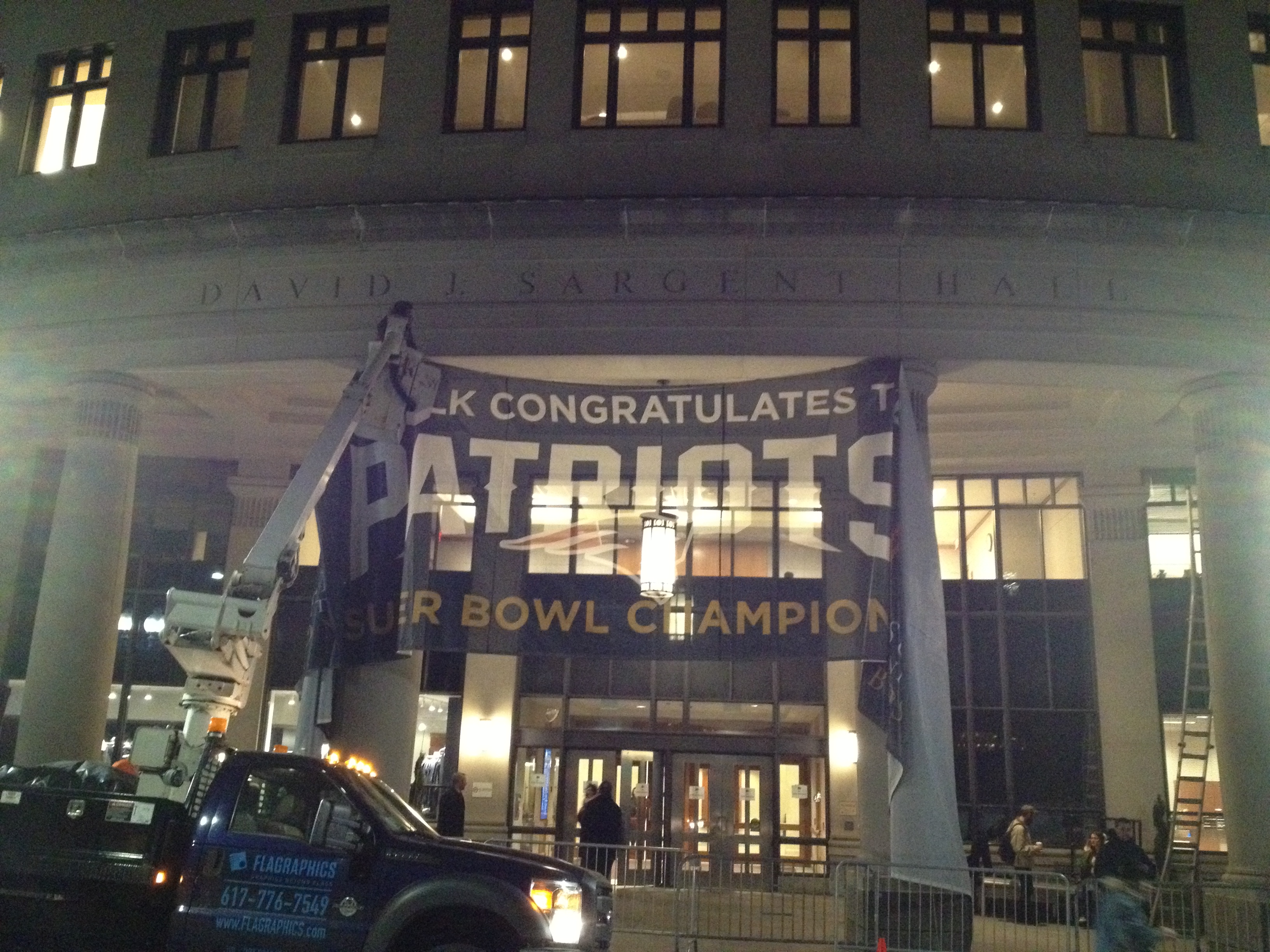
My school during more celebratory times, including being on the parade route for championship celebrations
Many years ago, when I was easily inspired by catchy phrases, the expression “may you live in interesting times” first sounded waaaay cool to me. As a late Baby Boomer (i.e., a member of Generation Jones), I had missed out on all of the drama and tumult of the 1960s. As a history buff, I was fascinated by the Second World War (and remain so). Now those were times that mattered, I thought to myself.
In stark contrast, my formative years included watching lots of bad TV, being amazed at the culinary convenience of Stouffer’s French bread pizza, and wearing clothes that threatened to melt if I got too close to a radiator.
I would later learn that “may you live in interesting times” was thought to be an old Chinese curse, not a blessing! And now we know that its allegedly ancient provenance is apocryphal. Heh, perhaps the whole tale was invented by someone who knew that impressionable fellows like me would fall for it.
Anyway, I thought about the expression as I prepared to make one of my occasional trips to my university office yesterday, in order to pick up some materials to help me prep for the coming semester. You see, this decision involved a bit of personal calculus that directly reflects our current situation.
First, for me at least, every trip on the Boston subway now involves a standard risk assessment. If I catch COVID-19, I’m at moderate risk to develop a severe case of it. So, I wear a KN-95 mask, put on gloves (once our infection rate started to surge again), and liberally use my bottle of hand sanitizer. When I enter a subway car, I do a quick scan for folks not wearing masks. I will try to transfer cars at the next stop if there appear to be blatant violators.
Second, I decided to go in yesterday, even though classes don’t begin for another two weeks. According to credible news reports, the same insurrectionist cells that stoked the violent occupation of the U.S. Capitol last week are threatening similar events in both Washington D.C. and all 50 state capitals for next week. Boston is the capital of Massachusetts, and the State House building is a short walk up the street from my university office. I plan to avoid the area. (In fact, a few days ago, I wrote senior university administrators at my school to suggest that all buildings be closed for most of next week, out of an abundance of caution.)
Interesting times, indeed. The coronavirus has changed the way we live, while an ugly and deeply divisive election and its aftermath have been playing out before us. Although I sincerely believe that 2021 will be better than its predecessor, the next few months will be dire in terms of our public and civic health. This time will be remembered as one of the most challenging periods in our history.
I’ve always been a news junkie, but I’m following daily developments like never before. I guess you could say that I got what my younger self wanted. But that younger self was not always very wise or perceptive. In a 2017 remembrance published in The Cresset, the literary journal of Valparaiso University (my undergraduate alma mater), I opened with an observation that I had long regarded my collegiate years as covering a rather dull, uneventful stretch of America’s history. Subsequent events, however, would prove otherwise, revealing that a lot of important developments were occurring during that time.
In reality, the ebb and flow of history suggest that there are no truly uneventful times. Something is always going on, even if its significances are not always evident in that snapshot moment. Moreover, we can live meaningful and interesting lives under virtually any general set of circumstances. I think that’s the more important consideration to keep in mind.
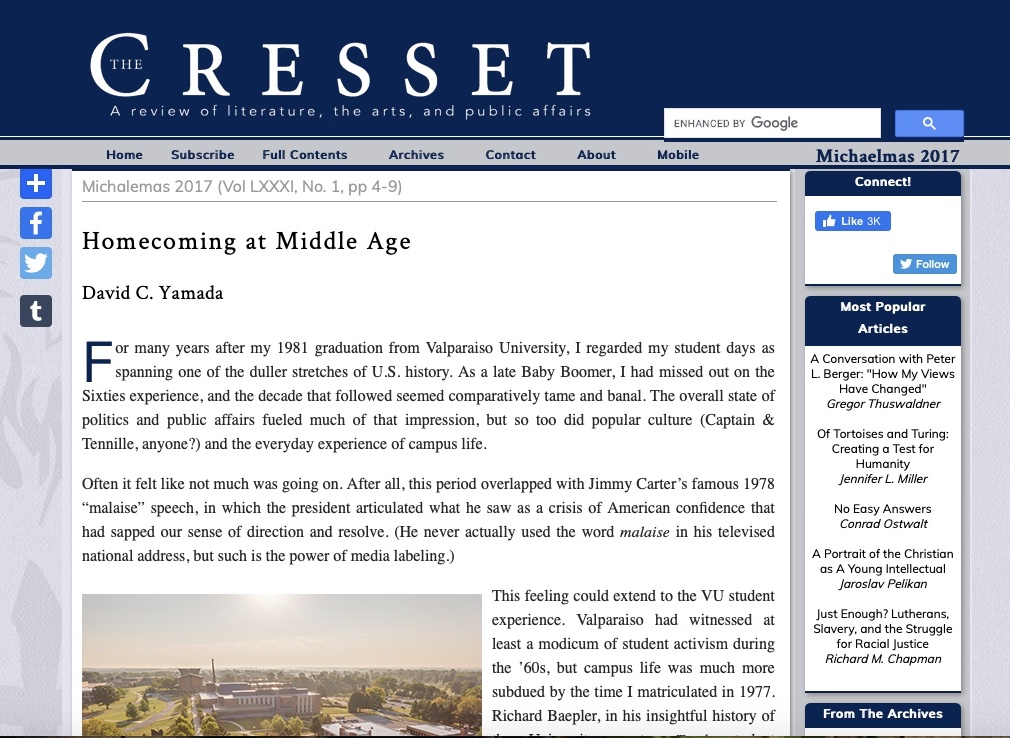
As a young collegian, I yearned for interesting times
Pandemic Chronicles #10: Taking stock of our lives

Is the coronavirus pandemic prompting you to take stock of your life? Are you spending some of the compelled time at home examining your past, present, and future? If so, you’re in good company. Put simply, facing one’s mortality and living under lockdown conditions has a way of encouraging big picture thinking.
In a recent piece for the Boston Globe (link here), journalist Beth Teitell examines this phenomenon:
If an entire region can have an existential crisis, we’re having one.
With COVID-19 cases mounting and the fear of death hovering, therapist Sam Nabil captured the question lurking barely beneath the surface:
“If I die now, have I lived the life I wanted to?”
For many, the answer is no. Spouses are being left, retirements pushed up, friends dropped. People are moving to rural spots and strengthening their faith, and those fortunate enough to have a choice are saying “no” to commuting.
At the core, so many of the individuals interviewed in Teitell’s piece refer to reassessing their values and priorities. It’s deep stuff, leading to decisions about how we want to live, what we want to do, and what people we want to hold close.
Perhaps this reassessment will not only lead us to better our own lives, but also individually and collectively move us toward creating a better society. Exploring this possibility for the New Yorker, author Lawrence Wright interviewed Gianna Pomata, a retired professor at the Johns Hopkins University’s Institute of the History of Medicine, about how the pandemic may shape our futures (link here). Dr. Pomata is an authority on, among other things, the history of the Black Plague of the Middle Ages.
Now living in Italy, one of the original hot zones for COVID-19 outbreaks, Pomata shared her historical perspective with Wright:
When we first talked, on Skype, she immediately compared covid-19 to the bubonic plague that struck Europe in the fourteenth century—“not in the number of dead but in terms of shaking up the way people think.” She went on, “The Black Death really marks the end of the Middle Ages and the beginning of something else.” That something else was the Renaissance.
…“What happens after the Black Death, it’s like a wind—fresh air coming in, the fresh air of common sense.”
Although Pomata expressed shock over the resistance of so many Americans to follow basic public health precautions such as wearing masks, she sees the potential for a similar revitalizing response on a global level once we get through this pandemic:
“What I expect now is something as dramatic is going to happen, not so much in medicine but in economy and culture. Because of danger, there’s this wonderful human response, which is to think in a new way.”
So, I’m going to put on my law professor’s hat and say that the jury’s still out for me on whether our post-pandemic world will be a more enlightened one. After all, here in the U.S., we are witnesses to some of the most appalling ignorance and selfishness when it comes to undertaking preventive public health measures, and we have an alarming absence of competent leadership at the head of state.
Nevertheless, if humanity can come out of the utter carnage of the Black Plague to create the Renaissance, then we have the capacity to emerge from this pandemic with a vision for a much better world as well. That’s all the more reason to wear those masks, wash our hands, and stay socially distanced.
When an author finally “clicks” with you after several tries

One of my 2019 resolutions has been to downsize my overflowing book collection. I’m actually managing to keep to it, with several dozen books already given away or donated, and lots more to follow. In culling through my books for possible offloading, I’m trying to apply the following test:
- If it’s a book relevant to my work, am I ever likely to use or need it? With work-related titles, I don’t have to read them cover-to-cover. If I can reasonably expect to consult a book at some point for teaching, research, blogging, etc., I’ll hang onto it. Otherwise, I should find another home for it.
- If it’s a book for reading enjoyment, am I ever likely to read or re-read it? For fiction, it means cover-to-cover. For non-fiction, it means at least wanting to dip into a chapter or two.
I’m also using the same screening inquiries for book purchases. Over the past, oh, say, 35 years, I’ve made more impulse book purchases than I’d like to admit. Perhaps I’ve rationalized that this intellectual form of retail therapy is a more virtuous way to lighten my wallet, but it often results in buying a book that sits, unread, on a shelf or in a pile.
Put simply, I’m old enough to be thinking about how many books I can read during the rest of a hopefully decent lifespan. Decisions and choices must be made.
Beware the fickle reading heart
But the reading heart can be a fickle one. Or so it was reinforced to me during the past week or so, when I read with pleasure an espionage novel set in World War II, Alan Furst’s A Hero of France (2016). For some 30 years, Furst has been writing these richly atmospheric novels set in Europe of the 1930s and 1940s. As a result, he has a dedicated following of readers and appreciative reviewers.
When I discovered Furst years ago, I thought that I would be one of those fans. The WWII era has grabbed my interest since childhood, and I enjoy reading espionage novels placed in that time. Reviewers have praised Furst’s ability to create evocative, suspenseful tales of everyday people confronted with the on-the-ground evils of fascism and decisions that must be made as a result. And what enthusiast of the genre can resist picking up books with titles such as The World at Night and Foreign Correspondent?
However, several tries at Furst’s books just didn’t take. I sped through one of them and thought it was OK. I read a few chapters of others but never finished. After obtaining several of his books, I eventually gave them away. Something just wasn’t clicking for me, rave reviews notwithstanding.
But a couple of weeks ago, I discovered A Hero of France in yet another pile of unsorted books. A little voice in me said to give it a try, and I’m glad I did. The book’s protagonist is a member of the French Resistance, and the story covers roughly five months. It is written almost as a series of vignettes, sometimes with days or weeks passing in the story, and the reader is left to imagine what happened in between. Different characters come and go as well; some loose ends aren’t tied up. While A Hero of France earned Furst another round of positive marks from book reviewers, some readers who like to have every subplot resolved found themselves lukewarm towards the way he constructed the book.
In my case, however, this time Furst worked for me. I finally got what readers and reviewers have been saying about his ability to recreate this historical time and place. Because the book is written in an episodic way, it made for easy subway reading. One minute I’m stepping into an Orange Line train to take me home, the next minute I’m in a café in 1941 Paris, wondering what will happen when the Resistance members meet up there. Rather than rushing through the book, which I am too often tempted to do with mysteries and suspense novels, I went along for the ride and savored the surroundings created by the author.
Outgoing and incoming
Now, of course, I find myself reacquiring a few of the Furst titles that I had given away. I’m not loading up on them, figuring that after one or two more, I may want to read something else. But I definitely have come to understand the appeal of this author.
So herein lies the dilemma: Will my current round of book culling lead to giveaways of other titles that I eventually will want to read? Am I prematurely giving up on books that I am capable of enjoying immensely?
After a while this starts to sound like a counseling and existential philosophy session for book lovers. Add in the reality that although I love to read, ironically I am not a voracious reader in terms of volume. Even in an imagined retirement, I don’t see myself simply plowing through books.
As I said, decisions and choices must be made. The good news is that I may select from an embarrassment of riches. The process of selecting books for offloading should also reintroduce me to others worth adding to my short list, rather than creating anxiety.
A tour of historic Massachusetts General Hospital

The tour concluded in the Ether Dome
Like many folks, I generally don’t like being at hospitals. It has nothing to do with the dedicated health care professionals who work in them, but rather because I associate hospital stays with serious disease or injury. Nevertheless, last week I joined a guided tour through historic parts of Massachusetts General Hospital in Boston, and it was very interesting.
The tour was sponsored by Old South Meeting House, the non-profit organization based in the historic Boston building of the same name. Old South (the building) dates back to colonial days. A public meeting hall, it was the site where rebellious patriots planned the Boston Tea Party (1773) in protest of taxes levied by the British crown. Old South (the organization) maintains the historic site and hosts programs and talks devoted to Boston history.
I learned that MGH was founded in 1811 and is the third oldest general hospital in the U.S. The “general” hospital distinction is important, because it means that (1) its services are open to all; and (2) it treats a full range of health conditions.
The highlight of the tour is a visit to the “Ether Dome,” the name given to the operating theatre that hosted the first public demonstration of anesthesia in 1846. The space is still used for meetings today, and it has been maintained to look as it did during the 19th century.
This 2000 painting depicts the historic event, which you can read about at the Wikipedia page about MGH:

And here’s my snapshot of the location shown in the painting:
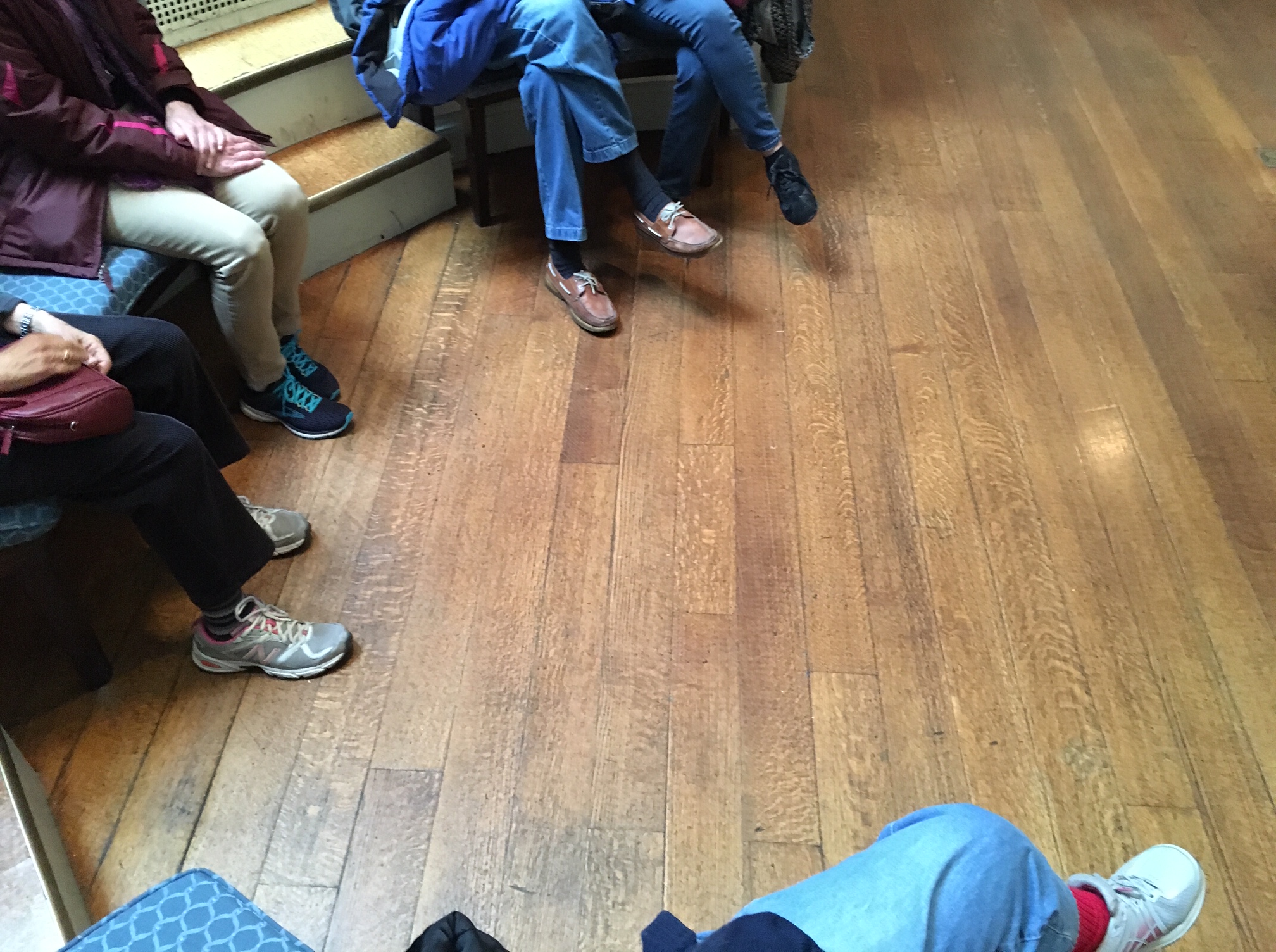
Yup, we were right there. It gives you chills.
For reasons stated above, I probably won’t be signing up for many more walking tours of hospitals, if at all. But MGH is a historic site in Boston history and a significant institution in the history and ongoing delivery of health care in America.
The tour was also a reminder to me of how much fascinating history is present in Boston. Even as a history buff, it’s easy to take for granted how much evidence of early American history is all around me. I’ve decided to spend more time exploring that history, and toward that end I recently renewed my membership with Old South Meeting House. It’s neat to play tourist in my own hometown, and I want to do more of that.
Early winter binge viewing

The combination of a cold and some holiday downtime has led to a lot of binge viewing during the past couple of a weeks, and the televised rewards have been substantial. Here’s what I’ve been binging:
“TURN: Washington’s Spies” first appeared on AMC in 2014. It’s set in the American Revolution during the late 1770s, and it develops the story of an American spy ring operating along the east coast. When TURN first appeared, I watched most of the first season and thought it was okay, but I didn’t follow the series through its full four-season run. Although I’m a lifelong history buff, for some reason I didn’t take to it during the first viewing.
But I started TURN from the beginning last week and finished this week, via Netflix. I was completely drawn into it. At times the loyalties and deceptions were hard to follow and seemed to flip flop in head spinning ways, but the core narratives held the series together. I especially liked the focus on ground-level operatives. Major military and political figures entered the fray as well, but the perspective was that of the rank-and-file spies, soldiers, and civilians. It deepened my interest in this aspect of American history.
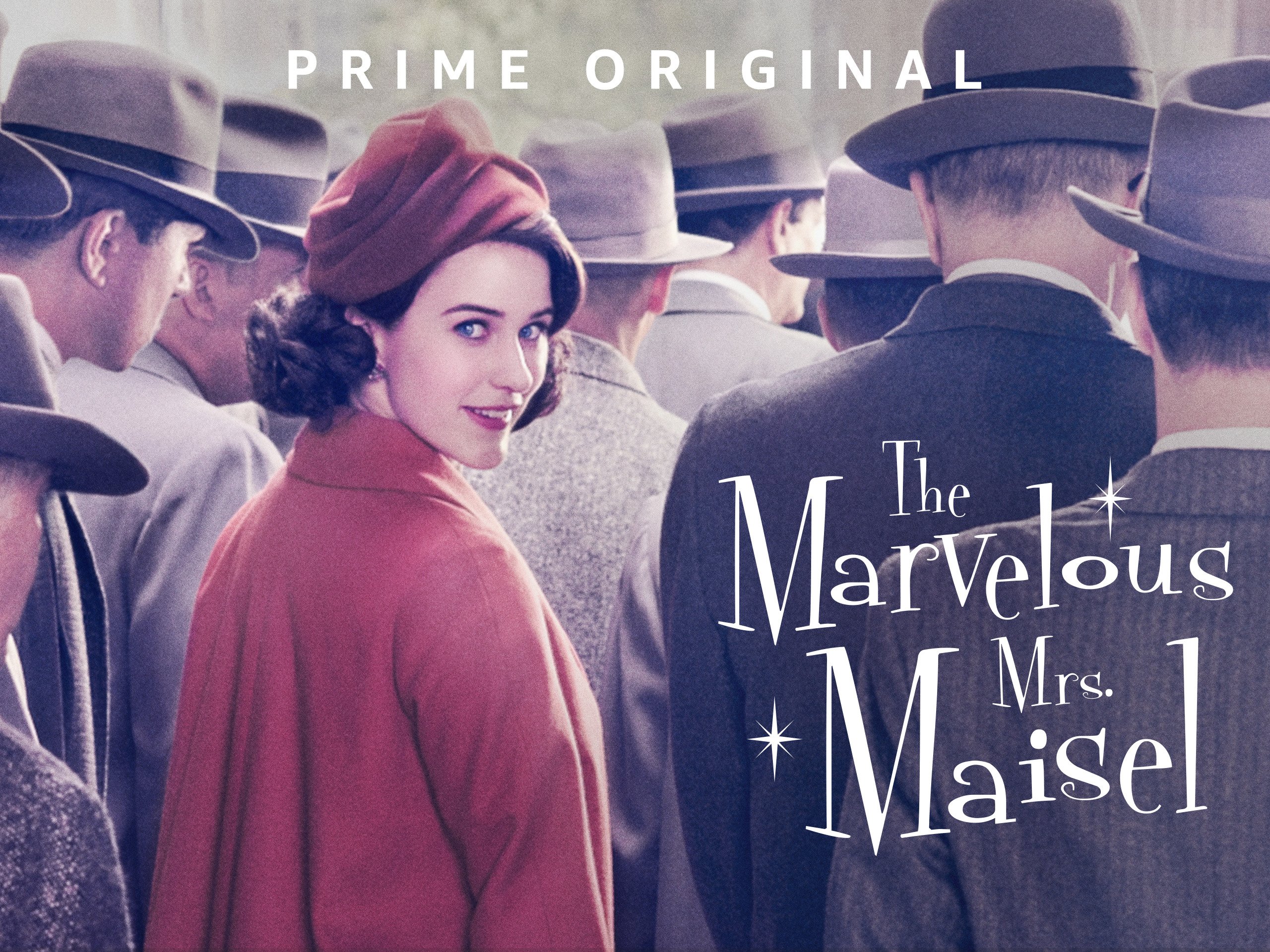
Despite all the awards it’s racking up, I didn’t expect to be so smitten by “The Marvelous Mrs. Maisel.” But I was hooked by the end of the first episode.
Set in 1950s New York City, Miriam “Midge” Maisel (Rachel Brosnahan) is a young wife and mother who quickly discovers that she has a gift for doing stand-up comedy. Susie Myerson (Alex Borstein), who works at the Greenwich Village nightclub where Midge does her first impromptu gig, becomes her manager. Brosnahan is perfectly adorable as Midge, and Borstein is a hilarious scene stealer as Susie.
“The Marvelous Mrs. Maisel” has now completed its second season. I won’t say anything more, except that if you like a funny, charming TV series replete with entertaining doses of New York City nostalgia, family dysfunction, and Jewish culture, this is a winner.

“Mindhunter” is about an unlikely pairing of two FBI agents during the late 1970s who commit themselves to understanding more about the psychology of serial killers. It’s not for the squeamish.
As some readers know, much of my work as a law professor concerns bullying, mobbing, and psychological abuse in the workplace. I have been deeply engaged in this work for some 20 years, and during this time I have deepened and broadened my understanding of psychology, especially in the realms of abuse and trauma. A lot of the psychological themes in “Mindhunter” resonate with me, especially when it delves into the outward “ordinariness” of serial abusers.
I also like how the series tackles the reality of a law enforcement bureaucracy resisting the usefulness of psychological research and insights. Modern, common understandings about serial killers today were quite unknown some 40 years ago, when old fashioned attitudes and assumptions towards hunting down criminals weren’t working for catching this newer breed of killer.

“Dirty John” is about a severely narcissistic, dishonest charmer and his relationship with his latest romantic target. It’s based on a real-life story that was the subject of an award winning podcast. Eric Bana stars as lying drifter John Meehan, and the remarkable Connie Britton stars as Debra Newell, the object of Dirty John’s attention and manipulation.
The limited series is getting mixed reviews, but I love it. I concede that my interests in psychological abuse and deception are a big part of the draw, but I also enjoy the performances and find the storyline creepily compelling. Check it out and see if you agree. And when it comes to Connie Britton’s portrayal of intelligent, accomplished, kindhearted, but clueless Debra, don’t be surprised if the title of a popular self-help help book, Smart Women, Foolish Choices, pops into mind!
***
Folks, this heavy dose of binge viewing underscored a fundamental truth for me: We’re in the true Golden Age of television. Networks, cable, public television, BBC, and streaming services are producing high-quality new programs in abundance. Cable stations, streaming services, and DVDs are preserving and offering classic television programs from the past.
Although cable bills have gotten out of control, the remaining viewing options are relatively affordable, even on a modest budget. There’s so much good stuff to watch. Bon appétit!
The Great War, in stunning, detailed color
Lately I’ve been watching movies depicting aspects of trench warfare during the First World War, including “Journey’s End” (2018), “King and Country” (1964), and “Westfront 1918” (1930). I highly recommend each of them.
They also have been fitting lead-ins to a stunning new documentary, “They Shall Not Grow Old” (trailer here), featuring a masterful restoration of film footage from the war, enhanced by expert colorization. Using this footage and recorded interview excerpts from WWI veterans, the documentary recreates the experience of British soldiers being recruited, trained, and sent to the front, where they are soon confronted by the terrible realities of trench warfare.
“They Shall Not Grow Old” presents the Great War as no succeeding generations have ever seen it. Director Peter Jackson headed up this project, and the visual results are breathtaking. I saw the film at a local movie theatre in Boston as part of a limited national release here in the U.S. It was accompanied by a fascinating short feature on how the restoration was done and how the sound component was developed.
If you want to read reviews and commentary about the documentary, these pieces from the Guardian, Atlantic, and New York Times are worth checking out. Variety reports that the limited release has been a huge success and that a wider release is scheduled for 2019. The Thursday afternoon showing I attended was sold out. If you have any interest in this important chapter of history, then by all means get a ticket to “They Shall Not Grow Old” when it comes around to a theatre near you.
An eight-minute flight to Hawaii
This really cool eight-minute 1950 United Airlines travelogue of a Boeing Stratocruiser flight from California to Hawaii pushes nostalgia buttons for an age that preceded my earthly arrival. It harkens back to an era of commercial air travel before the jet airliners arrived. The post-WWII years featured powerful propeller-driven aircraft capable of making the long Pacific flights. And as the video shows, it was a pretty special experience.
For many, this was a once-in-a-lifetime journey. It called for dressing up, even if seated in the main cabin (i.e., coach). The flight alone was an event. Watch the video and feel your mouth water at the plated meals and pre-landing buffet! (It’s easy to forget that even domestic flights within the continental U.S. often included a hot meal for everyone.)
The contrasts to the present are pretty obvious. There is nothing romantic or adventurous about standard-brand air travel today. Oh, it’s still the case that a trip to an exotic locale or to see cherished family and friends can bring excitement and anticipation. But otherwise, hopping onto a plane for a flight is a more practical experience designed to get us from point A to point B.
Of course, modern air travel is also less expensive than it was back in that day. With luck and timing, a plane ticket can take us a long way and back at relatively affordable prices. Vacations and reunions still await us upon landing. For the flight itself, just expect cramped seating and swap out that in-flight entrée for a bag of chips.

Approaching Boston’s Logan International Airport (photo: DY)
 Musings of a Gen Joneser
Recent Comments