Derby-Pie, baseball bats, and a Gatsby-esque hotel in Louisville
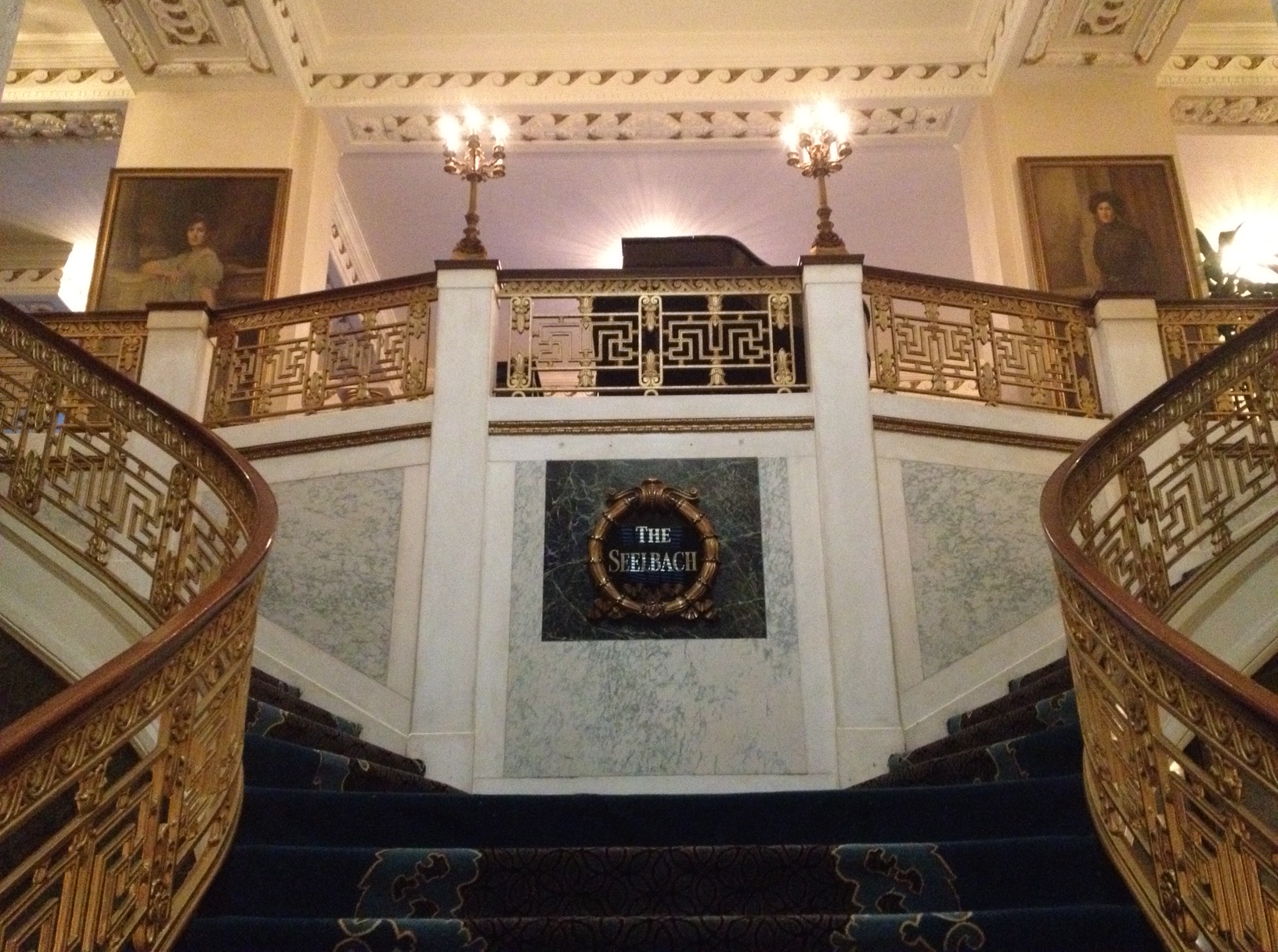
Featuring Scott, Big Al, and maybe a ghost or two (photo: DY, 2014)
I was reminded how travel is one of the benefits of my work when I made a quick trip to Louisville, Kentucky to speak last Friday at a continuing legal education program sponsored by the University of Louisville’s Brandeis School of Law.
It was my first visit to this historic old riverboat city, and I hope that I’ll be able to return for a longer one.
Seelbach Hotel
The conference was held at the Seelbach Hilton Hotel in downtown Louisville. I’m sufficiently clueless about interior aesthetics that I rarely notice much about hotels I stay in, but the Seelbach is a beautiful place with lots of history. F. Scott Fitzgerald spent time there and was so taken by it that he used the hotel as the setting for Tom and Daisy Buchanan’s wedding in The Great Gatsby. Prohibition era gangster Al Capone was a frequent visitor as well.
And as befits any classic old hotel, ghost sightings have been reported at the Seelbach. Local history expert Nicholas Howard writes:
The first ghost sighting was in 1987 when a cook spotted a woman in a blue dress with long dark hair walk into the elevator and disappear; the catch was the doors were closed the whole time. A maid spotted the same woman the same day. With some investigating, it is believed she is the spirit of a woman that died there in 1931. . . .
A guest in 1985 also called the desk saying she felt something rubbing her legs when she got into her bed; nothing was ever found in the room. There are also reports of guests TVs being turned on in the middle of the night, the air conditioners coming on and reports of an old woman roaming the halls.
Baseball bats
I believe the first time I ever heard of Louisville was in connection with baseball bats. You see, “Louisville Slugger” is the name of an iconic brand of baseball bat, and the company still has its headquarters in the city. Walking along Main Street, you’ll see Louisville Slugger plaques and baseball bats making for the “Walk of Fame.” As a baseball fan, I got a big kick out of this!
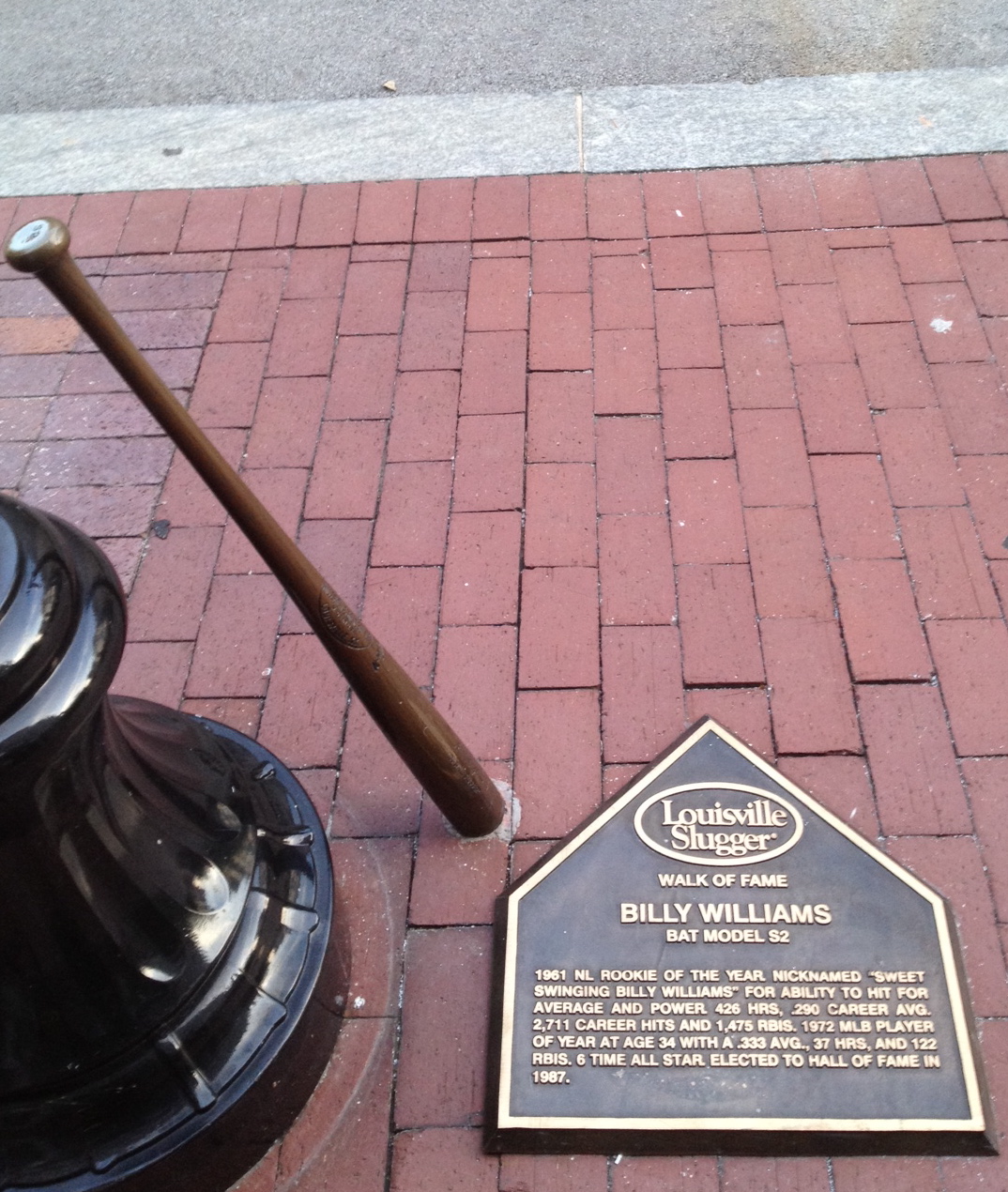
Honoring Hall of Fame outfielder Billy Williams, one of my favorite Chicago Cubs (photo: DY, 2014)
Derby-Pie
The conference organizers hosted a lovely dinner for program speakers at the Bristol Bar & Grill, and the highlight for me was a local dessert known as Derby-Pie, which I can best describe as a sort of walnut & chocolate chip pie with a flaky crust.

From derbypie.com
Derby-Pie is one of the best desserts I’ve ever tasted! On a plate in a dimmed dining room, it looks like just another dessert, but after one bite…
In praise of the mundane and slow blogging

My triple decker condo building, on the right, Jamaica Plain, Boston (Photo: DY, 2014)
Commenting on my previous dramatic, pathbreaking post about coffee (NOT), one of my friends remarked on Facebook that I had a knack for making even mundane subjects sound engaging and interesting. That’s a real compliment for a personal blog — thank you, Holly!
That said, “mundane” isn’t exactly what inspired blogging, which first became popular roughly a decade ago as a way to publish breaking news and commentary on major events. In addition to serving that journalistic purpose, blogging also has grown into a medium for synthesizing information and for sharing analysis and opinion.
In any given week, I read a fair share of blogs for all of these purposes. And through my professional blog, Minding the Workplace, I attempt to contribute to that dialogue by writing about issues of employee relations, workplace bullying, and psychological health at work. On occasion, I even help to break a story within my realm of work.
However, I also find myself increasingly drawn to blogs about everyday life, hobbies, travel, memoirs, TV shows, books, sports, avocations, and anything else that isn’t about hard news, analytical thinking, and conflict. They offer interesting, entertaining, and sometimes fascinating windows into our daily lives. And since launching this personal blog last fall, I’ve come to enjoy writing about some of the more common or ordinary aspects of life, two words often used to define mundane.
Understanding “slow blogging”
To characterize these less momentous uses of blogging, I reference the term slow blogging, the philosophy and practice of which has been beautifully articulated in the Slow Blogging Manifesto by software designer and writer Todd Sieling. (He hasn’t updated his blog in years, but this post alone is worth keeping it online.) Here are a few snippets:
Slow Blogging is a rejection of immediacy. It is an affirmation that not all things worth reading are written quickly, and that many thoughts are best served after being fully baked and worded in an even temperament.
***
Slow Blogging is a reversal of the disintegration into the one-liners and cutting turns of phrase that are often the early lives of our best ideas.
***
Slow Blogging is a willingness to remain silent amid the daily outrages and ecstasies that fill nothing more than single moments in time, switching between banality, crushing heartbreak and end-of-the-world psychotic glee in the mere space between headlines.
The happily mundane
Maybe we need to make a more prominent place for slow blogging about the common and ordinary. We all want to live good, rewarding, purposeful lives. Many of us have a tendency to frame this in terms of milestones, such as major work accomplishments or family events. But perhaps we should spend more time appreciating and reflecting upon the everyday stuff as part of our search for that meaning.
So I leave you with this photo of my three-unit condo building in Jamaica Plain, Boston (“JP” to locals), taken on a dreary, wet, overcast day earlier this year. Having moved there in 2003, this is the longest I’ve lived anywhere since my childhood. Although my condo is nothing elaborate in terms of space, views, furnishings, or architecture, it’s a good home.
Equally important, as someone who doesn’t own a car, my place is a quick walk to subway (aka the “T” in Boston) and bus lines. The T’s Orange Line takes me into the city’s downtown area. Logan Airport and South Station (Amtrak) are short T rides away, a boon to frequent travelers such as myself.
My home is close to JP’s shops, stores, and restaurants. And when I’m hungry and don’t want to cook heat up something, I can bop across the street to the City Feed and Supply Store for a sandwich, order a pizza from Il Panino, or call in for Chinese delivery from Food Wall.
The photo above doesn’t capture the beauty of JP, a diverse, picturesque neighborhood in the southwest region of Boston. I was reminded of this a couple of weeks ago when I slept past my subway stop and got off at the next station, still in JP. To get home I walked along the Southwest Corridor Park, a linear park that runs roughly parallel to the T tracks through a long stretch of the city. It was a beautiful walk, the kind that makes you think “urban oasis.”
These are simple things that can make for an enjoyable day, and pleasant reminders — even for those of us too caught up in destinations at times — that the journey counts for a whole lot.
Coffee and me
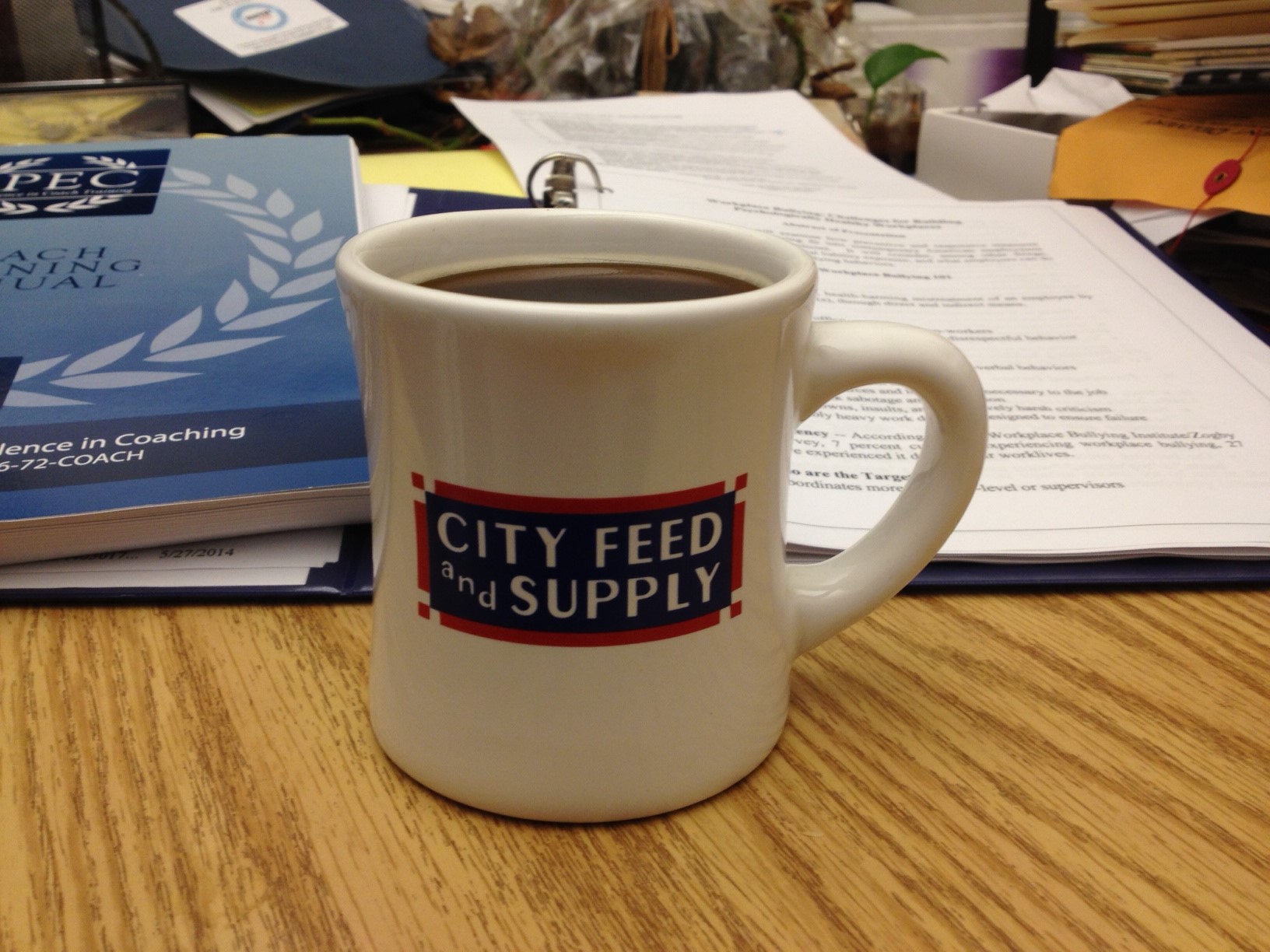
Every so often, I feel moved to blog about coffee. The hearty brew is a daily part of my life. Today I consume coffee for a variety of reasons. Its caffeinated punch (no decaf for me, thank you), aroma, and taste all count for me. Plus, there’s something about the aesthetics of being a coffee drinker that appeals to me.
I was a latecomer to the coffee thang. I didn’t drink it regularly until my mid-thirties, and it’s no mere coincidence that I became a tenure-track faculty member around then! That late night cup (or two) helped me get through a lot of heavy-duty initial class preps and exam grading.
But I’m not exactly a coffee connoisseur — while a fresh, organic blend is always nice, in a pinch I’m happy to swill whatever is served at local convenience stores.
Home and office
At home, most of my coffee comes from the City Feed and Supply store in my Boston neighborhood of Jamaica Plain. They sell assorted blends of Equal Exchange fair trade, organic coffee, all of which brew up nicely in my ordinary drip coffee maker.
I don’t know whether this is a good thing or not, but I’ve reached a point where I can enjoy coffee well into the evening hours and experience the caffeine kick, without being rendered an insomniac for the night.
At work, a couple of years ago I bought a Keurig coffee maker for our office suite, and I usually pop in a K-cup every day. It’s not as good as the homebrewed stuff, but it’s fast, convenient, and relatively inexpensive.
Café culture
One might think that my job as an academic affords plenty of opportunities to work or relax in cafés and coffeehouses, but I’ve found that to be illusory when meetings and other obligations pile up. Still, I want to make more time for this. I can be quite productive in such settings, with my laptop or iPad in front of me and some coffee and a morsel on the side.
Until I read this piece about the history of Boston’s café culture by Magda Romanska, I had no idea that the city enjoyed such a rich history with coffee and coffeehouses. Here are a few snippets:
- “Although the first man known to bring knowledge of coffee to North America was Captain John Smith in 1607, who was familiar with coffee, thanks to his travels in Turkey, the first-ever coffeehouse in America was actually opened in Boston by John Sparry. As Boston city records indicate, in October 1676 John Sparry was ‘aproued of by the select men to keepe a publique house for sellinge of Coffee.’”
- “Throughout the seventeenth and eighteenth centuries, Boston was the metropolis of the Massachusetts Colony and the social center of New England, so it is no surprise that the most prominent coffeehouses were established here in Boston.”
- “The Boston Tea Party of 1773 was planned in one such coffeehouse, the Green Dragon, known by historians as the ‘Headquarters of the Revolution.’ Located at that time on Union Street in Boston’s North End, the Green Dragon was a meeting place for the Freemasons, who used the first floor. The Green Dragon’s basement was used by several secret Revolutionary groups.”
Pretty cool, huh?
I’ve got no grand insights here. I’ve noticed a lot of Facebook postings about coffee lately, and apparently they rubbed off on me. Time for a refill.
Space Food Sticks, Jiffy Pop, and more: Gen Jones convenience food and snacks
If you’re a classic Gen Joneser, certain kinds of convenience food and snacks were part of your upbringing. Yes, the late 60s and 70s were a Golden Age for the emerging processed food and snack industry. Take a look at this list and add your own if you’re inclined!
1. SPACE FOOD STICKS — Processed, artificially flavored sticks of whatever…chocolate, vanilla, and so on…like a grainy Tootsie roll without the chewiness.
2. JIFFY POP — Popcorn packed in a foil container, put it on the stove and wait for the kernels to start popping and the foil to bloom. Puncture the foil and enjoy.
3. TAB — Addictive diet soda made with cyclamates, an artificial sweetener later yanked off the market for health reasons.
4. CHEF BOYARDEE CANNED “PASTA” — Spaghetti & meatballs, “lasagna,” Beefaroni, and other authentic Italian specialties, just like they prepare ’em in Boston’s North End. NOT. If you didn’t like Chinese food but enjoyed ingesting MSG, these products would meet your needs. Still on the market.
5. PRINGLES — They were such a novelty when they first came out. Imagine, a perfectly stackable alternative to the traditional potato chip! We were more easily impressed back in the day. I still think they’re pretty lousy tasting.
6. BUITONI’S INSTANT PIZZA — Self-enclosed “pizzas” that you’d pop in the toaster until hot. The instructions were silent on how to clean your toaster when the product broke or started leaking.
7. HOSTESS TWINKIES, CUPCAKES, ETC. — Rumor has it that the crème filling is not organic.
8. SARA LEE FROZEN CHOCOLATE CAKE AND POUND CAKE — For those moving beyond Hostess. Remember how they came in tins? But once defrosted, oh my, they were delicious. The chocolate cake, with the rich creamy frosting, remains among the best I’ve ever had.
9. KOOL AID — Believe it or not, back then it was a special treat. Nothing like drinking 73 parts sugar + 1 part artificial flavoring.
10. JOHN’S FROZEN PIZZA — More on the pizza theme. Even though things cost a lot less back then, we still should’ve realized that a 12 inch pizza for around 79 cents wasn’t exactly the real deal.
11. BUGLES — Salty, crunchy corn snacks shaped like, natch, bugles. Super nutritious, too.
12. SWANSON’S AND BANQUET TV DINNERS — With foil trays and little compartments for each food item. I didn’t like it when the gravy would spill into the fruit compote. Descendants of those who invested in companies that made food preservatives are grateful and probably living off the interest.
Pizza box art

Displayed above is a picture of a pizza place in some unspecified Italian setting. No, I didn’t buy it at a gallery or from a street artist. I cut it out of a pizza box top, from Il Panino Cafe & Grill in my Boston neighborhood of Jamaica Plain. It’s my favorite Italian/pizza delivery place. The food is a solid cut above the usual delivery fare, and the service is great. I’m a steady customer; in fact, I order from them often enough to know that the pizza box art, done by CM Design, isn’t even their normal box.
I realize that I’ve just betrayed one of my culture blocks: I’m just not that big into art. In fact, my lowest grade in college by far was a D+ in . . . drumroll . . . Art Appreciation. And in my own perma-adolescent sort of way, I’m kinda proud of it. That said, I’ve taken steps to alleviate my block, including taking an art history course at a local adult education center, which I enjoyed.
Anyway, having cut out the picture, I don’t know what I’m going to do with it. It’s not exactly suitable for framing — if you had it in front of you, you’d see a small grease stain. (It was a working pizza box, after all, not some stuffy show box.) But it captures for me the idea of good food in a relaxed, informal setting, with the water in the background — what I imagine a nice place in Italy would be like, which someday I hope to visit. And given how I’ve been feeling about work and my schedule lately, that makes for an appealing daydream.
Well, I’ve just gone rhapsodic over a pizza box with some commercial art on it. I’ve taken up too much of your time already. But especially in the event I’ve inspired you to order a pizza, bon appétit. I happen to have some leftover slices in the fridge; I may have to heat them up now.
Earthy, historic, mysterious, delicious New Orleans

New Orleans has a mythology, a personality, a soul, that is large, that has touched people around the world. It has its own music (many of its own musics), its own cuisine, its own way of talking, its own architecture, its own smell, its own look and feel.
-Tom Piazza, Why New Orleans Matters (2005)
At least during those five months of the year when it isn’t unbearably hot and humid, I can’t think of a more fascinating American city to visit than New Orleans.
I’ve been in New Orleans for a conference, and it’s my first trip to the city in 15 years. Obviously NOLA (as they call it) has been through a lot in the post-Katrina years, but it retains the unique look and feel that Tom Piazza wrote about in his eloquent tribute to the city as it struggled to recover from the storm and flooding.
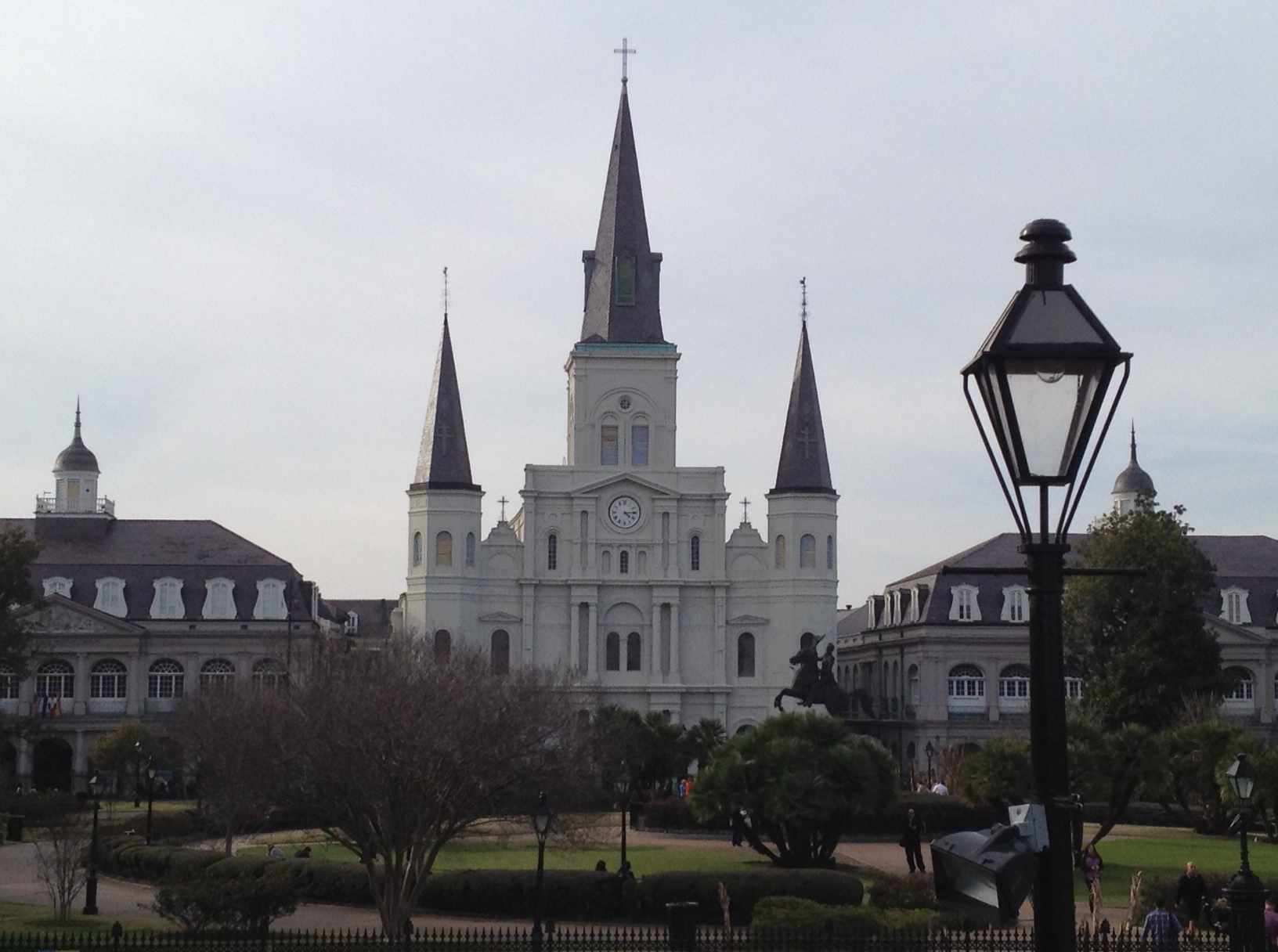
Lately my vacations have been limited to extended weekend trips and add-on days to work-related travel, and thus I tend to explore places I visit in short stretches. Fortunately I can dig into a city like New Orleans, especially its historic French Quarter, even if I have only a couple of days to do so. For starters, I took a great walking tour of the Quarter sponsored by Friends of the Cabildo, a non-profit organization dedicated to preserving Louisiana’s history. From that tour, here’s a shot of the St. Louis Cathedral, the oldest operating cathedral in North America:
Some of my college pals who read this blog know all-too-well how much our semester abroad in England and accompanying post-semester sojourns imprinted themselves on me. Ever since, I’ve welcomed opportunities to re-experience the adventure of youthful European travel, however briefly, and New Orleans allows me to do just that without need of a passport! Seeing artists displaying their work in Jackson Square reminded me of my first visit to Paris over 30 years ago.

Being the bookstore hound that I am, I had to seek out a few of the city’s bookstores. Here’s Beckham’s Bookstore on Decatur Street, a great used bookstore with piles of books next to filled-up shelves that, well, sorta reminded me of my condo!

Beckham’s comes replete with its own resident cat, who apparently commandeers whatever space is convenient in order to get in a well-earned nap.

NOLA is home to some incredibly talented musicians. Here’s a great jazz band playing on Royal Street.
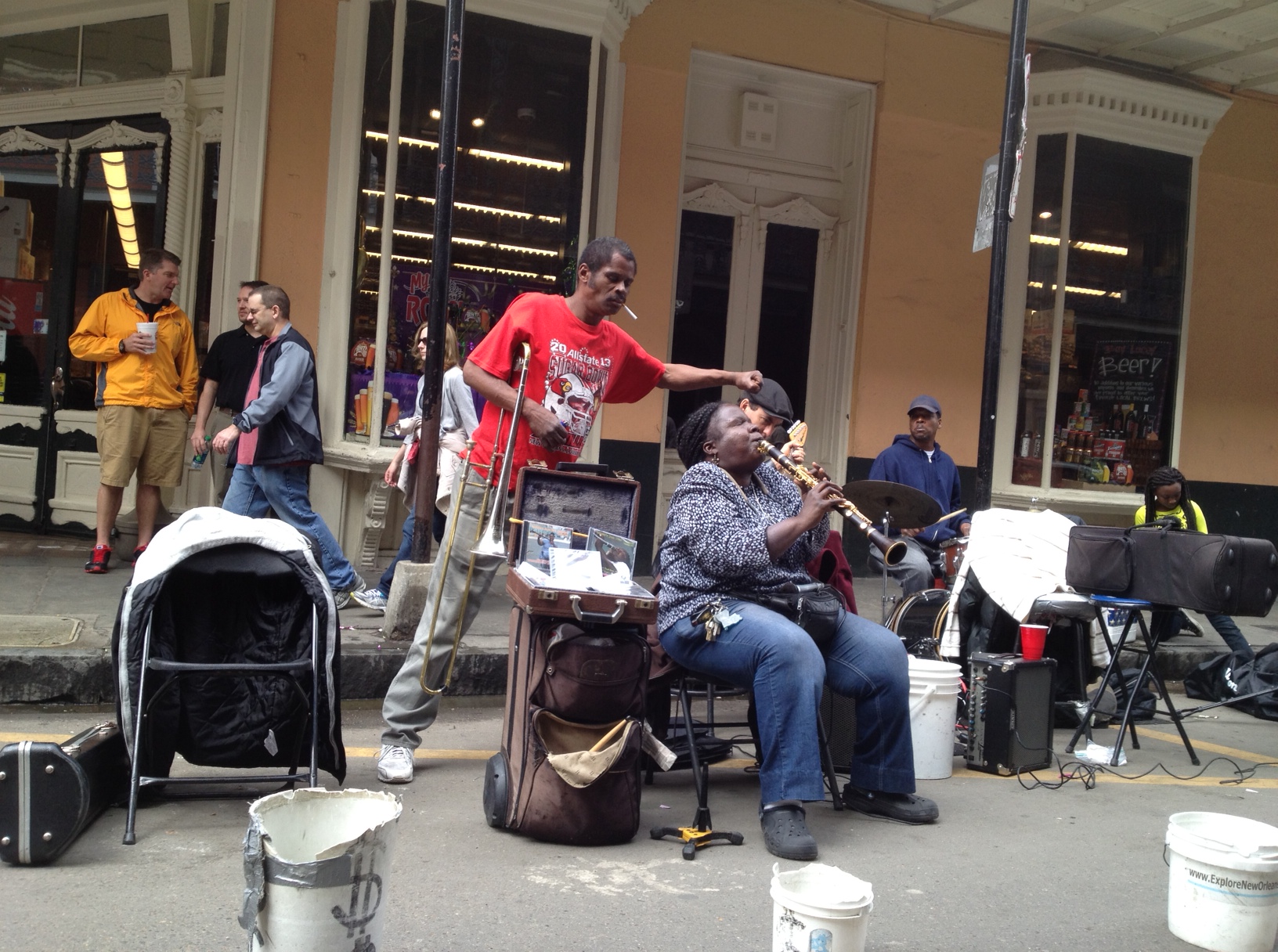
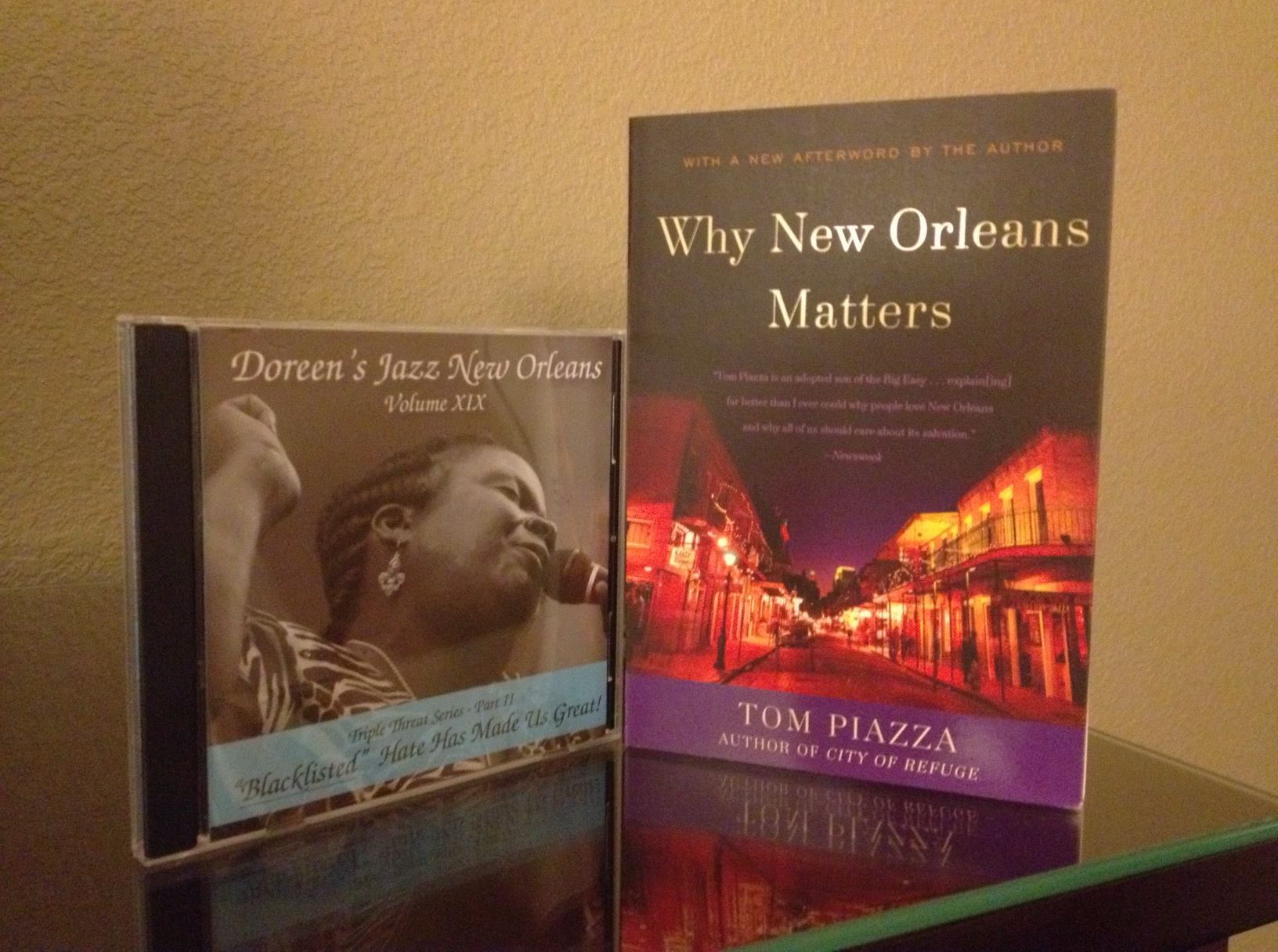
They’re so good, I picked up one of their CDs, pictured here with the Piazza book:
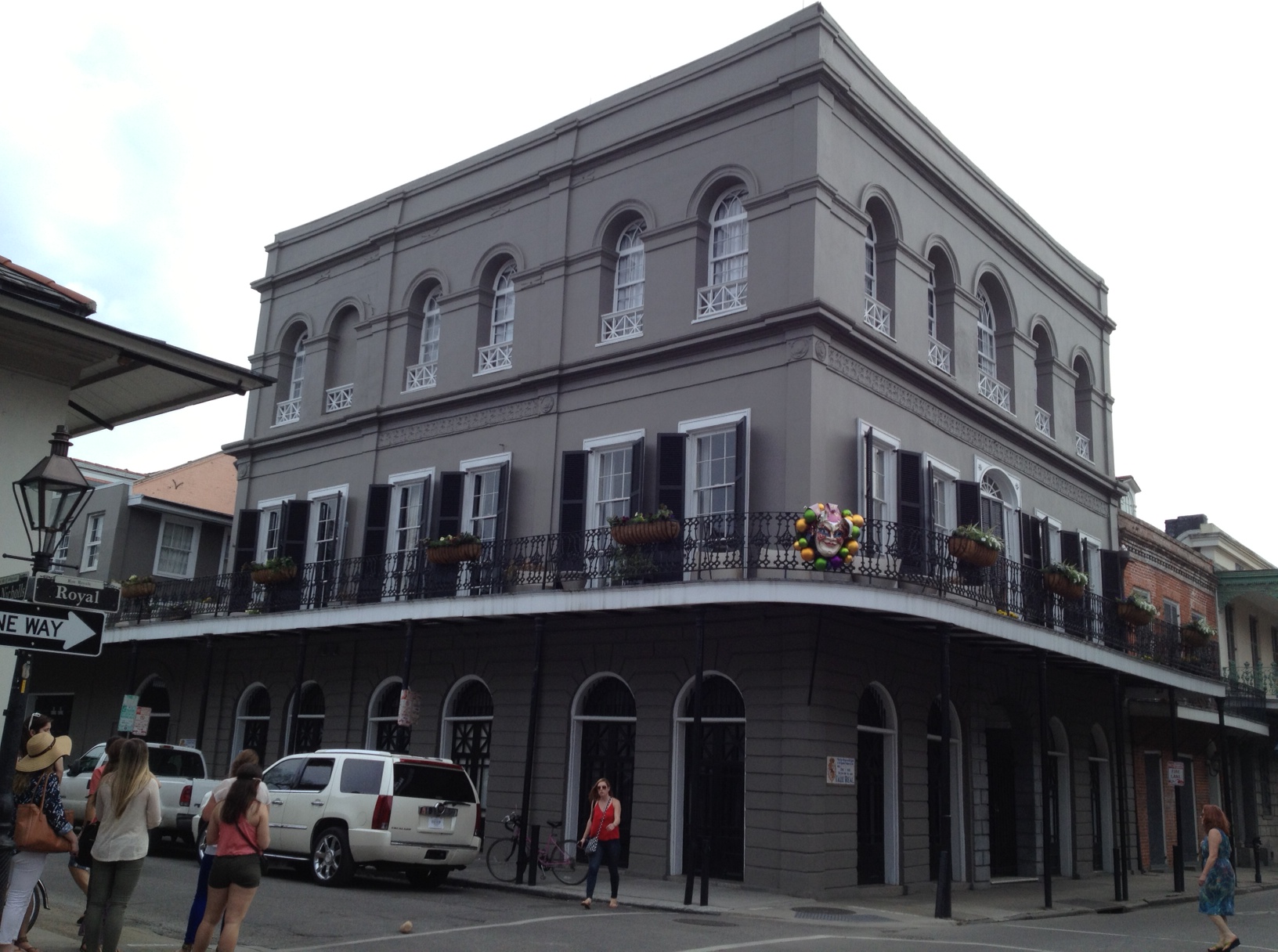
NOLA’s history has its ghastly side that, not surprisingly, sometimes turns ghostly. For example, pictured here is the house of Madame Delphine Lalaurie, who is said to have committed horrific acts of torture on her slaves during the 1830s. Though some claim that she has been unfairly indicted in the court of history, the most authoritative book that I’ve encountered on the topic, Carolyn Morrow Long’s Madame Lalaurie, Mistress of the Haunted House (2012), sides with the accusers. Naturally, the house is a favorite stop on the countless French Quarter ghost tours, and though I didn’t encounter anything supernatural when I was clicking away with my camera, I wouldn’t be eager to spend a night there.
Not all of the historical offerings are uniquely local. New Orleans also is home to the impressive National World War II Museum, co-founded by noted historian Stephen Ambrose, who taught at the University of New Orleans and whose books about D-Day and the European Theatre inspired the HBO series “Band of Brothers.” The museum, which continues to expand, includes a large hall containing vintage aircraft. Here is a B-17 “Flying Fortress,” an iconic U.S. bomber plane of the era.

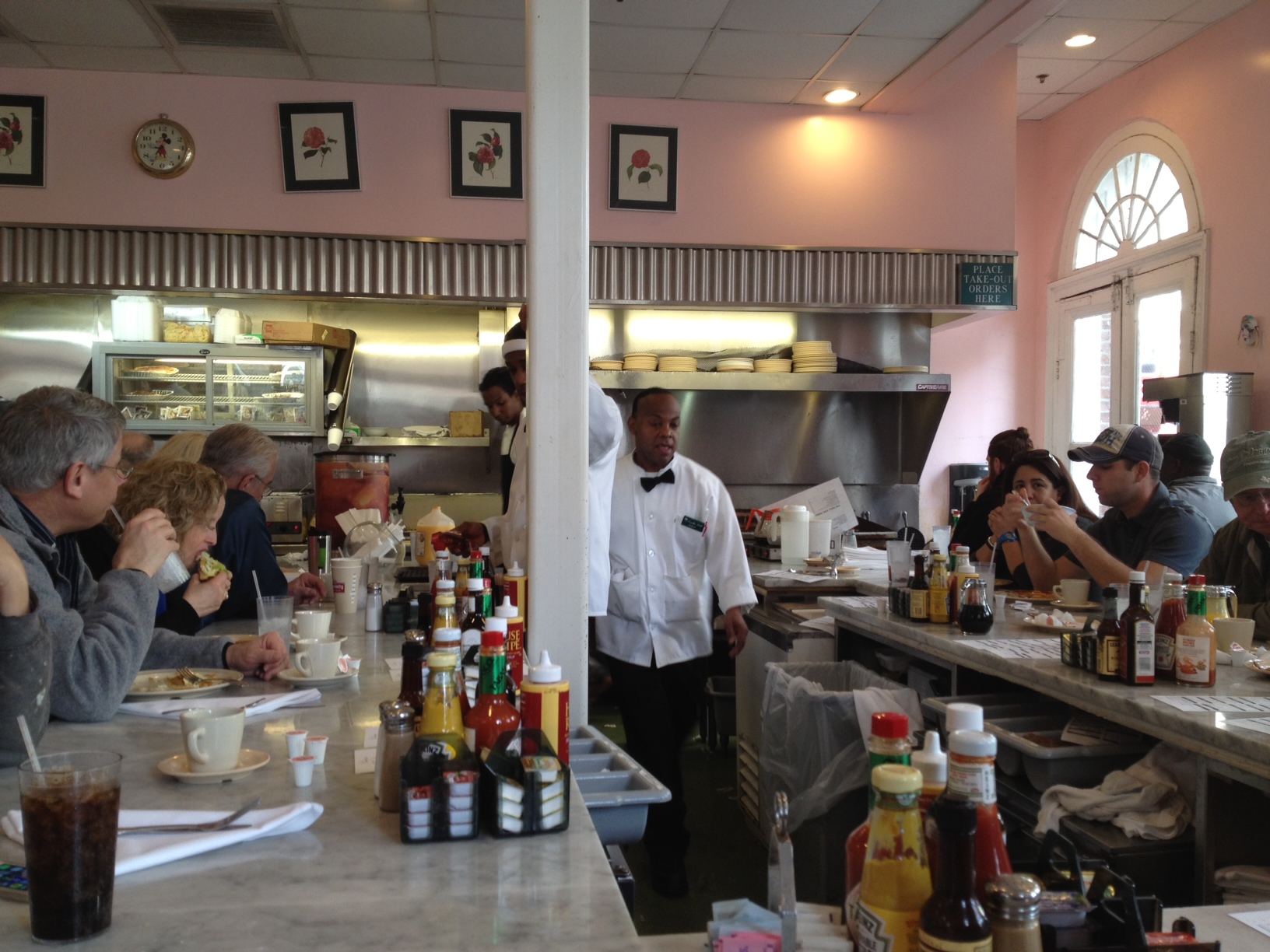
Of course, a visit to New Orleans typically involves good food. The city has a collection of fancy restaurants, but I ended up being a repeat customer at less expensive eateries, including The Grill, pictured here…
…and Jimmy J’s Cafe, whose wonderful cinnamon French toast is pictured here.

I think an order of French toast is a good way to conclude this blog post. Enjoy!
***
For a short piece on the psychology & law conference that brought me to New Orleans, go here.
All photos: DY, 2014
Frozen pizza

With another winter storm heading toward New England, my thoughts go to…
…frozen pizza!
I wrote about comfort food in November, but I neglected to include frozen pizza on my short list. Of course, pizza of any variety appears on that list — restaurant, take-out, delivery, whatever. But with more cold and snow on the way, it’s reassuring to know that I’ve got an Amy’s cheese pizza (yup, the one in the photo!) stored in the freezer.
Amy’s pizza is on the high end. It’s pricier than the standard fare. But it’s good stuff, and to keep it a “healthy” pie while enhancing the flavor, I add some tempeh (“fakin’ bacon) strips.
By far the best frozen pizza I’ve ever had is Trader Joe’s three cheese pizza, but alas, the closest store is several subway stops or a bus trip away. Newman’s Own cheese pizza is very good as well.
My guilty favorite is Red Baron’s individual deep dish pizzas, sporting a long list of ingredients that don’t sound too pizza-like to me. However, I’m trying to eat healthier these days, so between Amy’s frozen pies and a great eat in/delivery place in my neighborhood (Il Panino in Jamaica Plain), my domestic pizza situation is not as chemically enhanced as it used to be. (If the folks at Il Panino happen to be reading this, yes, you’ll be hearing from me sometime during the weekend.)
I’m glad that I ate a late dinner, or else I’d be tempted to pop that sucker into the oven right now. Such is the power of suggestion when writing about crave-worthy food…..
Ordering Chinese delivery: Hitting the Food Wall
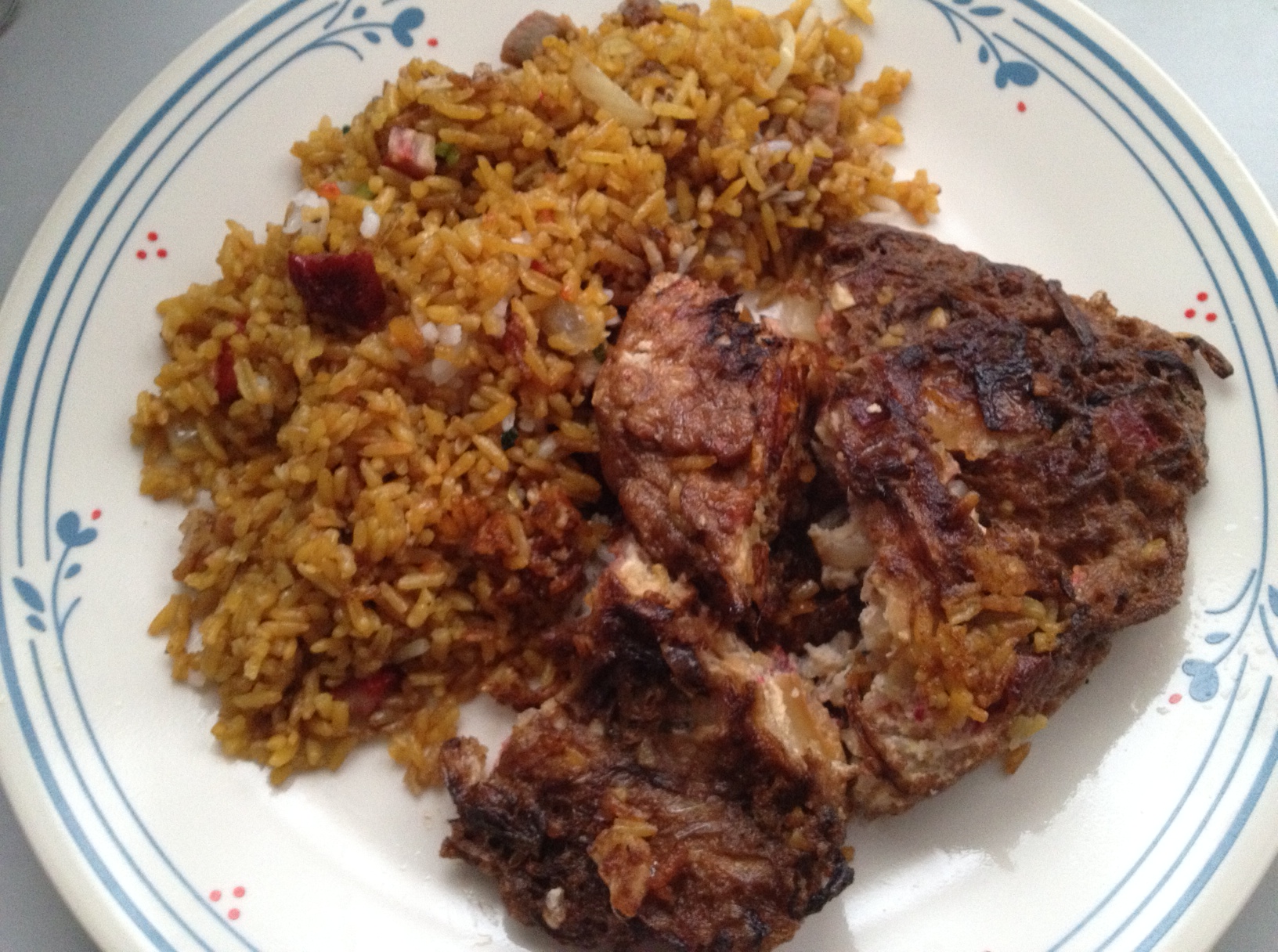
Delicious Chinese leftovers!
Ordering in Chinese food is one of my simple pleasures. Whether it’s after coming home from teaching an evening class, or during the weekend when a glance inside the fridge shows nothing resembling a meal, the ritual is basically this: Survey the menu, call in the order, wait for the delivery, and remove goodies from the bag.
Typically, one plate isn’t enough, so seconds follow. Then I close up the containers and pop the leftovers into the fridge for later meals.
I got hooked on Chinese delivery in law school. New York and Chinese food go hand in hand, and the local choices in NYU’s Greenwich Village neighborhood were abundant, tasty, and cheap. Even a modest order would yield several meals.
Today, my Chinese delivery venue of choice is called Food Wall, located in my Boston ‘hood of Jamaica Plain. I’m far from alone in this category. Val Wang featured Food Wall in her 2012 National Public Radio series on Chinese takeout places:
When you spend as much time inside of Chinese takeouts as I do, you start to notice some patterns. Like, every takeout has its regulars, people for whom the takeout is an essential part of their lives.
Food Wall in Jamaica Plain is one example. It has inspired something of a cult following. I walked up and down the street one afternoon asking people who work nearby how often they stop in. . . .
“At least once a week,” said Saul Cifuentes, owner of Beauty Masters Salon and Supply.
“Lately I’ve been going at least three to four times a week,” said Josiah Simmons of theVideo Underground.
James Norton of Revolution Bikes is trying to cut back, but “it used to be almost daily.”
None can top Fat Ram of Pumpkin Tattoo. He claims he’s eaten there “Eleven days a week for 10 years. It’s too much. Too much Food Wall. I hit the Food Wall.”
Pictured above is some very basic Cantonese fare from Food Wall: Egg foo young and fried rice. I usually opt for spicier Szechuan dishes, but not to worry, it’s good stuff. I cleaned that plate quickly.
What’s your favorite comfort food?
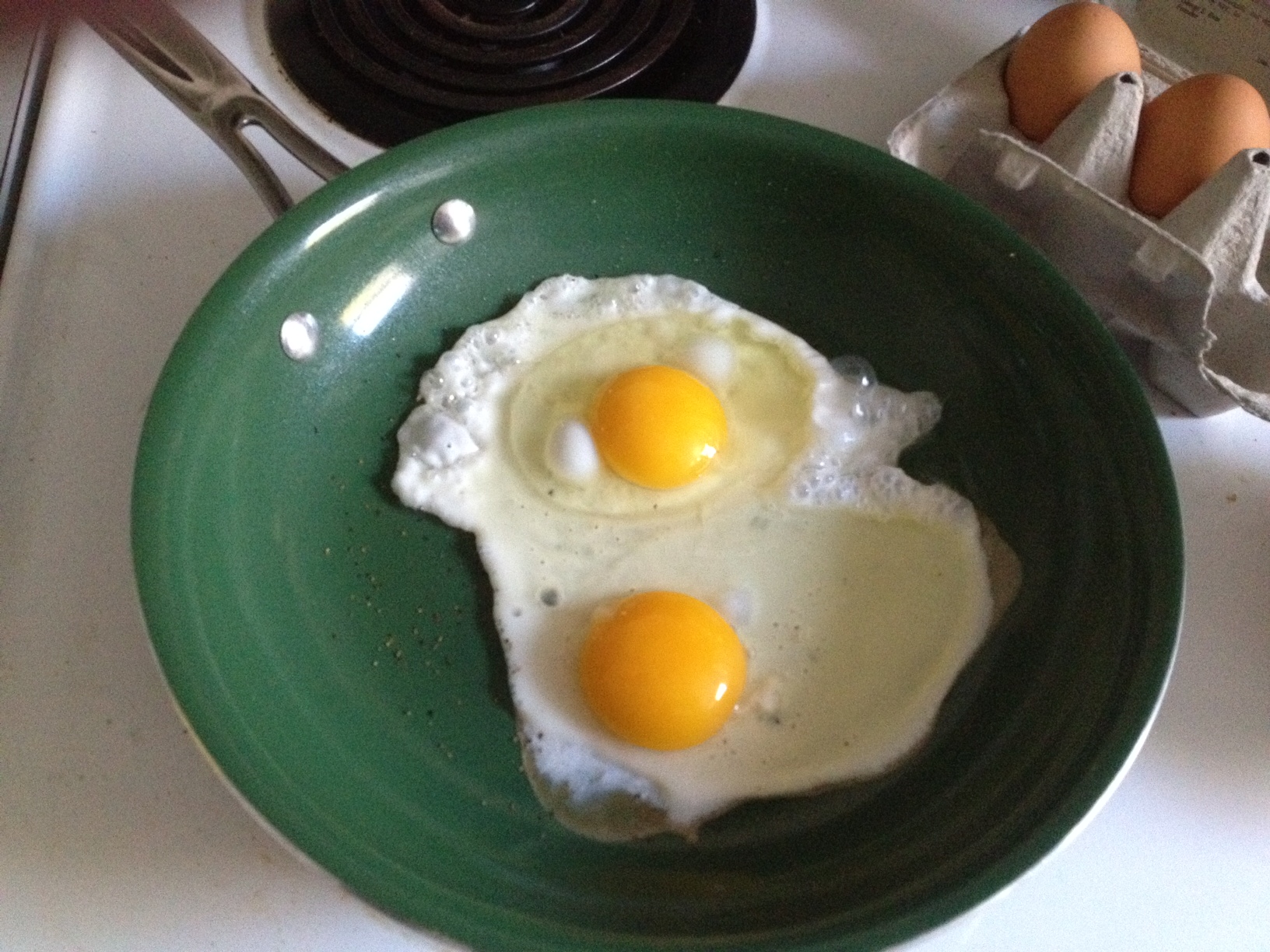
Confession: The yolks broke (Photo: DY, 2013)
A burger, coffee, and slice of pie. Mac & cheese with some greens on the side. Eggs, hash browns, and pancakes.
Yup, comfort food. Good, hearty stuff. Here’s how Wikipedia defines it:
(T)raditionally eaten food (which often provides a nostalgic or sentimental feeling to the person eating it), or simply provides the consumer an easy-to-digest meal, soft in consistency, and rich in calories, nutrients, or both. The nostalgic element most comfort food has, may be specific to either the individual or a specific culture. Many comfort foods are flavorful; some may also be easily prepared.
As that snippet suggests, comfort food is often associated with lasting memories! Mention “meat loaf,” and I think of my mom’s recipe, which included a thin brush of tomato paste and strips of bacon on top. (Mom knew her comfort food.) I also recall a meal during my collegiate semester in England, when my friend Don got a care package from home that included a packet of powdered meat loaf mix. We bought 2 lbs. of ground beef and a pile of Brussels sprouts, and enjoyed a feast.
What are your favorite comfort foods? If you need a prod, the Wikipedia article on comfort foods collects lists from different countries! (Bangers and mash, anyone?)
When fast food was a treat, not a staple

McDonald’s Big Mac (Photo: Wikipedia)
Remember the days when a trip to McDonald’s was considered a treat, rather than a staple of our weekly food consumption?
A special event
When we were kids in the late sixties and early seventies, a McDonald’s meal (and to a much lesser extent, Burger King and later Wendy’s), was a bit of an event, even if our folks saw it as a matter of convenience. At times, it may have involved something as special as a birthday celebration.
If we were eating at home, there was a certain anticipation in waiting for the designated adult to return with bags full of goodies. And it was especially neat when we got to order shakes with our meals! (Yeah, admit it, some of you can relate!)
While it may sound bizarre to think of savoring fast food, as kids that’s what we did.
Nowadays…not so special
Today, we call it fast food because of the time it takes to serve it and the way in which we gulp it down.
With fast-food restaurants so ubiquitous in modern life, the idea of a burger, fries, and a drink isn’t much of a novelty, and in terms of public health, Americans consume way too much of this stuff.
Compare the lunch lines at the typical food court. I bet you’ll find the lines at McDonald’s among the longest, perhaps with (healthier) Subway possibly giving it a run for its money. The others usually aren’t even close in terms of numbers of customers.
The OMG extreme
I’m not sure when we reached the tipping point of fast food becoming a regular part of our diet, but I certainly was given, umm, food for thought when I saw this ABC News piece about a seemingly fit 64-year-old salesman and Vietnam vet who claims to have eaten 10 Big Macs a week over the past 30 years:
Dennis Rosenlof has special sauce coursing through his veins.
“My first meal of the day is always at about 10:30, when they open up the Big Macs,” Rosenlof, 64, told ABC News.
. . . “I enjoy what I eat,” he said. “It tastes good, so I order the same thing every day.”
. . . “Mondays I always eat a Big Mac, two on Tuesdays, one on Wednesdays, two on Thursdays, one or two on Fridays, and two every Saturday,” he explained.
I suppose if we want to rediscover how to savor a fast-food burger, we probably could find no better adult example than to follow Mr. Rosenlof to his local McDonald’s — assuming he isn’t too busy fielding requests to be the subject of medical journal articles.
 Musings of a Gen Joneser
Recent Comments