Can Generation Jones talk to its animals?
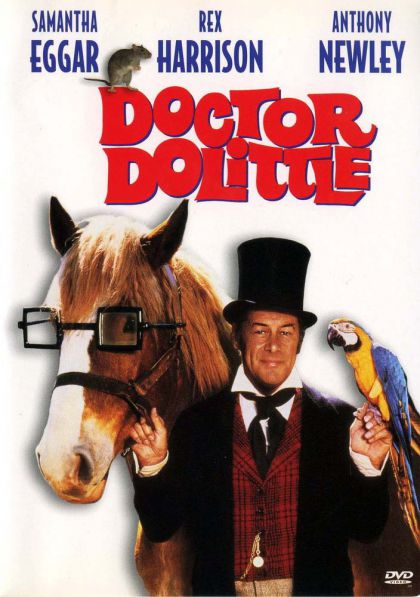
I’m sure you remember this one!
Okay folks, this is based purely on anecdotal evidence, but many of my Gen Jones friends are among the most devoted animal lovers I know.
They care deeply for the critters they bring into their homes, they understand their quirky personalities, they play with them and feed them well, and they will dig into their pockets when a trip to the doctor is needed.
These animals become part of the fabric of individual lives and families. They are much more than “substitutes” for kids or spouses/partners or friends; they have a standing (and eating and sleeping) of their own.
It’s mostly a dog or cat thing, though other four-legged beings, plus birds and fish, are a big part of the picture too.
Some may think these devotions are over the top, but I see them as healthy — unless, maybe, you’re living with 40 cats in a studio apartment. Otherwise, animals bring joy and comfort to our lives and allow us to return the favor. Their presence helps us to live in the moment, no easy task given the pace and challenges of modern life.
Fall is my most nostalgic season
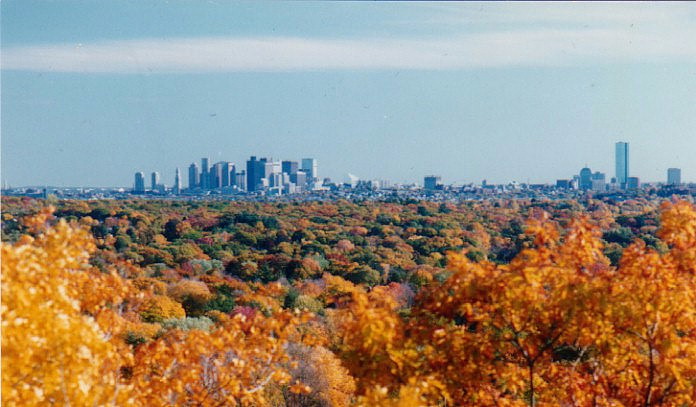
Fall foliage, with Boston in the background (Photo: Wikipedia)
I’ve spent my whole life in places where the seasons change: Northwest Indiana, New York City, and now Boston. Of course I complain about the extremes of hot and cold weather, but if I’m being honest with myself, I admit to liking the change of seasons.
Spring is my favorite, but it never lasts long enough anywhere I’ve lived. Fall, however, has staying power, and for some reason it’s the season that most pushes my favorite childhood nostalgia buttons.
I think it has a lot to do with memories of going back to school as a grade schooler. My brother Jeff and I were fortunate to go to a good little neighborhood public grade school in Hammond, Indiana, staffed largely by old-fashioned teachers who really cared about the kids and drilled us on the basics. I don’t have to engage in a lot of revisionist history to say that it created some good memories.
Those memories connect to holidays and historical dates associated with the fall: Columbus Day, Halloween, and finally Thanksgiving, the bridge to winter. Of course, Columbus Day and Thanksgiving were drenched in the feel-good historical fictions contained in our easy reading history books. Halloween was a calorically magical and innocent observance, replete with neighborhood trick-or-treating where the only fears about knocking on strangers’ doors were over ghosts and goblins. And some of us imagined ourselves waiting with Linus for the Great Pumpkin to appear:
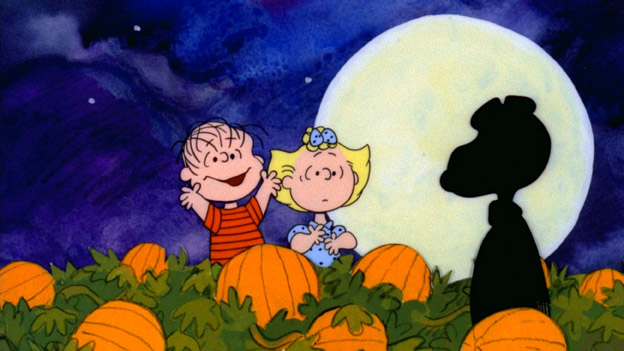
Tune in on October 31, 8 p,m. Eastern (Photo: abc.com)
Fall is a wonderful time of year in Boston. The weather is cool and comfortable, and the leaves turn colors in spectacular ways. The many historical sites from the American Revolution remind me of my childhood introduction to history, which quickly became one of my favorite subjects and remains so to this day. And not too far away is Salem, home to the real-life witch trials and some modern day tourist traps!
Today, of course, the seasons also correlate with what I do for a living. We have a fall semester and a spring semester, and I still use a personal, academic year calendar book where I write in my class schedule and various meetings by hand. Classes started this past week, and the weather has hit a classic fall-type cool patch. It’s a comforting combination for me.
How will Generation Jones make its mark?

I can relate. (Photo: Screen shot from “Rudolph the Red-Nosed Reindeer”)
If you’re a card-carrying U.S. member of Generation Jones, you no doubt recognize this screen shot from “Rudolph the Red-Nosed Reindeer,” depicting some of the inhabitants of the Island of Misfit Toys, hoping that Santa Claus will pick them up some Christmas Eve and deliver them to loving homes.
And that, for me, captures how I feel about our chronological place in time. I think of Gen Jones as a group whose formative period missed out on the heart of the Sixties and preceded much of the gee-whiz launch of the Digital Age.
Instead, the Seventies come to mind, and I don’t necessarily consider that a good thing: Big, gas guzzling cars; a struggling economy; lots of cheesy pop music, TV, and movies; some pretty scary fashions; high crime rates and crumbling cities; and the outing of political corruption at a national level. Despite my Cancerian devotion to nostalgia, that’s one decade I don’t get all warm and fuzzy about.
Finding our place now
But I’m over that — er, sort of.
More importantly, there’s a bigger question presenting itself, and that’s how we make our mark as a generation. I know I’m not alone in wrestling with these thoughts. The quest to find that narrative and purpose is said to be one of the defining characteristics of Gen Jones, as its Wikipedia entry suggests:
The name “Generation Jones” has several connotations, including a large anonymous generation, a “keeping up with the Joneses” competitiveness and the slang word “jones” or “jonesing”, meaning a yearning or craving. . . . It is said that Jonesers were given huge expectations as children in the 1960s, and then confronted with a different reality as they came of age in the 1970s and 1980s, leaving them with a certain unrequited, “jonesing” quality.
For now, it’s fair to say that the process of generational self-definition is a work-in-progress for Gen Jones.
Here’s one take on it…
Beth Wiggins, whose work brings together aging issues and community services, suggests that Gen Jones can make its unique contribution by how we handle our aging population. Here’s a piece of her article for MinnPost.com, “Time for the Jones Generation to Make Its Mark”:
We . . . have been given a name: Generation Jones. Born between the mid-1950s and the mid-1960s, you don’t hear much about the Jones cohort. Yet, we outnumber all other Boomers and Generation X. Jonathan Pontell, who coined “Generation Jones,” describes it as a large, anonymous generation with unfulfilled expectations. . . . But here we are at our midcentury mark, and we have an opportunity to step out and make a difference.
. . . And we must, whether motivated by pursuit of the greater good or pure self-interest. Generation Jones is the crest of the population age wave. We personify its biggest challenges and are especially vulnerable to the potential insecurities when the wave hits the shore. Health-care costs continue to escalate, and Medicare is in a precarious position. Professional care-giving work force shortages loom ahead. Dispersed families and the increasing prevalence of single-person households have implications for how informal care is provided in the future. How we approach aging matters.
A good conversation over a bite to eat
Just yesterday I enjoyed a quick meal with an old friend from high school who was in town on business. We hadn’t seen each other in decades, but Facebook put us back in touch. He’s got a ton of important work experience in both the private and public sectors, and he’s at a point in his life where he’s considering how to bring this accumulated wisdom to bear upon some of our larger challenges in creating a vibrant, socially responsible economy.
Our conversation covered a wide swath of what our generation has experienced over the past 30 years. For both of us, this includes witnessing the sharp decline of our hometown of Hammond, Indiana, once a thriving small industrial city in Northwest Indiana’s steel belt, now yet another Midwestern locale trying to hang on. We’ve seen good jobs at decent wages disappear, with massive shifts in wealth distribution to go along with it.
Will my friend be part of a creative solution? I’m betting that his myriad experiences, and what he’s learned from them, have led him to this point.
Legacies
There’s no shortage of good works and noble deeds that need doing. That said, we’re in our 50s and late 40s. Realistically speaking, we have about a 20 year window to continue or begin creating the heart of our personal and collective legacies.
In other words, we can’t afford to feed a lot of angst about the world and our places in it. It’s game time, and we need to realize that.
Welcome, dear readers!

Me in a bookstore. Where else? (Photo: Sharon Franklin Driscoll)
Welcome to Musings of a Gen Joneser, my personal blog especially for late Baby Boomers and early Generation Xers.
“Generation Jones” is the term coined by television producer, director, and writer Jonathan Pontell to capture that group of people born between 1954 and 1965. We’re between two well-defined generations, and our life experiences — on the whole, at least — are different than those of classic Baby Boomers and Generation Xers.
Years before I had heard the term Generation Jones, I referred to my age cohort as the ‘tweener generation. I felt that we didn’t quite fit in with the prevailing characterizations and timelines of the Boomers and Gen Xers. And now that we’re decisively into our middle years, I think we have some unique perspectives, insights, and observations worth sharing.
I don’t mean to sound all that earnest. This blog will serve up plenty of trivia and pop culture, in addition to the serious stuff. And I’ll use this as an excuse to share personal stories as well. I plan to be writing from here at least once a week, and I hope you’ll enjoy what I have to offer.
***
A few words of introduction: I’m a law professor, active blogger, and activist, and I live in the Boston neighborhood of Jamaica Plain. I was born in 1959, which puts me right in the heart of Generation Jones! If you’d like to learn a bit more, I’ve included some brief biographical information on my About page.
 Musings of a Gen Joneser
Recent Comments