From top dog to underdog: Why I’m pulling for Barnes & Noble

Recent B&N acquisitions
Not too long ago, Barnes & Noble was a big bad bully of the bookselling industry, pushing indie bookshops out of business across the country and swallowing up competitors like B.Dalton. For a while it jousted for top dog status with Borders, its main competitor in the superstore category.
But then along came Amazon, the biggest, baddest book selling behemoth of them all, armed with easy online click & ship ordering, the Kindle e-reader, and marketing savvy. Borders would go into a slow death spiral, finally crashing a few years ago. Barnes & Noble is now trying to survive as the only significant, national brick & mortar bookstore chain.
The top dog has morphed into the underdog.
Still and all, I very much hope that B&N makes it. I have always enjoyed walking into their stores, wondering what new discoveries await me, and exploring their huge selections. In addition to the shopping experience, B&N’s stores host author talks, meetings of writers’ circles and book clubs, and informal meet-ups. They are good for a community.
In addition to shopping at indie bookstores and, yes, Amazon at times, I’ve been making a conscious effort to buy more of my books, DVDs, and periodicals at B&N’s main store here in Boston. If it disappears, Boston will be without a major, high volume bookstore in the heart of the city, and that would be a genuine civic shame.
Me and B&N: The beginning
Barnes & Noble and I go way back. I first discovered it well before its superstore era, when the company was a plucky retailer, with stores in Manhattan and a fledgling mail-order business. As an undergraduate living in Indiana (1977-81), I sent away for their thick catalogs, and I would spend hours poring over the remainder listings in search of good bargains.
When I moved to New York for law school in 1982, my periodic walks from NYU’s Greenwich Village campus up to B&N’s twin retail stores on opposite sides of 5th Avenue at 18th Street became regular rituals. The east side location housed its flagship academic bookstore, offering mostly new non-fiction titles and textbooks at full sticker price. As a budget-conscious student, this made it better for browsing than for buying.
The west side storefront, however, was the site of B&N’s huge Sale Annex. It quickly became a personal treasure trove, with several floors of low-priced remainder books, discounted new books, and a generous used book section. At the risk of betraying more of my geekdom, I confess that my heart would start beating faster upon entering the store, in anticipation of the affordable goodies I might find there. I cannot guess how many hours I spent in that store during my 12 years in New York.
Right next to the Sale Annex was a large B&N music store. Here, too, I was overwhelmed by the choices. This was still the golden age for cassette tapes, and the music store seemed to have them all. At the time, my “stereo system” was the portable cassette player I had brought with me from Indiana, and I would wear out the batteries over and again playing my purchases there.
Enter the superstores
In the early 1990s, B&N made its big move, launching the superstores with their huge book selections, many shelves of periodicals, music and video offerings, and cafés selling beverages and food. They started in New York and soon expanded the concept nationally.
At that point, B&N became the bad guy, the Manhattan bully that was pushing small independent bookshops out of business. There was truth in the charges. With its thousands of titles and discounted best sellers, B&N simply offered much more than did its smaller competitors, and at lower prices for popular books. Borders would soon join the fray, and the two went head-to-head for a decade or so, while the indies took even more of a beating.
Among book lovers, the superstore vs. indie issue became political. Looking back, I recall being in a distinct minority among my liberalish social cohort in saying that I preferred the big superstores to the mom & pop bookshops.
These debates even helped to inspire a main storyline in the 1998 romantic comedy You’ve Got Mail, starring Meg Ryan as the owner of a small Manhattan bookstore and Tom Hanks as a senior executive for the superstore opening in the indie shop’s neighborhood. (It also features AOL as the e-mail platform. How things have changed!)
Fast forwarding……
My gosh, the superstore vs. indie discussion is largely passé, yes?! When it comes to bookselling today, it’s Amazon vs. Everyone Else. In fact, until recently it appeared that Barnes & Noble would go the way of Borders and disappear from the scene. In particular, B&N’s Nook e-reader has flopped as a competitor to Amazon’s Kindle, and losses from its e-book division have been a drag on B&N’s balance sheet. In addition, Amazon’s ubiquitous online presence has hastened the closure of many B&N stores across the country.
Among the departed are the main and annex stores on 5th Avenue at 18th Street. That breaks my nostalgic heart a little.
However, B&N has been making something of a comeback. It appears that a growing number of book buyers have recognized the importance of having brick & mortar bookstores around, and B&N has joined indie booksellers in enjoying a minor resurgence. In pure business terms, even its stock value has staged a recovery.
Until a year or so ago, I was buying most of my books from Amazon and keeping a Prime membership to guarantee fast delivery. However, ethical concerns over Amazon’s treatment of its warehouse workers have caused me to reduce my ordering from Amazon and to cancel my Prime account. (See this piece posted to my professional blog for a longer explanation.)
In the meantime, I’ve rekindled my enjoyment of visiting brick & mortar bookstores of all types, including small indies, used bookstores, and B&N’s superstores. Yup, click & ship is awfully handy, and online booksellers (including B&N and Amazon) are now networked with used bookstores across the country, making the hunt for elusive out-of-print titles much easier. Nevertheless, physical bookstores, where you can browse and discover and buy, are a joy for the mind and spirit and are part of an intelligent, healthy society.
Let’s hope that B&N and other bookstores are around for a long time. I look forward to giving them more of my business.
New Year’s resolution: Taking on Moby-Dick
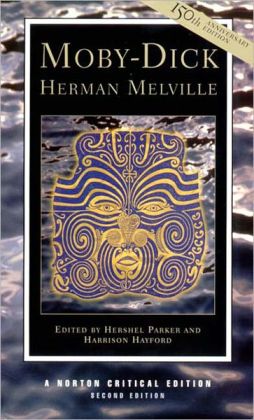
More intimidating than Capt. Ahab?
If the most common end of New Year’s resolutions is that they are broken, then perhaps I’ve set myself up for an easy fail: I’m giving Herman Melville’s Moby-Dick (1851) a genuine try.
Notice that I didn’t say “old college try,” a term usually associated with failure. We could fill a big state with students who gave Moby-Dick the old college try before throwing in the towel. I would be one of them.
But something about the book tells me that it’s now worth the effort. I’m familiar enough with the story to understand why it speaks more to adults who have been around the block than to young students who have it assigned to them in a course.
My interest has been piqued by Nathaniel Philbrick‘s Why Read Moby-Dick (2011). Philbrick, a terrific popular historian, calls Moby-Dick the “American Bible.” As he points out, Melville was writing in the years preceding America’s Civil War (1861-65), when the nation was forging its identity and grappling with conflicts that would soon escalate. A lot of that place and time is built into Moby-Dick.
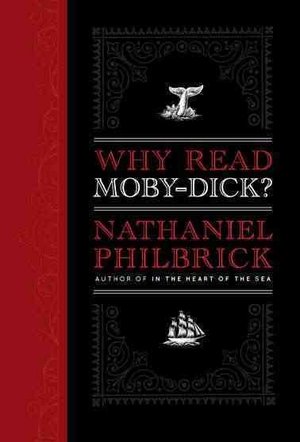
Whetting my appetite
Also, I’m in search of more books that will stick with me beyond the time I spent reading them.
Now, I’m far from being a reading snob — quite the opposite. In fact, I think there are many popular fiction writers today who deliver entertaining books with staying power. Stephen King’s great stories are a prime example. One of the telltale signs of their depth is how I can start reading or re-reading one of King’s books, find myself unable to get back to it for a week or so, and then pretty much pick up where I left off. There’s an emotional resonance to the characters and storyline.
However, I also could assemble a long list of mystery, thriller, and espionage books that were enjoyable in the moment, but didn’t leave a lasting impression in terms of plot, personages, or atmospherics. I simply galloped my way through them.
I finished the opening chapter of Moby-Dick and already know that it won’t be a cover-to-cover read. Others have written about carrying the book around for months before they finally completed it. I’m giving it six.
But that first chapter already yielded some remarkable images, including those of 19th century Manhattanites crowding along the waterfront, gazing out toward the sea with fascination. I couldn’t help but think of Bartleby, the unhappy law firm clerk featured in another noteworthy (and much shorter) Melville story (Bartleby, the Scrivener, 1853), wondering if he is among them, drinking in the view before heading back to his soul sapping job.
Hmm…if I’m already mixing and matching characters from Melville’s stories, then maybe it’s a sign that I should stick with it.
Papercuts JP: A new indie bookstore in my ‘hood!
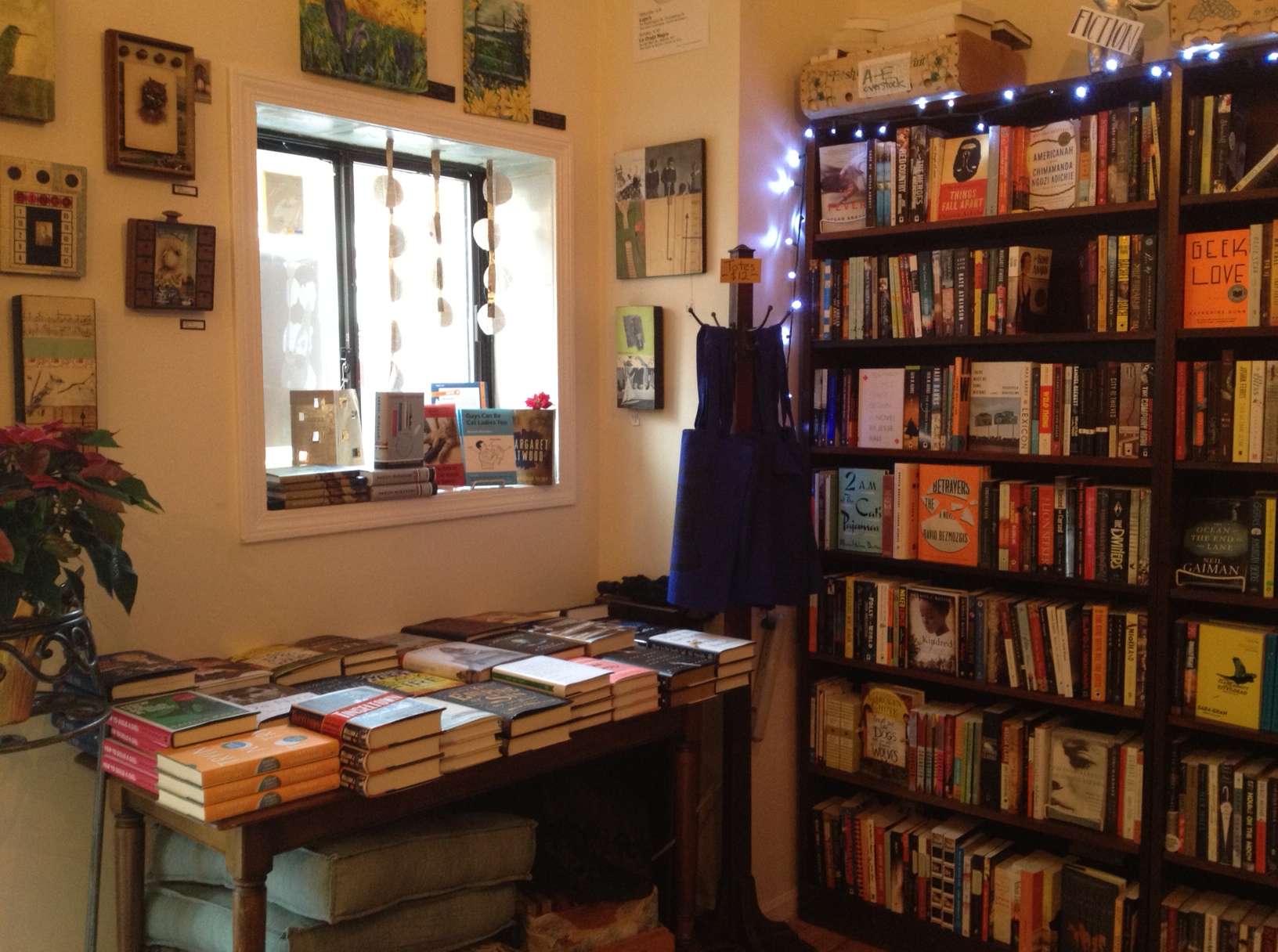
Papercuts JP in Jamaica Plain, Boston (photo: DY)
It’s always a boost for popular culture when a new brick & mortar bookstore appears on the scene, especially when it’s an interesting independent one. Here in my Boston neighborhood of Jamaica Plain, I’m delighted that a new indie bookshop called Papercuts JP is now open for business. It’s a cozy little store that manages to stuff several thousand carefully selected titles into its 500 square feet.

A bookseller with a smile! (photo: DY)
Boston Magazine blogged about Papercuts and its owner, Kate Layte, upon the store’s opening last month:
“I figured, if I didn’t take the leap now, I’d just get more scared as time goes on.”
That was the risk Kate Layte took when she decided to open her very own indie bookstore in Jamaica Plain. Now, after two years of planning, learning, fundraising, and prep, the Central Mass. native will finally open up her new shop, Papercuts JP, to the public November 29, a.k.a. Small Business Saturday.
…Layte, who says she is anti-genre, has already stocked the shelves with all sorts of gems. Starting out with about 3,500 titles, Papercuts has fiction, nonfiction, science and nature, art and design, humor, cookbooks, graphic novels, kids’ books, local books, poetry, biography and autobiography, and more.
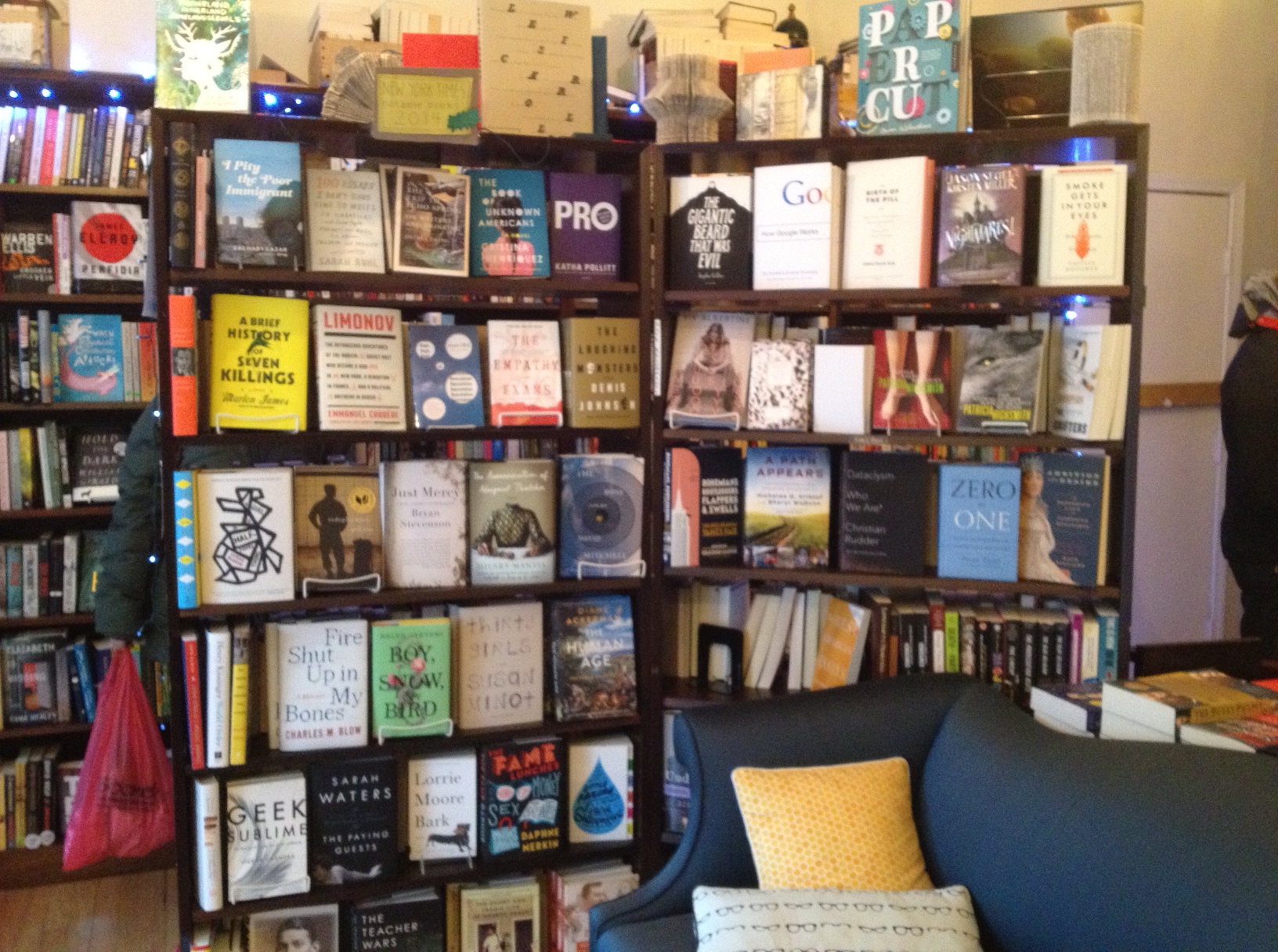
The store features an eclectic selection of mainstream and less-so titles (photo: DY, 2014)
Although JP is home to a lot of writers, artists, and avid readers, it has been without a dedicated bookshop for several years. That’s among the reasons why Papercuts is such a welcomed arrival. It’s a grassroots effort all the way: Earlier this year, Layte did a crowdfunding campaign to raise seed money for the store. I was pleased to be among the sponsors, but I must admit, it was an act of faith. However, now that I’ve paid my first visit, I’m in awe of what they’ve packed into this little storefront.

Yup, open the door to a cozy, wondrous bookstore! (photo: DY)
Although Papercuts may be swimming upstream against the bigger brick & mortar stores and the online sellers, it is the latest candidate to become part of an indie bookstore revival. Earlier this year, Zachary Karabell wrote a piece for Slate suggesting that the independents are staging a modest comeback:
In the words of Oren Teicher, CEO of the American Booksellers Association, “The indie bookselling amalgam of knowledge, innovation, passion, and business sophistication has created a unique shopping experience.” Teicher is hardly a neutral observer, but the revival of independents can’t be statistically denied. Not only have numbers of stores increased, but sales at indies have grown about 8 percent a year over the past three years, which exceeds the growth of book sales in general.
In sum, Papercuts has bonafide potential to become a lasting, enriching addition to the local business and cultural scene. I know that I’m looking forward to future visits!
***
Papercuts is located at 5 Green Street, right off Centre Street in the heart of JP. You can check out their Facebook page here.
Another quick trip to Manhattan

A throwback view — I want to name it “The Naked City” after the old movie and TV show — from my midtown Manhattan hotel room
I’ve been back in New York City this week to participate in a terrific conference, the annual workshop of the Human Dignity and Humiliation Studies network, sponsored and hosted by Teachers College of Columbia University. Among other things, I gave a talk on the quest to advance and nurture dignity at work. I’ll be posting more about that on my professional blog, Minding the Workplace.
During these all-too-brief trips to the city, I try to revisit favorite old haunts from my 12 years there. One of my stops was the famous Strand bookstore. Since my very first visit to New York in the summer of 1982, I’ve been there hundreds of times!
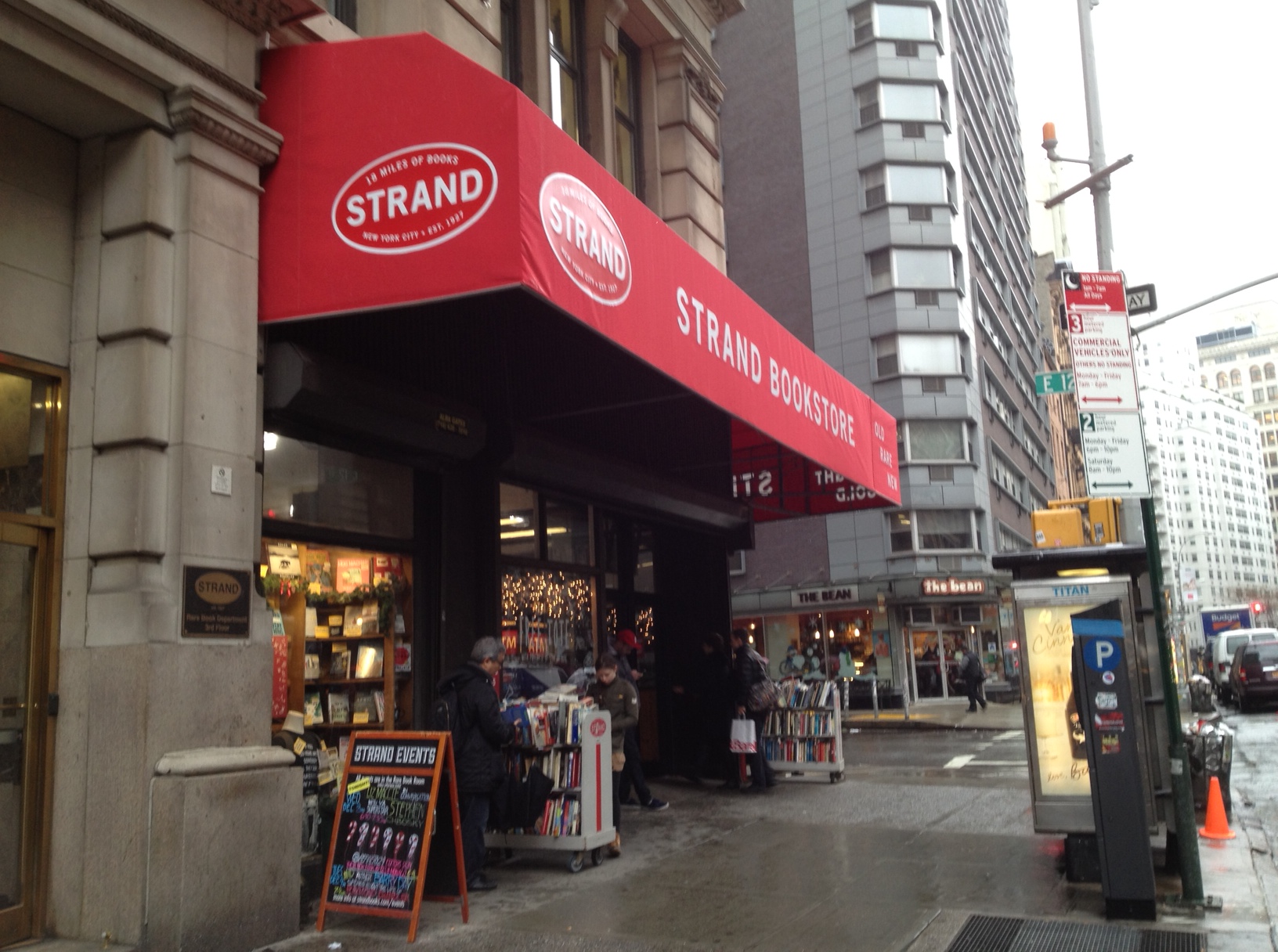
The Strand, my long-time bookstore mecca
When I lived in New York, one of my favorite ways to spend a free afternoon or evening was to go pick up a few discounted treasures at the Strand and then enjoy a hearty meal at the Cozy Soup ‘n’ Burger on Broadway & Astor Place. One of my law school pals (hey Joel!) introduced me to the Cozy some 30 years ago, and I’ve been making pilgrimages there since then. My usual order is a turkey burger (no fries) and a cup of their signature split pea soup. If it’s dinnertime, I also may splurge on an order of rice pudding.
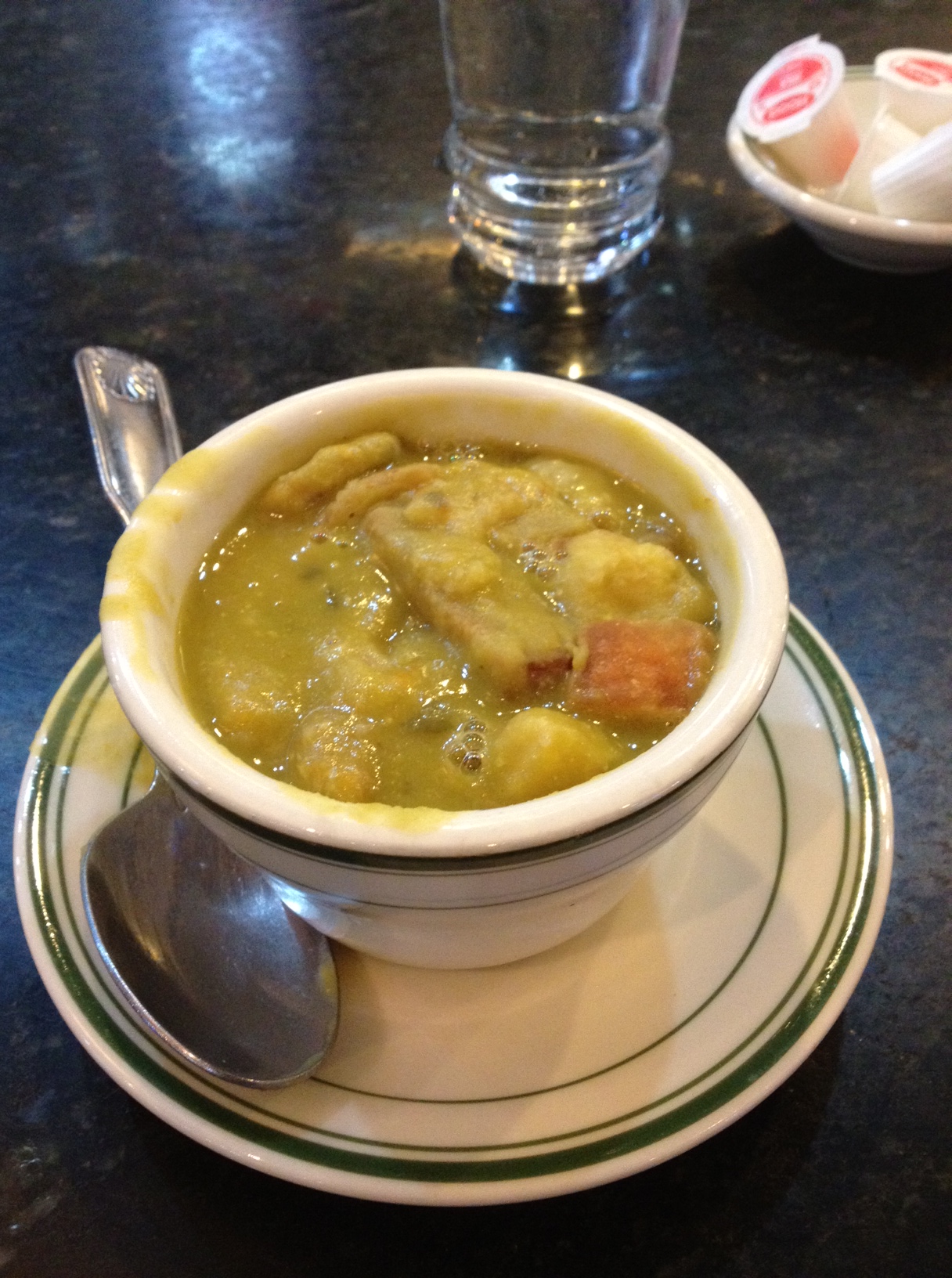
The Cozy’s split pea soup with croutons…as good as soup can get.
Wednesday’s dinner was at La Palapa, a real deal Mexican restaurant on St. Mark’s Place in the East Village. My cousin Judy, a superb restauranteur, is a manager. Fortunately I can champion the food because it’s sooo good, not just because I have a dear family member who works there! Dining with cousins Al, Aaron, and one of their friends, I had this incredible, fall-off-the-bone pork shank dish with rice and plantains.

Tasted even better than it looks!
Cousin Judy and I also went to see a Broadway show, a top-notch performance of “On The Town,” the fresh, funny, and sharp revival of a 1944 musical about three U.S. Navy sailors enjoying a 24-hour leave in New York City.
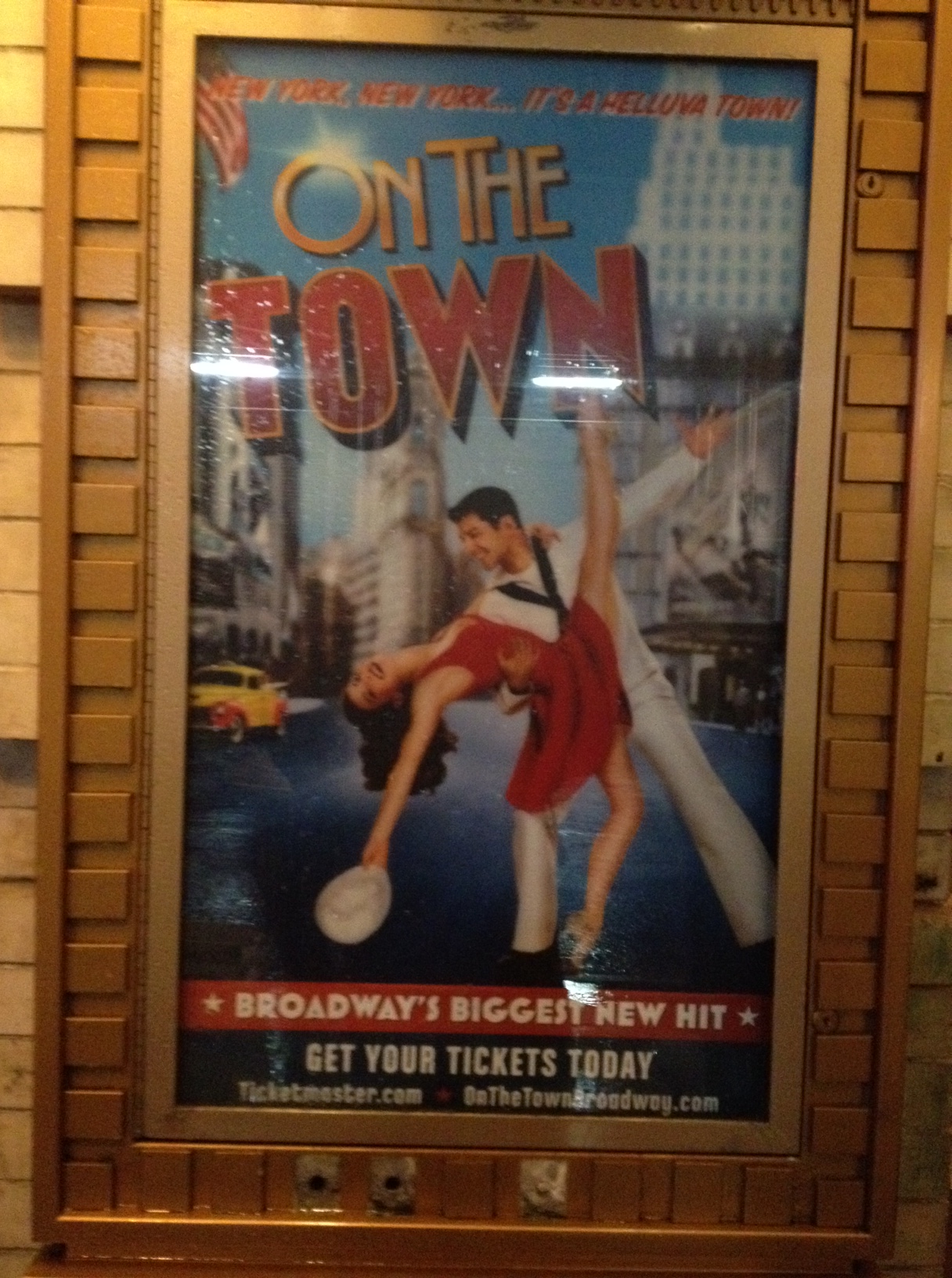
Outside the Lyric Theatre, NYC
This visit also overlapped with serious real-life events in New York. On Wednesday, a Staten Island grand jury opted not to indict a white police officer, Daniel Pantaleo, who had placed an unarmed and secured African American man, Eric Garner, in a fatal chokehold. Especially because the July incident was captured on videotape, the decision has sparked major protests in the city (and elsewhere). Here was the scene Wednesday night in Union Square at 14th Street in Manhattan.
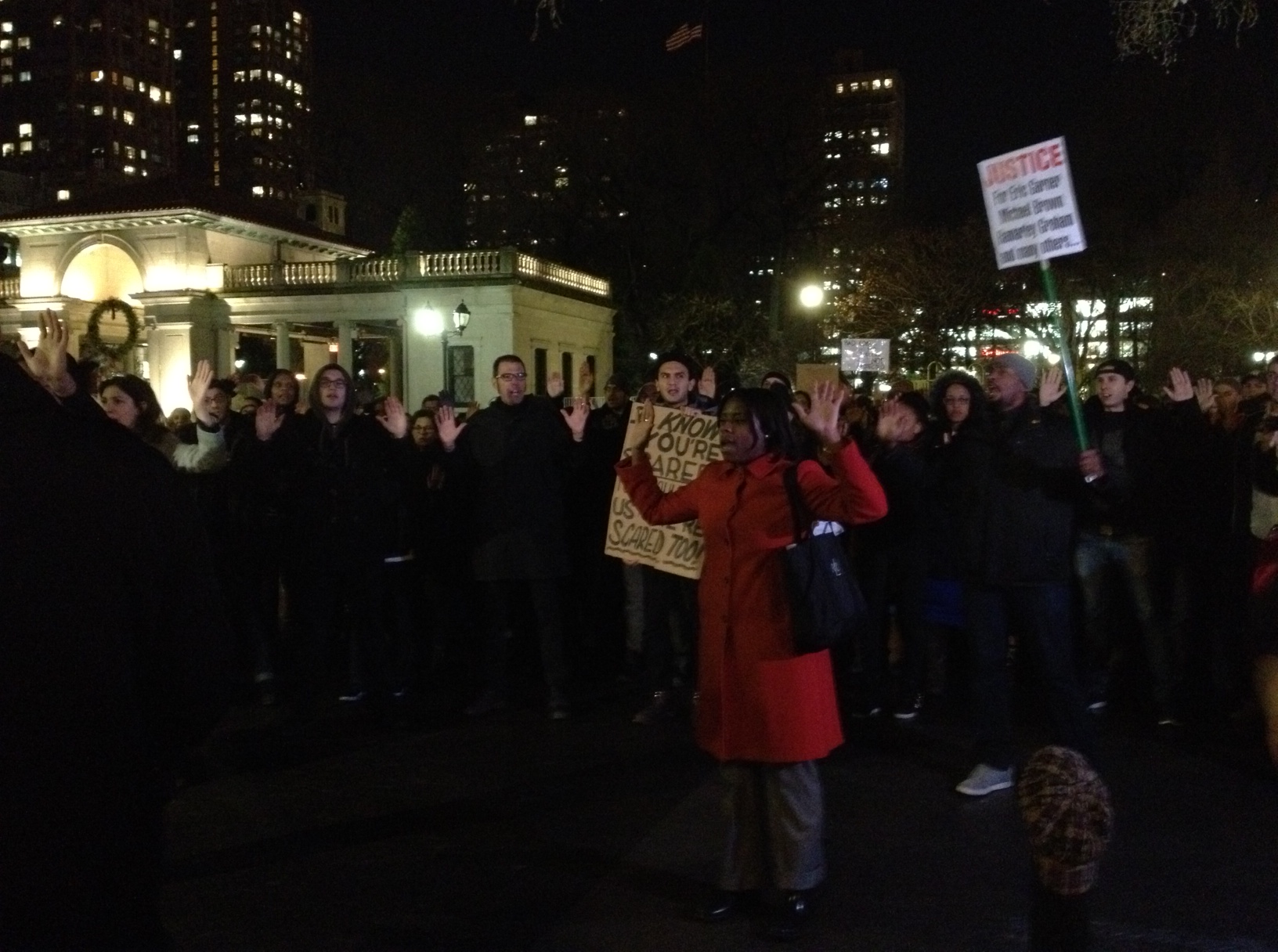
Protesting the grand jury decision in the Eric Garner killing, at Union Square, early Wed evening
I read an entire, hard copy book — and enjoyed it!
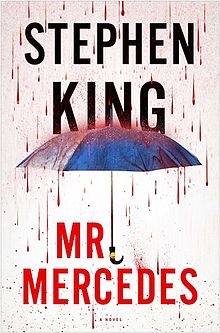
This is a rather pathetic title for a blog post, especially by someone who calls himself an avid reader. But lately my reading has been very task-oriented, both books and articles alike, and almost entirely of the non-fiction variety.
So I credit Stephen King for serving up a novel that I eagerly read from start-to-finish over a week’s time. Mr. Mercedes (2014) is King’s foray into hard-boiled detective fiction, and it’s a good one. The main protagonist is a retired police detective, Bill Hodges, who gets caught up in an unsolved multiple homicide. The perpetrator — identified very early in the story (no spoiler alert necessary) — is a pretty messed up dude with serious mommy issues.
I enjoyed this book, and easily place it in the “didn’t want it to end” category. Thus I’m delighted that King launched it as the first of a planned trilogy featuring Hodges and his sleuthing pals, with the next title expected sometime next year.
Back in January, I sang the praises of the latest incarnation of Amazon’s Kindle e-reader, especially for folks who travel often. However, last weekend I decided to take this hardcover edition of Mr. Mercedes with me for a quick out-of-town visit with friends, even though it took up precious backpack space. (Although this is not among King’s longer works, it still clocks in at a hefty 440+ pages.) I’m glad that I did. Reading Mr. Mercedes as a printed book rather than as an e-book was such a pleasure. Hey, it’s not often when you’re wishing the plane ride was just a little bit longer so you can squeeze in another chapter!
I know it has become something of a cliché for those who love the printed page to say they prefer the tactile experience of reading a physical book to the convenience of using an e-reader. Nevertheless, count me among them. Even with my fifty-something eyesight (oy…) and frequent travel schedule, there remains something very cool about reading an old fashioned printed book.
Throwback Thursday: Steve Anderson’s “Retro Football Games”

Those who want to play a game of simulated football today are likely to fire up Madden Football on their video game systems or check the status of their fantasy football teams. But before these brands of fake football became all the rage, gridiron fans who wanted to coach their very own teams could opt from a rich variety of board and electronic football games.
For a grand stroll through these offerings, check out Steve Anderson’s Retro Football Games (2014), an illustrated look at vintage tabletop football games from the last century. It’s a beautifully done book, featuring hundreds of games, ranging from very simple recreations of the sport, to complex statistical simulations that incorporate actual player performances and play calling options. Interspersed with the photographs and brief descriptions are short sections on football trivia and collectibles.
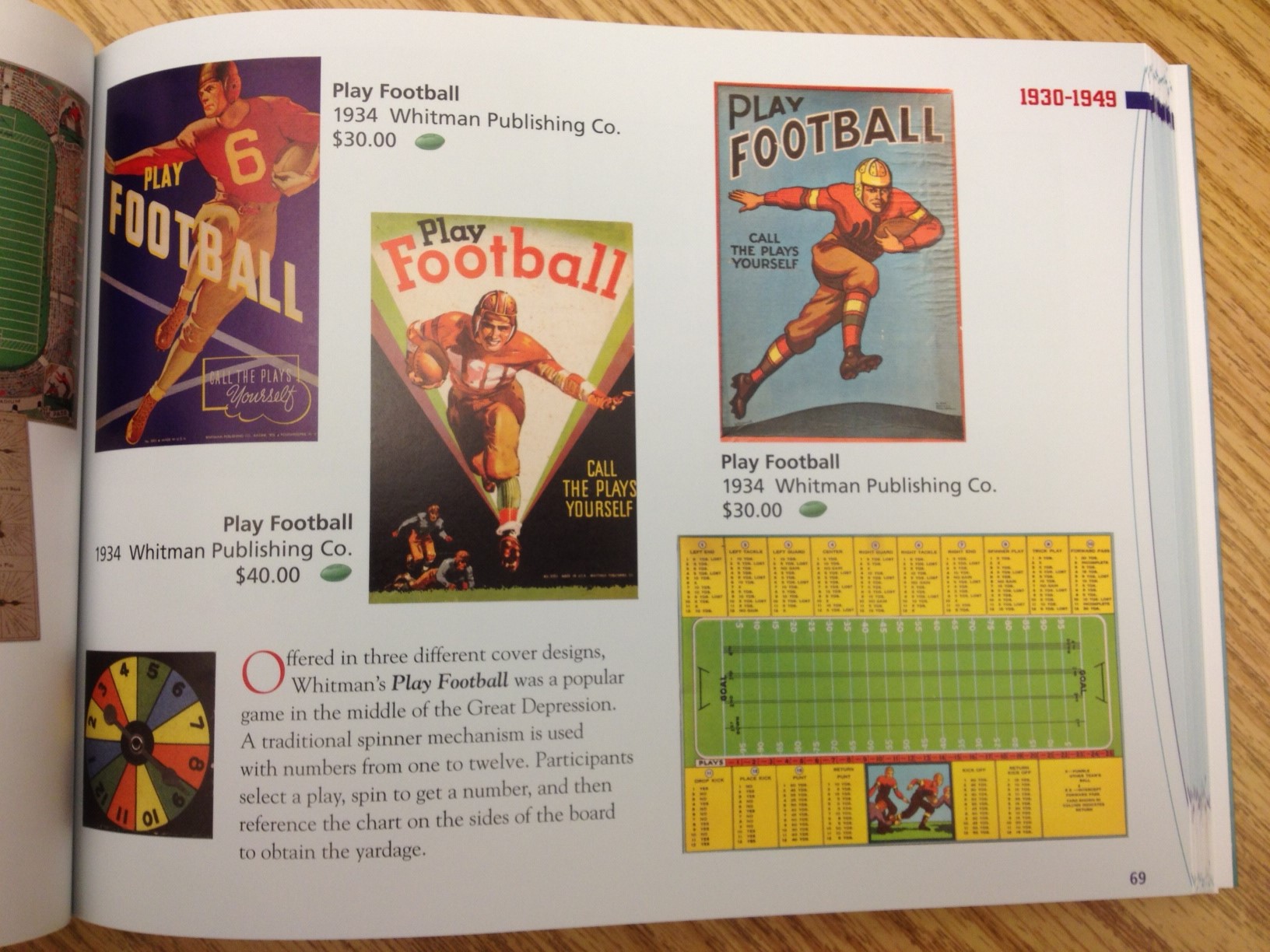
The Whitman Play Football game from the 1930s is an example of a simpler version of tabletop football. It’s activated by a spinner, with the play results obtained from the game board.
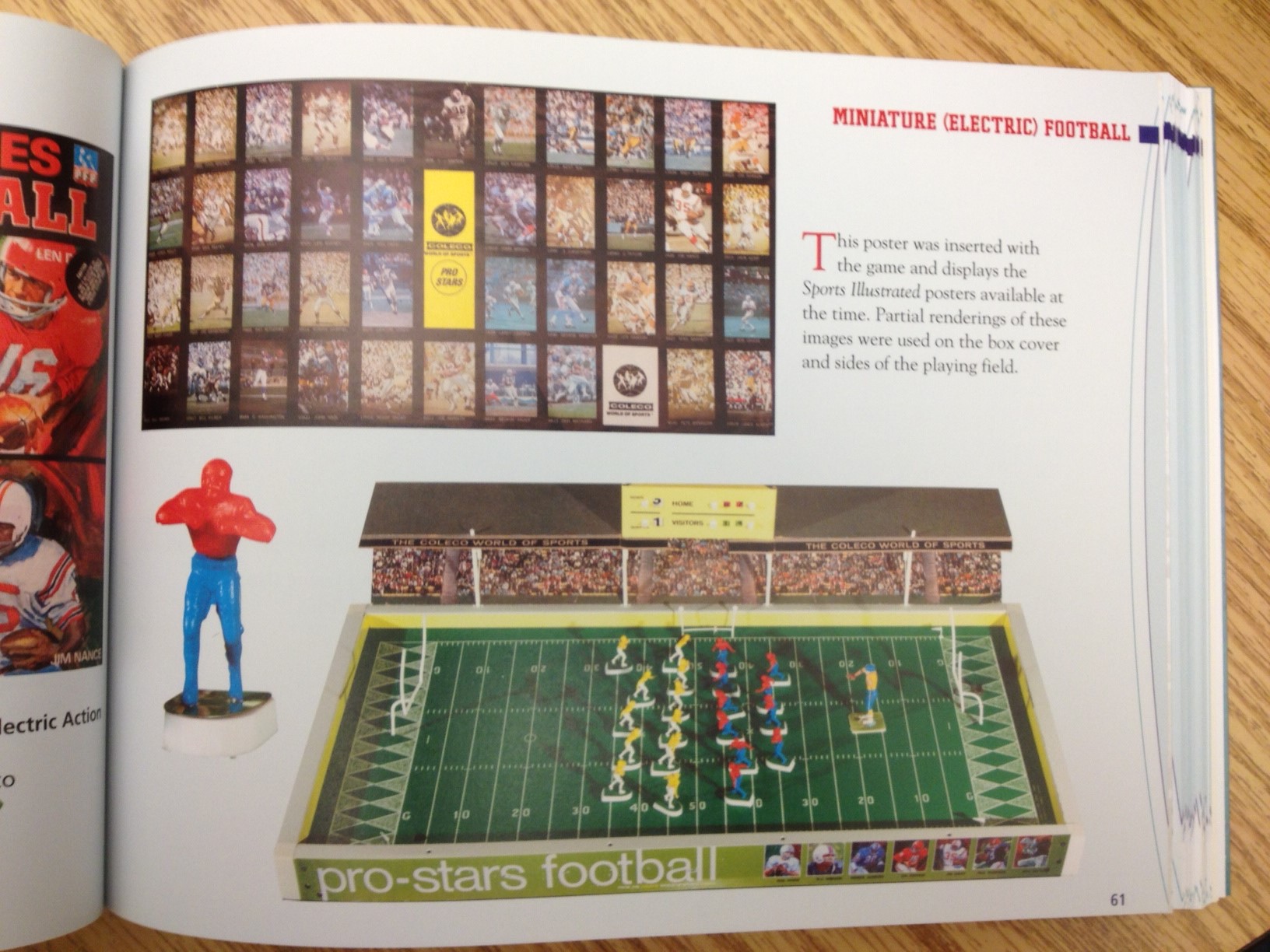
If you were a young fan in the 60s or 70s, it’s very possible that you played some brand of electric football. A vibrating field and quarterback figures who could “throw” a tiny felt football were the supposed keys to the plastic players executing their plays, but for many of us the results included mainly wrong-way runs and errant passes.

Eventually tabletop football became more complex and sophisticated, with game systems that used real player performances translated into player cards and roster sheets with statistical ratings that would be taken into account when determining play results. No longer did you have to imagine your star player overwhelming the opposition based on generic result charts like the Whitman game. Instead, games like APBA Football would allow you to pick your lineups and plot game strategies.
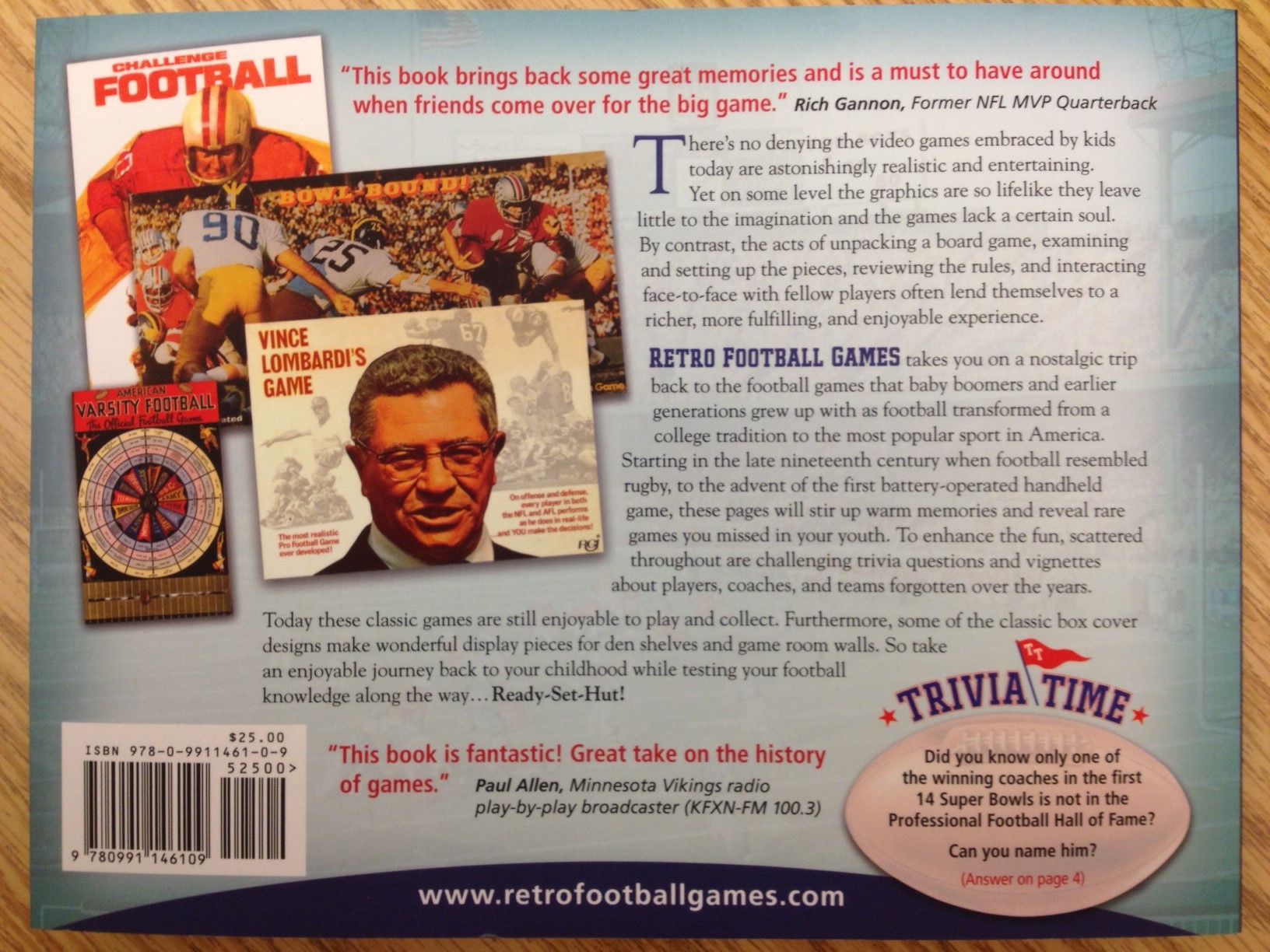
Steve’s book arrives just as the current football season is in full swing. Especially for those who grew up during this era, it’s nostalgic eye candy and a fun read. For more information and ordering details, go to his website, here.
***
For more fun
Tabletop football is not dead — far from it! In fact, buoyed by consistent demand from a lot of guys around my age, many of these games continue to be offered, with new offerings popping up all the time. There’s also an active after-market on e-Bay and sites dedicated to tabletop sports games, such as this popular site on Delphi. In addition, the second issue of a new tabletop sports zine, One for Five, features a cover package including descriptions of currently available football games.
All photos (including the blurry ones): DY, 2014
Heaven is a used bookstore

Brattle Book Shop, downtown Boston, exterior (Photo: DY, 2014)
Over the weekend I made an extended pitstop at the Brattle Book Shop in downtown Boston. I was reminded once again how used bookstores have been a place of happy sanctuary to me, going back to my early adult years.
The Brattle, pictured above, is one of America’s oldest bookstores, and it’s one of my favorites. Inside, you’ll find two floors of used books and review copies, plus a top floor of rare books. Outside, at least when the weather is okay, you’ll find shelves and carts of discounted used books, marked at $5, $3, and $1. Lots of the $5 books are quality volumes that would be a boon to many a personal library, and there are plenty of great bargains among the $3 and $1 offerings as well.
The discounted books outside draw me in. The weekend stop, for example, started with a discovery from one of the $3 carts, The World of Charles Dickens (1997), a colorful, illustrated guide to Dickens’ works and times, by London popular historian and Victorian crime expert Martin Fido.
But then I went inside. Uh oh. Let’s just say that the books I found on adult education and on psychology ran up the bill to considerably beyond three dollars. They may have been real “bargains” as measured by their original prices, but they lightened my wallet nevertheless.
Favorite haunts
Especially with the decline of brick & mortar bookshops, I’m delighted and appreciative that Greater Boston still supports used bookstores. In addition to Brattle, Commonwealth Books, Raven Used Books, and the basement level of Harvard Book Store are among the stores that offer plenty of used book treasures.
Elsewhere in the U.S., the Strand in Manhattan, Powell’s in Chicago, and Moe’s in Berkeley are favorite haunts. (Not surprisingly, all are within close proximity of one or more major universities.) During a recent trip to New Orleans, I was delighted to find several used bookstores in the French Quarter. And on those fortunate occasions when I’ve traveled to England, I’ve always been on the lookout for used bookstores.
New York
New York City’s used bookstores hold a special place in my heart. By the time I moved there, its famous “Book Row” on 4th Avenue was no more. But during my years in New York (1982-94), the Strand was a classic, creaky, and vast used bookshop. I visited regularly as a law student, and during my stretch as a perpetually broke Legal Aid lawyer, I would make pilgrimages there on paydays when I felt (very temporarily) flush. The Strand has done some upscale remodeling in recent years and now sells a lot of new titles along with its storehouse of used books. Nonetheless, it remains a standard stop during my New York visits.
Another favorite was the Barnes & Noble Annex on 5th Ave. and 18th Street, across the street from the original B&N flagship store (which recently closed). The Annex was a multi-floored wonder, full of remaindered and heavily discounted new titles and used books. B&N would shutter the Annex sometime after I moved to Boston. I recall that when I discovered it had closed, I felt like a small piece of my New York life was gone too.
Book sale in a tent
The origins of my enjoyment of rummaging through piles of used books trace back to the summer after my first year of college. I was spending the summer at home in northwest Indiana, and my mom had clipped from the Chicago Tribune a small notice about a big used book sale in Wilmette, Illinois.
Later I would learn that the book sale was an annual, week-long fundraising event organized by the Chicagoland chapter of the Brandeis University women’s committee. It was legendary among many bibliophiles across the country, some of whom would rent camping vehicles to drive there and load up on good books for the year.
Anyway, I did the 90-minute drive to check it out. When I arrived, I could scarcely believe my eyes. The sale — offering some 250,000 used books(!) — was held in a huge tent that covered a big stretch of a mall parking lot. I spent just about every bit of spare change I had to my name. I filled several bags of books, and a few days later I would return to buy even more. Though I felt too silly to call it as such, this marked for me the beginning of a personal library.
Apparently some form of this book sale survives to this day. Hopefully others are deriving the same pleasure of visiting it and loading up on great discoveries. Maybe, like me, it will fuel a lifelong devotion.
“Grand Central”: Postwar stories from one of the old familiar places
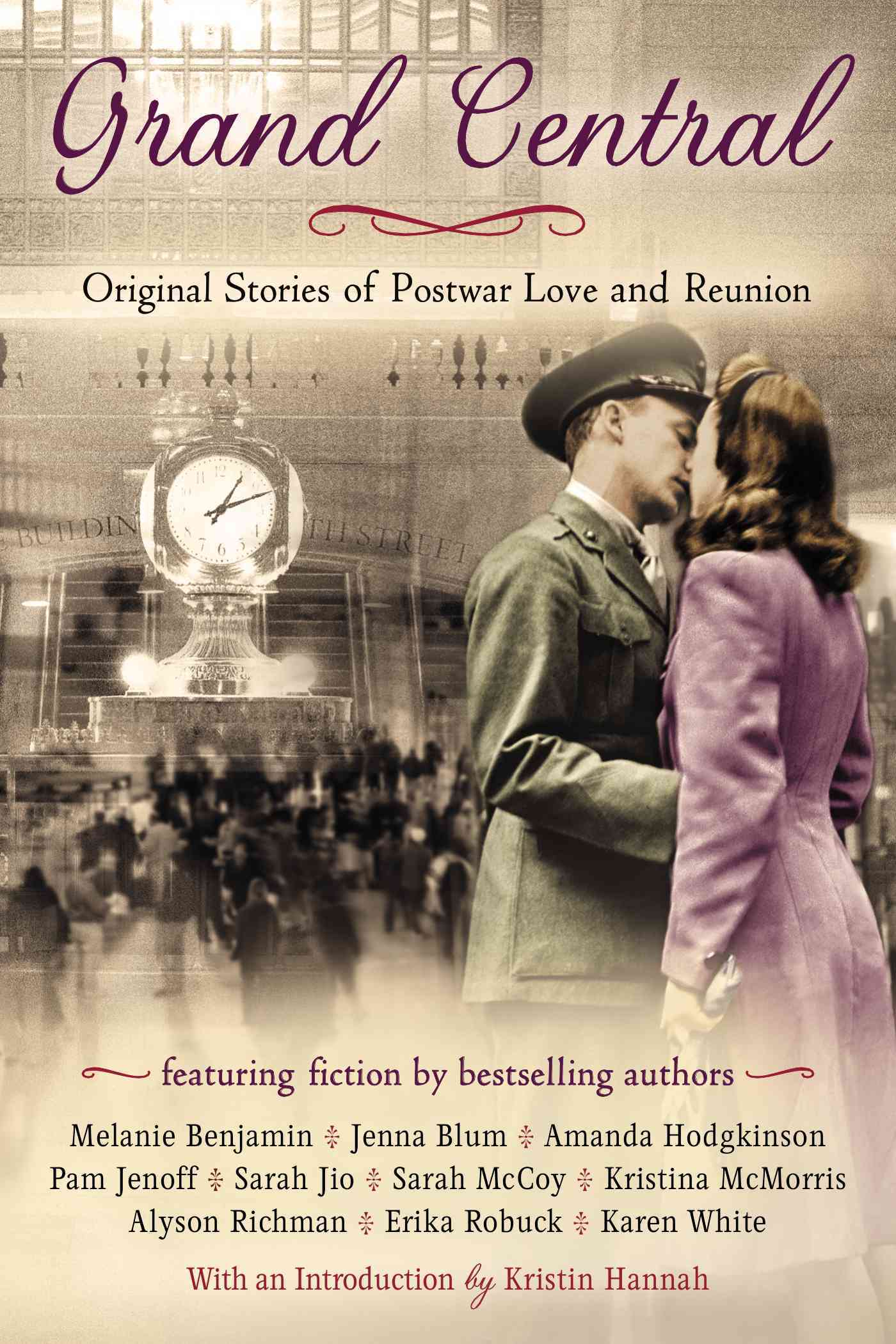
I’ve just started reading Grand Central: Original Stories of Postwar Love and Reunion (2014), a newly-released anthology of short stories by ten writers, with the iconic train station playing a role in each one. Last night I read “The Lucky One” by Jenna Blum, author of two very successful novels, Those Who Save Us and The Stormchasers. I count Jenna among my dear friends, so perhaps I’m biased, but if her contribution is a harbinger of things to come, I’m in for a treat.
I began with Jenna’s story because, well, I saw it as sort of a test. WWII. Train station. Love and reunion. In the wrong hands, such a collection could easily become a soggy nostalgia fest, conjuring up images of a couple having a final embrace before the one left behind runs along the departing train. Because I’m a big fan of Jenna’s work, I figured her story would give me an idea of what to expect.
Jenna’s “The Lucky One” is about a Jewish concentration camp survivor who works at Grand Central’s famous Oyster Bar restaurant. He sees a customer who looks like his late mother. . . .
Enough said. I’ll simply opine that “The Lucky One” is a superb, knowing, heartfelt contribution from a writer whose ability to tell a great story with nuanced emotional intelligence is one of her distinguishing gifts. It also is the work of someone who learned about the Holocaust by interviewing survivors for Steven Spielberg’s Survivors of the Shoah history project. Jenna has infused a lot of historical understanding into her short story.
Okay folks, I know I’m betraying my own limitations when I confess that I cannot recall ever diving into a volume of short stories with a cover showing a couple kissing in a train station! But I will be the loser if I don’t spend more time with this one. And I have a strong feeling that the next time I step into Grand Central Station, some of these tales will come to mind.
June 6, 1944: Why it matters for those of us born much later

Photograph of D-Day landings (from National WWII Museum, New Orleans)
Seventy years ago, Allied forces landed on the beaches of Normandy, France, signaling the beginning of the major campaign to reclaim Europe from Hitler’s Germany. If you’ve ever wondered how terms such as “D-Day” and “first wave on the beach” became parts of our cultural vocabulary, look no more.
The veterans of D-Day are aging, and many have passed on. But this remains a signature event in history. Had the invasion failed and the Allied forces been pushed back across the English Channel, the war likely would’ve gone on for years. Instead, it ended the next May in Europe and the next September in the Pacific.

German defenses watched Allied troops landing on Normandy beaches from these fortifications (from National WWII Museum, New Orleans)
Most of us have been spared the experience of armed combat, but if you want a sense of what it was like to be in that first wave of troops on the beach, the opening sequence of Saving Private Ryan, Steven Spielberg’s 1998 depiction of a squad of American soldiers assigned to a special mission, is about as close as you’d want to get.
If you’d prefer popular historical overviews of D-Day, then Stephen Ambrose’s D-Day (1994) and Walter Lord’s The Longest Day (1959) are good book choices. The 1962 screen adaptation of Lord’s book (also titled The Longest Day), while very much a Hollywood war movie, tells the story well, too.

In my previous post, I observed that some of us would benefit by finding greater meaning in the common, ordinary, and mundane pieces of our lives, rather than always working toward or anticipating the next big event. Many of the men who returned home from D-Day and other places of battle understood that notion implicitly. They had seen enough of the world’s conflicts and drama; many wanted nothing more than to lead quiet, comfortable, and relatively uneventful lives.
I try to remember this whenever I look back at WWII, while simultaneously yearning for a greater sense of shared purpose in our fragmented society. It’s awfully easy to romanticize the war era through a rose-colored lens some 70 years old. But I can’t imagine anyone who survived the beaches of Normandy getting too soggy about a global war that left millions of casualties. D-Day matters for a lot of reasons, not the least of which is how it reminds us of the blessings of living in peace.
Jack Kerouac’s homebrewed tabletop baseball game
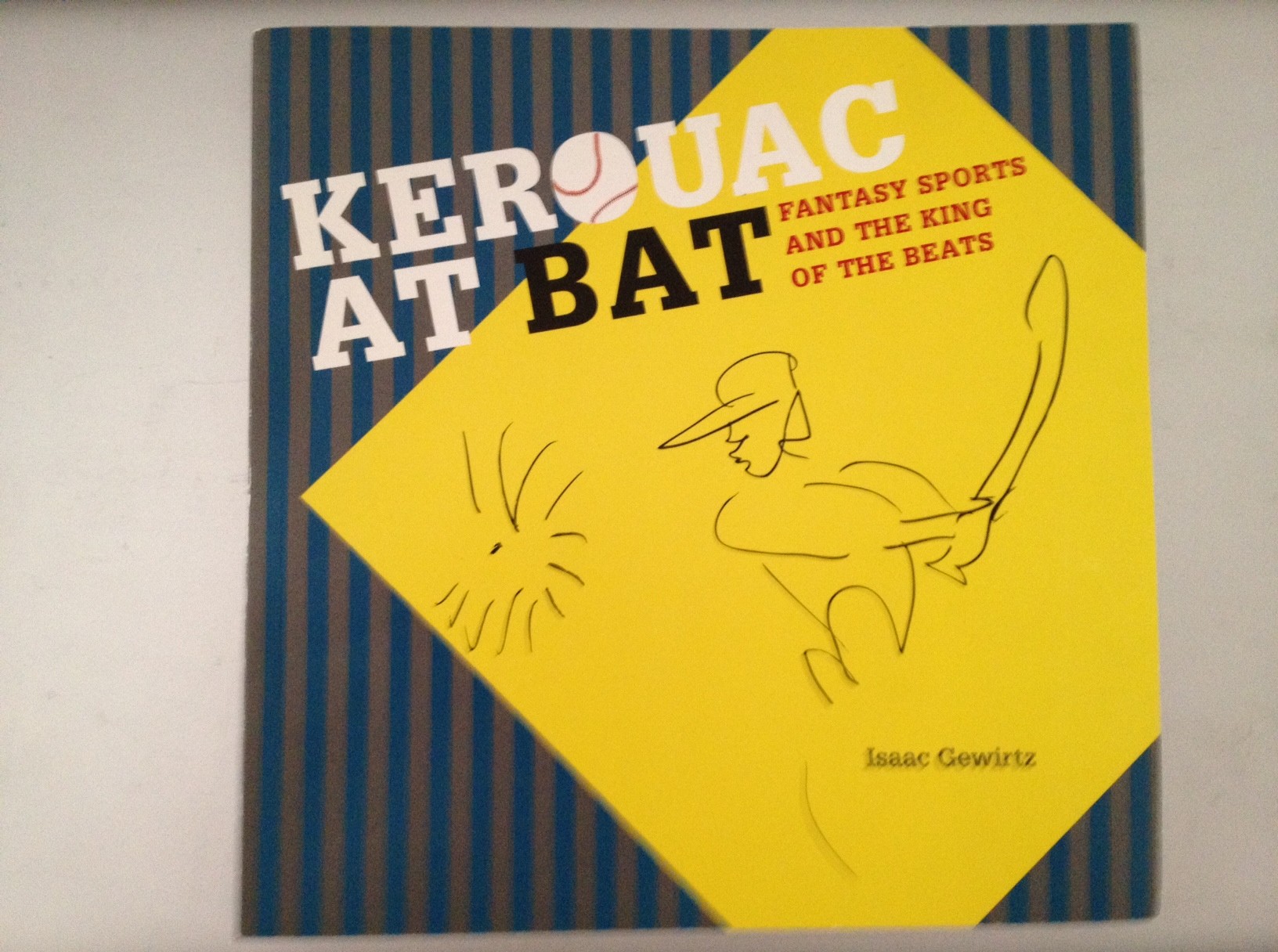
You may be familiar with Jack Kerouac (1922-1969) as the author of novels (e.g., On the Road) and poetry that established him as an iconic figure of the Beat Generation. But did you also know that he was a big sports fan who blended a love of baseball and a rich imagination to create a homebrewed tabletop baseball game? The game featured a league of fictitious teams and ballplayers that he played for years, well into his adulthood.
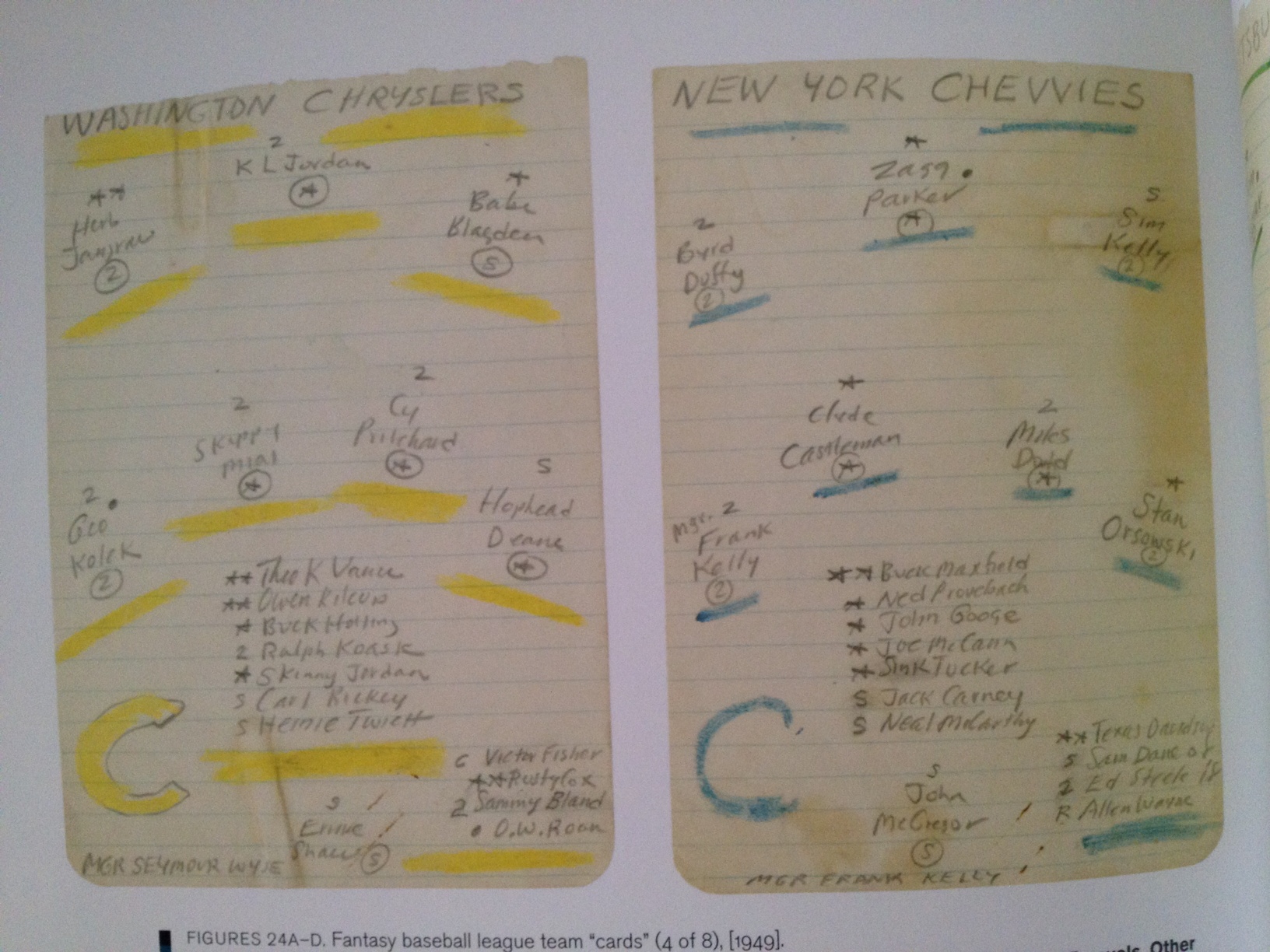
With baseball season moving into full swing, I’m delighted to highlight Isaac Gewirtz’s Kerouac at Bat: Fantasy Sports and the King of the Beats (2009), a colorful 100-page book about Kerouac’s fantasy sports world, including plenty of photos of Kerouac’s own baseball game and the voluminous league records he maintained. The book is published by the New York Public Library (Gewirtz is a curator there), and it’s listed in the NYPL’s online catalog.

Through his game, Kerouac created his own fictitious world of baseball, proceeding from season to season. During the earlier years of his baseball league, he named his teams after car brands:
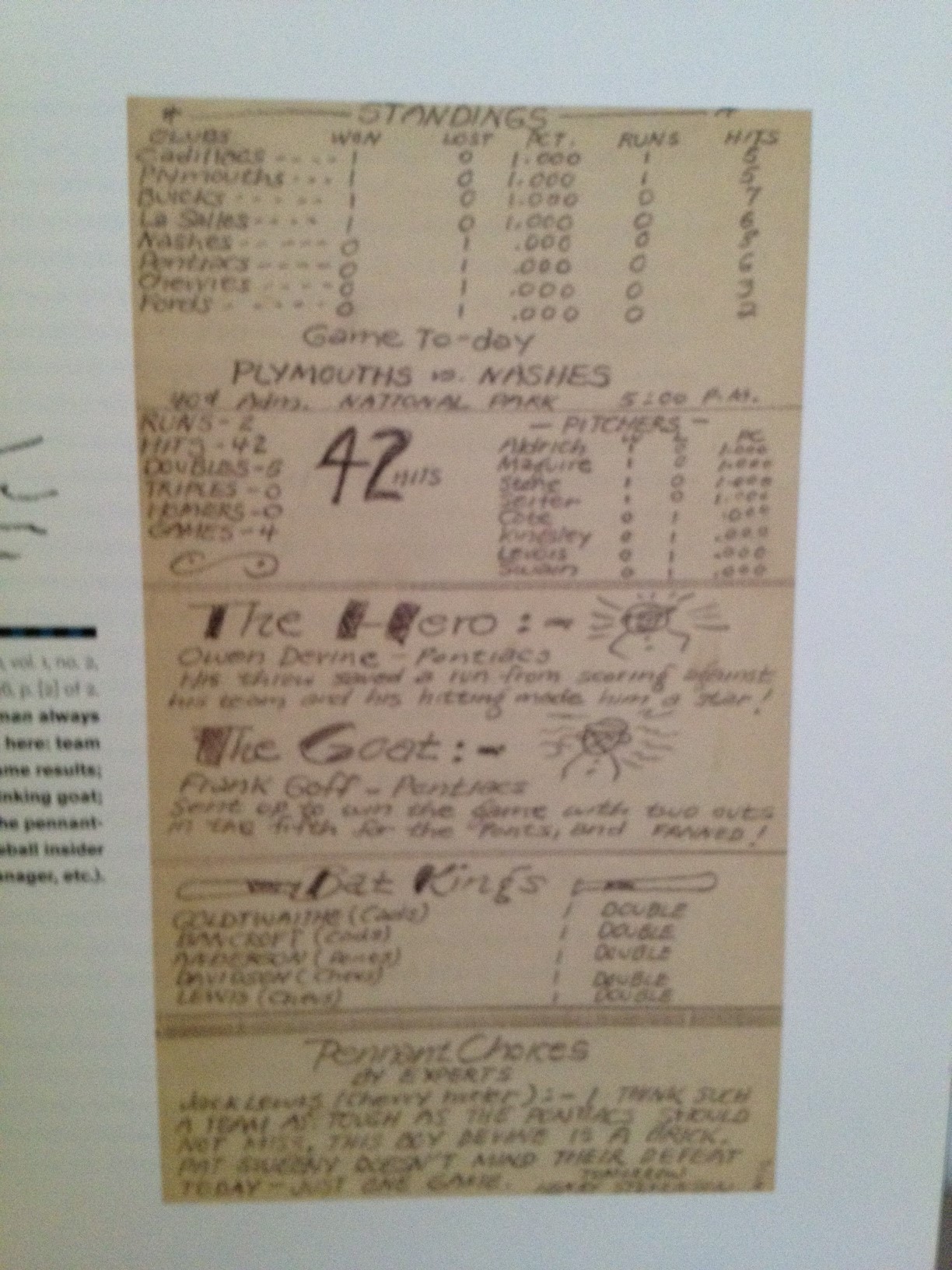
Kerouac added journalistic touches to his baseball league. Here’s a write-up of early-season league action, including the nascent standings and a game summary:
Kerouac’s game slightly preceded the arrival of dozens of commercially marketed baseball board games, such as APBA and Strat-O-Matic, in which players recreate the performances of real-life major leaguers via game engines that blend assorted charts, player performance cards or rosters, and activators such as dice or spinners. Computer and videogame platforms have now brought baseball simulations into the digital age. (For those who want to check out the contemporary tabletop sports simulation scene, the Tabletop Sports game forum on Delphi is a good starting place.)
Perhaps newspaper reporter and APBA baseball fan Kenneth Heard is following in Kerouac’s footsteps with his terrific personal blog, Love, Life and APBA Baseball, in which he mixes game and league summaries with personal stories and observations about life.

Vintage edition of the APBA baseball game (From apbagames.com)
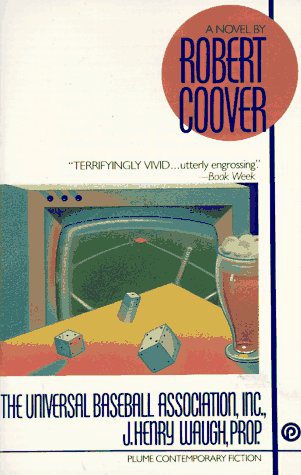
Kerouac’s fictitious tabletop baseball world also preceded Robert Coover’s The Universal Baseball Association, Inc., J. Henry Waugh, Prop. (1968), the tale of a man who invents his own cards & dice baseball game and becomes lost in the life of his fictitious baseball league. It’s considered a minor classic and one of the best books about the dramatic pull of baseball.
I’ve been playing tabletop sports games since I was in grade school. Last year I played the 1969 Chicago Cubs schedule on the iPad version of Out of the Park baseball. I was attempting to reverse the fortunes of a favorite team that, in real life, slumped badly at season’s end and lost the division title to the New York Mets, the eventual World Series champs. (I’m afraid that my management of the digital Cubs resulted in a much worse record!)
But I digress! You see, it comes easily for those of us who, like Kerouac, enjoy recreating a favorite sport with the mind’s eye. Even if we lack his gift for writing novels, we can build a world of legendary sports accomplishments on our tabletops.
 Musings of a Gen Joneser
Recent Comments