Are used bookstores making a comeback?

Are used bookstores on the comeback trail? Michael Rosenwald reports for the Washington Post that this may be the case. He starts his piece with a tale of an entrepreneurial book lover who is opening a new store:
Early next month, Pablo Sierra is opening a used bookstore in Northwest Washington — an unlikely bet in the digital age made even more inconceivable, given that his only experience with books is reading them.
“I guess it is pretty crazy,” Sierra said, echoing an observation shared by some of his friends.
Or maybe not. Sierra, like other book lovers, has read articles about slowing e-book sales and watched as independent bookstores such as Politics and Prose thrive, catering to readers who value bookish places as cultural hubs and still think the best reading device is paper.
He adds that “(w)hile there are no industry statistics on used-book sales, many stores that survived the initial digital carnage say their sales are rising.”
We can only hope that this is true. The vitality of used bookstores is a leading indicator of whether we live in a literate, reading, thinking society. They offer a chance to obtain new treasures that may be out of print today, not to mention provide an opportunity to recycle books that have outlived their usefulness to their original owner. When you walk into a used bookstore, you never know what discoveries await you.
Adding a Little Free Library to my favorite store in the ‘hood

LittleFreeLibrary.org is a non-profit organization devoted to promoting, well, Little Free Libraries, tiny, handcrafted wooden boxes that invite anyone to take a book or leave a book. From their website, here’s the short version of how they got started:
In the beginning—2009–Todd Bol of Hudson, Wisconsin, built a model of a one room schoolhouse as a tribute to his mother, a former school teacher who loved reading. He filled it with books and put it on a post in his front yard. His neighbors and friends loved it. He built several more and gave them away. Each one had a sign that said FREE BOOKS. Rick Brooks, of the University of Wisconsin-Madison, saw Bol’s do-it-yourself project while they were discussing potential social enterprises. Together, the two saw opportunities to achieve a wide variety of goals for the common good. Each brought different skills to the effort, Bol as a creative craftsman experienced with innovative enterprise models and Brooks as a youth and community development educator with a background in social marketing.
Recently I arranged with the co-owners of City Feed & Supply, one of the wonderful, socially conscious businesses in my Boston neighborhood of Jamaica Plain, to place a Little Free Library in their Boylston Street store. City Feed is a popular neighborhood gathering spot, offering a variety of coffee drinks, freshly-made sandwiches, and health-minded groceries, and I thought it would be a perfect home for a Little Free Library.
I took a snapshot of the first collection of books to be included in the box. I also posted announcements to some of the J.P. online bulletin boards and Facebook pages. In less than a week, it’s already attracting some reader traffic!
Of course, I must confess my ulterior motives in promoting this idea. I have way too many books, and being able to share some of them with others helps me to thin the herd. I could spend most of the next ten years simply reading the books I’ve accumulated and still not get through them all.
I forgot to take a new exterior shot of City Feed to go with the photo above, but here’s a scene from two winters ago. It’s a fitting view. After all, as the weather grows colder, the temptation to curl up with a good book, a cup of coffee, and a nice little morsel will be all the greater!

Nostalgia for a New York experienced and occasionally imagined

Awaiting the okay to board, South Station, Boston (Photo: DY)
My annual Thanksgiving pilgrimage to New York included a traditional feast with family and friends and a lot of walking around to absorb the sights and sounds of the city. And while my trusty smartphone is not exactly state of the art, it continued to take decent pictures, a few of which I’m happy to share here.
As good as it gets (Photo: DY)
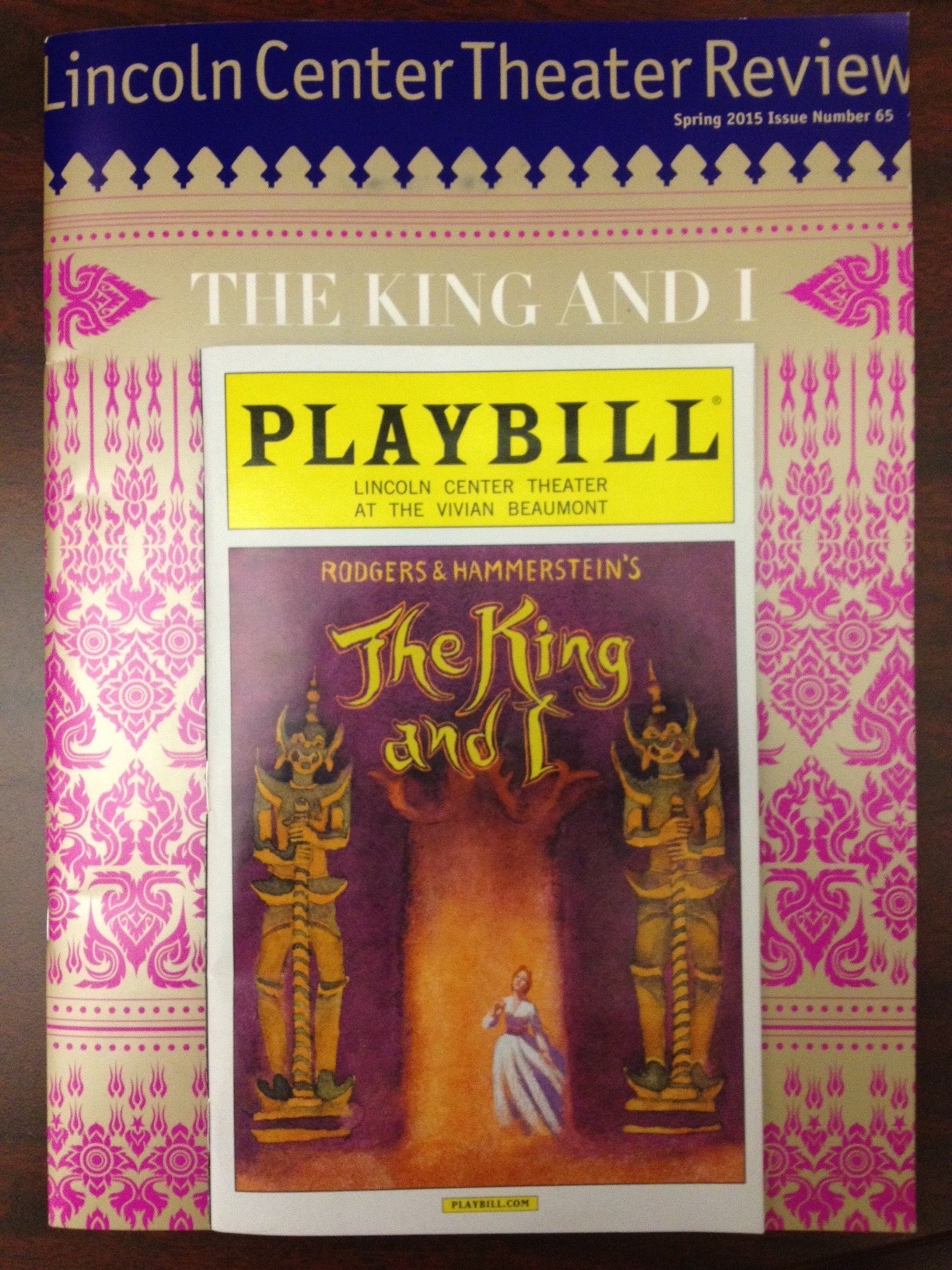
Besides our Thanksgiving dinner, my favorite part of this visit was going with my cousin Judy, a true connoisseur of the New York theatre, to a performance of “The King and I” at Lincoln Center. Starring Kelli O’Hara (Anna) and Hoon Lee (King of Siam), this revival of a Rodgers and Hammerstein classic was simply breathtaking in every way. As the lead of this superb cast, O’Hara was other-worldly good, with flawlessly beautiful vocals and acting chops that brought a deep emotional intelligence to this show.
Returning to old haunts is usually part of any New York visit for me, and the Cozy Soup ‘n’ Burger at Broadway & Astor Place in Greenwich Village is a standard bearer. I’ve been going to this diner since my law school days at NYU, and almost every order includes a bowl of their awesome split pea soup.
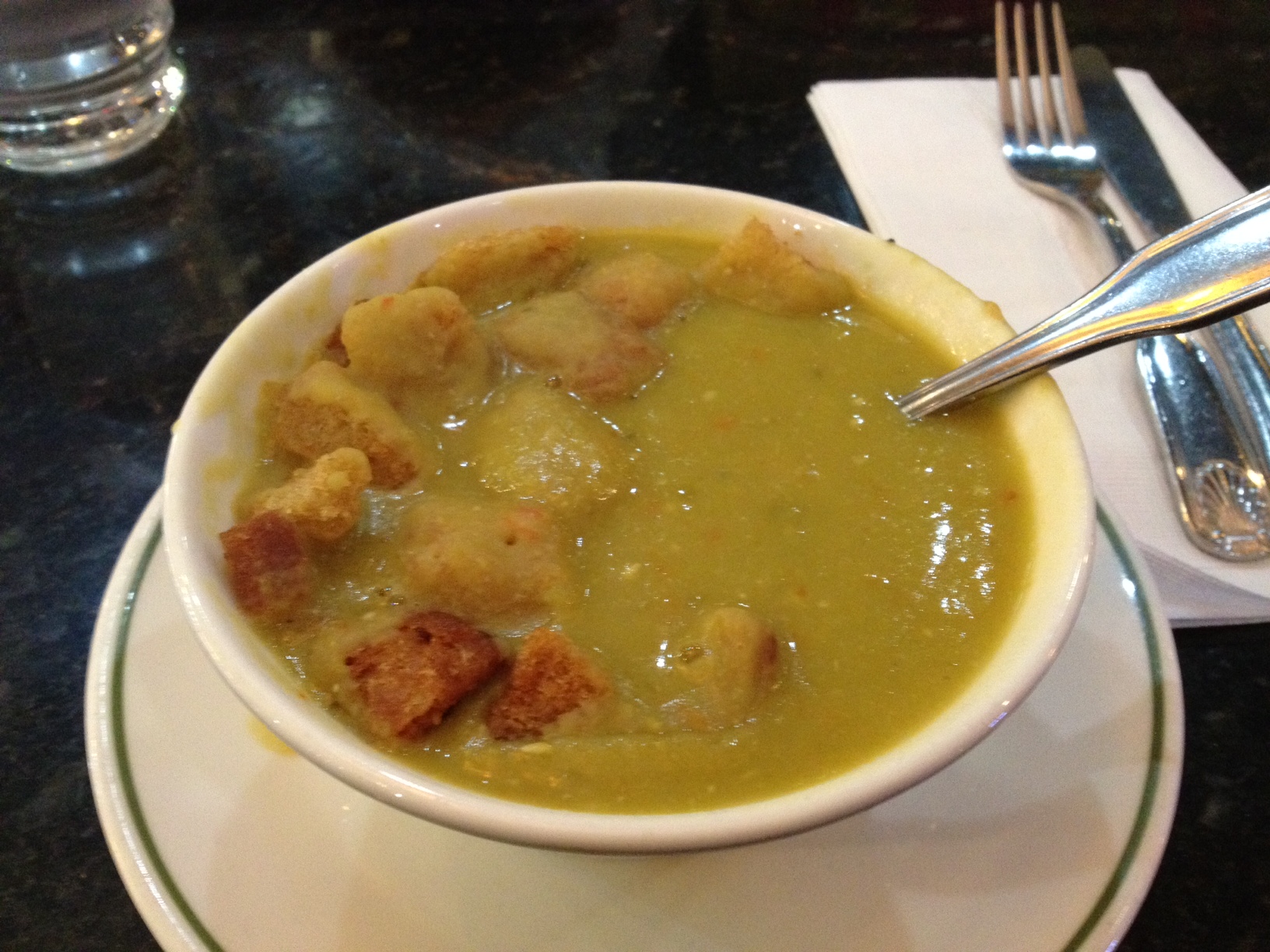
Delicious split pea soup from the Cozy Soup ‘n’ Burger, Manhattan (Photo: DY)
You may be wondering, where are the people in these photos? As I explained in a post last year, although this particular Thanksgiving gathering has been a part of our lives for well over a decade, for some reason no one has ever started taking pictures! Phone cameras abound within our group, and at least some of us are of Japanese heritage! The statistical odds against this shutter shutdown must be off the charts.

Back in the day, I worked for the NY Attorney General’s Office, in this downtown Manhattan building (Photo: DY)
My hotel was in lower Manhattan, so I did quite a bit of walking around there. Above is 120 Broadway, home to the New York Attorney General’s Office, where I spent three years as an Assistant Attorney General in the Labor Bureau before I started teaching. Robert Abrams was the AG then, and he set a high standard for the office. Many of my former colleagues have gone on to distinguished leadership positions in public service, the non-profit sector, and private practice.
Someday I will enjoy a steak with all the trimmings at this place (Photo: DY)
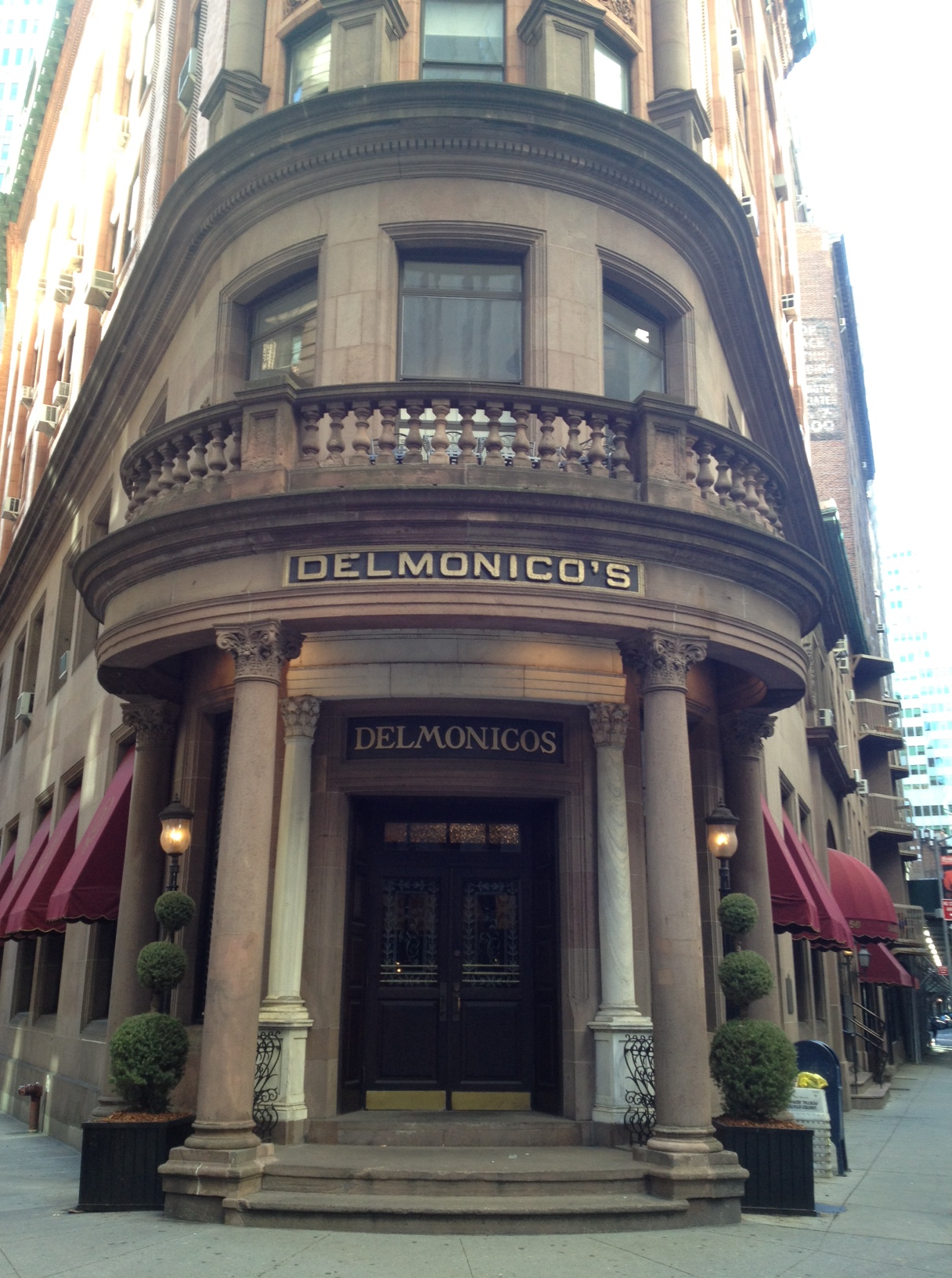
Above is a place that exists for me in a kind of historical, imagined New York: Delmonico’s steak house in the Wall Street business district, a legendary dining establishment going back to the early 1800s. I’ve read about Delmonico’s in non-fiction books and novels about New York, and I’ve heard that they make an exceptional steak. But I’ve never eaten there! Someday it will happen. Medium-well for me, please, with a side order of hash browns.

A great find at the wondrous Strand Bookstore (Photo: DY)
When I lived in New York, a hefty share of my modest paychecks went to the Strand Bookstore. In recent years, the mighty Strand has undergone some interior remodeling to give the place a slightly more upscale feel, but it retains much of the dusty used bookstore feel that made it such a fun book hunting ground years ago. There I made my one Black Friday purchase for myself, a Folio Society edition of T.E. Lawrence’s (Lawrence of Arabia) Seven Pillars of Wisdom. With its slipcase and in excellent condition, I got it at a fraction of its original price.

A truly gourmet taco from La Palapa, East Village, Manhattan (Photo: DY)
My gustatory intake also included a couple of truly excellent tacos at La Palapa, a superb (and affordable!) Mexican restaurant on St. Mark’s Place in Manhattan’s East Village. Cousin Judy happens to be a manager at La Palapa, but I’d be raving about it even if I didn’t have family working there.

And speaking of the East Village, this new history of historic St. Mark’s Place (Photo: DY)
My cousin Al gave me this new history of St. Mark’s Place. St. Mark’s is a culturally famous street, with a history rich in noted writers, musicians, artists and other historically significant folks. Today it has not escaped the sky high cost of Manhattan living, but it’s still a great site of urban Americana. And paging through the book, I imagine incarnations of a New York that I’ve never personally experienced. Such is the pull of this little island.
Stephen King and the art of the slow read
Among the writers whose books merit the appellation “page turner,” Stephen King ranks high on the short list. After all, millions of loyal readers have been enjoying his books for decades now. He remains a master storyteller who continually demonstrates his growth as a writer.
I’m a Stephen King fan, but not necessarily one of his “Constant Readers.” In fact, since discovering his early works during college and law school (starting with Salem’s Lot, which scared the hell out of me), I’ve gone through lengthy stretches of years when I didn’t pick up a King novel. In recent years, however, I’ve read and enjoyed a number of his books, and I anticipate that his work will be a regular presence in my reading rotation.
During my current incarnation as a King reader, I have moved away from devouring one of his books in a short period of time. Rather, especially for his longer novels, I take my time, usually several weeks.
With that practice of slow reading has come a revelation: Stephen King is a brilliant writer because his stories stay with you over a long stretch of reading time. You get emotionally invested in the plot and the characters, to the point where you can pick up the story a week later and be right back in its world.
Those of you who are avid readers may know the opposite experience. You begin a book that seems promising, but then life intrudes and you put it down for a few days or a week. When you try to pick it up again, even the major characters seem foggy to you, or maybe the developing story simply isn’t all that compelling.
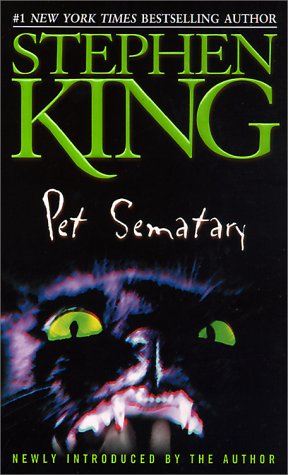
By contrast, I just finished a slow read of Pet Sematary (1983), and oh my, is it good. This is one of his scariest and most emotionally wrought stories, a family-based tale that plumbs the depths of death and loss. For some reason Pet Sematary escaped my attention when it first appeared, but I know that I appreciate its richness more today.
A couple of years ago, I read King’s superb novel built around the Kennedy Assassination, 11/22/63 (2012), in the same fashion. (I took over a month to finish it.) Framed by a time travel device, the story spans several years. Reading the book slowly actually helped me to “experience” that passage of time.
On Facebook I have had exchanges with friends on the question of who is our generation’s Charles Dickens, and King’s name comes up quickly and enthusiastically. Dickens’s stories also had a slow read quality to them, in his case by design or necessity, as many of his works were serialized in weekly and monthly magazine installments. His plots and characters had to be sufficiently memorable in order to maintain the interest of readers over the longer haul.
Stephen King’s work is much more than a generational passing fancy. Like that of Dickens, people will be reading his stuff for many decades to come. May I suggest that doing so slowly is a great way to appreciate his great talent?
The finer things: Books, movies, coffee
As my friends will readily acknowledge, my spending priorities do not extend to matters of wardrobe, home and office design, and other things domestic. But in the Kingdom of Geekdom that is my world, books, movies, and coffee are more likely to separate cash from wallet. And on occasion, I will indulge in select higher end purchases in each of these three categories.

Let’s start with books. Powered by my ability to rationalize virtually any book purchase (not much willpower there, folks), I have become fond of editions published by the Folio Society, a British entity that specializes in collector-quality volumes of fiction and non-fiction works that have stood the test of time and critical review. Folio Society books are beautifully designed and produced, with print quality that is very easy on these middle-aged eyes.
But Folio Society editions are quite pricey when bought new, often ringing in at between $50 and $100 per volume and sometimes much higher. Consequently, I am judicious with purchases of new Folio books, usually waiting for sales when I will permit myself on occasional splurge, such as a stunning edition of Howard Carter’s The Tomb of Tutankhamun. More frequently, I will scour used bookstores in person and online for copies in quality condition. Perhaps a silver lining of today’s retreat from hard-copy book reading is that fine quality used volumes can be had at bargain prices.
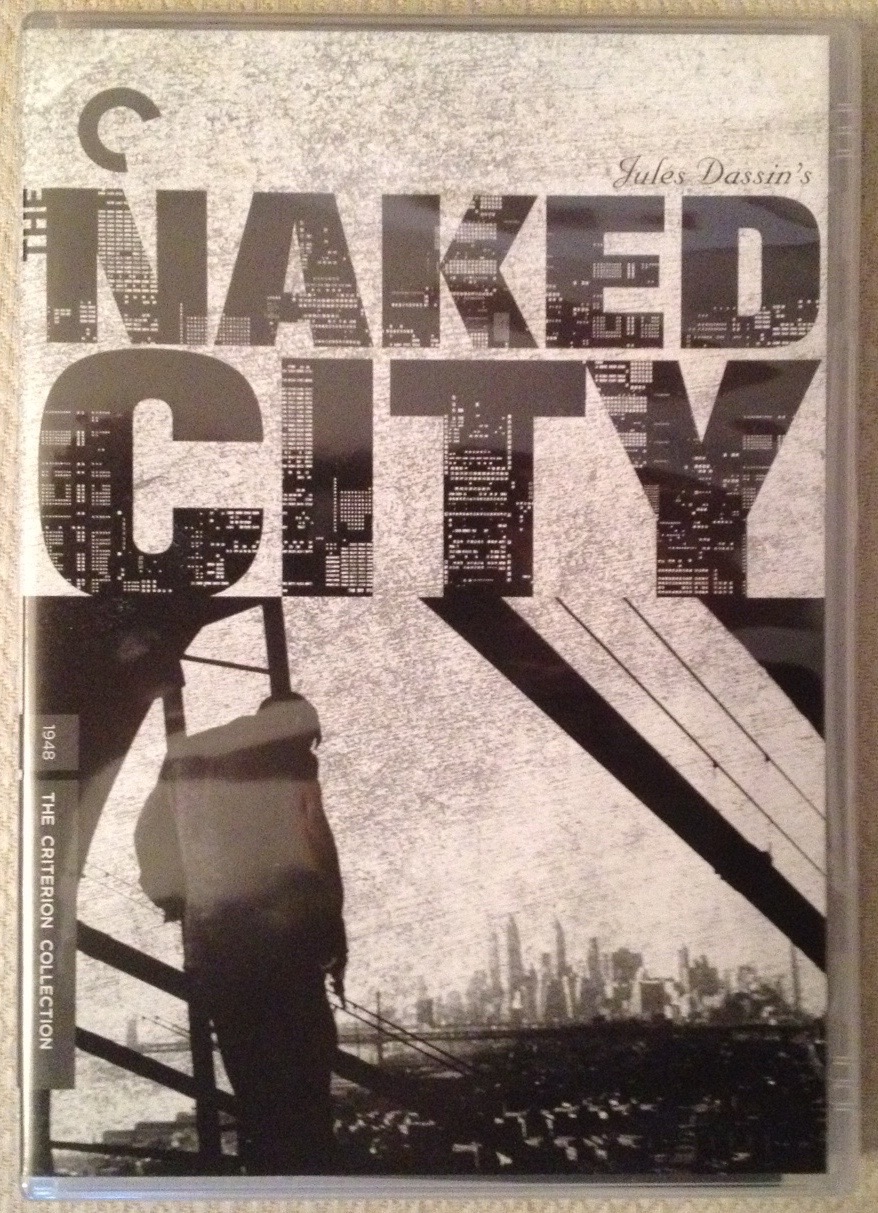
Next, on to movies, where DVDs from the Criterion Collection catch my eye. Criterion editions are first-rate prints of acclaimed films, accompanied by lots of extras on the DVD and a booklet with original essays about the film. Pictured above is one of my favorite movies, “The Naked City” (1948), a classic crime story filmed on site in post-war New York. The Criterion edition is a beautifully restored print, capturing the city’s vistas in sharp, vivid black and white.
Relatively speaking, Criterion editions are not as expensive as Folio Society books, but they are priced at premium rates nonetheless. Here, too, patience and bargain sleuthing yield dividends. Barnes & Noble runs a half-price sale of Criterion Collection films once or twice a year, and poking around online will uncover pre-viewed copies at decent prices as well.
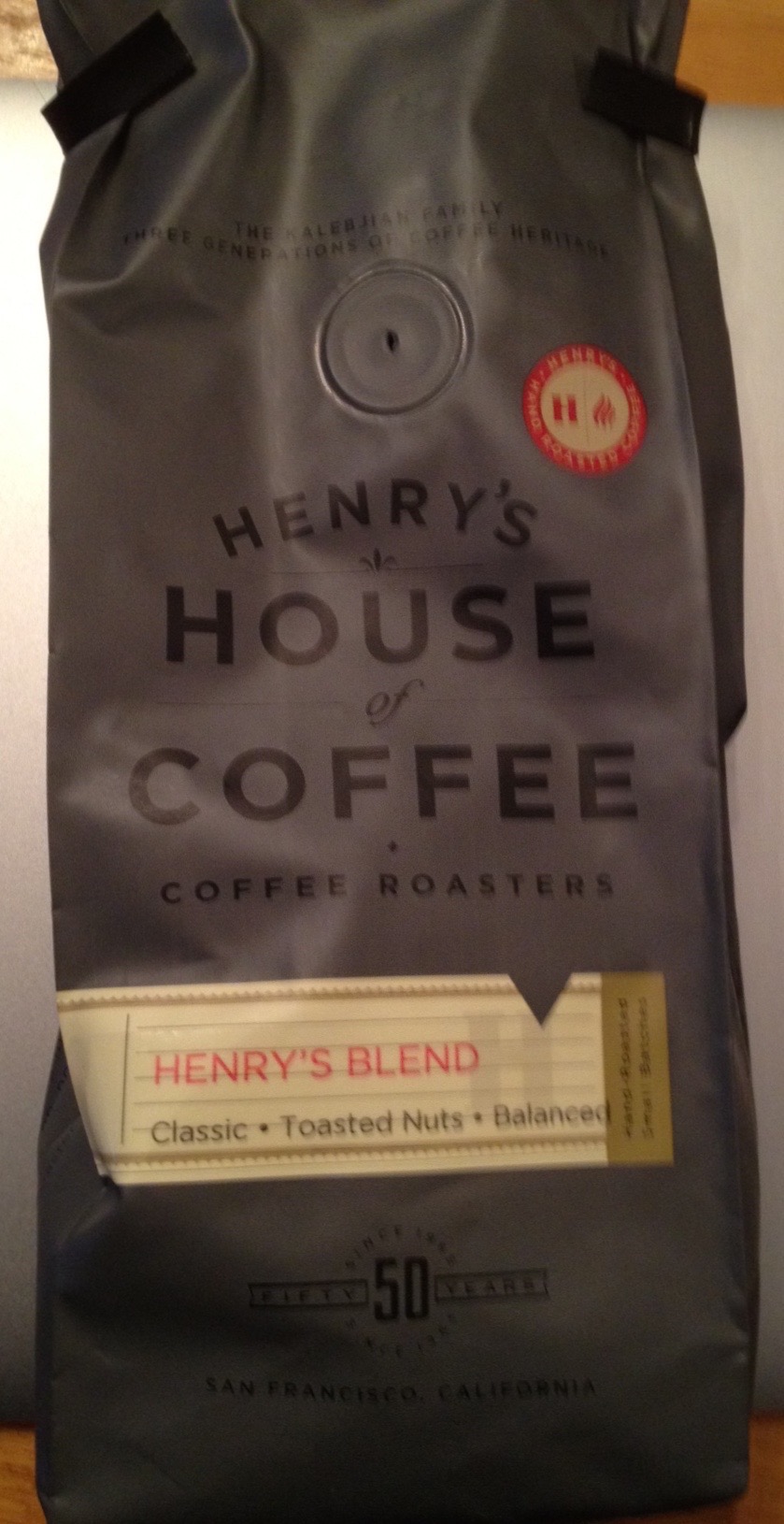
Well kids, if we’re talking books and movies, then coffee can’t be far behind. I save money by usually making coffee at my home or office. Yet I must confess, my tastes are more expensive than Maxwell House or Folger’s. I often opt for a fair trade blend from my beloved City Feed & Supply store across the street, or maybe a good brand on sale at the local CVS.
And here’s the splurge: Recently, I used a gift card from GoCoffeeGo to try the house blend from Henry’s House of Coffee, a popular, long-time San Francisco coffee roaster. I must say that it is one of the best, most aromatic coffees I’ve ever had. This will have to be a periodic treat rather than a regular presence in my coffee rotation, but it’s so good that I’ll continue to make the occasional purchase!
Diaries & journals as time travel devices

As both a history buff and a wannabe time traveler, I find that historically significant journals and diaries can be a wonderful way of jumping into the past. In the hands of gifted chroniclers, they offer intimate, we-are-there views of momentous times, blending reportage, observation, context, and some instant reflection and analysis.
Two of my favorites are William L. Shirer’s Berlin Diary: The Journal of a Foreign Correspondent, 1934-41 (1941) and John Kenneth Galbraith’s Ambassador’s Journal: A Personal Account of the Kennedy Years (1969). Here are some snapshot page views from both books:
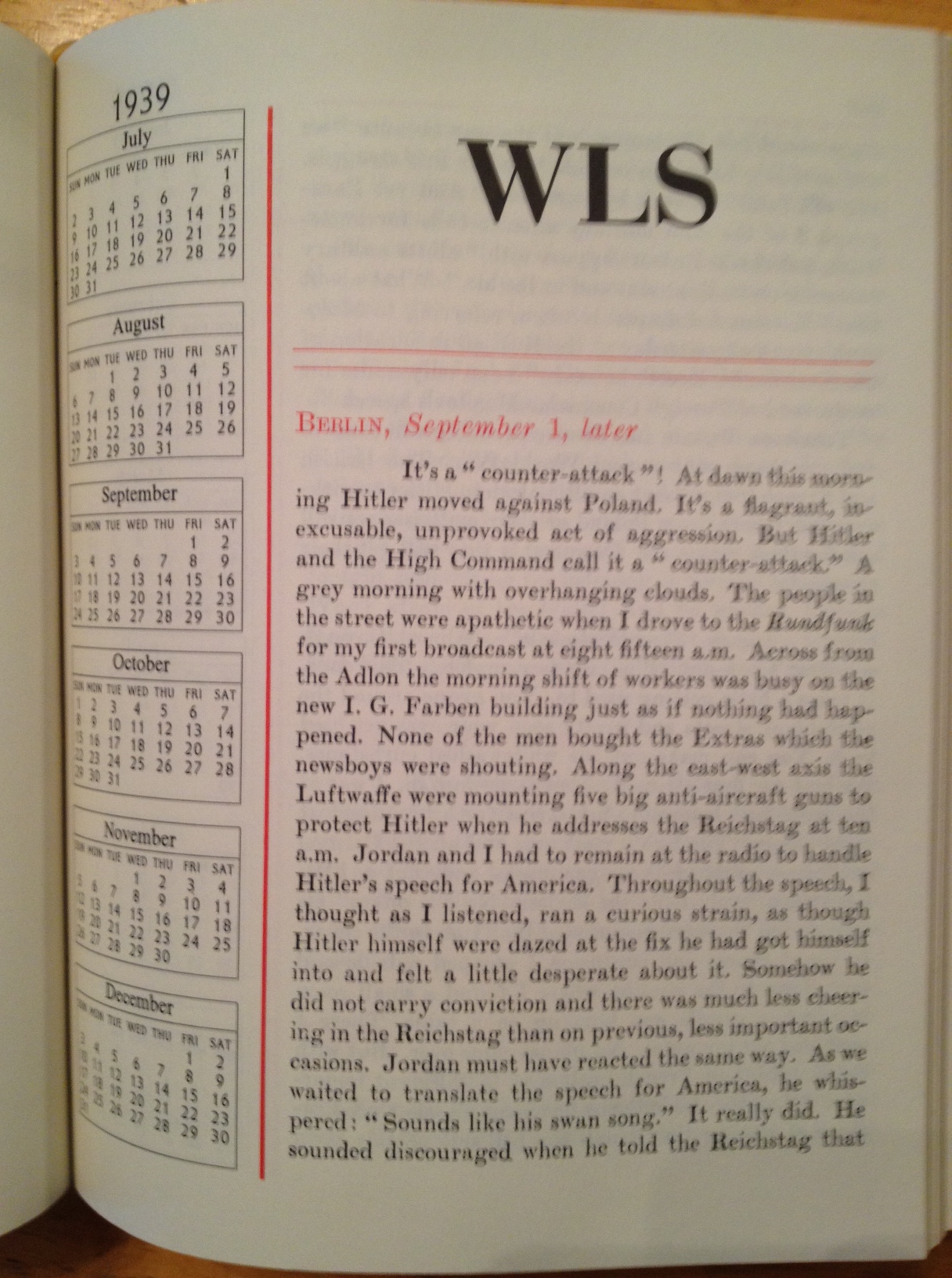
William Shirer was both a print journalist and a radio reporter in Berlin during the tumultuous 1930s and the early years of the Second World War. In the photo above, we see Shirer writing about the German invasion of Poland on September 1, 1939, regarded as the official launch of the war. He quickly and accurately dismisses attempts by Hitler and his High Command to spin the invasion as a defensive “counter-attack” in response to supposed Polish aggression.
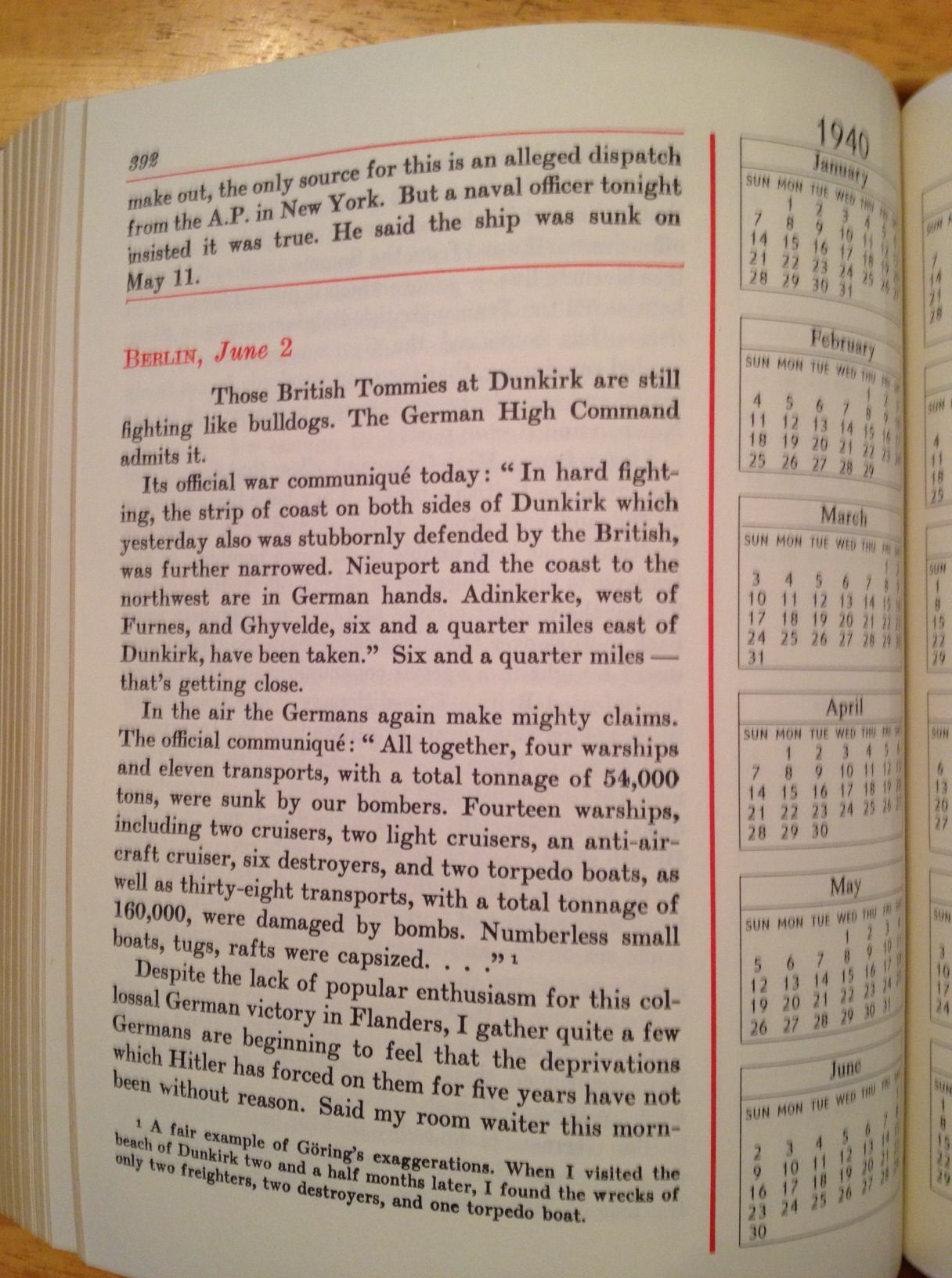
And here’s one of his 1940 entries, writing about the British evacuation of Dunkirk following the fall of France. Note, at the bottom of the page, his observations about how the German people are now regarding the material deprivations they experienced as Germany prepared for war.
Shirer would go on to write one of the most popular books ever about the war, The Rise and Fall of the Third Reich.
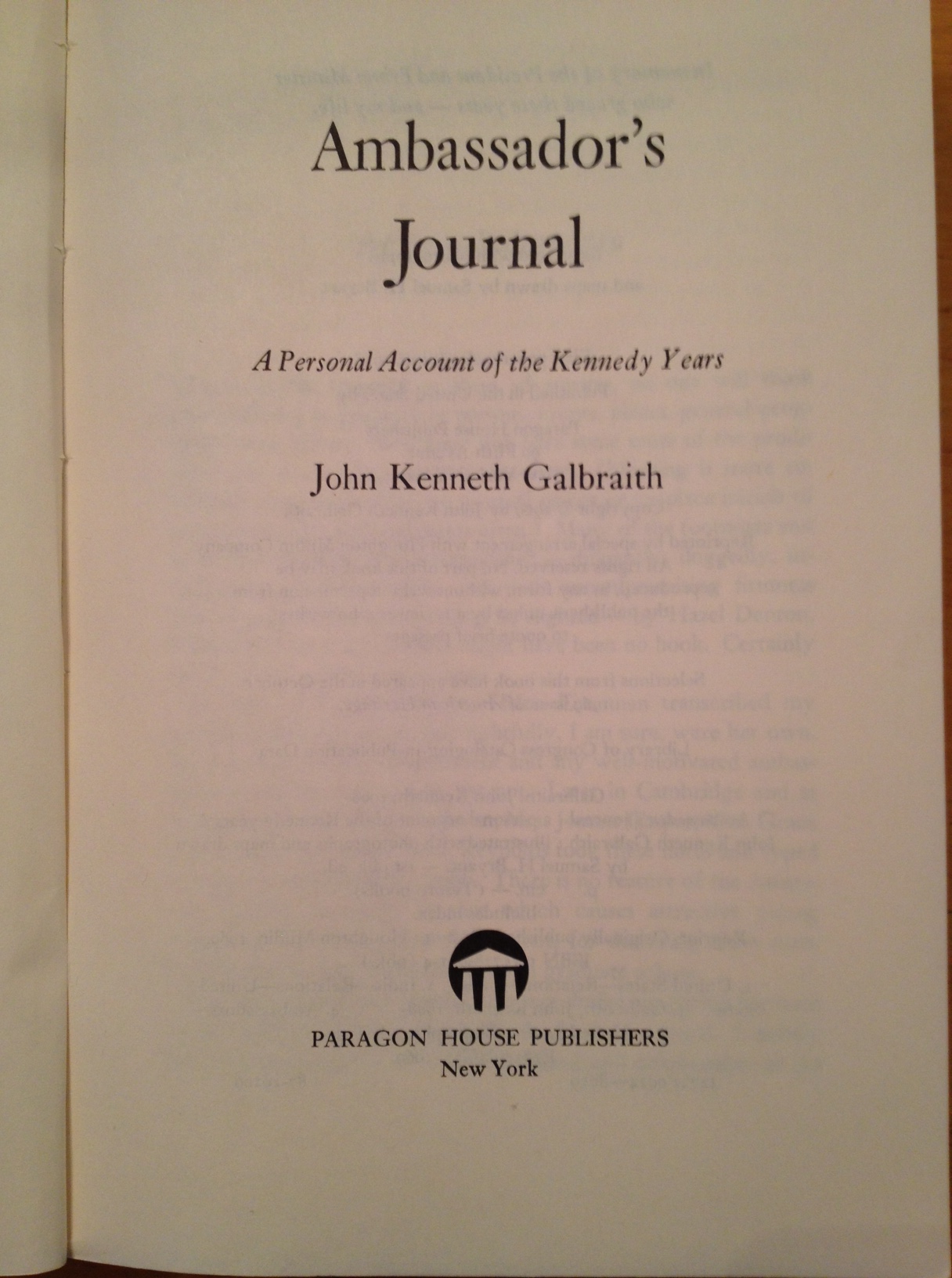
John Kenneth Galbraith was an accomplished Harvard economist, liberal political figure, and author of a bestselling (and still relevant) book, The Affluent Society, when he became an advisor to the Kennedy campaign. Galbraith’s journal mixes insider stories about the Kennedy Administration, his experiences as Kennedy’s ambassador to India, and texts of letters that he wrote to the President.

Some of the most interesting parts of the journal recount the period immediately following Kennedy’s election in 1960. In the passage above, Galbraith shares news of his pending diplomatic assignment and his conversation with the President-elect about potential cabinet appointees.

And here’s an entry with news that First Lady Jacqueline Kennedy will be making a short, informal trip to India, along with some humorous details about how Galbraith has been instructed to keep the visit confidential for now.
***
When it comes to journals and diaries from historically significant times, I much prefer the prose of observers such as Shirer and Galbraith over tawdry tell-all tales designed to sell books and attract talk show invitations. Shirer was a reporter, while Galbraith was a participant, but both journals share levels of restraint, sans the kind of voyeuristic detail we might expect in similar efforts today.
They are also fascinating to read, drawing us into different times and places. In the absence of time travel machines, books like these are pretty good substitutes.
***
Related posts
Time travel: Some favorite destinations (2013) — If I could go back in time, here’s my list!
A bookstore visit triggers memories of meeting an intellectual hero (2014) — My meeting with John Kenneth Galbraith, weeks before he passed away.
What are your “comfort books”?

OMG, I am an utter, hopeless geek
What are your “comfort books”? You know, those books that make you feel all warm and cozy, like a good meatloaf or bowl of soup?
It could be a classic novel, scary story, or atmospheric mystery. Or maybe a compelling tale of history or travel. How about an inspirational or spiritual book? If you’re a sports fan, maybe it’s a story about your favorite team.
I have comfort books that fit into most of these categories.
But in a confession of my free fall into complete geekdom, I’ll share one that I’m guessing you haven’t heard of before. It’s an intellectual history book, Men of Learning at the End of the Middle Ages (2000), by French historian Jacques Verger. I spied it at a bookstore over a decade ago, and it looked interesting enough to take a flier on it.
Men of Learning looks at how educated European men of the 14th and 15th centuries — mostly scholars, teachers, lawyers, doctors, clergy, and bureaucrats — contributed to the advancement and dissemination of knowledge.
Verger combed through a lot of libraries and archives to be able to share, for example, the numbers of volumes in the private libraries of well-known and not-so-well-known individuals of the era. The Gutenberg printing press did not come along until the 1440s, which meant that printed books were precious, and that books written out by copyists were still quite popular. A personal library of even a few dozen or so volumes was considered an impressive (and monetarily valuable) intellectual endowment.
Today, libraries of major research universities contains millions of books and countless other print resources, not to mention access to even more via online resources. In the late Middle Ages, however, even the libraries of great medieval universities typically numbered in the hundreds(!) of volumes. I probably shouldn’t get too big headed over the fact that my personal library contains more books than that of the entire Oxford University library during the early 1400s, especially given that volumes such as Uncle John’s Bathroom Reader are a part of mine, but I still think it’s pretty neat.
Oops, I’m already getting carried away! Why does Men of Learning resonate with me as a comfort book? Probably because it connects with a big part of who I am, someone who revels in books and learning.
Your comfort books may be much different than mine — I don’t expect a run on Men of Learning because of this blog post — but that’s fine and dandy with me. Read and enjoy.
Thinking young and thinking old: The best of both worlds

(Photo: DY, 2015)
So here’s the question for the day: In looking for books that help us to play the game of life, should we seek insights that encourage us to be young and adventurous or old and wise? Our popular culture worships youth, but there’s much to be said for maturity, too.
How about seeking out both perspectives?!
On that note, here are two books that might be interesting back-to-back reads: Chris Guillebeau’s The Art of Non-Conformity (2010) and Charles D. Hayes’s The Rapture of Maturity (2004). They were written with different generational audiences in mind, the former pitched at younger folks, the latter aimed at older folks.
From Hayes’s Autodidactic.com website, here’s a description of The Rapture of Maturity:
The Rapture of Maturity affirms the joys of discovery and insight that accompany thoughtful reflection on our years of lived experience and a pursuit of deeper understanding. It encourages the kind of thinking that can transform human relations on a global scale.
Rapture is the reward of living authentically and acting deliberately to leave the world a better place than we found it. For those who seek such a goal, this book is indispensable.
And here’s an online description of Guillebeau’s The Art of Non-Conformity:
If you’ve ever thought, “There must be more to life than this,” The Art of Non-Conformity is for you.
Based on Chris Guillebeau’s popular online manifesto “A Brief Guide to World Domination,” The Art of Non-Conformity defies common assumptions about life and work while arming you with the tools to live differently. You’ll discover how to live on your own terms by exploring creative self-employment, radical goal-setting, contrarian travel, and embracing life as a constant adventure.
Publisher’s Weekly aptly noted that “although directed at readers of all ages, [Guillebeau’s] message is likely to appeal most to those without dependents.” So consider the interesting twist: A book that understandably may be discounted as unrealistic by parents raising kids may suddenly be more relevant to them once they become empty nesters.
And for those who are younger, what better way to get a head start on what’s important in life than to read about lessons learned by Charles Hayes, an insightful, thoughtful, largely self-taught philosopher and writer of more senior vintage?
Favorite parts
Each book is full of inspiration, sound advice, and thought provoking observations. Here are parts from each that stand out for me:
In a chapter titled “Graduate School vs. the Blogosphere,” The Art of Non-Conformity explores the question of grad school vs. independent learning. Guillebeau shares his own graduate school experience (a master’s degree program in international affairs) and compares its time, cost, and activities to the benefits of pursuing a largely self-defined course of independent study.
He includes a suggested outline for a “One Year, Self-Directed, Alternative Graduate School Experience,” basically a low-cost, do-it-yourself program of reading, multi-media learning, travel, and online publishing. For lifelong learning junkies, this is catnip and gets the wheels turning. It’s a wonderful reminder of how much good stuff is out there for independent learners.
For me, the most memorable passage of The Rapture of Maturity is a story of regret that Hayes shares from his younger days when he lived for a short time in a boarding house:
In the room next to mine was an old man in his eighties who often asked me to have dinner with him. Most of the time I was in too much of a hurry and declined. When I did accept his invitation, I ate quickly and never stayed very long. The recurring memory I have today sees through that old man’s screen door to the table always set with an extra plate in case he might have company for dinner. Today I understand that he was lonely. Back then I didn’t have the time or the patience to notice.
Hayes goes on to explore the role of regret in helping us to shape better lives. “Reflecting on this kind of unfinished business,” he writes, “prepares us for similar decisions in the future.”
Freedom and responsibility
For me, at least, the broader takeaways from these books, considered together, is that life is a balance of freedom and responsibility. It’s about the freedom to do things and make decisions about one’s life, along with a self-defined responsibility to live in a meaningful, authentic, and difference-making way.
Within those very broad parameters, there may be plenty of room to navigate between family, friends, work, faith and spirituality, and various activities.
Not everyone has these choices. Life’s opportunities are not equally distributed, and for some they may be very constricted. But for those who are blessed with, at the very least, some capacity to create these options, these two books may be valuable.
New England autumn, that Halloween feeling, and scary stories

Boston Common, October 2015 (Photo: DY)
Friday was a raw, wet, overcast October day here in Boston. For me, it meant that fall has truly arrived in New England. As my wholly repetitive earlier posts about fall attest (here and here), this is my favorite and most nostalgic season.
The change of seasons from summer to fall is rooted in the equinox, an astronomical term. As explained by Wikipedia:
An equinox is an astronomical event in which the plane of Earth’s equator passes the center of the Sun. . . . The Astronomical Almanac defines it, on the other hand, as the instants when the Sun’s apparent longitude is 0° or 180°. . . . The two definitions are almost, but not exactly equivalent. Equinoxes occur twice a year, around 21 March and 23 September.
The month will culminate with Halloween, that most candy-coated of holidays. It will include a viewing of It’s the Great Pumpkin, Charlie Brown, a childhood favorite that still manages to get me in the Halloween spirit.
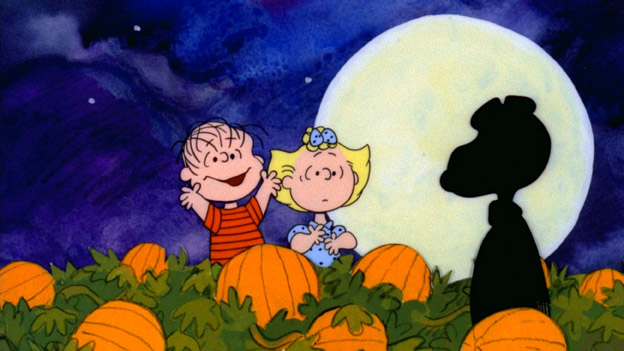
A childhood favorite: It’s the Great Pumpkin, Charlie Brown (Picture: abc.com)
But Halloween is about much more than empty calories and chocolate fixes. Its origins are grounded in religion and death. Again, from Wikipedia:
Halloween . . . is a yearly celebration observed in a number of countries on 31 October, the eve of the Western Christian feast of All Hallows’ Day. It initiates the three-day religious observance of Allhallowtide, . . . the time in the liturgical year dedicated to remembering the dead, including saints (hallows), martyrs, and all the faithful departed believers. . . . Within Allhallowtide, the traditional focus of All Hallows’ Eve revolves around the theme of using “humor and ridicule to confront the power of death.” . . .
According to many scholars, All Hallows’ Eve is a Christianized feast initially influenced by Celtic harvest festivals, . . . with possible pagan roots, particularly the Gaelic Samhain. . . . Other scholars maintain that it originated independently of Samhain and has solely Christian roots.
Perhaps it was inevitable that ghosts, goblins, and haunted houses would eventually enter the picture!
I’m in the right part of the country for religion and the supernatural to mix. It’s a combination that goes waaay back. Rosalyn Schanzer opens Witches! The Absolutely True Tale of Disaster in Salem (2011), a short, lively, fact-filled narrative of the Salem, Massachusetts witch hunts of the 17th century, with a description of the Puritan mindset of the day:
Yet with all their fine intentions, the voyagers had brought along a stowaway from their former home — a terrifying, ancient idea fated to wreak havoc in their new land. For the Puritans believed in the existence of two entirely different worlds.
The first of these was the Natural World of human beings and everything else we can see or touch or feel. But rooted deep within the Puritans’ souls like some strange invasive weed lurked their belief in a second world, an Invisible World swarming with shadowy apparitions and unearthly phantoms in the air.

Good little introduction to the story of the Salem witch hunts
It shouldn’t surprise us that this New England milieu has produced legendary writers of scary stories such as Stephen King and H.P Lovecraft.
After polling friends on Facebook and elsewhere for their Stephen King recommendations, I bought a small bagful of his books (Pet Sematary, It, and Needful Things), all with Maine settings. This one is first up on my reading list:

His scariest?
In his new introduction to Pet Sematary, King calls it his scariest book, so much so that he believed it would never be published.
In other words, it’s a great choice for an October reading.
A delightful book browsing pleasure

I received a terrific gift recently, a copy of the latest edition of Bartlett’s Familiar Quotations. (18th ed., 2012). It’s a behemoth of a book, clocking in at just over 1,500 pages.
It’s also a browser’s delight, a history lesson and time machine, and an exemplar for writers in how to turn a phrase. Here’s a very random sampling:
- “Every human being is an archeological site” (Luc Sante, The Factory of Facts, 1998)
- “A Pretty Girl Is Like A Melody” (Irving Berlin, Ziegfeld Follies, 1919)
- “Books, the children of the brain” (Jonathan Swift, A Tale of the Tub, 1704)
- “Nobody’s as powerful as we make them out to be” (Alice Walker, The Third Life of Grange Copeland, 1970)
- “You will find rest from vain fancies if you perform every act in life as though it were your last” (Marcus Aurelius, Meditations)
- “If we do not lay out ourselves in the service of mankind whom shall we serve?” (Abigail Adams, Letter to John Thaxter, 1778)
- “Uncommon valor was a common virtue” (Chester Nimitz, Of the Marines at Iwo Jima, 1945)
- “It is far, far better and much safer to have a firm anchor in nonsense than to put out on the troubled seas of thought” (John Kenneth Galbraith, The Affluent Society, 1958)
- “Man, if you gotta ask you’ll never know” (Louis Armstrong, Reply when asked what jazz is)
- “O world, I cannot hold thee close enough!” (Edna St. Vincent Millay, God’s World, 1917)
…and so, so much more. Buy, borrow, or be gifted a copy and enjoy.
***
Many thanks to Tom and Phyllis Schaaf for the kind gift that inspired this blog post!
 Musings of a Gen Joneser
Recent Comments